A hooded wedding dress directs attention immediately towards the face and the transition between head, neck and bodice. The first choice is therefore the opening: a strongly patterned edge, a finer translucent-looking field or a softer outline sitting farther from the cheeks. Four different views offer concrete points of comparison. None shows the connections completely enough to confirm a detachable construction. Choose the visual arrangement you want first, then establish how the actual garment is made and handled.
Compare the hooded wedding dress around your face
A densely patterned front edge draws a different boundary from the fine surface carrying small star- and moon-like shapes. In the first arrangement, the border itself occupies a substantial part of the view. In the second, more hair and background remain visible through it. Assess both from the distance at which you expect to be photographed. An attractive close mirror view may produce a different balance between face, pattern and pale surface when seen from several steps away.
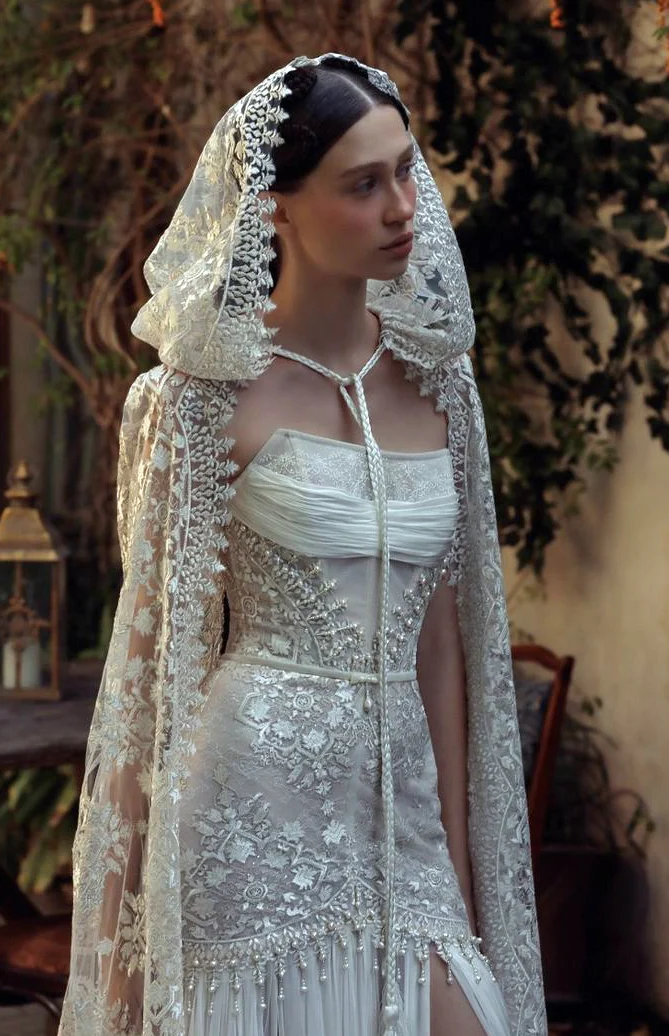
Do not treat the narrowest opening as the automatic answer. Decide how much hair you want visible at the sides and whether you prefer the edge beside your cheeks or farther out. Request an unchanged front photograph of each option at the fitting. A different head angle, closer camera position or rearranged hairstyle should not quietly determine the choice. Comparing the frame under consistent conditions makes your own preference easier to recognise without turning it into a supposed rule for every face.
Distinguish a neck bow from long hanging ends
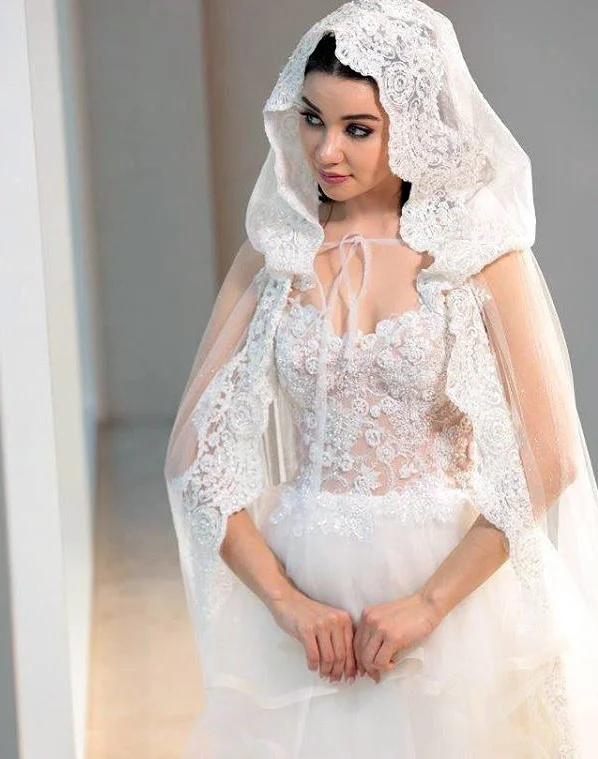
The front views show different finishes beneath the face. One has a small bow near the neck; another has long cords meeting at the front with hanging ends. These divide the middle differently. A short bow places a definite point close to the chin, while longer ends carry the eye down across the neckline. Compare that arrangement with the actual top edge of the dress before adding a necklace or deciding deliberately to leave the middle quieter.
Check the neck finish with your arms away from the pictured pose as well. Lift a glass, hold a small object and incline your head as if speaking to someone. Ask which elements are decorative and which determine the position of the garment. Do not change an unfamiliar fastening simply to produce a preferred photograph. Have its intended adjustment demonstrated and note whether you can manage it yourself or want help when dressing. The choice then accounts for use as well as appearance.
Try the hairstyle and head turns together
A hooded wedding dress needs to be assessed with the hairstyle you plan to wear. A higher arrangement may require a different interior shape from flatter or looser hair. That is something to establish during a real fitting rather than a dependable property of one photograph. Bring your headpiece, or a substitute of similar size, and check how much you want visible beneath the edge. Decide whether earrings should contribute to this outer frame or remain a quieter detail inside it.
Turn your head in both directions and look briefly down without holding the edge in position. Afterwards, observe whether it stays where you want it or needs rearranging. Ask someone to record the movement from the side. Our bridal accessories guide helps coordinate head, neck and ear jewellery. Here the particular question is which of those details still has space within the hood opening. A small head turn can reveal a relationship that a straight front photograph leaves unresolved.
Choose the front frame and rear length separately
The rear view shows a long outer layer spreading broadly across the ground. It answers a different question from the neck close-up: what outline do you want when you turn away? Compare its width, visible pattern and relationship to the lower dress. Liking the front border does not automatically mean you want the same degree of spread behind you. Record those decisions separately so that one attractive feature does not silently select a much larger arrangement at the back.
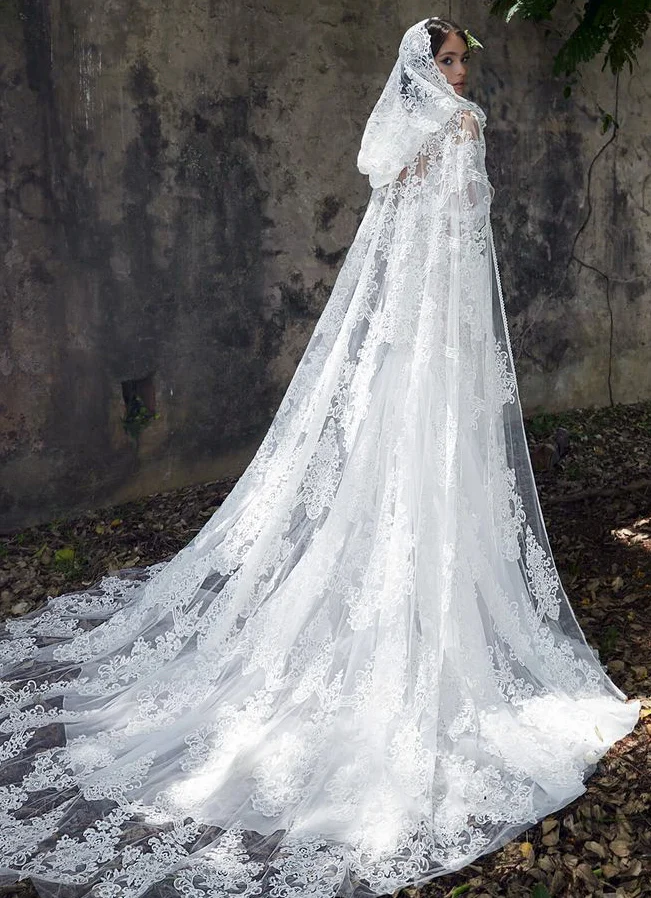
Think through your actual route, from dressing to a possible seat and then to photographs. Try a turn and sitting down in the real model, and ask how the long section is gathered or arranged during those actions. A photograph spread on the ground does not demonstrate any particular freedom of movement. It does provide a useful starting point for precise handling questions. Establish where the fabric should go when entering a vehicle or passing through a narrow doorway, rather than leaving that decision until the day.
Coordinate pattern density with the bodice
A large floral-looking border can be chosen deliberately alongside a densely decorated bodice. The finer hood with small celestial shapes places a different kind of drawing over the more strongly divided upper dress. Decide whether you want continuity between the patterns or a visible change. Compare hood and dress together rather than saving only a particularly appealing border close-up. The balance between face, chest area and waist matters to the overall view more than one isolated decorative edge does.
For translucent-looking sections, also compare the real background beneath them. Hair, skin, lining or the dress below changes which details can actually be seen. Our sheer wedding dress guide adds a more detailed surface comparison. It cannot replace a fabric sample, but it helps distinguish a request for a particular pattern from a request for coverage. The hood does not need identical visual density everywhere or the same density as the bodice beneath it.
Reduce the final choice to two complete arrangements
Keep the last round to two well-described options. One might combine a clearly patterned face edge with a short neck tie; the other might pair a finer frame with a longer front line. Hold hairstyle, viewing direction and camera distance constant for both. Add a rear view and a photograph taken during a head turn. You are then comparing a hooded wedding dress as a worn arrangement rather than several attractive fragments whose relationship remains unclear when brought together later.
Write down one advantage and one unresolved check for each option. Perhaps the front edge appeals to you while the handling at the back still needs testing. The other arrangement may have the quieter neck area you want, but hide most of your headpiece. Specific differences like these help with an alteration or order. The question is which complete arrangement you want to wear along your own route with your own accessories, giving each candidate a concrete purpose in the final decision.
Establish the connections and care before ordering
Finally, ask to see the actual connections. Is the hood part of the dress, part of an outer layer or a separate item? Which fastenings are present, and can any section genuinely be removed? Have this demonstrated on the garment being offered and record exactly which pieces are included. The visible photographs do not answer those questions completely. A clear list also helps prevent a requested alteration from being understood merely as a temporary styling arrangement for a picture.
Care follows the labels on the pieces actually supplied. GINETEX explains the five care-symbol groups: washing, bleaching, drying, ironing and professional textile care. A pale colour or translucent appearance does not establish an appropriate treatment by itself. Ask specifically about dress, hood, border decoration and any separate components. The selection can then finish with both the face frame and the practical handling clearly described, including the information needed to look after the real garments after wearing them.
A hooded wedding dress can be compared through the face opening, neck finish and rear length. The photographs do not establish a detachable construction.
Frequently asked questions
Can I remove the hood during the celebration?
That depends on the actual construction. Ask for a demonstration on the offered garment of whether and how the hood or outer layer separates, then rehearse the intended change beforehand.
Should I finalise my hairstyle before the hood fitting?
An approximate height and shape help. Try the planned hairstyle and headpiece with the hood before committing to the final hair arrangement.
Which product details should I check for the hood?
Ask for composition, lining, connections and care for the pieces actually supplied. Have the relationship between hood, border decoration and dress demonstrated on the offered garment.
How should I assess the long rear section?
Record its spread from behind and walk a few steps with the real piece. Establish handling and any assistance for your own route rather than judging length only in a standing pose.



Thoughts on this article