Bridal accessories become easier to choose when you decide where each one belongs in the complete outfit. A floral gold-toned band creates a different emphasis from a taller pale headpiece. Flowers woven into a braid move attention towards the back, while a drop necklace emphasises the front centre. The four references make these relationships visible. Choose the detail you most want to see, then introduce the remaining pieces gradually. A photographed set does not require you to wear every component together. Jewellery you already own can also provide a useful starting point.
Choose bridal accessories around one leading detail
Establish dress, shoes and an approximate hairstyle first. Then choose the area you want noticed initially: hair, ears or neckline. This is a personal styling decision rather than a rule for every bride. A detailed bodice may work with a smaller hair accent for your intended effect. A quieter neckline may instead leave room for a longer necklace you particularly enjoy. Compare both arrangements from the same distance, keeping the dress and hairstyle unchanged so that the accessory difference stays clear.
Photograph the first attempt from front and side. Add only one further piece and compare again. Changing earrings and headpiece simultaneously makes the preferred difference harder to explain. Keep the pieces that already work and change the unresolved area. Our boho wedding dress guide offers further questions about the complete outfit. Take the comparison that helps without feeling obliged to give your own appearance one fixed style label. The purpose is to describe the relationship you enjoy.
Compare headpieces with the actual hairstyle
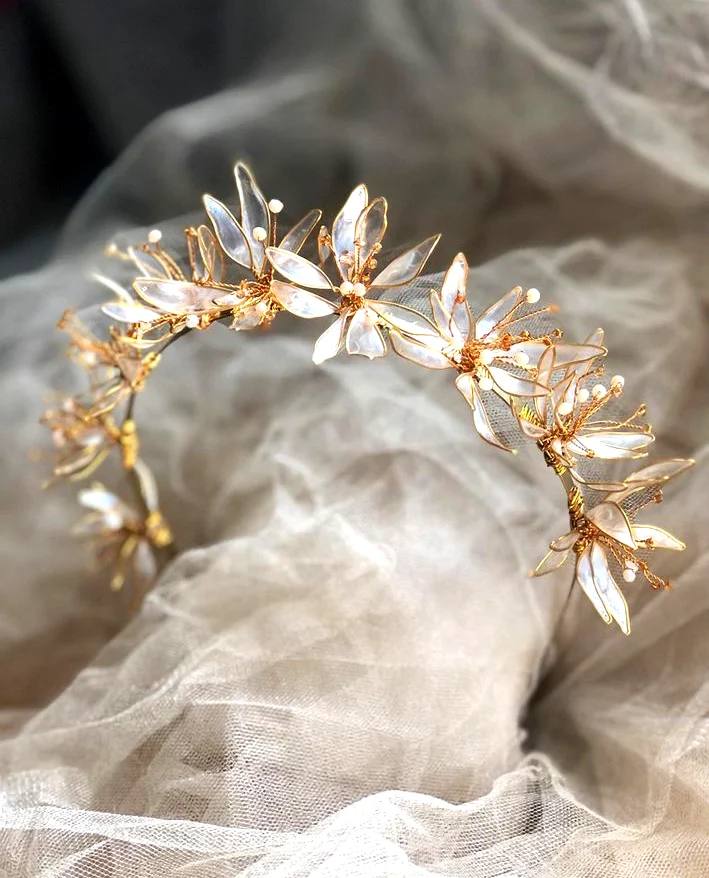
The gold-toned band uses leaf-like and floral elements arranged around its sides. The taller pale headpiece in the set creates a more pronounced line above the head. Try these directions with the hairstyle you actually intend to wear. Compare height on your head rather than only on a table. Ask how the specific piece is fitted and which area of hair it needs. Its decorative outline alone cannot explain a suitable attachment for your particular hairstyle or how the arrangement will be put together.
Move your head, look down and greet someone. Wear the piece through a longer trial while moving normally, describing any pressure or slipping precisely. A tighter fitting is not automatically the answer to every problem. Discuss the real arrangement with the person styling your hair. Decide whether the decoration should remain after a veil is removed. This turns an appealing upper outline into a planned combination for different parts of the day, with the order of wearing and removing pieces established in advance.
Assess earrings between hair and shoulders
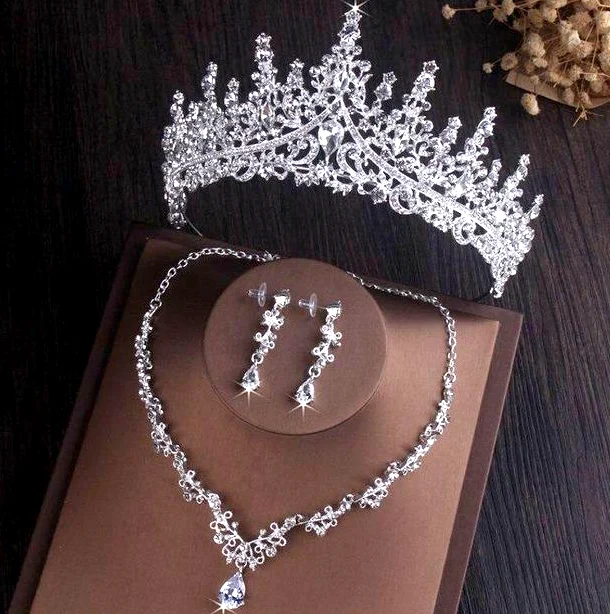
The close jewellery reference shows a pale drop-shaped pendant at the ear. In the set, the earrings are longer and more articulated. Compare those differences with hair loose, drawn back and arranged in the way you intend. Notice when the earring remains visible and how it relates to the dress’s shoulder line. You do not need larger earrings simply to show them in every photograph. You may prefer an occasional glimpse rather than a continuous main accent beside your face and neckline.
Try the actual fastenings and have putting them on demonstrated if unfamiliar. Turn your head and add the planned outer layer. Include a greeting that brings hair and shoulders close together. Unknown material or a personal sensitivity calls for specific product information; pale sparkle identifies no particular metal. Bridal accessories need to suit your own use. An attractive outline on a table cannot settle whether you want to wear that real piece for the whole period you have planned.
Decide necklace length against the neckline
In the close view, the necklace follows a V-shaped line towards a larger central drop. The set also uses an extended centre. Try that arrangement with the actual dress instead of estimating length from the picture. Compare the gap between pendant and garment edge while standing and sitting. Decide whether the two shapes should touch, overlap or leave a clear area between them. Your preference depends on the complete neckline and the relationship you enjoy, rather than a single universal matching formula.
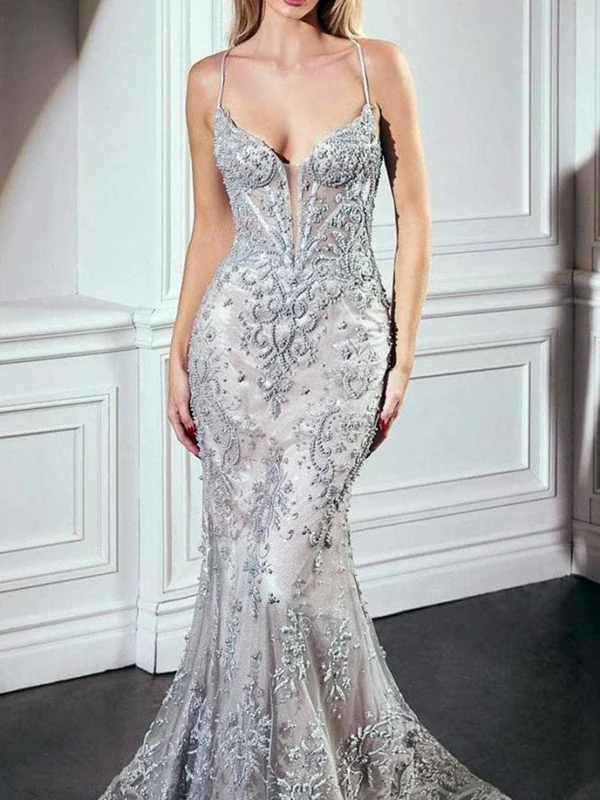
Try necklace and quieter earrings once, then the more noticeable earrings without a necklace. Both can distribute a similar brightness differently. Our crochet-look wedding dress guide adds questions about visible bodice patterns. Use them to assess jewellery and garment surface together. Another elaborate pattern is unnecessary if the existing detail already serves your intention; deliberately combining several accents is also possible. Compare the real alternatives before buying another piece purely because it belongs to the photographed set.
Plan hair flowers and veil separately
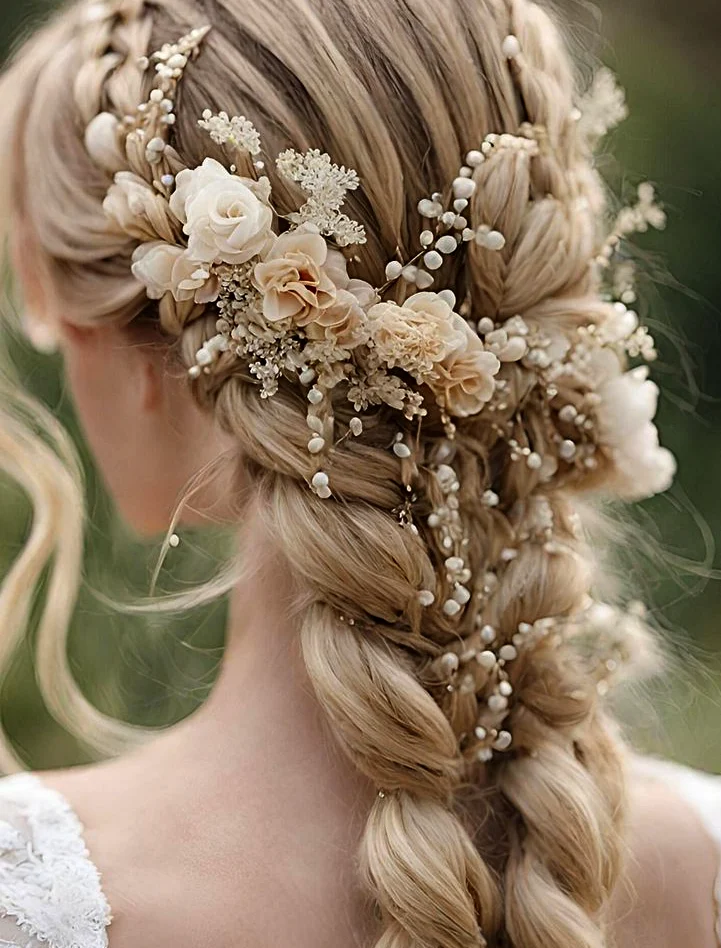
The braided hairstyle shows pale flowers and branching small rounded elements across the back of the head. It offers a different starting idea from a band that leads from the front. Have the arrangement shown with your own hair length and planned braid. Decide whether side or rear view should supply the main emphasis. The photograph explains neither exact attachment nor whether the decorative elements are natural or artificial. An order requires a description of the particular piece actually offered to you.
Introduce the planned veil after trying the hairstyle. Look at which flowers it covers and where it is fitted. Have removal demonstrated in the intended sequence. Someone should know which component stays and which will be removed later. Compare the rear view again afterwards. Bridal accessories can form a clear arrangement in both states when you test those transitions with the same actual pieces. Establishing that sequence is more useful than hoping the veil and decoration will happen to separate neatly on the day.
Record bridal accessories choices and clarify care for each piece
Finally wear the chosen bridal accessories with dress, hair and outerwear. Sit, lean forward and pick up a bag. Record which pieces you can put on yourself and where help is planned. Photograph the completed front, side and rear arrangement and keep a short list of the selected components beside it. You can then repeat the combination at another fitting. Add a further piece only when it answers an unresolved outfit question, rather than because an empty area seems to demand another purchase.
Ask the actual providers about material, fastening and care. GIA explains jewellery care, distinguishing materials and possible treatments. Do not transfer a cleaning method to unidentified stones or coatings. Request instructions for your real pieces and appropriate separate protection during transport. Your accessory plan then connects the desired distribution of accents to an understandable dressing sequence and the information you need for the selected objects. Appearance and real handling become parts of the same concrete choice.
Choose bridal accessories around one main accent. Test headpiece, earrings and necklace individually with your dress, hairstyle and veil.
Frequently asked questions
Must I wear every piece of a bridal jewellery set?
No. Compare partial combinations and clarify which components the actual offer includes.
When should the veil join a bridal accessories trial?
Try the veil with bridal accessories after choosing hairstyle and headpiece. Check coverage and removal, then inspect the outfit without the veil.
How should I compare necklace lengths when choosing bridal accessories?
Compare pendant and actual garment edge while standing and seated. Have any possible length adjustments shown on the real piece.
Does pale sparkle establish a particular metal or stone?
No. Ask about material and care for the concrete product; photographic colour cannot settle those questions.
Thoughts on this article