A crochet-look wedding dress asks you to consider more than the outline of the skirt: compare the spaces between motifs, the lining underneath and the placement of the pattern. Start by deciding how much openness you want at the shoulders, back and legs, then compare that preference with the actual garment. A photograph can help you explain a design to a bridal consultant, but it cannot establish fibre content, construction method or the support hidden inside the bodice.
Crochet-look wedding dress: compare the front and back
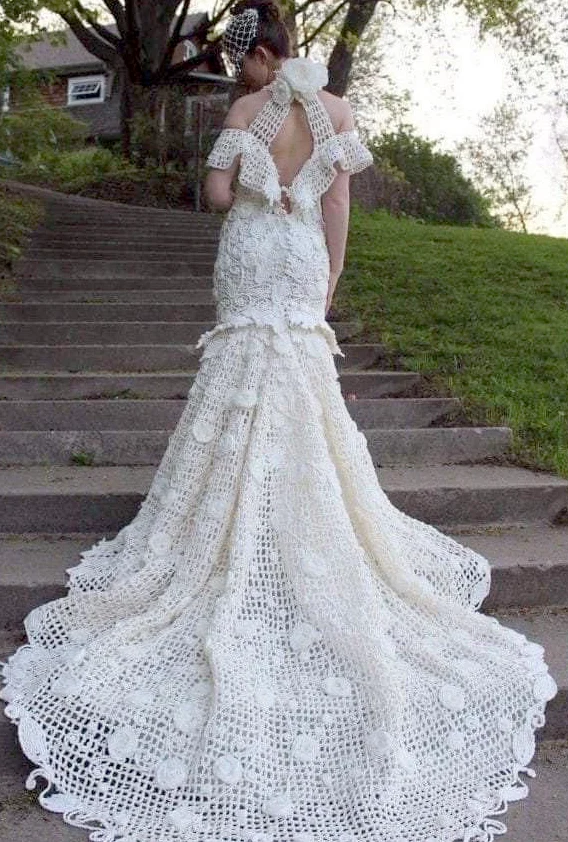
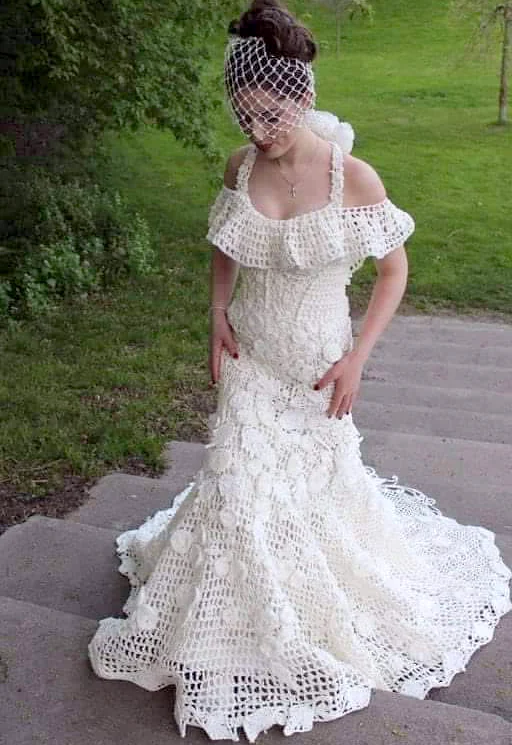
The reference images show the front and back of a pale dress with an open patterned surface, a fitted upper skirt and a spreading lower skirt. At the front, a broad ruffled band crosses the upper arms and a closer neckline sits above it. At the back, a large opening and patterned straps frame the skin. The train spreads across the steps behind the wearer. These are two views of one visual reference, rather than evidence of two different products or a current bridal collection.
Make a clear pattern brief
Before an appointment, describe the parts you actually like. You might want the large circular motifs near the hem, the small repeating openings around the torso, or the contrast between a fitted hip and an expansive train. List them separately. This avoids asking for an exact copy when what matters is one proportion. A second column can record features you would change: a higher back, a shorter train or less fullness across the arms. Keep the brief small enough to compare with dresses that are available to try.
Separate appearance from construction
Use “crochet look” as a visual description until the seller confirms how the real dress was made. An open patterned surface does not establish handwork, a particular fibre or a historical technique. Ask for the garment label, a close view of the inside and a clear explanation of the lining. If the sales description uses terms such as handmade, request the details that matter to your purchase. Your decision can still begin with the image; the final specification should come from the garment and its documented description.
Check coverage in the intended light
Bring the underwear you expect to wear, or ask which alternatives can be tested during the appointment. Look at the front, side and back with the dress against your body, then repeat the check near a window and under the fitting room lights. Ask a companion to describe any areas that you cannot see easily. Concentrate on changes you would actually want, such as lining behind the skirt or an adjusted neckline. A phone image can be a useful note, but ask permission before taking one and compare it with your own view.
Give the shoulders a movement test
The band across the upper arms is a distinctive part of this reference. During a fitting, raise your hands as if greeting someone, reach forward and bring your arms comfortably to your sides. Notice whether the band moves with you and whether the neckline returns to its starting position. Do not assume the photographed dress has any particular fastening or stretch. Ask how the version you try stays in place, what alterations are possible and whether those alterations would change the placement of the pattern across the front and back.
Walk and sit before choosing the lower shape
A fitted area around the hips and thighs deserves a practical test. Take several normal steps, turn, sit in a chair and stand without arranging the skirt first. If stairs will be part of the venue, discuss how you would manage them safely in the actual dress. Compare the look with your intended shoes. The spread train in the rear image is attractive as a composition, but the amount you want to carry during a ceremony or reception is a separate decision. Ask to see the proposed way of gathering it up.
Plan alterations around the motifs
Bring questions about where the garment would be shortened or taken in. With a conspicuous pattern, you may care about whether a large motif remains centred or how the border finishes at the floor. Ask the person doing the work to show the proposed adjustment on the real dress before agreeing to it. Record which changes are included and when the next fitting will happen. There is no useful universal alteration price or guaranteed answer from a reference image; the construction and the work requested decide the practical options.
Choose accessories by checking contact points
Try the complete neckline before adding a necklace. The patterned straps, upper arm band and front edge already create several lines around the face. Compare earrings on their own with the combination you first imagined. Bring a veil, headpiece or bag to the fitting if it will be part of the outfit, and check where it touches the open surface. Move each item as you would during the day. The purpose is to find a combination you can use comfortably, rather than to assign a compulsory bohemian accessory to the dress.
Make the final appointment specific
Write a short decision sheet: coverage approved, shoulder movement checked, sitting comfortable, hem tested with shoes, train arrangement demonstrated and alteration plan understood. Add any unresolved question in plain language. If you are choosing between this kind of pattern and a smoother dress, use the same movement sequence for both. That makes the comparison about your priorities. For care, follow the garment label; GINETEX explains the symbols. Confirm transport and storage with the supplier, particularly how they recommend supporting the actual dress between collection and the wedding.
Compare the front and back, check coverage with your intended underwear and test the shoulder band, sitting and train handling. Confirm lining, construction and alterations on the actual dress.
Frequently asked questions
Is a crochet-look wedding dress in a photograph definitely hand crocheted?
A photograph of a crochet-look wedding dress does not establish hand crochet or a particular making method. The description refers to the visible pattern. Ask about construction, the garment label and the documented product description for the actual model being offered.
How can I check coverage between the motifs of a crochet-look wedding dress?
Try the actual crochet-look wedding dress with the underwear you plan to wear. Compare coverage at the front, sides and back under fitting-room lights and near a window where possible. Discuss any extra lining on that model before agreeing to alterations.
What movements should I try with the upper arm band?
Raise your hands into a greeting, reach forward and let your arms relax. See whether the band and neckline return to the position you want, then ask about possible adjustments.
How do I decide on a train length?
Separate the spread shape in the photograph from your own use. Walk and sit with your intended shoes, and ask for a demonstration of any proposed way to gather the train on the actual dress.