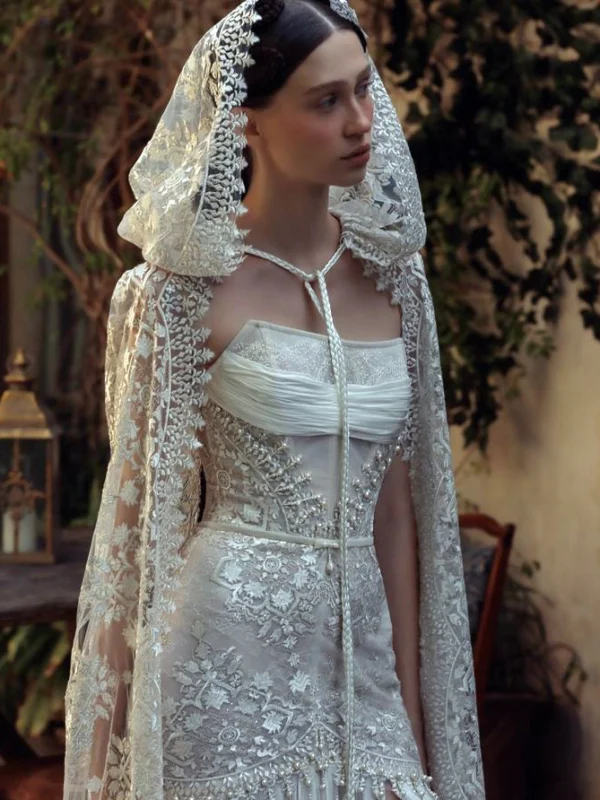
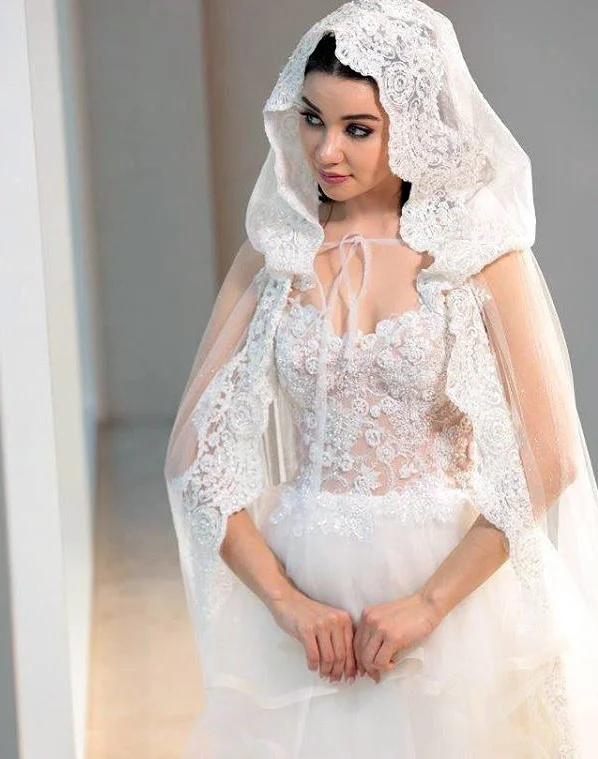
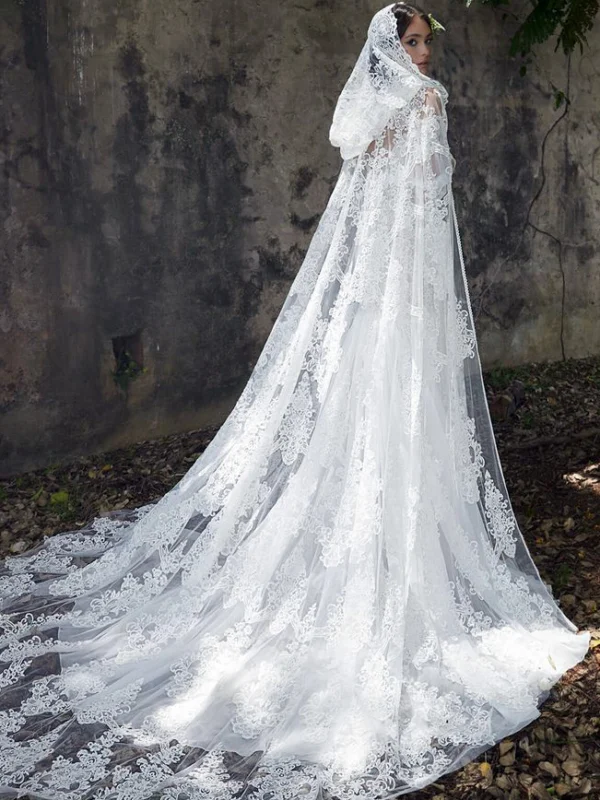
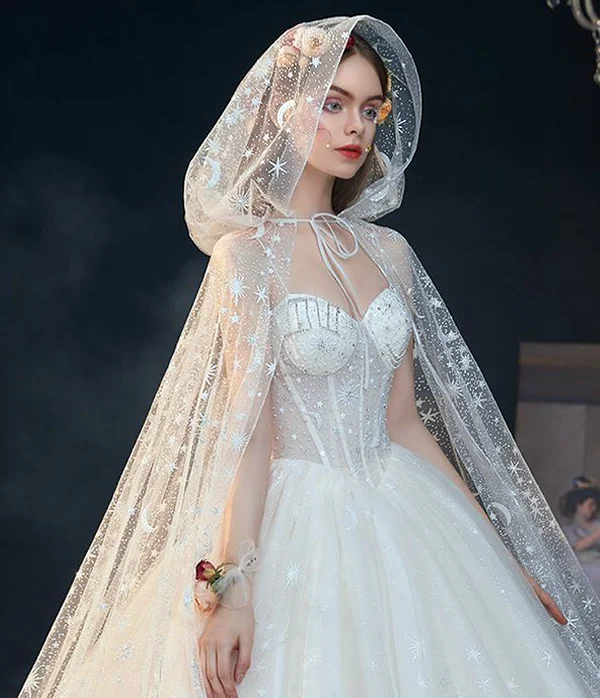
Hood edges can be compared from different directions in this sequence. The dense floral front border with long hanging ends also frames the decorated chest area. Another front view shows a small neck bow and a broad translucent-looking outer layer extending over the arms. The example with star- and moon-like shapes draws a finer frame above a strongly divided bodice. The rear view adds the width and length of an outer layer spread across the ground. These answer different questions that a single close-up cannot cover completely.
Start by choosing the distance you want between edge and face. Then compare the neck bow or hanging cords against the actual top edge of the dress, adding the rear spread afterwards. An unchanged front position and a short head turn are useful fitting records, so changing poses do not explain the difference. Select two complete arrangements you can assess with the same hairstyle. The pictures offer design comparisons but do not expose enough of the connections to establish removability. Ask for that function to be demonstrated on the actual offered garment before making it part of your plan.
Guide to comparing these images
Compare the route below the face frame
The dense floral edge is followed by long hanging ends across the decorated bodice. The small bow reference creates a shorter central stop beneath the face instead. The finer celestial-pattern hood leaves more background visible through its field. Compare the route from face to chest, then the amount of drawing beside it, as two related but separate choices.
The broad rear floral layer adds another scale that the close fronts cannot explain. Its outline occupies a large ground area behind the wearer. Keep that image for the lower outer field rather than using it to assume the back of either close hood. Each piece needs its own complete sequence.
Keep a consistent reference record
Create one page for the actual candidate, joining its front detail, side and rear views. Mark which areas show the face frame, central ends and lower outer spread. Review the same page before selecting another accessory, so the widest image or brightest motif does not replace your original priority with an unrelated feature from a different piece.