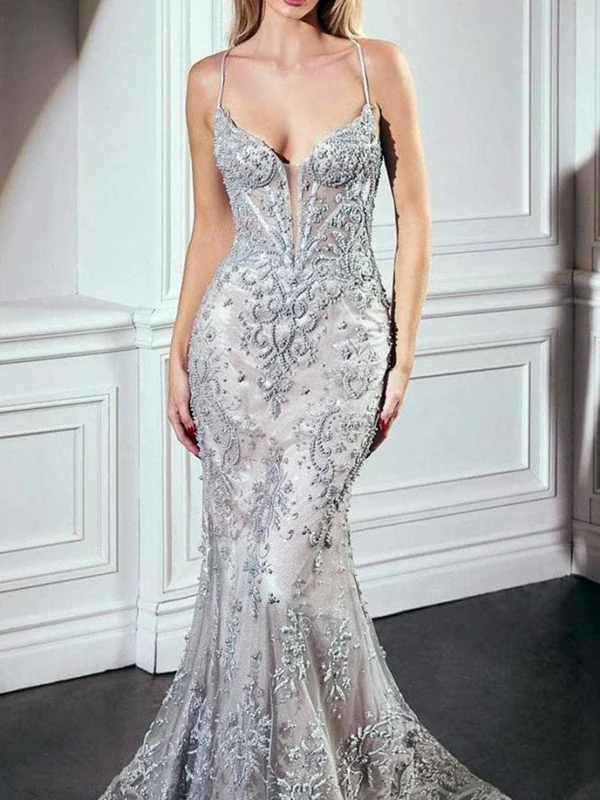
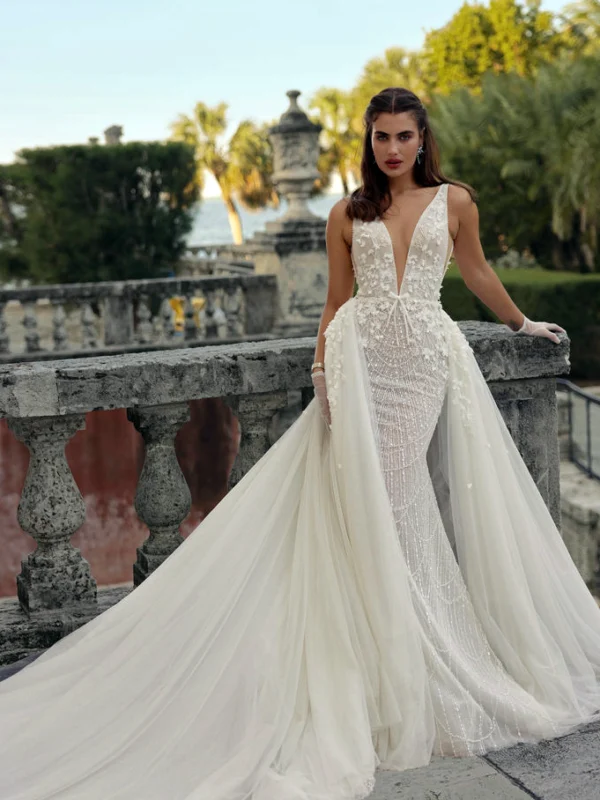
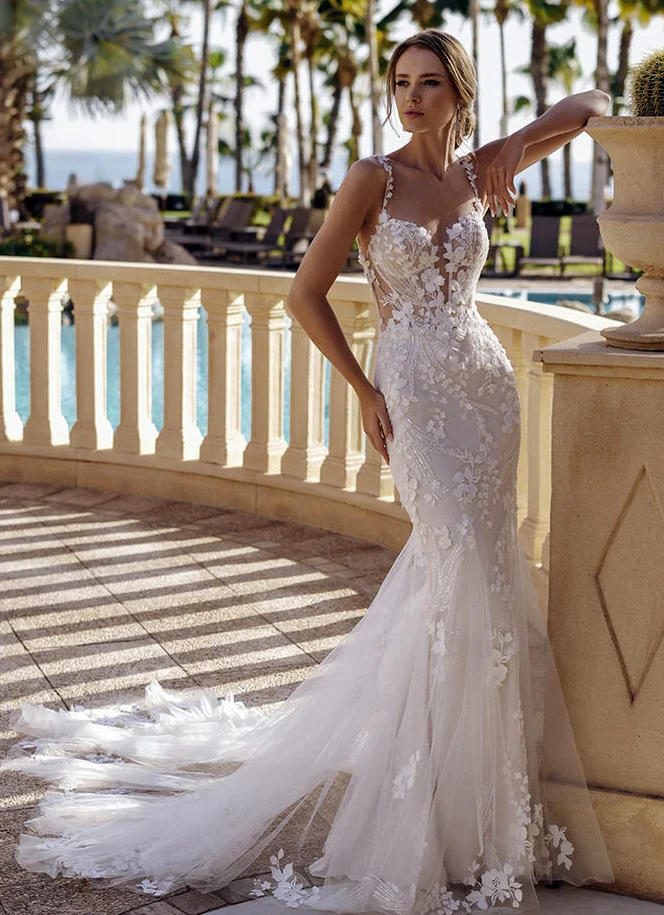
A sheer wedding dress works through the relationship between covered and more open-looking areas. A patterned back creates a different focus from a small panel beneath the bodice or a deep front neckline. Choose that arrangement first. These four references show different bodices, backs and skirt shapes. Their translucent appearance cannot establish latex or another particular material. For the effect you want, start with placement, pattern and lining on the actual offered garment. The photographs can explain those design preferences without acting as material evidence.
Choose a sheer wedding dress by panel placement
Mark where you want a more open effect on a simple front and rear sketch. Perhaps the back interests you while you want a quieter front middle. Narrow side areas may appeal more than a large continuous panel. Those preferences can be combined but need checking on a real model. A clear position request is more useful to a shop than asking for as much transparency as possible. It also leaves room for a suitable cut with another pattern arrangement.
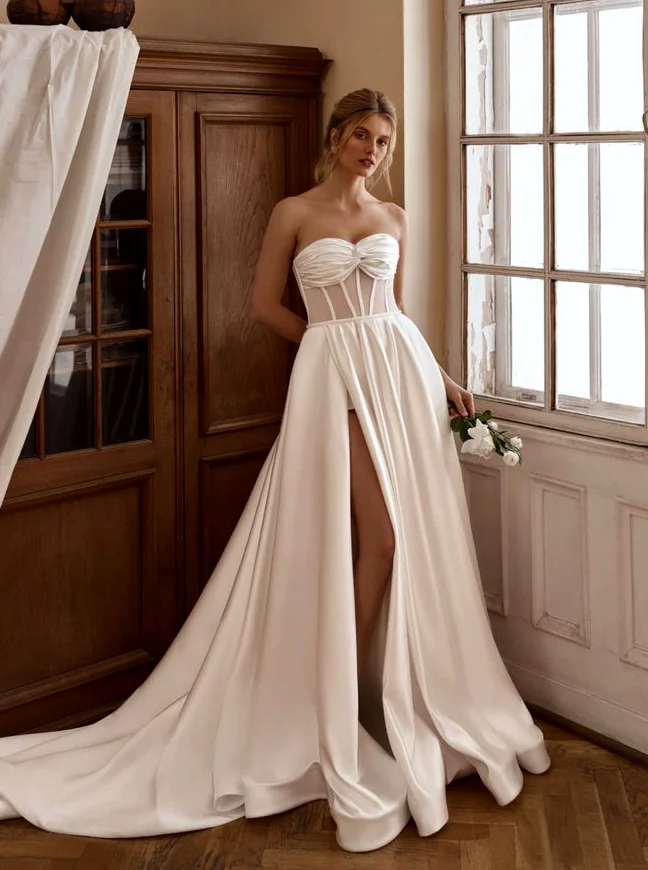
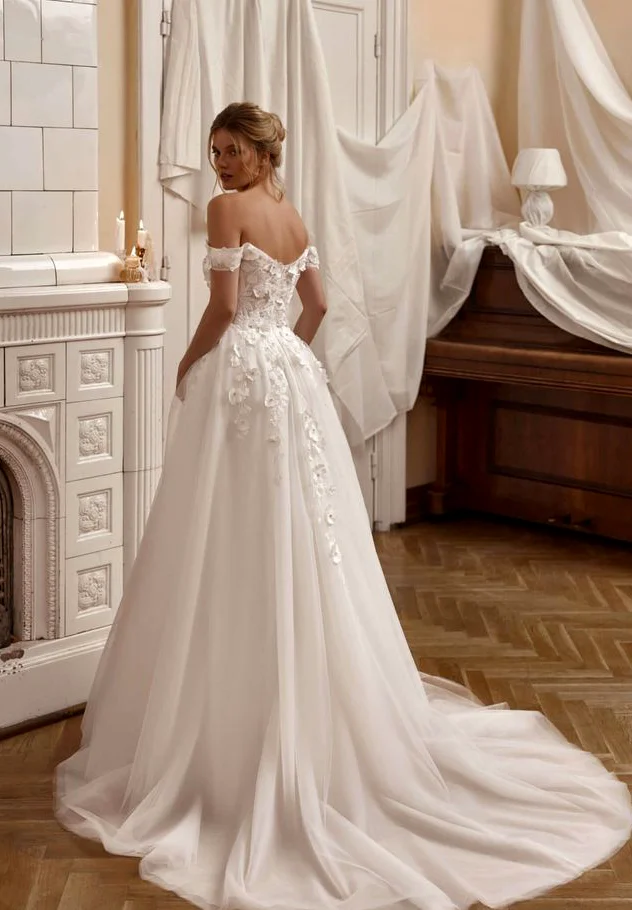
The first reference concentrates visible lines on a strapless bodice; the third shows a broadly patterned back with longer sleeves. Compare those ideas independently of the skirt first. Ask which view matters most to you during greeting, ceremony or dancing. The front and rear need not have equal coverage. A dress can look more closed in front and more open behind, or the reverse. Choose the division you want to wear instead of accepting every exposed detail in one photograph.
Coordinate lining and pattern on a sheer wedding dress
Ask which parts of the actual garment are lined and how the pattern sits over them. A similar motif may look different against another base. Request a view of any proposed added layer at the relevant position before agreeing. Look at colour, visible edges and transitions into the neighbouring area. This turns a request for more coverage into a concrete design question. The crochet-look wedding dress guide adds another comparison of open patterned areas and their lining.
Look with your intended underwear in ordinary indoor light. Compare in more even daylight too if possible during the appointment. The aim is not a fibre test but an impression of your preferred coverage. Stand at a normal distance before examining details closely. If the motif is your main attraction, pursue that pattern preference with more lining as well. Open effect and decoration need not be chosen as an indivisible package. Keep other pieces unchanged when comparing two proposed layers so the cause of the difference stays clear.
Bring underwear into the bodice decision early
Take your planned inner layer to the first serious fitting. Check side transitions, upper edge and visibility when seated. A strapless bodice raises different connection questions from the fine straps in the fourth reference. Ask about the actual construction if support matters to your choice. Visible vertical lines do not explain the whole interior. The boho wedding dress guide offers additional movement questions for preparing your trial. Repeat the final assessment with your intended underlayers if an adjustment changes the upper arrangement.
Begin in a relaxed stance, walk a few steps and sit. Reach for a planned object such as your bouquet afterwards. See whether the open areas and underwear still relate as you prefer. Describe an observation precisely: a visible edge, a shifted upper line or a section with different coverage. This gives the shop a specific question. Calling the entire fabric uncomfortable is less informative when a single connection may need attention. A sheer wedding dress choice brings appearance and this actual use into the same decision.
Request front and rear views of the same model
Do not complete a sheer wedding dress in your mind by joining different garments. The second and third rear references each belong to their own designs. Ask for front, side and rear views of the exact model offered. This shows how the open effect belongs to a complete silhouette. A particularly beautiful rear photograph can leave the front unresolved; it should simply not replace that missing information unnoticed. Keep the product reference with the images so a similarly coloured design is not mistaken for the same garment later.
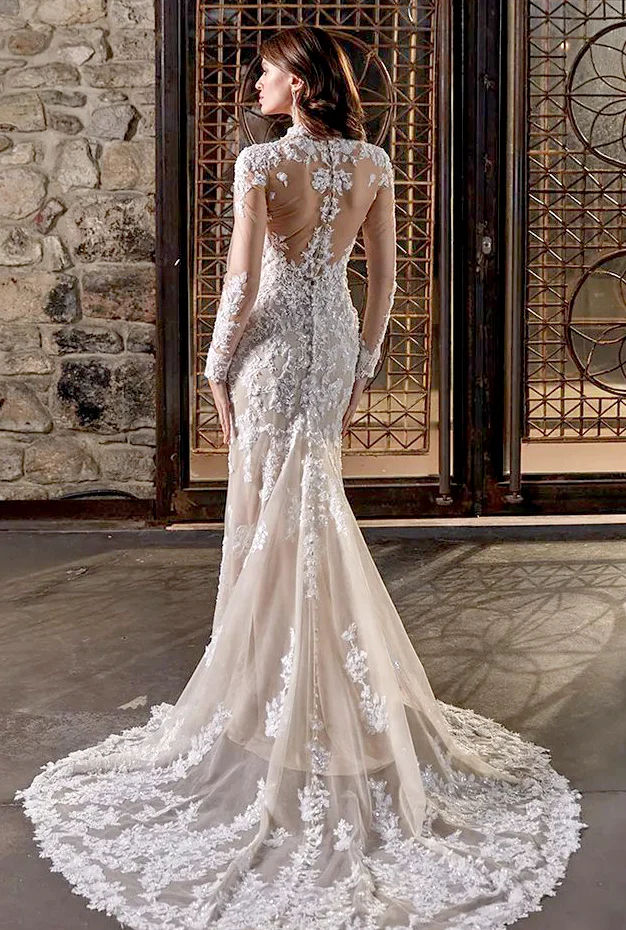
Try the back with your intended hairstyle and any veil. Hold hair clear of the pattern first, then compare your ordinary preferred arrangement. Decide which area you actually want to show. Try the jacket or wrap too, particularly over patterned sleeves. The comparison should reflect your schedule: arrive, put something aside and remain in the dress. There is no need to find one state in which every detail is visible simultaneously if that does not reflect how you want to use the outfit.
Choose the skirt as an independent second decision
The references differ below the waist as well. A broad pale skirt and a closer continuing form change the overall impression even if the upper open area were similar. Settle the bodice preference first, then compare two lower solutions. Walk and sit in your shoes. Decide separately whether a leg opening gives the coverage you want. It is not a compulsory addition to sheer panels. An open back and a more covered-looking skirt can be your chosen combination without repeating both openings from a striking photograph.
For a train, request a demonstration on the real garment. The spread rear references help show pattern and outline without explaining how you move through an aisle or sit. Ask about an actual gathering arrangement if you need one. Look after walking without rearranging the skirt. This makes the decision about its ordinary shape rather than only the ordered moment of a photograph. If someone will help with the train, having them observe the trial can make the plan clearer. Decide which parts of the celebration need the train spread or gathered.
Clarify product information, alterations and care
If a description names latex or another material, request relevant information for the offered dress. Visible openness does not establish the claim. Ask how added lining or a bodice alteration changes the neckline and pattern boundaries. See the new connection and plan a final fitting with the same underwear. An extra layer can change the finished effect, so decide on the expected result rather than only asking whether a change is possible. Keep the scope and timing with your other product notes for an understandable final comparison.
Read the care label before cleaning or pressing. The GINETEX reference helps interpret care symbols. Finish by checking placement, pattern, lining, inner layer, skirt and accessories together. When these parts work on the actual garment, you have an explainable wedding look. An unanswered material question can stay open until a specific response arrives without undermining your clear design preference. The final choice should connect what you want to see with what you have actually tried, rather than ask one image to settle every question.
For a sheer wedding dress, choose the location and size of open areas first. Then test pattern, lining and underwear together on the actual garment.
Frequently asked questions
Does a sheer appearance establish latex?
No. The material needs relevant information for the actual offered garment.
Can I keep the pattern with more coverage?
Ask about an added layer and see its colour, edges and transitions on the real model.
Should I compare bodice or skirt first?
If open areas are your priority, settle their position first and assess the skirt as a separate choice afterwards.
What should I take to the fitting?
Planned underwear, shoes and an important outer layer help compare coverage and movement in the complete outfit.