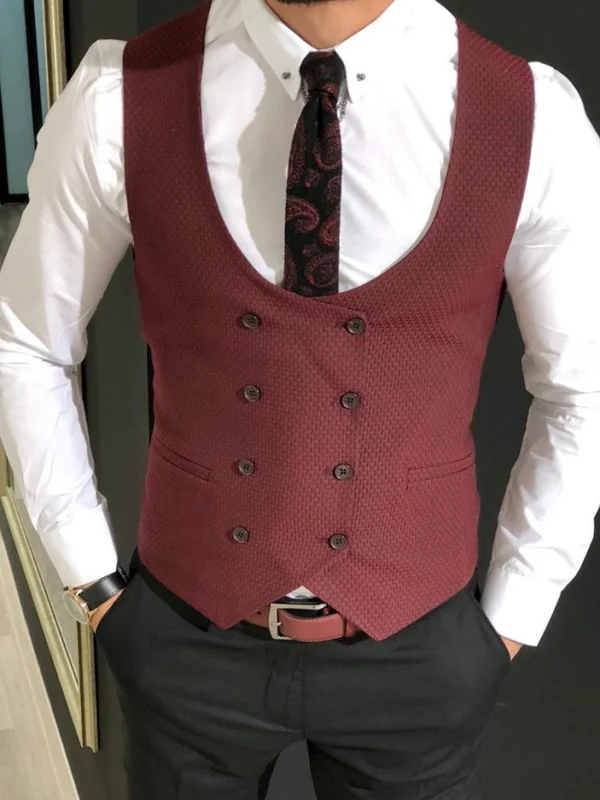
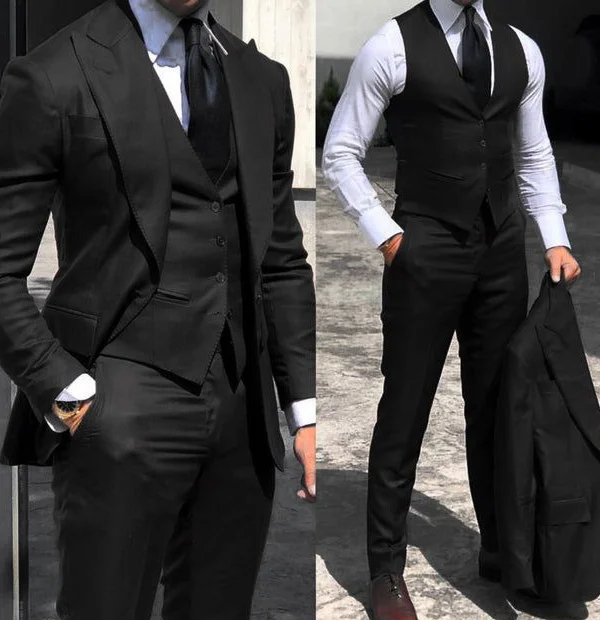
Sustainable suit fabrics are best approached through specific, documented questions. A fabric name, a green colour or a photograph in a natural setting cannot establish the environmental performance of a suit. Start by identifying what you need the outfit to do, then examine the exact composition, the scope of any claim and the practical condition of the garment. This guide provides a comparison method rather than a ranking of fibres. The accompanying menswear references illustrate outfit choices only; no environmental certification or material content is established for them.
Define the job before comparing sustainable suit fabrics
Write down the occasions you actually expect: a recurring office requirement, several weddings or one formal invitation. Include the stated dress code, your usual inner layer and the shoes already available to you. These details help you distinguish a garment you can use from one that only looks attractive in a product photograph. No fabric label can compensate for an outfit that does not meet the event’s requirements or your preferred way of dressing.

Compare a purchase with the options already open to you. An alteration to a suit you own, a suitable second-hand garment or a rental may meet the brief. This is a practical comparison of access and use, not a promise that one route always has a lower environmental impact. Check fit, condition, timing and the service terms for each. Keep any environmental comparison separate unless you have comparable evidence for the particular options.
Sustainable suit fabrics: read each component’s composition
Request the label for the actual jacket and trousers, including the lining where information is provided. Do not stop at the headline fibre. Record percentages and ask which section a statement covers. A claim about the outer cloth does not automatically describe a lining, pocket bag, button or waistband. If the seller describes a recycled blend, ask for its stated recycled share and the product documentation supporting it.
Compare like with like. A percentage of recycled fibre is different from the share of the total garment, and neither statement alone proves a lower footprint for the finished suit. Do not assume a source such as bottles or discarded garments unless the seller documents it. If the available information is narrow, retain that narrow description in your notes. An honest unknown is more useful than an invented explanation of where a fibre came from.

Ask what an environmental claim covers
The FTC Green Guides advise against broad unqualified environmental benefit claims and call for clear, specific qualifications. They also explain that recycled-content claims should identify partial content appropriately. These US marketing guidelines offer a useful way to interrogate wording; this article does not apply them as legal advice for your purchase. Ask the seller which attribute is being claimed and which product or component the evidence concerns.
For example, an answer about recycled outer fabric does not settle questions about manufacturing energy, transport or future recycling. Avoid treating the single attribute as a complete environmental verdict. If a comparison says less water or lower emissions, ask what it is compared with, what was measured and which stages were included. Without that basis, do not convert the phrase into a numerical saving or a general endorsement.
Check a certification on its own terms
Read the scheme owner’s explanation before interpreting a label. OEKO-TEX describes STANDARD 100 as testing for harmful substances and provides a label-check process. That scope should not be silently expanded into proof of organic fibre, recycled content or an entire environmental comparison. Ask for the relevant certificate number and confirm that the result relates to the offered item, rather than to a different fabric or another product from the same brand.

Keep the certificate information with the model reference and the date you checked it. If the provider supplies only a logo, request the missing details. A certificate can answer an important bounded question without answering every question you have. You may still need separate information about fibre origin, production and repair. Decide which matters are essential to your purchase instead of expecting one mark to stand for everything.
Test wearing performance separately from green wording
Try the actual jacket over your normal shirt or other intended layer. Sit, reach toward a table and walk in the trousers. Describe pressure, pulling or a waist position that you want changed. Do not attribute every fit problem to the fibre. Two garments with the same composition can have different cuts and internal structures, which is why a documented fabric claim and a practical fitting should be separate parts of the decision.
The checked suit fitting guide helps compare the complete outfit, and the suit lapel guide considers the jacket alongside its other proportions. Use them when defining the silhouette you want. Their styling advice is not an environmental assessment of a pictured suit. Ask the alteration provider which changes are feasible before deciding a promising fabric will make the garment workable.
Examine condition and the possibility of repair
For either new or used clothing, inspect the actual seams, lining, closures and areas of wear you can access. Ask for an explanation of any repair and whether spare buttons or matching cloth are available. Do not claim a guaranteed lifespan from the fabric name. Instead, identify what can be repaired, who would carry out the work and what the provider can reasonably explain about the garment you are holding.
If the jacket and trousers are sold separately, ask whether you can order a replacement piece and whether a later colour match is promised. Do not assume that availability will continue. Consider how you want to wear the parts with your existing wardrobe, and try those combinations rather than counting theoretical outfits. A plan you are likely to use is more valuable for your purchase decision than a long list of imaginary occasions.
Include care and a written comparison
Read the care label before purchase and include cleaning arrangements in your budget and schedule. GINETEX explains the care symbols. Follow the actual garment’s instructions rather than assuming that a natural, recycled or certified fibre makes a particular cleaning method suitable. Ask about the jacket and trousers individually if their labels differ. Keep unclear instructions as a question for the provider.
Finish with a short record for each option: intended use, composition, precise claim, evidence, fitting result, alteration needs and unanswered questions. Mark a claim confirmed only when the supporting information relates to that item. You can then choose a suit for documented attributes and practical suitability without calling its colour sustainable or claiming a complete environmental benefit that the evidence does not establish.
Compare sustainable suit fabrics through full composition, precise claims and matching evidence, then assess certification scope, fit, condition and care separately.
Frequently asked questions
Does a green colour make a suit sustainable?
No. Colour is a visible styling choice and establishes no material or environmental attribute.
Does recycled content prove a lower total footprint?
No. Clarify its percentage and scope; that attribute alone does not establish the finished suit’s overall footprint.
What does OEKO-TEX STANDARD 100 describe?
The scheme owner describes testing for harmful substances. Separate evidence is needed for organic fibre, recycled content or a complete environmental comparison.
Which alternatives can I compare practically?
An altered suit you own, a suitable second-hand garment or rental. Check each option’s condition, fit, schedule and terms.