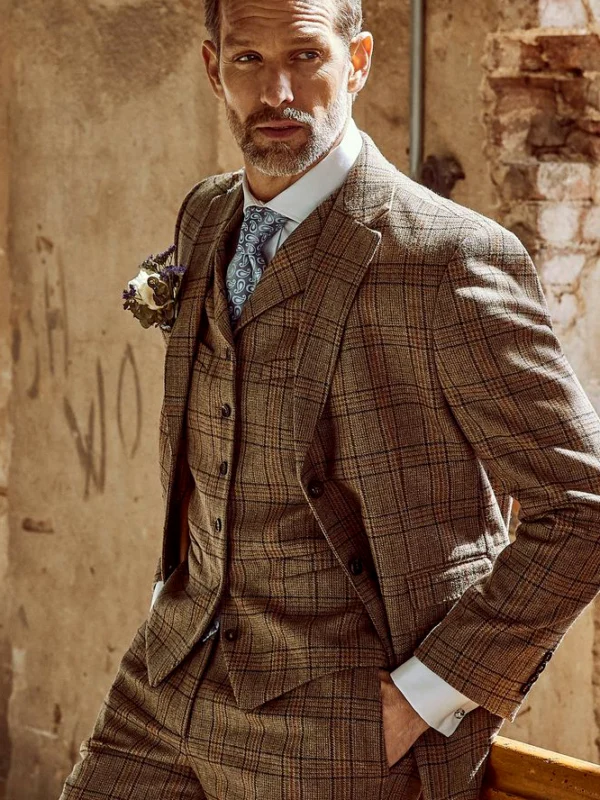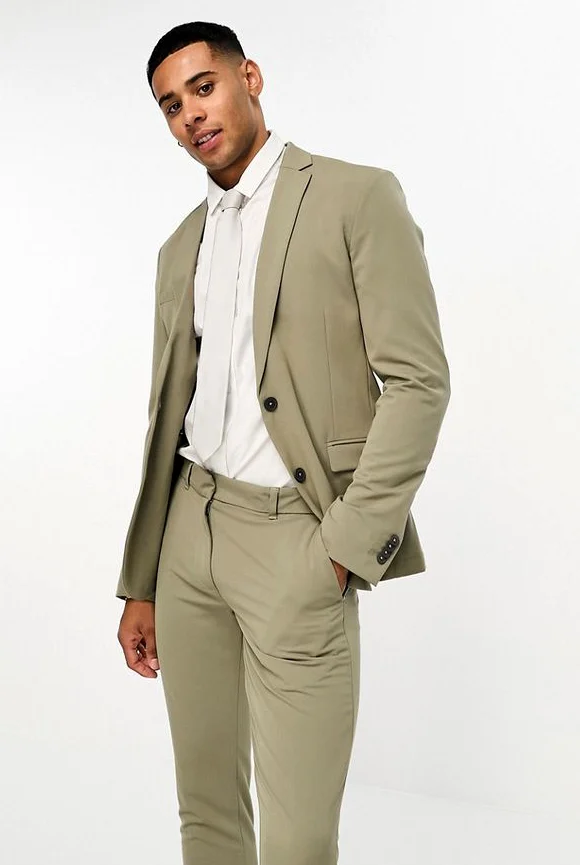
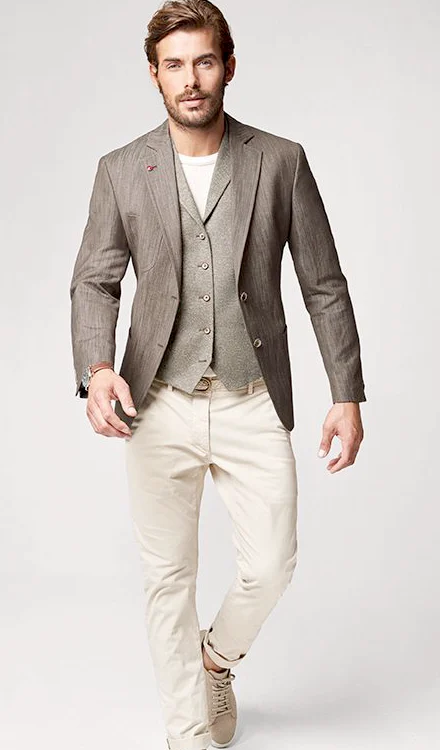
Suit lapels are easier to compare when you consider the shoulder, chest opening, jacket length and trousers together, rather than choosing a jacket by one feature alone. These references offer two different combinations: a light olive matching suit with a white shirt, and a brown jacket with a waistcoat, pale trousers and a light crew-neck top. Use them to decide which relationship you want between the parts. The photographs do not support a claim that both jackets have unusually wide lapels or belong to a new seasonal trend.
Suit lapels: start with the whole outfit
In the olive reference the jacket and trousers repeat a similar colour, leaving the white shirt as a clear central contrast. In the second image the darker jacket and waistcoat sit above much lighter trousers. That difference in colour changes the visual division of the outfit before you consider the lapel. Look at each image from a distance and note the first line you notice. If you want a similarly continuous combination, ask to try a matching suit. If you prefer the separation between jacket and trousers, use the second reference to explain that preference.
Describe the lapel without inventing a measurement
The lapels are visible as folded edges running from the collar toward the front opening. Their precise widths are not established by these images. Camera angle, body position and image scale make a numerical comparison unreliable here. At an appointment, point to the part of the reference you like and try two actual jackets beside one another. If width matters to your decision, ask for the measurement on those garments. Compare the result on your own torso instead of assuming that a label such as wide or narrow will deliver the same appearance across different jackets.
Keep the shoulder and chest in the comparison
Put on the shirt or top you expect to wear before judging the jacket. Stand with your arms relaxed and look at the front, then turn to see the side. Close the jacket in the way the supplier recommends for that particular model and notice whether the front feels comfortable. Reach forward as if greeting someone and return to a relaxed position. Ask which changes are realistic if you want a different fit. The reference image cannot establish how a shoulder is constructed or how a particular jacket would sit on you.
Compare an open jacket with the intended fastening
Both references leave space at the centre of the outfit, but they fill it differently. The olive look shows a long area of white shirt; the second has a waistcoat above the pale trousers. When trying a similar combination, look at it open and in the intended closed position. Ask yourself whether you like how much of the inner layer remains visible. Do not select the waistcoat or shirt from a cropped view alone. Its lower edge and its relationship with the trouser waistband are part of the full arrangement you will actually wear.
Give the waistcoat its own fitting time
If you want the second kind of combination, try the waistcoat while sitting as well as standing. See how its front lies over your intended inner layer and how it meets the trousers. Try the jacket over it, then remove the jacket and decide whether you still enjoy the outfit. This is especially useful if you expect to take the jacket off during the event. The photograph does not show the hidden back of the waistcoat, its fabric label or its adjustment system. Ask those questions about the actual item rather than assuming a standard construction.
Check trousers with the planned shoes
The olive image pairs the jacket with trousers in a similar tone. The brown outfit instead uses pale trousers with a different colour relationship. In either case, try the full combination with your intended shoes. Walk, sit and stand; check the waistband and the lower leg in those positions. If the length needs changing, ask to see the proposed finish before work begins. A photographed hand in a pocket or a posed step can alter the displayed outline. Use the image to explain the look, then base the fit decision on your own ordinary movements.
Change one element when comparing necklines
The white shirt and light crew-neck top create different lines at the chest. To understand your preference, keep the jacket on and compare the inner options one at a time where available. Look at the area between the lapels and at the top edge near your face. If your event has a stated dress code, check the host's instructions before deciding what belongs underneath. A casual-looking reference is a styling idea, not evidence that the combination satisfies a particular invitation. Ask about any uncertainty while you still have time to choose another arrangement.
Add accessories after the proportions work
Try a belt, watch or bag only once the jacket and trousers feel right together. Look at the whole outfit again to decide whether you want another point of contrast. There is no obligation to copy every visible detail or to add a tie because a jacket is present. Equally, a photograph with an open collar does not decide what you should wear to your event. Choose accessories with the intended use in mind and check that you can carry what you need without changing the fit you approved during the appointment.
Record the actual garment decisions
Before buying, note the jacket size and fit changes, the intended inner layer, the trouser length and whether a waistcoat is included. Ask for the documented composition and the agreed alteration schedule. The references do not verify brand, fibre, price or availability. Care follows the garment label; GINETEX explains the symbols. Ask the supplier about transport and storage for the actual pieces. A clear record lets you repeat the combination at collection and confirms that you chose a complete outfit whose proportions you checked, rather than a lapel in isolation.
Consider the lapel with the shoulder, chest opening, jacket length and trousers. Try real jackets with your intended inner layer, open and fastened, and check sitting and arm movement.
Frequently asked questions
Do the photographs establish that both jackets have especially wide suit lapels?
The photographs do not establish precise widths for the suit lapels or support the claim that both are especially wide. Compare actual jackets directly and ask for a measurement on each garment if lapel width is important to your choice.
How do I compare suit lapels in a matching suit and separates?
Consider suit lapels within the overall colour division. The olive reference joins similar jacket and trouser tones; the second separates a darker upper outfit from pale trousers. Try both combinations with your planned shoes to assess the complete arrangement rather than the lapel alone.
What extra checks should I make for a waistcoat?
Try it sitting and standing over the intended inner layer. Check where it meets the trouser waistband and compare the outfit with and without the jacket if you may remove it later.
Does the crew-neck top automatically suit any invitation?
No. A reference image does not establish compliance with a particular dress code. Check stated requirements with the host and compare another inner layer under the actual jacket if necessary.