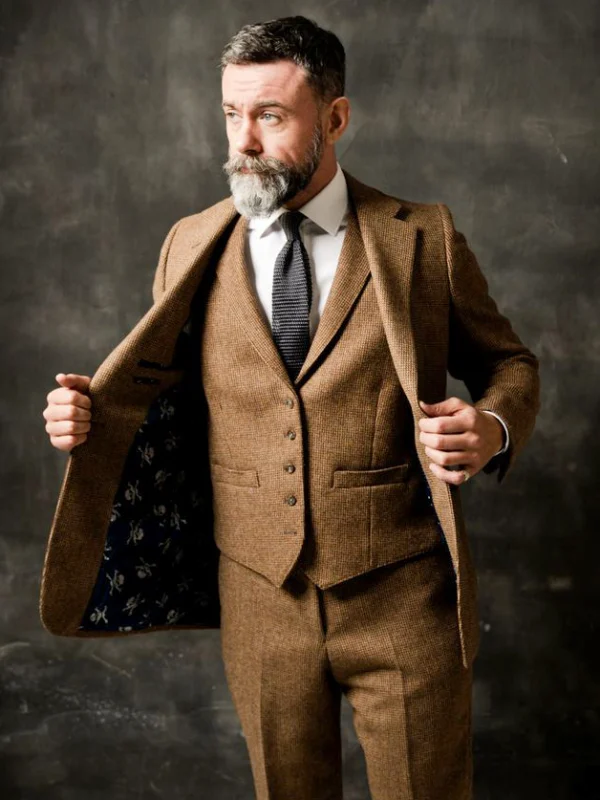
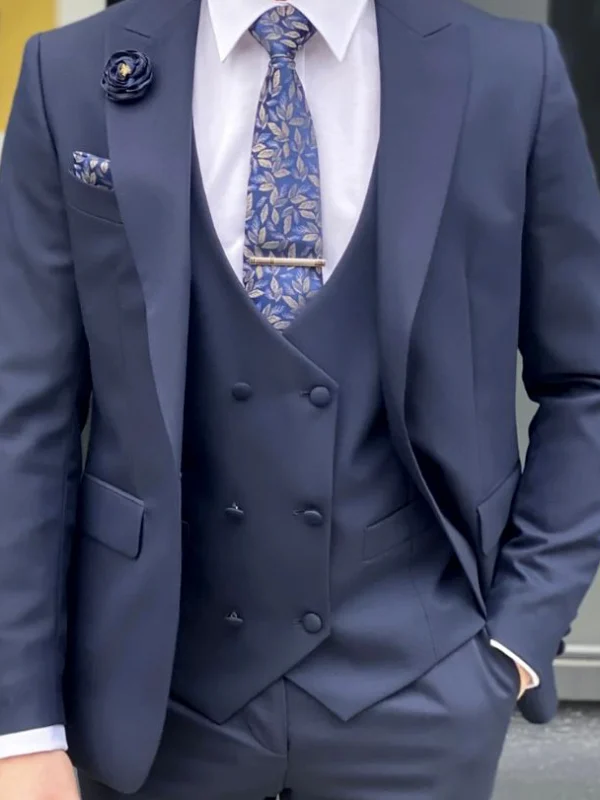
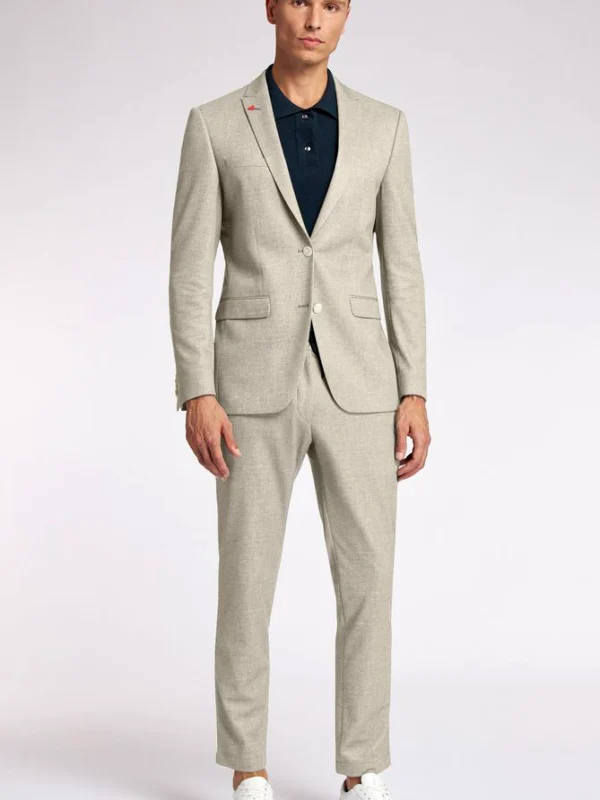
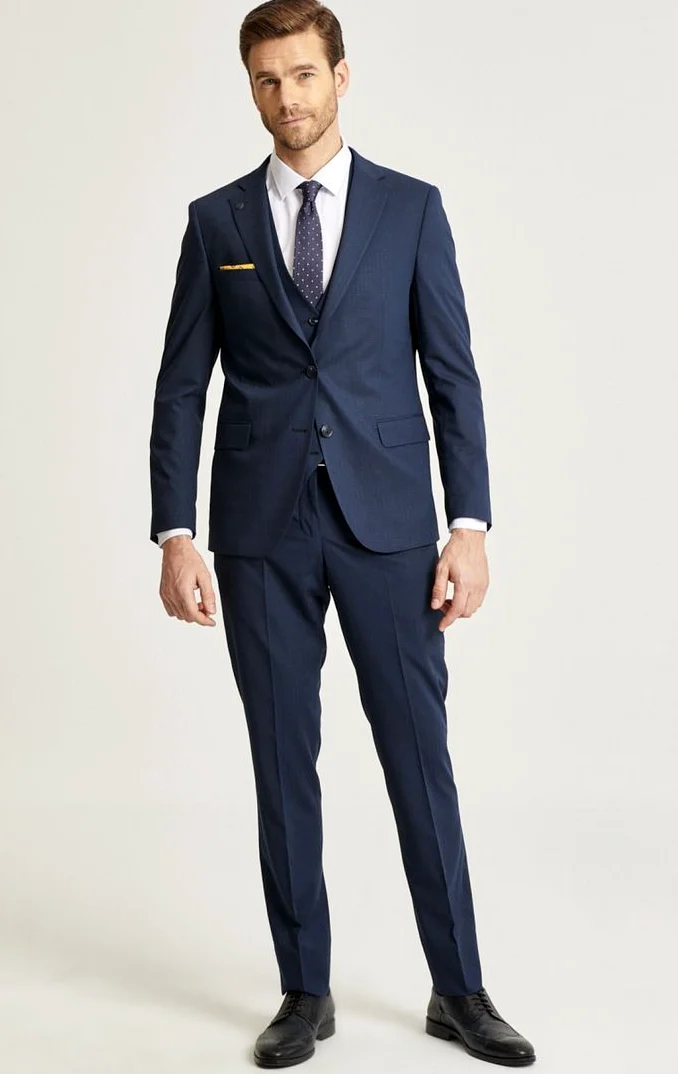
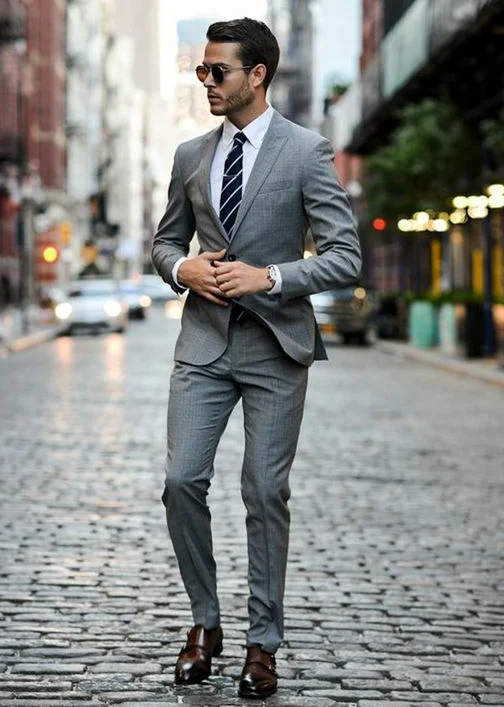
Build a wedding guest suit for a particular celebration. Start with the invitation, your role and the transitions between arrival, ceremony, meal and later party. The four style references help afterwards: two navy arrangements with visible waistcoats, a grey look with a striped tie and a black combination with an overlapping waistcoat front. The pictures establish no host requirement. They show different colour areas and details from which to choose your own combination. Existing shirts, shoes and a well-fitting jacket belong in that comparison too.
Begin a wedding guest suit with the invitation
Read the clothing wording and record place and times. Emily Post treats the invitation and wedding timing as guides to formality. Use that as a starting point rather than transferring one rule to every celebration. Clarify an unfamiliar term with the actual hosts. A tie in a photograph cannot answer that question. With a clear brief, you can assess existing pieces rather than buying an entire outfit simply because the expectation feels uncertain.
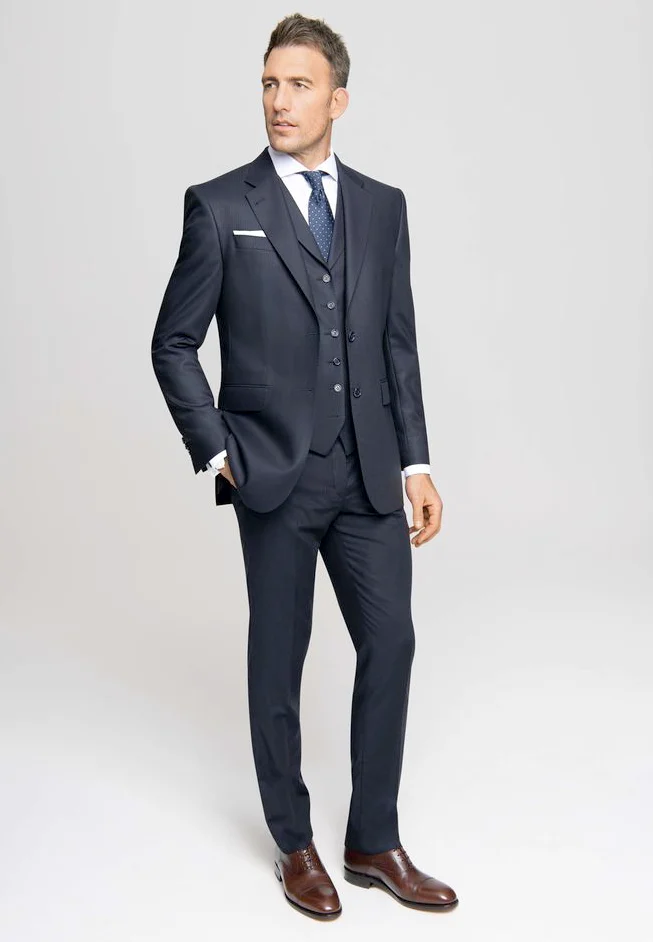
Record your actual task as well. Are you attending as a guest, or has another role been agreed? A request for a particular colour or shared detail should be clarified before shopping. The black reference shows a small pale lapel flower. It is a style reference rather than compulsory equipment for every guest. Ask about an explicitly intended floral detail before borrowing it from the picture. This keeps your outfit connected to the real celebration instead of accidentally adopting an accessory associated with another person’s role.
Compare navy, grey and black as whole combinations
The two navy references show similar broad colour relationships but different shoes and small chest accents. Use them for comparison with your existing shirt. Do you enjoy the dark area with brown footwear, or prefer a darker continuation at the lower end? Decide on the complete outfit and invitation. One dark tie does not make two arrangements identical. The relationship between shirt, jacket and shoes remains a deliberately chosen design preference rather than a fixed package from one image.
The grey example places a lighter upper area beside a striped tie and brown shoes. Compare that direction with your darker candidate under the same light. When choosing a wedding guest suit, the shoes you already own can change the question about another suit colour. Include the real pair rather than only borrowed fitting shoes. Visible colour supplies no fibre or particular temperature-related behaviour. Resolve those product questions on the actual model, keeping enjoyment of the palette separate from an unconfirmed material preference.
Rehearse greeting, sitting and the later celebration
Try an ordinary greeting with your hands free. Reach for a glass or the object you will actually carry afterwards. The grey reference holds both hands at the jacket front. View the real garment without holding it too, so hand position does not quietly become a condition for the shape you want. Check how shirt and sleeves appear through your movements. Describe a concern as a specific action and location rather than asking for a general promise of perfect fit.
Then sit at a table, stand and walk a few steps. Note whether you immediately want to rearrange jacket, waistband or pockets. A wedding guest suit may accompany several hours in different rooms; test the important states together. Include the actual journey as well. Wear the coat over the complete outfit if it belongs. An appealing indoor arrangement should work understandably with removing and replacing outerwear, beyond the moment immediately after dressing. Ordinary movement belongs in the same choice as the silhouette you enjoy.
Give waistcoat and small accents a clear job
The visible waistcoats in the dark references support a concrete question: how should the outfit look if you remove the jacket later? Try the actual waistcoat with the trousers while seated and without the jacket. Ask about the back and intended fastening. You can enjoy the added layer without repeating the photographed piece count. Decide which state you will actually use during your celebration before introducing more accessories. Even under a jacket, the whole waistcoat deserves assessment beyond the small central area seen from the front.
The black reference has an overlapping waistcoat front, while the navy examples divide the middle differently. Compare that surface first, then tie or pocket square. Our suit lapel guide adds questions about upper shape. Use it for a targeted fitting rather than a compulsory measurement. If the shirt-and-tie line already supplies your preferred effect, a smaller chest accent can remain quiet. More separate pieces cannot establish that an outfit meets the occasion better; understand what each addition contributes.
Match shoes and pockets to the real route
Think through the route between arrival, seating and party area. Walk in the actual shoes and trousers you want to use. Compare normal stride, turning and sitting. The two navy photographs show different relationships between hem and shoe without providing a personal length measurement. Agree shortening after the trial with your pair. If two shoe options are planned for the day, discuss the shared solution before a final alteration. The choice can then reflect actual use rather than an estimate from someone else’s lower proportions.
Put phone, keys and other small items where you intend to carry them. Inspect jacket and trousers again. You may prefer another distribution or a small separate bag. Our checked suit guide adds shirt, pattern and accessory comparisons. Transfer only the useful question. For your celebration, an understandable sequence using pieces you own matters more than recreating every photographed watch, pocket detail or pose. Filled pockets connect a fitting with the real outfit you will wear rather than a carefully empty version.
Complete the wedding guest suit with clear product information
Compare two complete candidates under the same conditions finally. Keep the confirmed invitation brief beside them and choose the combination whose shape and handling you enjoy. A wedding guest suit needs a concrete final trial with its actual shoes, shirt and important additions. Have necessary alterations and the next appointment explained. Save an ordinary front and side view of the completed arrangement so you know which pieces were assessed together, rather than assuming another shirt produces the same result.
Read the care labels of the individual garments. GINETEX explains the care symbols. Similar dark areas do not automatically share composition or treatment. Ask about unclear information for the actual piece. Your selection then connects a role at a particular wedding to a chosen colour relationship and tested sequence. The four references remain useful style ideas, while the real invitation and garments you tried carry the decision. You can explain the finished outfit through those concrete choices rather than its general photographed smartness alone.
Choose your wedding guest suit through the real invitation and role. Compare colours and details, then greeting, seating and route with your own shoes.
Frequently asked questions
Should I copy the lapel flower in the black picture?
Ask whether a particular shared detail is planned first. The image establishes neither your role nor a requirement for every guest.
How should I compare brown and dark shoes?
Keep shirt and trousers unchanged initially, then walk and sit with both actual pairs. Include confirmed host expectations.
What should I check if I remove my wedding guest suit jacket?
Try the remaining outfit with the real shirt and trousers. For a waistcoat, include sitting, back and waistband transition.
Does the grey picture’s hand position replace a fitting?
No. Test the actual jacket with free hands while greeting, reaching and sitting as well.