A tweed suit is easier to choose when you separate two decisions: the real cloth you want and the visible relationship between surface, pattern and layers. These five pictures help with the second question. They show finely textured-looking brown areas, checks, a burgundy combination with a contrasting waistcoat and a jacket-free outfit. The photographs do not confirm that the pictured garments are actually tweed. Use them as specific styling references while checking the cloth information on your real candidate, rather than treating a familiar-looking surface as its composition label.
Choose a tweed suit from the actual cloth information
The Heriot-Watt University textile collection describes tweed as a type of twill weave. That terminology does not replace your suit’s composition information. Ask for the precise description of the outer cloth, lining and any waistcoat back. Request a sample or the actual garment where possible. Record the surface you want: a small-scale texture noticed close up, clearly visible checks or a quieter broad area with only a few contrasting details. This makes the brief more specific than simply asking for brown cloth.
If an offer specifically names Harris Tweed, check that additional claim separately. The Harris Tweed Authority explains its particular cloth definition and Orb certification mark. That establishes no such identity for these photographs. Brown colour or a visible texture is not provenance evidence. Even a confirmed cloth description does not establish that the real suit feels comfortable on you. Keep material verification and fitting as separate steps, rather than allowing one to substitute for the other or assuming a familiar name answers every practical question.
Decide between fine texture and larger checks
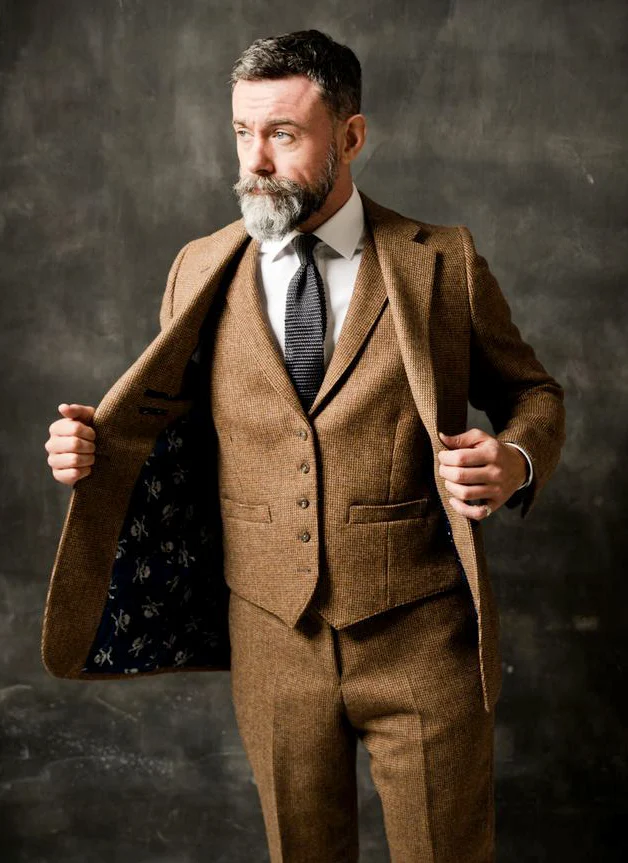
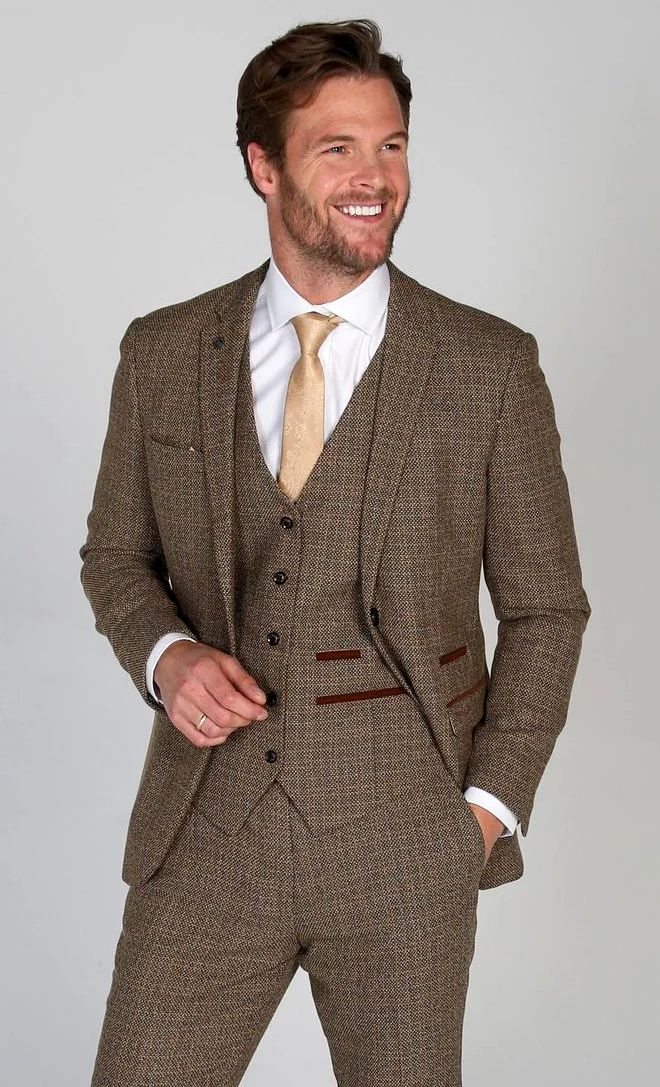
The first brown example shows a small-scale surface across jacket, waistcoat and trousers. The white shirt interrupts it clearly, while the dark tie remains relatively narrow. Another brown comparison, with a pale gold-coloured tie, also has darker pocket welts. If you want a tweed suit in this quieter direction, decide how broad the continuous textured area should be. A waistcoat extends it into the open jacket centre, while a contrasting shirt places a clear frame above it. Assess the whole silhouette as well as nearby details.
By contrast, larger checks add lines across the brown-olive jacket and waistcoat. The shirt is checked too, and the tie is red. Compare that upper-area density with the finer brown candidate from several steps away. Do you want to notice the large outline first, or a distinct grid even at a distance? These photographs help with that discussion. For the actual feel, weight or your experience of wearing the outfit, however, you need the real cloth and intended combination on your body rather than a conclusion based on the picture.
Use the waistcoat as continuity or contrast
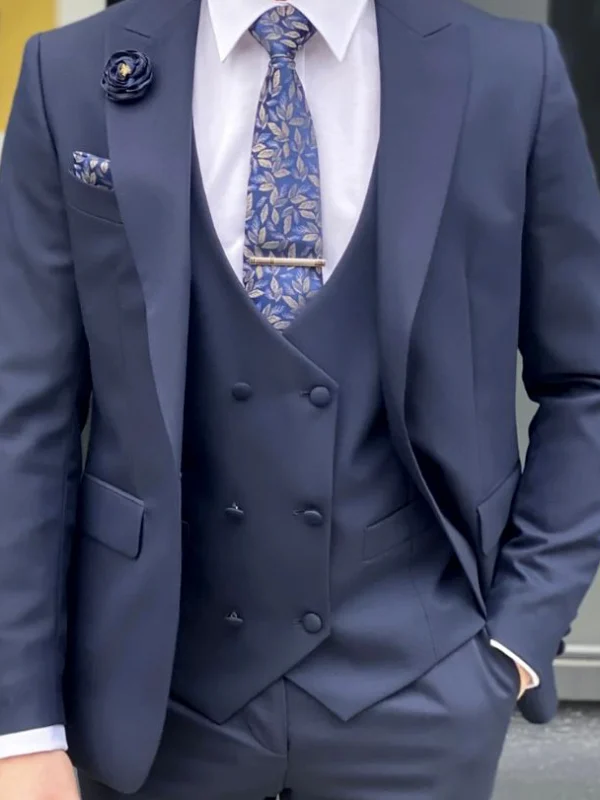
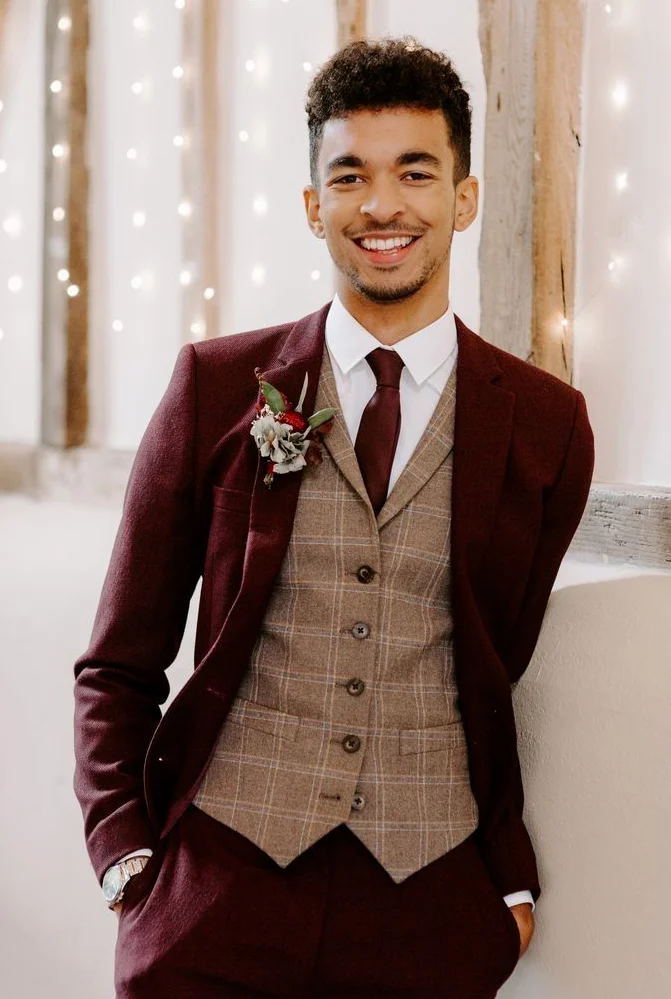
In the burgundy example, a pale checked waistcoat forms an independent inner area. Its lines differ clearly from the quieter dark jacket. White shirt edges and a related tie colour hold the upper arrangement together, while a small lapel flower adds another focus. If this structure interests you, the contrast waistcoat guide develops the choice between light and dark inner areas. You can borrow that relationship without adopting every accessory in the photograph or assuming the entire outfit is necessary for the effect.
The jacket-free brown comparison instead shows waistcoat and trousers in similar colour with related checks. The large area continues without a jacket. Fit your real candidate in precisely this state if you expect to wear it that way. Check the waistcoat edge against the trouser waistband standing and seated. A coordinated front in a photograph says nothing about your own waistcoat’s actual back. Ask to see and assess that part during selection rather than expecting an identical surface to continue automatically around the whole garment.
Compare shirts and ties under an unchanged jacket
Begin with the shirt before selecting several patterns at once. The plain white shirt in the finely textured brown reference makes a clear quiet interruption. In the brown-olive checked outfit, small shirt lines meet larger jacket lines. To understand the difference, try both shirt types beneath the same real jacket. Photograph them at the same distance and first consider only the collar and chest. Decide afterwards whether a distinct patterned tie should have its own space in that centre, instead of changing the entire combination before comparing it.
For a tweed suit with an already strong grid, a plain tie may be a deliberate choice, but it is no universal obligation. Choose a tie you enjoy with the real shirt and compare another candidate with a different motif size. Avoid changing jacket, shirt and pocket square simultaneously, which makes it hard to identify what improved the result. Record successful combinations using the actual pieces or photographs. You cannot transfer a precise motif measurement from a small reference picture onto your own garment; test the desired effect on the real item instead.
Keep the lower half in the decision
Only the jacket-free checked reference clearly shows a complete lower transition with brown lace-up boots. The trousers end near the upper footwear and continue the brown main colour. The other pictures mainly describe upper layers, leaving shoes and full hems missing. Arrange your own full-length picture for the real candidate. Compare its hem with the precise shoes you plan to use before agreeing on shortening or changing a turn-up. Imagining the boots from another image does not supply a missing view of the same actual trousers.
Walk a few steps and sit down afterwards. Notice where waistband, waistcoat edge or knees feel uncomfortable and describe those points specifically. The cloth decision cannot replace this check. If you are comparing different composition descriptions, the virgin wool suit guide helps separate material information from cut and purpose. Do not assign that term from a photographed colour either. The eventual choice should bring the cloth description, your experience and actual movement together, rather than allowing one attractive element to hide unresolved questions about the others.
Record the tweed suit as a usable combination
Finish with one complete outfit and a small alternative, such as the same set with another shirt or without the jacket. Record whether your priority is a textured overall area, visible check lines or a contrasting centre. That gives the next fitting a clear brief and discourages random additions of more patterns. Put the real use beside it: which existing shoes, shirts and outer layers do you actually intend to wear? Testing those relationships is more complete than judging the new suit alone in a photograph.
Resolve care information before treatment. GINETEX explains care symbols; the actual label governs the garment. Ask for the separate information on independently selected pieces, including a potentially different waistcoat construction. The name tweed suit does not promise a particular cleaning method, warmth or weather performance. With documented cloth, a tested combination and a clear list of outstanding alterations, you can explain your choice without reading more into the photographed surface than it actually establishes. Keep a final picture so later comparisons refer to the same version.
Verify real tweed suit cloth information separately from styling. Then compare a fine surface or checks, the inner layer, shirt and complete trouser-to-shoe transition.
Frequently asked questions
Which cloth information should I request before buying?
Ask for outer cloth, lining and actual waistcoat-back information. Verify precise composition and the offered cloth description on the real candidate.
Is Harris Tweed another name for every tweed?
No. The Harris Tweed Authority explains a specific cloth definition and Orb certification mark. These photographs establish no such identity.
How do you compare two pattern sizes?
Keep the real jacket unchanged and switch only the shirt first, then the tie. Compare collar and chest from the same distance.