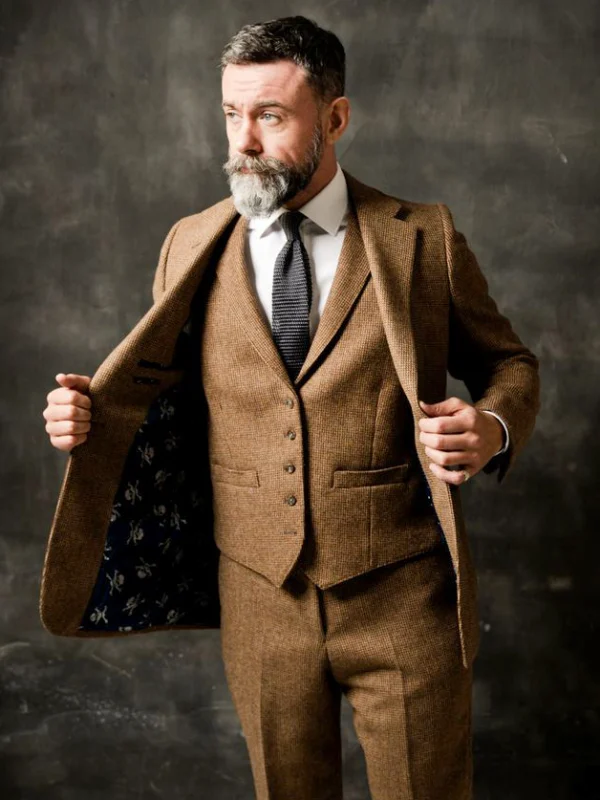
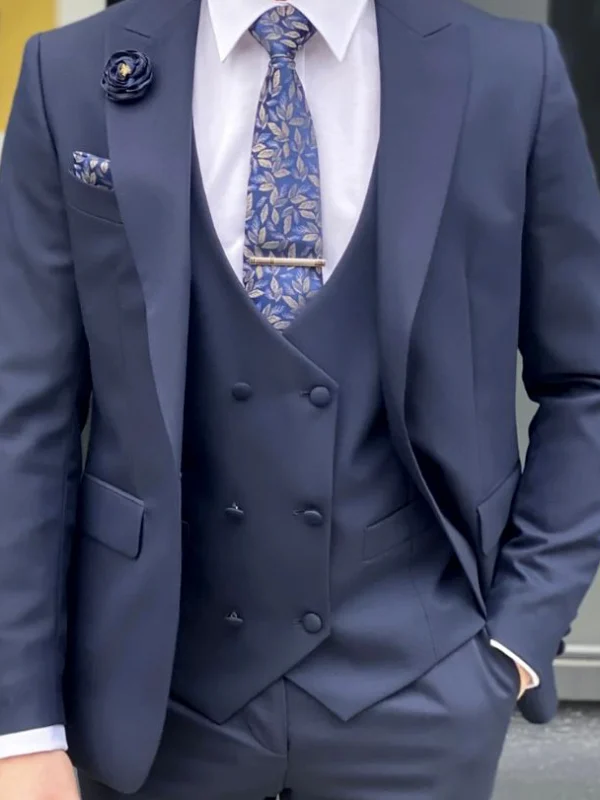
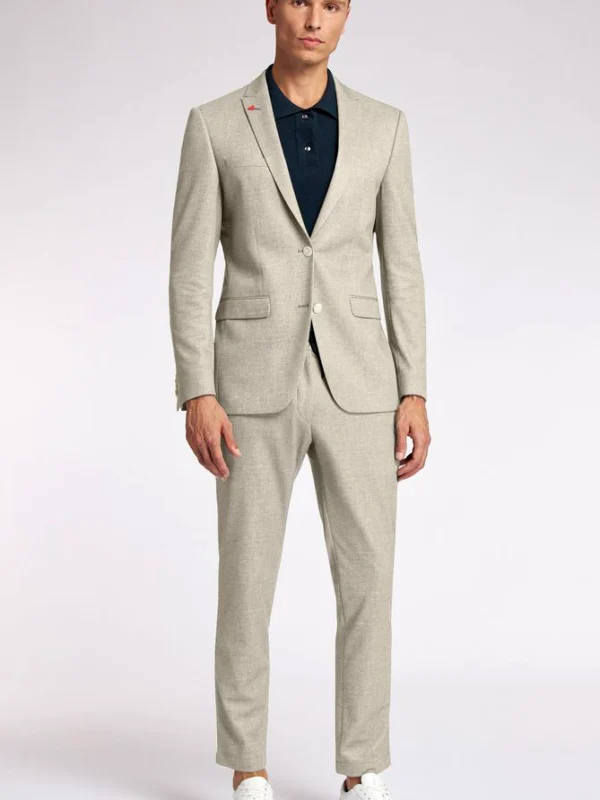
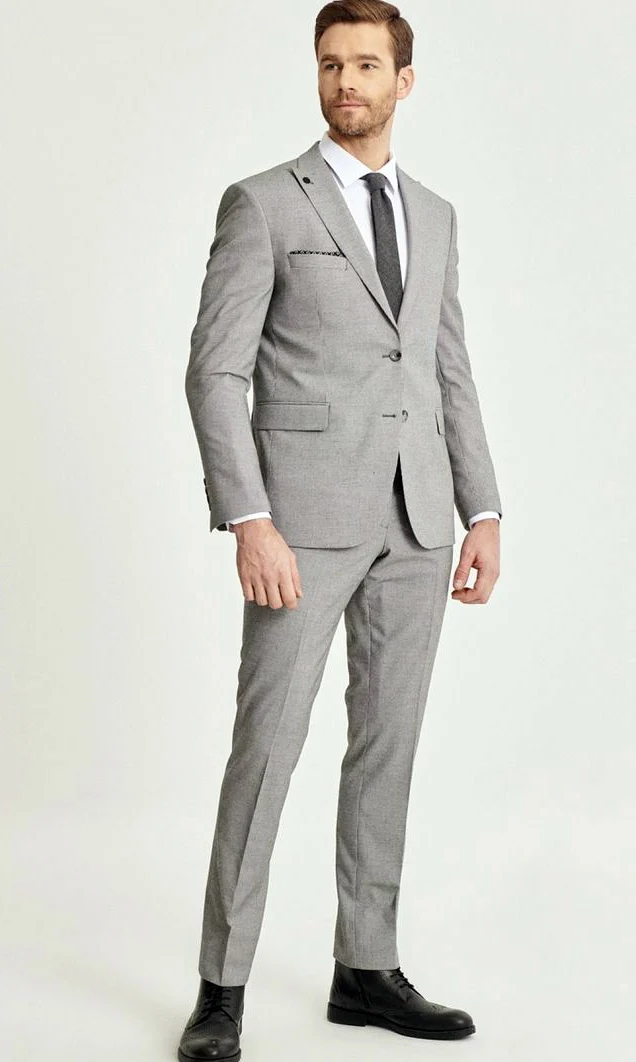
A virgin wool suit should not be selected through an appealing fabric name alone. Ask about exact composition first, then try the finished garment in combinations you actually expect to wear. The two references show a black arrangement with dark shirt and tie while seated, and a grey suit with light shirt, dark tie and black lace-up boots while standing. They help with colour and shape, but establish no fibre. Use that contrast to connect a material preference with an understandable choice about purpose, underlayers and existing additions instead of treating a photographed surface as a complete product description.
Separate the virgin wool suit designation from percentage
Article 8 of the EU textile regulation treats virgin wool as a particular designation with conditions. Among them is that the relevant wool has not previously been incorporated into a finished product. This supplies different information from a particular wool percentage. Ask for the complete composition of the actual offer rather than relying on the product heading. Note model and variant beside the material details so that answers are not accidentally carried across from another similarly named piece. The provision explains the designation, not the fit or your personal comfort in the finished garment.

Inspect internal construction beside the outer fabric
Ask which information applies to the outer cloth and which concerns lining or other components. Look inside the open jacket and ask about construction where support, movement or an additional layer matters to you. A virgin wool suit cannot be described fully through its fibre name. Put your actual shirt underneath and wear the jacket for a while during the fitting. Explain what you notice rather than assuming a particular warmth or wearing experience. This keeps the material decision close to the real garment and gives you a clear basis for comparing another option.
Compare grey and black with existing shirts
The grey reference gives the light shirt a clearly visible area between lapel and tie. The black arrangement keeps that area darker, with differences appearing more through outline and surface. Compare both directions in your own shirts under similar light. You may want to continue using a particular shirt or create a quieter overall area. Do not automatically assign one colour to every work setting and the other to every celebration. Your invitation and preference establish the context; colour offers a visible design possibility within it. Keep the shirt unchanged first to make the comparison more understandable.
Name one main occasion and one second use
Write down why you need the suit first and which other use is realistic. A regular appointment with a shirt differs from one evening using dark neckwear. Do not choose a virgin wool suit solely for a theoretically large number of possibilities. Build two complete combinations from existing pieces and assess both. If only one really works for you, that is useful information too. It helps you decide whether this particular garment is what you want or whether another colour or cut deserves comparison. A second use becomes meaningful when you can actually put the outfit together.
Treat standing and sitting as connected tests
The black reference shows a seated posture with an open jacket, while the grey example presents a standing front. Do not infer a better fit from that difference; add both states when trying the actual model. Sit on an ordinary chair, stand and reach forward. Look at the front afterwards without resetting it by hand. Ask about size or alterations if you notice pulling or displacement. An attractive standing view cannot replace wearing the outfit at a table. Equally, a deliberately seated pose cannot explain the complete cut or establish how another wearer will experience it.
Test shirt, tie and open-neck versions individually
Begin with the neckwear intended for your main occasion. Change it for an alternative afterwards, keeping shirt and jacket as consistent as possible. The dark tie in the grey reference works beside a light shirt differently from the darker area in the black outfit. If you want to use the jacket without a tie, try the actual collar and visible transition. A virgin wool suit requires no particular neckwear simply because of its material. Record which version you enjoy and when you would actually use it rather than retaining alternatives only as an abstract list of possible styling ideas.
Choose trousers and shoes together before alterations
The complete grey view shows narrower trousers above black lace-up boots. The seated black photograph supplies no equivalent comparison of the entire hem. Wear your intended shoes and assess walking and sitting in the actual garment. Look at the hem from front and side. If two shoe pairs belong to your plan, compare both before shortening. Ask whether a proposed alteration changes only the lower finish or the line of the leg too. The proportion you want is created between trousers and actual footwear rather than copied from another person’s photograph. Use the same shoes again at the final fitting.
Judge separate pieces through actual combinations
If you want to wear jacket and trousers separately later, put those versions on too. A coordinated set does not guarantee that each piece works with every existing addition. Compare the grey jacket with your actual dark trousers and intended shirt, for instance. Assess the new colour division and surface difference. You need not force separate wear if you prefer the complete suit. The second possibility then becomes a tested additional use or a deliberately rejected idea rather than an unsupported purchase justification. One outfit that works within your wardrobe can be more useful than a long list you have never tried.
Clarify virgin wool suit care on the finished garment
Read the label before cleaning or pressing. The GINETEX care symbols explain those markings, while Article 8 of the EU textile regulation supplies context for the wool designation. Our checked suit guide and lapel comparison add further shape questions. Choose a virgin wool suit through product-linked information, inspected construction and at least one complete combination you actually want to wear. Resolve outstanding alterations before the planned occasion and record the pieces used, keeping your material preference connected to a garment you have assessed.
A virgin wool suit needs documented composition and an assessed finished construction. Compare colour, neckwear and actual uses after clarifying the product.
Frequently asked questions
Can a grey or black photograph identify a virgin wool suit?
No. A virgin wool suit needs composition information tied to the offered model. Grey or black colour and visible texture do not identify its fibres.
Are virgin wool and a wool percentage the same information?
No. The designation and percentage address different questions. Ask for the complete composition rather than relying on the name alone.
How should I compare black and grey virgin wool suit options?
Compare both with existing shirts, neckwear and shoes for your actual occasions. Colour alone does not settle a dress-code question.
Can care be inferred from the fibre name?
No. Finished construction and labelling also matter. Read the label and clarify questions before cleaning or pressing.