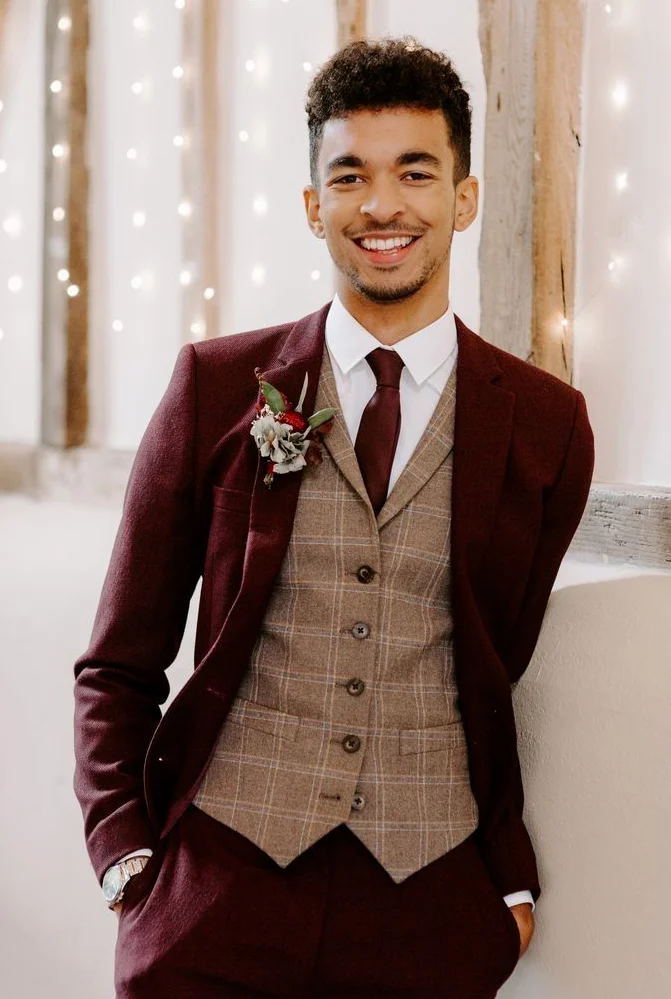
The pale checked waistcoat forms a distinct inner area between a burgundy jacket and white shirt. A burgundy tie connects the outer colour to the centre. A visible lapel flower has pale, red and green parts. Hands sit in trouser pockets, and the lower legs are cropped. The image therefore shows the difference between a larger drawn inner pattern and a quieter dark outer area particularly clearly. It establishes neither a specific event nor the wearer’s role, so the flower is not proof of a wedding or another occasion.
If you want a similar contrast, start with waistcoat and jacket without an added flower. Assess the edge of the pale area and the number of visible check lines. Put on your actual lapel accent afterwards and look from a distance to decide whether it needs an independent focus. You do not have to repeat every colour. Samples of the real pieces help avoid treating similarly named beige or burgundy shades as confirmed matches. Add a full-length picture with your trousers and shoes and a jacket-free view before selecting the complete set.