A tuxedo waistcoat changes the visible centre between shirt and jacket. The choice concerns more than dark colour: where the waistcoat begins, how much shirt remains clear and which edges appear beneath the lapels all matter. Three dark bow-tie views show different central arrangements, while navy and white three-pieces with ties explicitly provide other comparisons. The photographs establish neither a shared collection nor general dress-code suitability. Choose the arrangement you want, then check the actual version against your invitation and the garments you intend to wear.
Choose the tuxedo waistcoat through the actual outfit
Clarify which jacket and trousers you want and the actual requirements for the appointment first. The waistcoat belongs to that combination rather than being bought independently through an appealing photograph. Bring the intended shirt to the fitting. Wear jacket, waistcoat and neckwear together and assess the whole front. This identifies the central form you genuinely want instead of treating a dark waistcoat alone as evidence of a suitable formal ensemble. Similar colour and an actually coordinated product description are different pieces of information.
Ask about included pieces on the real product. Is only the waistcoat offered or an ensemble specifically supplied together? Our two-piece suit guide helps distinguish jacket, trousers and additional waistcoat at the outset. The question here is its subsequent place within an evening outfit. Record exact model and size for the three actual garments, especially when they come from separate products. Similar dark photographic colour guarantees neither identical material nor an automatically suitable combination, leaving the real pieces to be tried together.
Compare the clear shirt area above the waistcoat edge
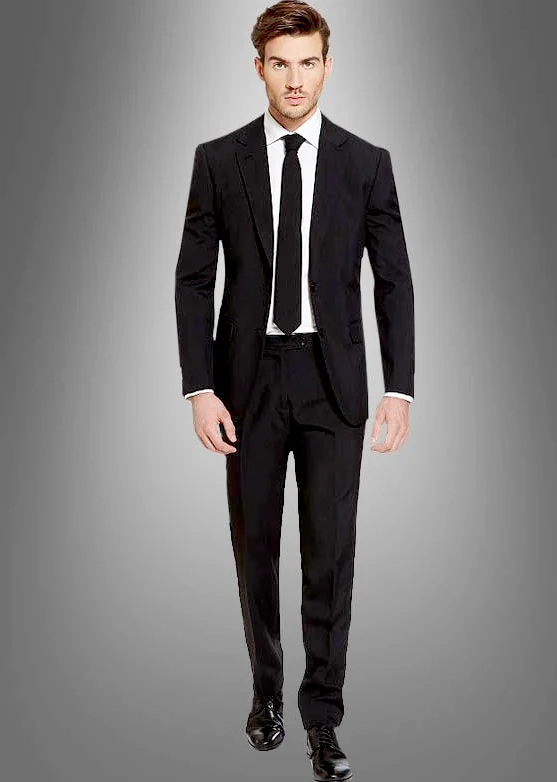
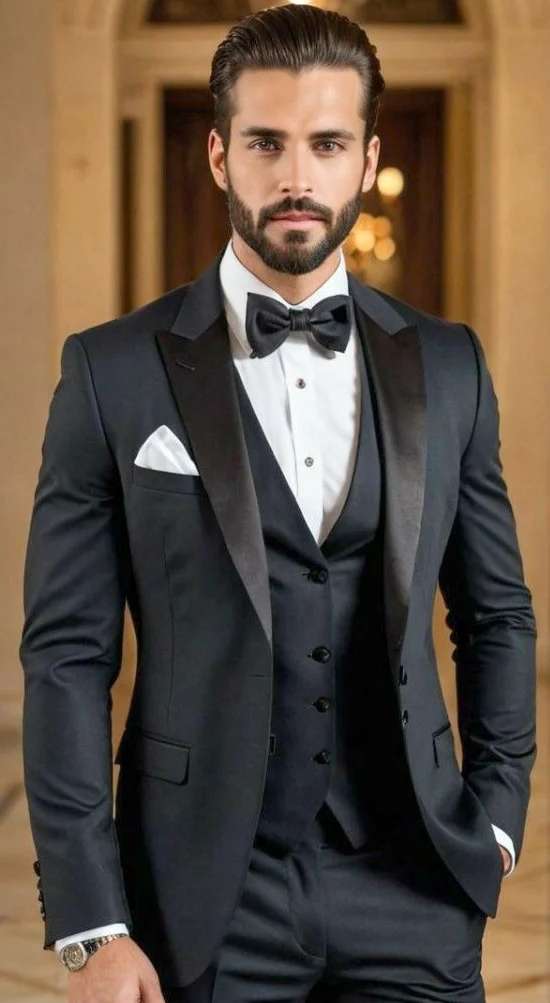
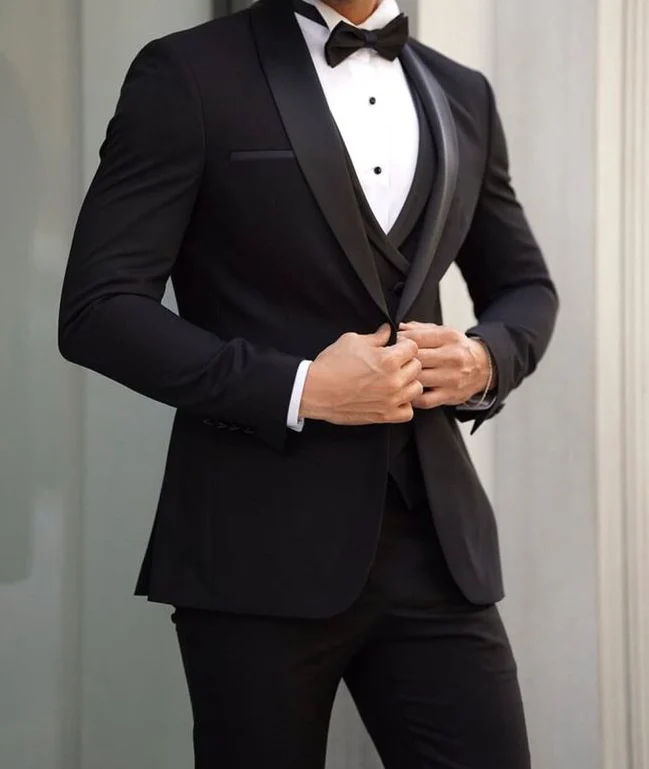
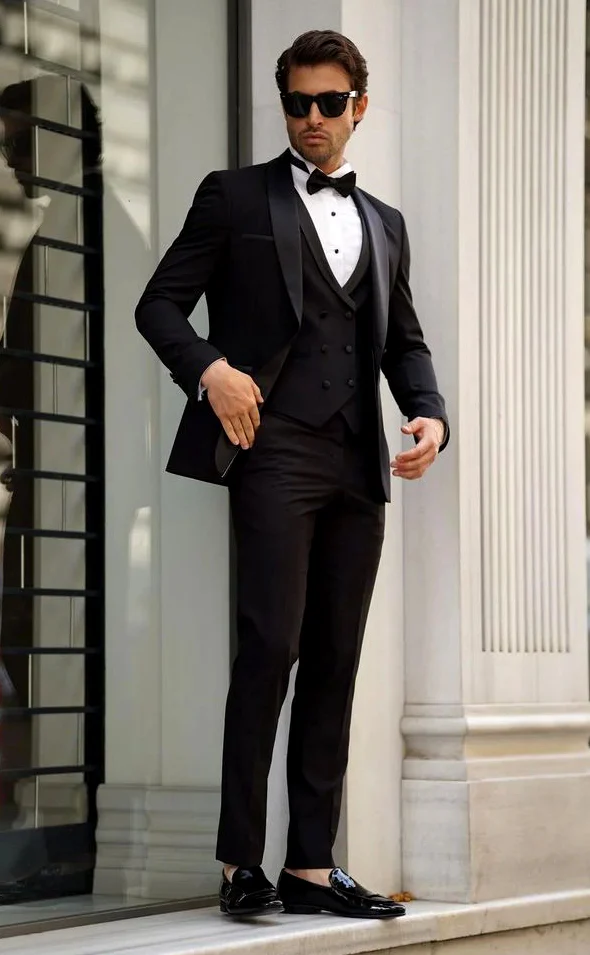
The close dark view with a white pocket square shows a deeper V-shaped waistcoat centre below the pale shirt. The bow tie sits above as its own dark accent. The full view with several waistcoat buttons divides the centre differently. Compare how much continuous shirt area you want visible first. A deeper and higher beginning establish different boundaries even where jacket and waistcoat remain similarly dark. That choice can be observed on the real outfit without changing colour or neckwear simultaneously.
A specific maker example comes from Ede & Ravenscroft’s evening waistcoat, described with a low-cut front and four buttons. This names that product rather than our pictures or a compulsory shape for every evening waistcoat. Use details like these to ask about the actual neckline height and fastening on the offered model. Request a front view over your shirt before selecting through a product name alone, without transferring the named maker’s construction or materials to another unidentified garment.
Treat lapels and waistcoat edge as separate lines
Broad smooth-looking lapels frame several dark views. An additional waistcoat edge may appear underneath. In the close picture with hands at the front, the central edges look layered and crossed while the hands hide part of the lower arrangement. The visible layout is therefore more useful than an unverified full construction label. Compare whether you want another definite line between lapels and shirt or prefer the waistcoat to remain quieter within the complete outfit. Not every dark edge needs to be assumed part of the same layer.
Retain shirt and bow tie for this stage. Try the actual jacket with the intended waistcoat and assess an ordinary front without hands at the edges. Our suit lapels guide adds the outer framing choice. You can like a particular lapel and still prefer a different inner waistcoat boundary. One held photographic front does not decide which combination supposedly always has to sit correctly over another. The real pieces need comparing together under the conditions you actually intend.
Examine the button arrangement on the real waistcoat
The full dark view shows several offset waistcoat buttons above the trouser waistband. The closer dark picture with a white square has another visible button line. Choose which division you want at the centre and request the complete actual waistcoat front. Count only elements genuinely visible or confirmed on the product. A section covered by hands does not automatically explain every button or the full way the front closes. Describe the appearance you like and obtain the real operation through a separate demonstration.
Have it opened and fastened, asking which handling is intended for this exact waistcoat. A rule from another garment should not be transferred without checking. If an alteration is wanted, identify the visible area and establish feasibility. Also decide how noticeable the buttons should remain beside shirt buttons or other small accents. Colour and surface can change that effect without a larger count automatically establishing more formality or better workmanship. Different viewing distances help determine how strongly a small detail should appear within the whole outfit.
Assess the lower waistcoat edge with the trousers
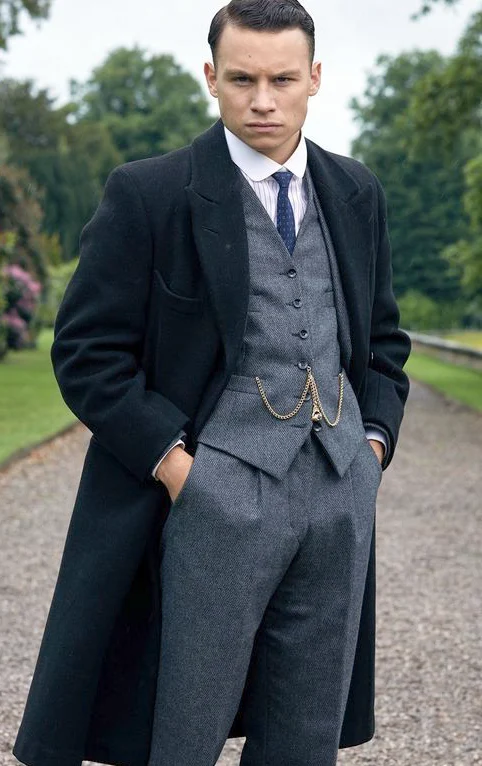
The lower waistcoat edge meets the visible upper trousers in the combinations shown. The full view also supplies short trouser hems and glossy-looking dark loafers. These are separate choices rather than necessary consequences of selecting the waistcoat front. Try it with the exact trousers intended. Assess the transition without a hand rearranging it. Choose the shirt area and lower boundary you want visible in an ordinary stance, keeping the upper waistcoat opening separate from a trouser-length decision that may need its own comparison.
Sit and stand again in the actual combination. Ask about intended handling or another real size if a change concerns you. You do not need a standard length guessed from the photograph. Have the front’s arrangement after your intended movements demonstrated. A tuxedo waistcoat belongs in your own fitting rather than only in a recreated sunglasses pose or a stance holding the jacket. Record the specific transition you want retained, providing a clearer request for the next fitting than a general wish that the whole outfit should look better.
Use navy and white tied looks as comparisons
The navy three-piece has a pale blue shirt and blue tie. The white combination adds a pale tie and a small yellowish-gold pocket accent. These pictures supply different central lines from the dark bow-tie looks. Use them to establish whether you want the framing of a tuxedo outfit or actually prefer another suit combination. They are not automatic approval for an invitation with explicit requirements. Clarify those through the real event information rather than placing every picture in the same formal category because a waistcoat appears.
Compare the waistcoat opening and visible shirt area first without changing neckwear simultaneously. If considering the complete tie version, assess it as a separate outfit with real pieces. A waistcoat is not assigned a particular construction or dress-code type through colour alone. Ask for its specific description and intended combination. Navy and white then remain useful alternatives instead of silently becoming evidence of the same formal classification. Once the actual brief is clear, compare the available candidates under consistent conditions and explain which central form you prefer.
Complete the model details and final fitting
For your selected tuxedo waistcoat, record exact size, included components, material and care information and confirmed alterations. Ask about the actual back if relevant to your use, since the front pictures do not show it. Have any intended adjustment options explained on the product. A dark smooth surface supplies no dependable answer about them. Identify the related jacket and trousers clearly so a later question or order does not depend only on approximate photographic colour instead of the actual pieces tried together.
Two genuinely tested fronts with the same camera position, shirt and neckwear can complete the final round. Save an ordinary standing view and the seated or moving state relevant to you. Select the clear shirt area, inner edge and button division you prefer. The finished outfit should match the clarified invitation and rest on real product information. A named manufacturer example or striking dark photograph need not become a universal rule or quality verdict for unknown garments. Your visible preferences and demonstrated actual handling provide a more specific basis for the final decision.
Choose the tuxedo waistcoat with the actual shirt, jacket and trousers. Compare its edge, clear shirt area and visible buttons on the real model.
Frequently asked questions
Should I buy the waistcoat independently from the jacket?
Try it with the jacket, shirt and trousers genuinely intended. Ask which pieces are included rather than deriving a coordinated set from similar dark colour.
Must every evening waistcoat have the same opening?
The named maker example describes its own low front. Select actual opening height on the offered model over your shirt; the photographs show different visible arrangements.
How should I test the lower waistcoat edge?
Add the actual trousers and view the front without arranging hands. Sit, stand and have intended handling or another real size explained.
What should I check if I prefer the blue tie outfit?
Assess it as a separate combination and check the appointment’s actual clothing requirements. A waistcoat appearing in every picture does not establish a shared formal category with the bow-tie looks.