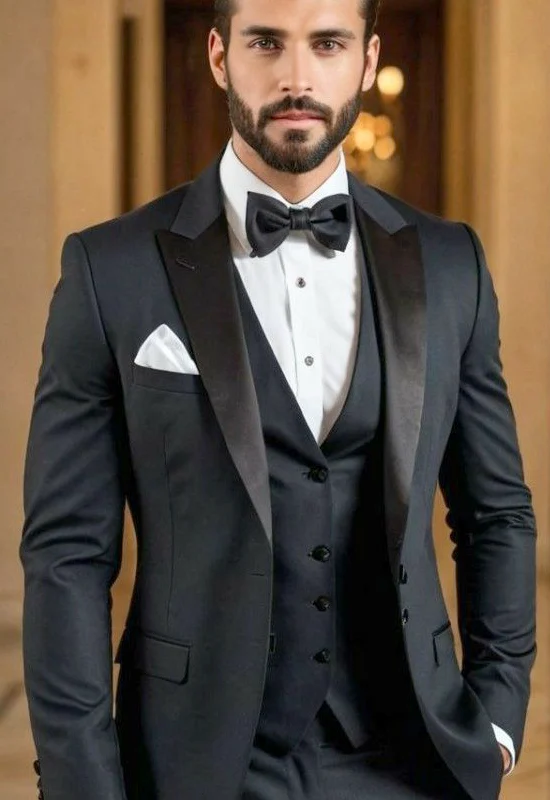
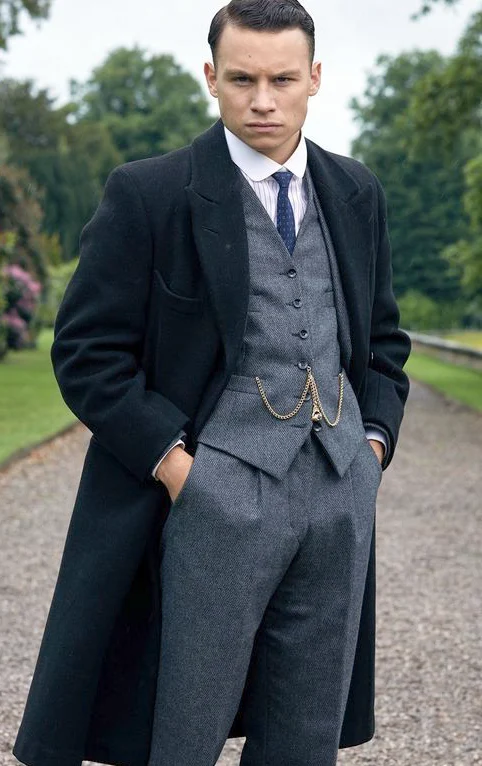
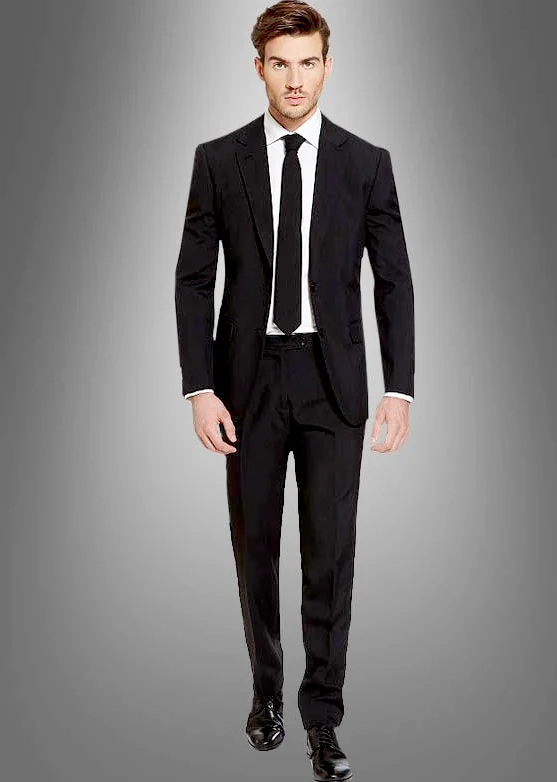
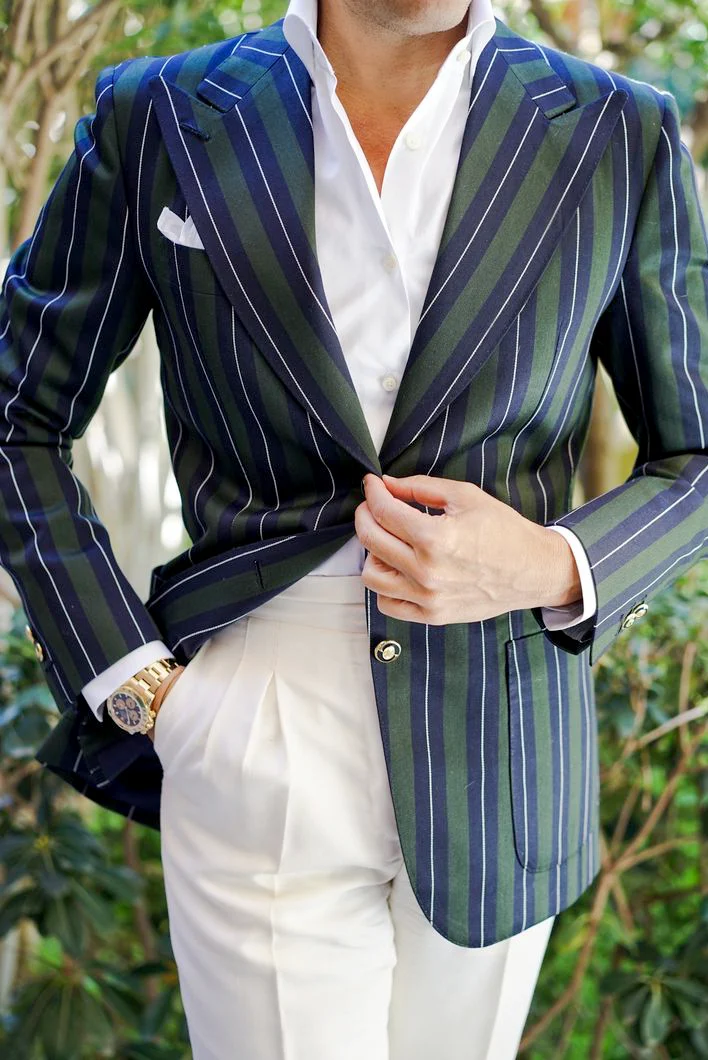
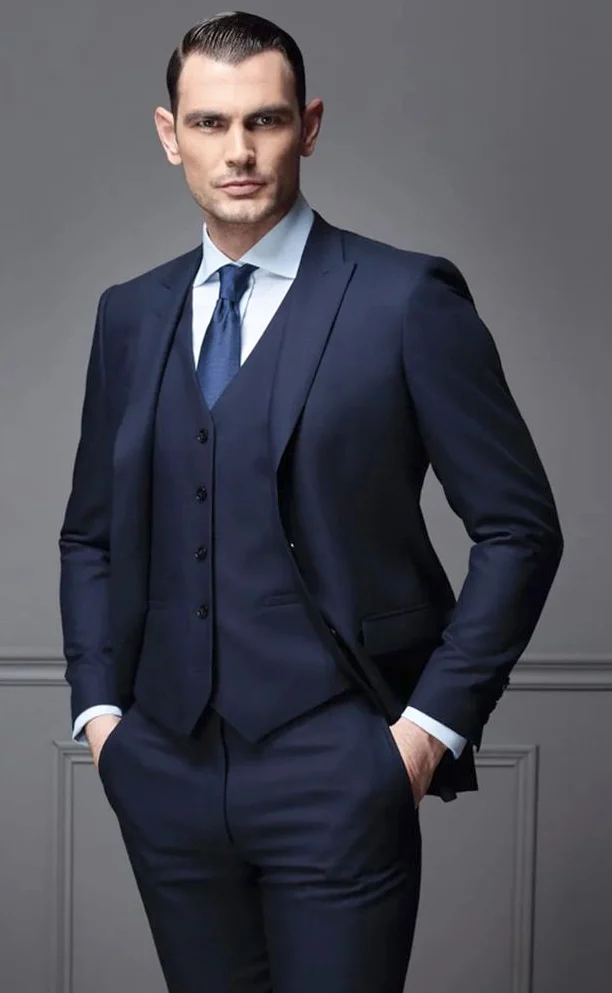
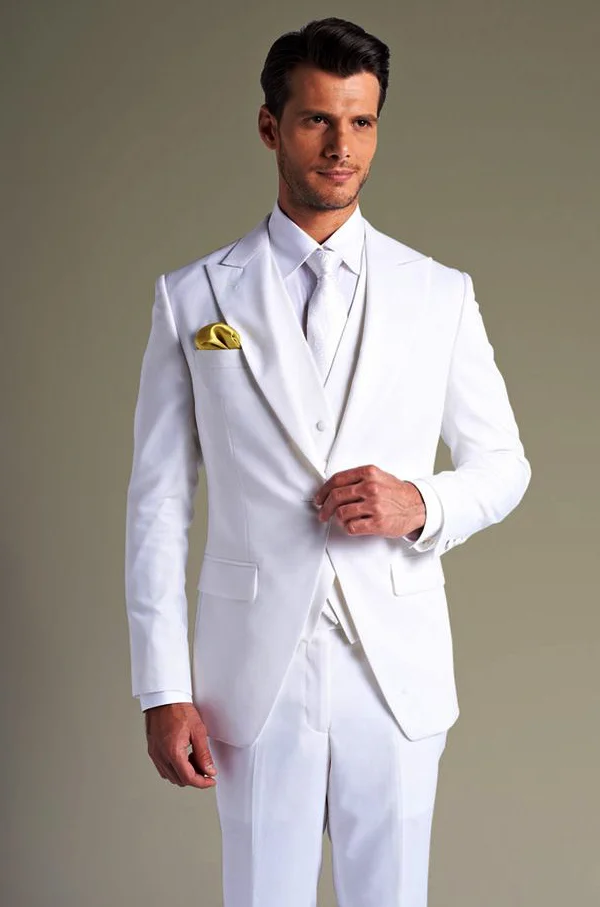
To assess suit quality, begin with the actual garment and its specific information. Luxury alone explains neither internal construction nor included service. The three pictures show different style directions: a striped jacket with pale trousers, a navy three-piece and a white combination with a tie. They help describe preferences but do not establish a workmanship level. The purchase decision needs the real jacket, waistcoat and trousers, an understandable description and the opportunity to resolve questions before any alteration is commissioned.
Compare suit quality with a clear checklist
Write down why you want the suit first. One celebration, regular appointments or a deliberately noticeable outfit creates different requirements for pieces, care and reuse. Choose two real candidates and compare the same headings: included garments, material information, visible workmanship, requested alterations and subsequent support. Keep the style question distinct. An assertive stripe or pale three-piece can appeal without therefore being a higher-quality product than a quieter navy combination. Identify what you like before deciding which confirmed details justify your purchase.
Record the exact model and size for each candidate. A spoken statement about the general collection should not replace the description of the actual item. Ask whether you are trying a sample, a single item or exactly the version to be supplied. Put differences on the list. You can check at delivery whether the same pieces and agreed details are present. Written identification also helps when jacket and trousers have different sizes or separate alterations, making each requested result understandable against its particular garment.
Read specific details rather than one large quality adjective
Request information about outer cloth, lining and included pieces. Check which details apply to jacket, waistcoat and trousers. Similar colour does not establish identical fabric; the striped jacket over white trousers explicitly combines different visible surfaces here. If a property determines your purchase, ask for its specific explanation on the product. An appealing first feel can belong to your preference without confirming cloth origin or lifespan. Comparable information on both candidates gives a better basis than one description made mainly of photographs and adjectives.
One example of more specific construction information is Huntsman’s grey twill suit page, which lists canvas construction and hand-finished buttonholes. That describes the named maker’s product, not our pictures or a universal quality guarantee. Use it as a reason to request similarly clear details. Our tailored suits for men guide explores manufacturing routes. The question here is which properties are actually described and supplied in your specific purchase, without transferring another product’s construction to the candidate you are considering.
Examine the actual jacket inside as well
Ask for the jacket to be opened and its interior shown. Observe visible lining edges, pockets and accessible seam areas in ordinary light. If a section concerns you, have it explained. A loose thread or unusual seam route should not become a remote verdict on the whole product by itself. Ask whether the execution is intended and what will still be completed before delivery. Compare the same location on the second real candidate, pointing to the feature rather than guessing a manufacturing process from a styled exterior photograph.
Have the intended inside pockets demonstrated too. Choose which you need for a phone or other items you actually carry, then assess the garment worn. The image references do not show the interior. That needs a demonstration on the model. You do not need to identify the canvas through a photograph trick or prove it with an invented quick test. Understandable product information and a real comparison answer more usefully than a guess based on a dark lapel or an expensive-looking setting.
Check buttons, pockets and finishes specifically
Have the intended buttons opened and closed. Observe buttonholes, visible threads and the join between edge and lining. Ask which pockets are ready for use and which finish will be supplied. The aim is not the highest possible count of visible functional details. Select what you actually intend to use and establish how it is made on the offered model. A quiet navy suit can provide information as specific as a strongly striped jacket. The actual item needs to support the description in either case.
Compare sleeve finish and trouser waistband as separate areas afterwards. If something is not finally adjusted, record the intended state after alteration. An unfinished hem is different information from a finished delivered edge with which you are dissatisfied. Request a clear description in the order if anything is uncertain. The actual execution supplies more than a general claim that every detail is luxurious. This distinguishes what you can inspect now from the result you should check when the garment is completed.
Use stripes and plain surfaces as style questions
On the striped jacket, line directions stand out across lapels, pockets and front edge. A hand holds the jacket together and changes its front. If you like that design, request a relaxed view of the real candidate as well. Ask about noticeable pattern transitions without automatically calling every interruption a fault. It may belong to the intended design. Choose the line arrangement you want and have the specific execution shown. The photograph alone cannot provide a dependable workmanship diagnosis or reveal its interior.
The navy and white combinations show quieter colour areas with waistcoats. You can compare visible shirt area, waistcoat opening and jacket edges through them. For suit quality, however, ask the same product questions as for the stripe. Our blazer and trousers guide helps deliberately select different pieces. A suitable style idea and verified product properties contribute together without one substituting for the other. A pale colour or composed stance is not itself a superior construction level.
Tie fitting and agreed alterations to the actual order
Try the candidate with the inner pieces genuinely intended. Have it explained which request needs another size and which alteration is planned on the existing garment. Record the area and desired result rather than only asking for better fit. Establish who will perform the work and when you can assess the outcome worn. For this quality comparison, the service should be clearly described and recognisable on the supplied item. A particular photographic pose does not answer that service question or confirm an alteration that has not been agreed.
Compare which work belongs to the stated description and which needs separate discussion. Request the actual fitting, alteration and delivery conditions before deciding. This is not a reason to pay for the greatest number of extras. You want both candidates assessed on the same understandable basis. When checking suit quality, the delivery description should match what was demonstrated. A precise list makes later questions more specific than a broad promise that everything will fit perfectly, especially where separate garments require different work.
Compare care, support and delivery at the end
Clarify care guidance for every supplied piece and have particular instructions explained understandably. Ask about spare buttons or an appropriate contact if those belong to your needs. Supplied information should concern your actual model. Storage and planned transport also need the provider’s specific guidance. Do not transfer treatment from a photograph of a similar pale or glossy surface. The style reference shows an appearance you might want rather than suitable care for another unknown product, whose components and finish may be different.
At delivery, review the list: model, size, included pieces, agreed finishes and completed alterations. Try everything again in the actual combination. If an area differs from the agreement, identify that section alongside its note. Suit quality then becomes an organised comparison of real product and confirmed service. You do not need to guess a brand from a picture. The relevant question is whether the particular version meets your explained requirements and arrives with understandable information, rather than relying on one large adjective to answer every purchase question.
Assess suit quality by comparing the actual garment with its description. Examine interior areas and finishes, recording specific pieces, alterations and support.
Frequently asked questions
Does a luxurious photograph establish suit quality?
No. A style reference helps with colour and design but does not show complete workmanship. Check the actual garment and its specific information.
Which interior areas should I ask to see?
Request lining edges, accessible seams and intended pockets. Ask about noticeable areas and compare the same section on the second real model.
Is every interrupted stripe a workmanship fault?
That cannot be decided generally from a photograph. Ask about intended design at lapels, pockets and seams, checking the real execution.
What should the alteration description include?
Identify the garment, precise location, intended finish and agreed work. Establish when you can assess the result worn.