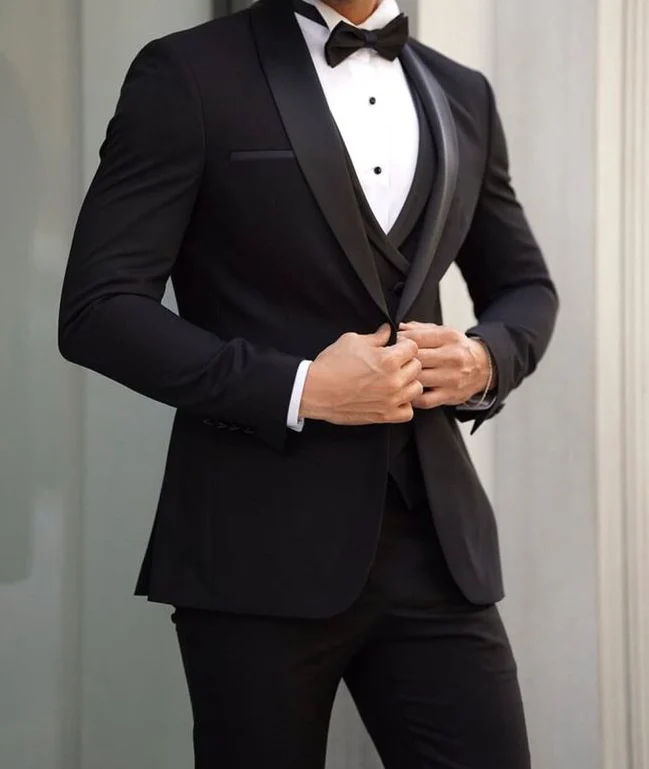
Shawl collar and waistcoat create several dark lines around the white shirt area here. The jacket collar looks smooth and rounded. Additional central edges appear layered and crossed below it. A black bow tie sits at the neck and dark points divide the shirt front. Both hands hold the jacket near the middle, hiding some of the lower waistcoat arrangement. Head and lower legs are not completely shown. A dependable count of every waistcoat button or the full fastening therefore cannot be established from this held front, leaving those construction details for the actual product.
Use the picture to decide how noticeable another inner boundary should be beneath the jacket collar. Compare the same waistcoat with the intended outer edges on the real outfit without shaping the front by hand. Have it opened and fastened afterwards, connecting visible lines with actual construction. If you want a quieter centre, request a real alternative and retain the shirt for comparison. An alteration needs explanation on the offered model; the layered photographic front alone does not establish a dependable possibility for changing it.