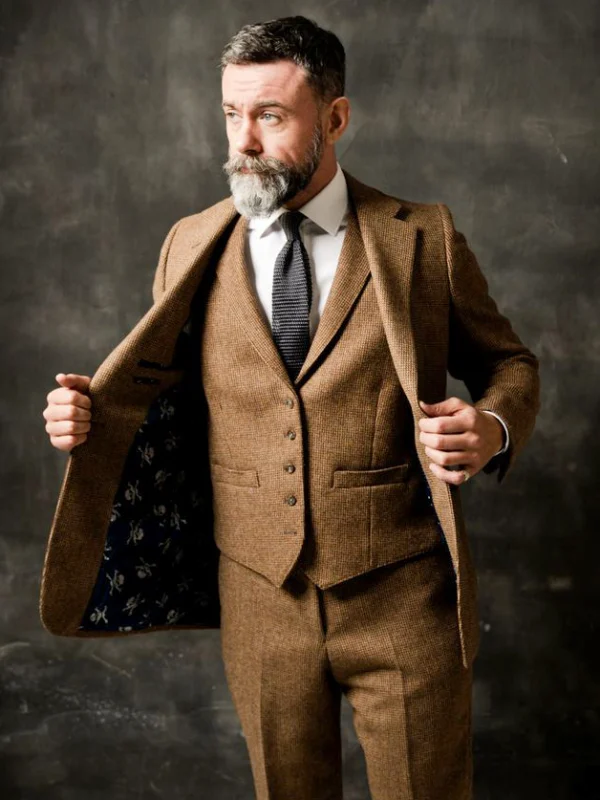
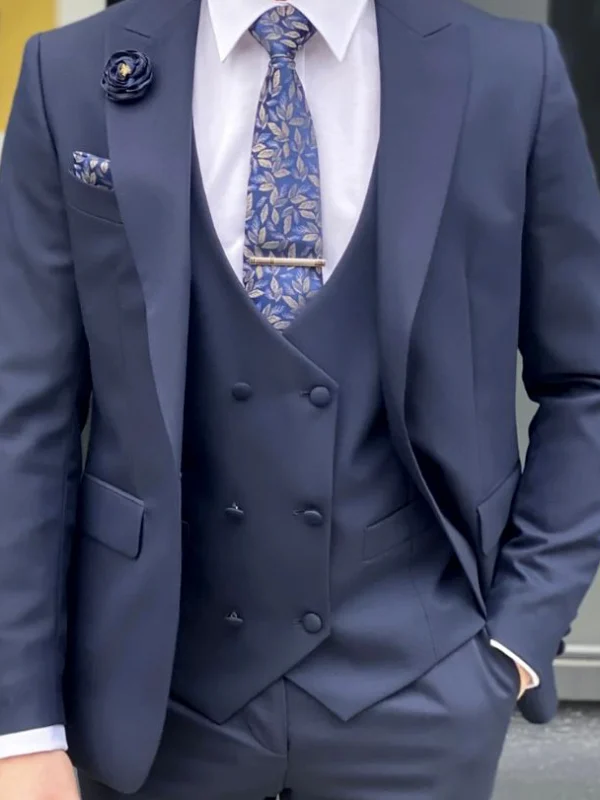
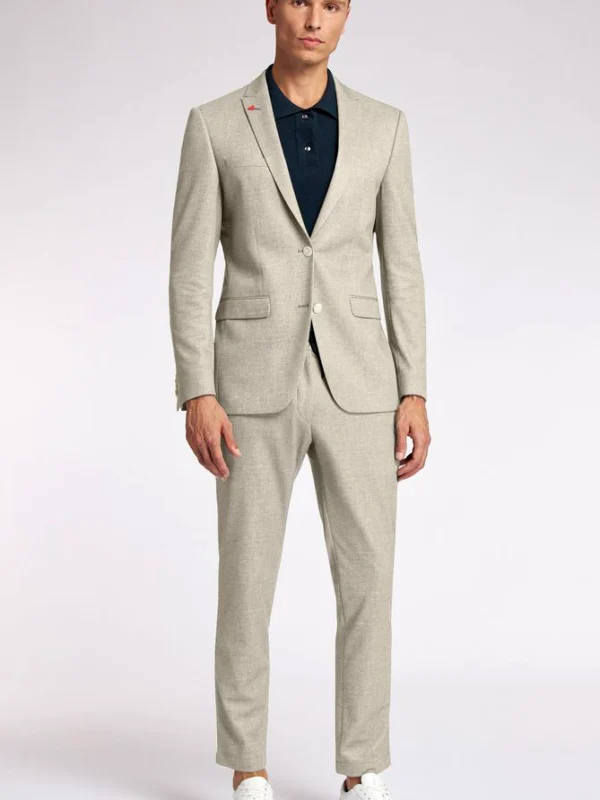
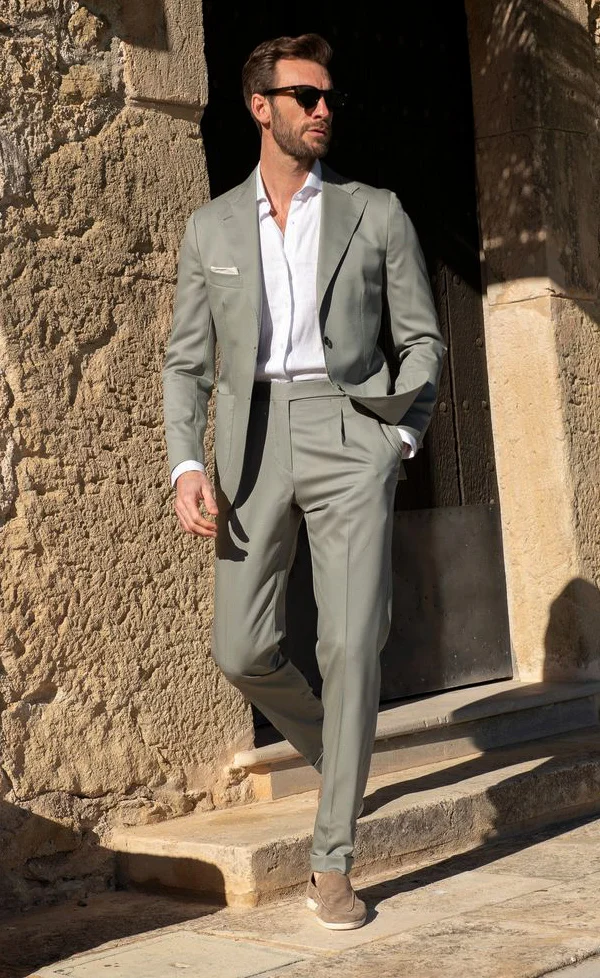
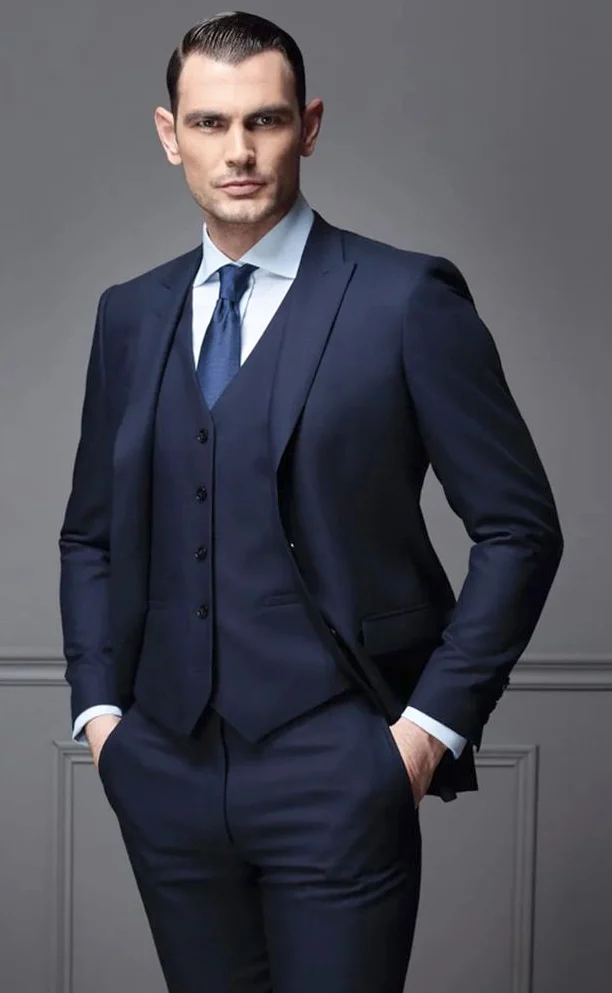
A silk suit for men is often described through shine and a sense of occasion. A useful buying decision needs more specific information: which fibre percentages the offered model contains, which parts are lined and how the suit works in your intended situations. Our three relevant references show a pale grey-green suit with an open shirt, a white jacket with black trousers and a navy three-piece outfit. The images do not establish silk. They help compare shapes and combinations separately from unverified material claims.
Assess a silk suit for men through product information
Ask for the full composition of the offered jacket and trousers. Mentioning silk in advertising does not by itself explain which percentage or component is intended. If the lining is described separately, record that separately too. The FTC explains textile fibre-content labelling for the US market. In your comparison, connect each statement to the actual product rather than a similar-looking photograph. If the details are unclear, request an answer before using material to justify a price difference. Clarify any differences between a sample garment and the model you would receive.
Silk suit for men: distinguish shine from fibre content
Look at a real jacket in different lighting where possible, without treating that exercise as a fibre test. A bright area in a photograph can be influenced by lighting and surface appearance. The navy reference has broad, quiet areas of colour; the white jacket already looks different through its strong contrast with black trousers. Ask whether you would want that effect independently of a material name. If so, compare several documented offers. If a particular silk percentage matters to you, it remains a separate product attribute to establish. Both preferences can influence your choice, but one does not prove the other.
Put the occasion before the combination
Clarify the invitation and your role at the event. The open shirt in the pale reference creates a different combination from the black bow tie with the white jacket. That difference does not automatically establish a dress-code category. If requirements are specified, ask the host about any uncertainty. Then try an appropriate inner layer with the actual suit. For comparing a continuous matching outfit with divided colour areas, the suit lapels and overall proportions guide complements these examples. A jacket you particularly enjoy is still only part of the full solution for an occasion.
Check the jacket with a shirt and ordinary movement
Wear the intended shirt or top during the fitting. Consider the shoulder, upper sleeve, chest opening and jacket length together. Fasten the jacket as intended for the offered model and reach gently forward. Sit down, then compare it open and fastened where that reflects your plans. Notice restriction or an urge to keep rearranging the fronts. Discuss what you observe with the shop instead of diagnosing the fit from a single fold. Size, cut and possible alterations should be explained on the real garment. Use your ordinary posture rather than pulling your shoulders back just to recreate a photograph.

Treat the trousers as a decision of their own
The pale reference has relatively narrow-looking trousers with the shoes visible; the white jacket is paired with black trousers. Check your own waistband, seat and freedom through the legs independently of which picture you prefer. Walk, sit and step onto a stair. Look at the hem with your intended footwear before settling on length. Ask whether a proposed alteration changes only the bottom edge or also the line of the leg. Shoes and hem length can change the overall effect without requiring a different material description. Photographed proportions are comparison points rather than measurements for your own pair.
Test a waistcoat separately and within the outfit
The navy three-piece creates an additional closed area between shirt and jacket. If that appeals to you, try the waistcoat while standing and sitting. Check its meeting point with the trouser waistband. Compare the outfit without the jacket as well if you expect to remove it during the event. A front view does not establish the same fabric at the back; ask about that construction if you plan to show the waistcoat alone. The checked suit guide adds a pattern comparison to these mostly plain references. Neither adding a waistcoat nor selecting a pattern establishes any silk content.
Build accessories around the colour distribution
Start with shirt, shoes and the waistband arrangement you actually intend to use. Add a tie, bow tie or pocket square in stages. The white jacket with black trousers already has a strong contrast, while a similarly coloured jacket and trousers may invite a different distribution of small accents. You do not have to repeat sunglasses or jewellery from a reference. Look at the combination from a normal distance before examining details. If an accessory is meant to conceal an unresolved fit issue, address that issue first. Accessories can complete the effect you want, but they cannot replace missing product information.
Clarify care and alterations before agreeing
Request the care instructions for the actual model, and ask whether jacket, trousers and waistcoat carry different information. GINETEX explains textile-care symbols. Do not infer a universal washing, steaming or ironing method from the word silk. Discuss proposed alterations in the same specific way: sleeve, hem, waistband or another area, with an explained result and timing. If the suit is for a fixed event, scheduling belongs in the decision. An attractive price is less useful when central questions about the finished outfit remain unresolved until the last moment. Record the agreed work to make offers easier to compare.
Make the decision with separate criteria
Keep material information, shape, wearing experience, combination, alterations and care on separate lines. This reveals whether you want a suit for documented composition or primarily for its visible effect. Both can be legitimate personal reasons. Compare actual offers against the same criteria, including agreed adjustments in your budget. The three photographs give you different menswear ideas without proving luxury, fibre percentages or manufacturing. An explainable choice brings the appearance you want together with a garment you have tested and clear details for the offered model. Where an unanswered question matters to that choice, waiting for the information remains a reasonable next step.
Choose a silk suit for men using documented composition, then compare jacket, trousers, lining and care on the actual offer.
Frequently asked questions
Does a shiny fabric prove silk?
No. Shine is a visible effect; fibre content needs documented information for the real garment.
Is silk in the lining the same as silk in the outer fabric?
Ask about outer fabric and lining separately and connect each statement to the relevant component.
Does the white jacket show a full white suit?
No. The reference pairs a white jacket with black trousers and a bow tie.
What extra checks does a three-piece require?
Try the waistcoat standing, seated and without the jacket, including its meeting point with the trouser waistband.