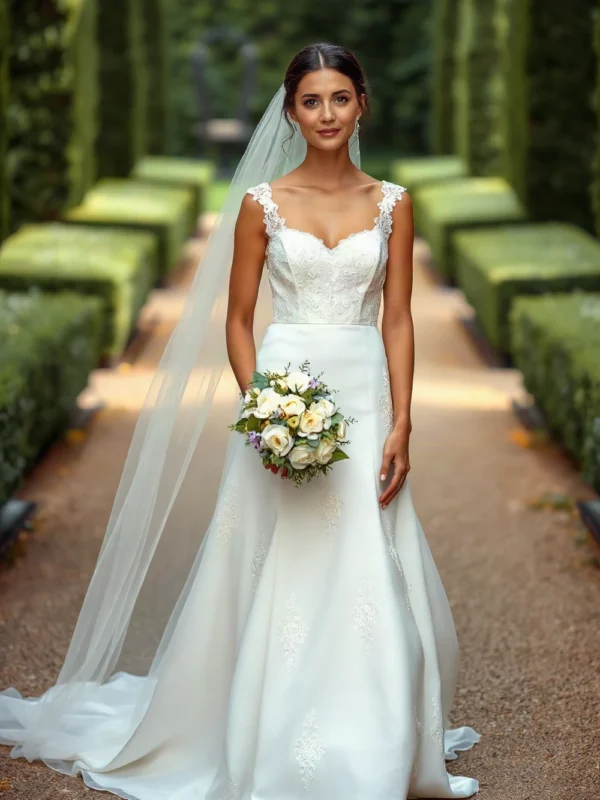
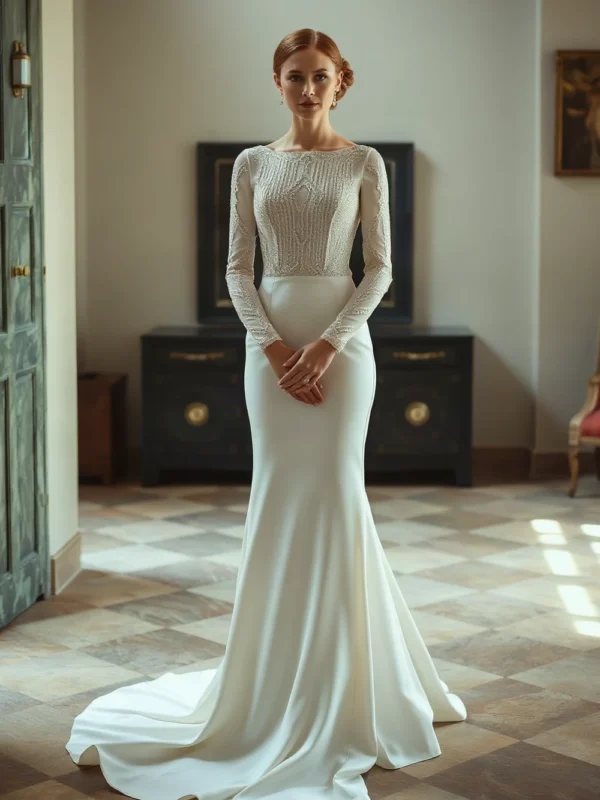
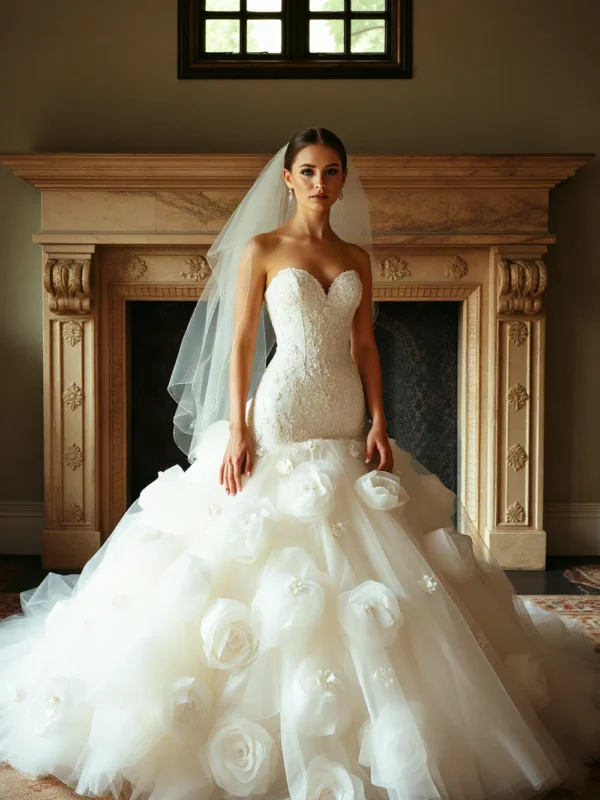
Short and tea-length wedding dresses do not describe a single silhouette. A narrow pencil skirt ending near the knee, an airy design that drops lower at the back and a full skirt opening during a turn create very different impressions. These six concepts distinguish them through cut, surface, neckline, sleeves and movement.
Choosing a shorter length is not simply a matter of raising a hem. Shoes become more visible, the point where the skirt crosses the leg matters, and the wearer’s stride shapes the outline. Compare ceremony formality, setting, time seated and dancing plans. Rather than treating each image as a purchasable design, use its visible features as fitting prompts: which proportions, support details and movements should you test?
Clean Lines in a Two-Piece Pencil Silhouette
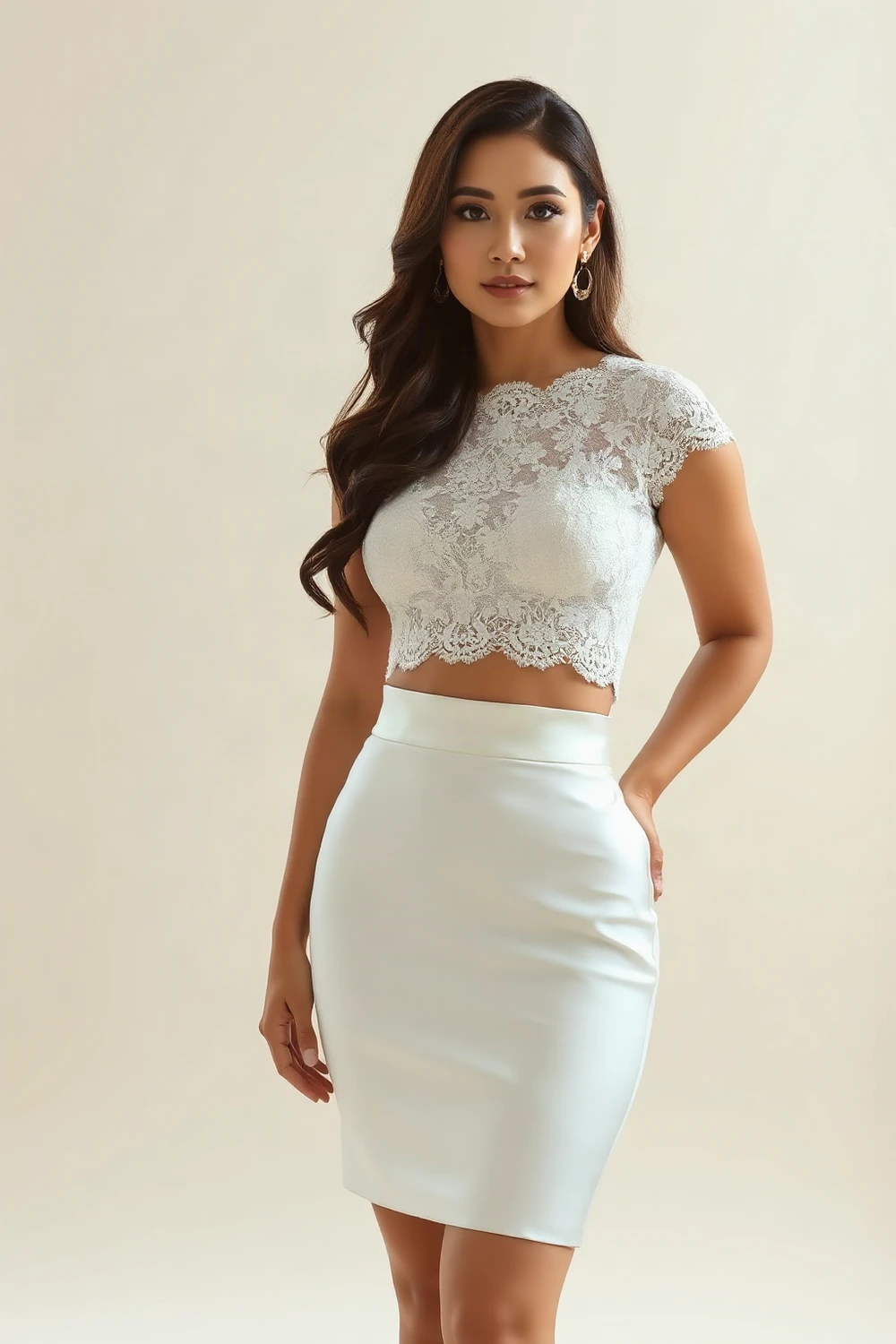
The first look gives a short bridal outfit graphic structure by pairing a patterned cropped top with a smooth, high-waisted pencil skirt. Dense floral detail and a scalloped edge on the top balance the plain, close line below. The narrow gap emphasizes the waist, while the knee-length hem reveals the shoes without making them dominant.
This controlled, urban silhouette may suit a civil ceremony or intimate gathering. Because the narrow cut affects movement, take long steps, climb stairs and sit during a fitting. Assess the top lining and skirt height together, since movement can change the space visible at the waist. The surface contrast already creates a clear focal point, so restrained accessories preserve the crisp two-piece effect.
Balancing a Lace-Up Back with Layered Volume
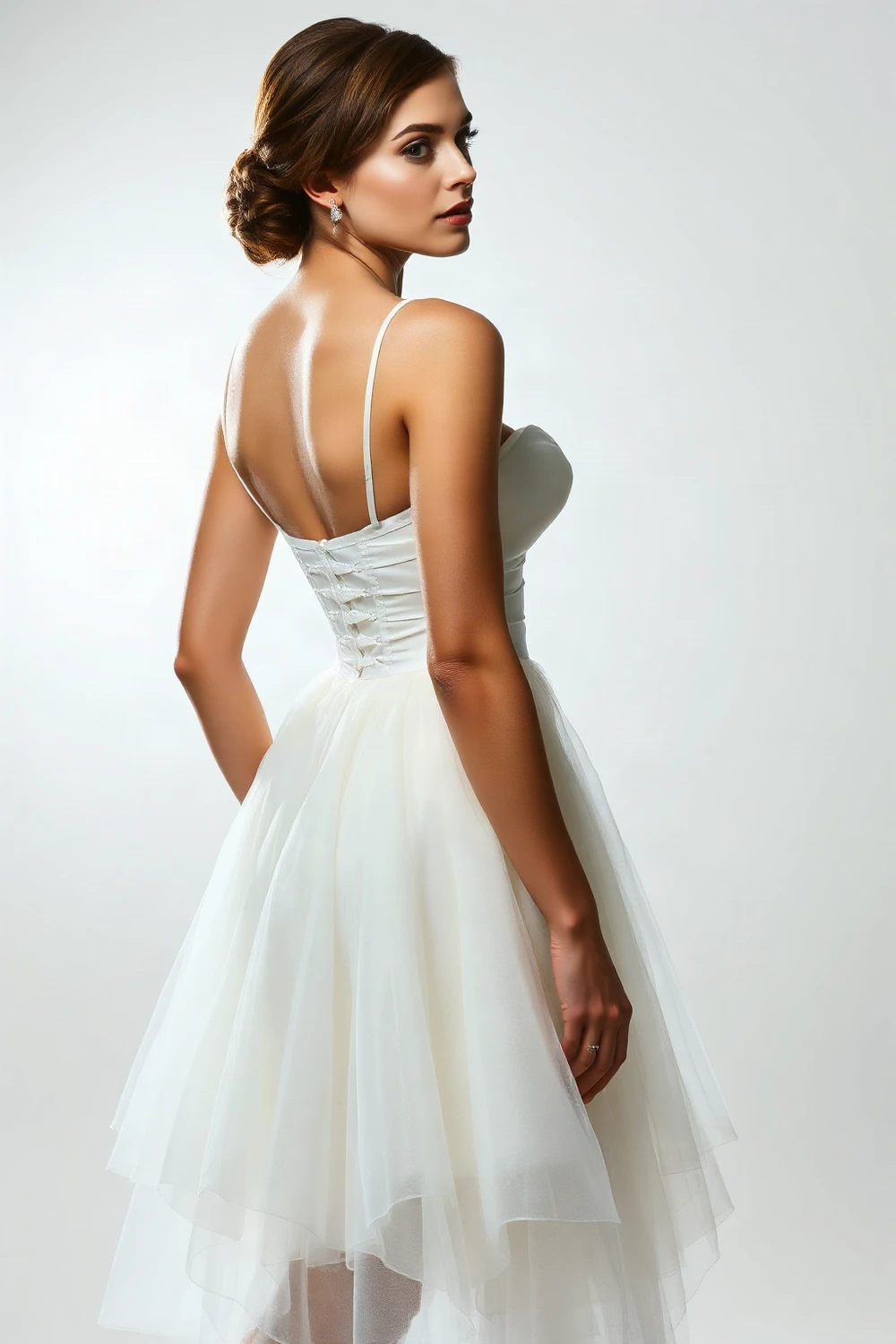
The second concept directs attention to the back. Fine straps, an open back and horizontal ties across a corset-like bodice define the upper body, while tulle-like layers spread softly from the waist. Uneven lengths make the skirt appear shorter at the sides and lower behind, revealing legs and shoes differently from each angle. The low hairstyle keeps this arrangement visible.
The practical question is how to balance volume with support. Although the lacing looks adjustable, strap placement, bust support and waist pressure require assessment in a fitting. Leaning against a chair tests the ties; turning shows whether the longest layer approaches the shoes. The detailed back also affects veil choice: a long or densely detailed veil could cover the lacing, while a shorter veil, restrained hair ornament or no veil keeps it central.
Flow from Flutter Sleeves and a High-Low Hem
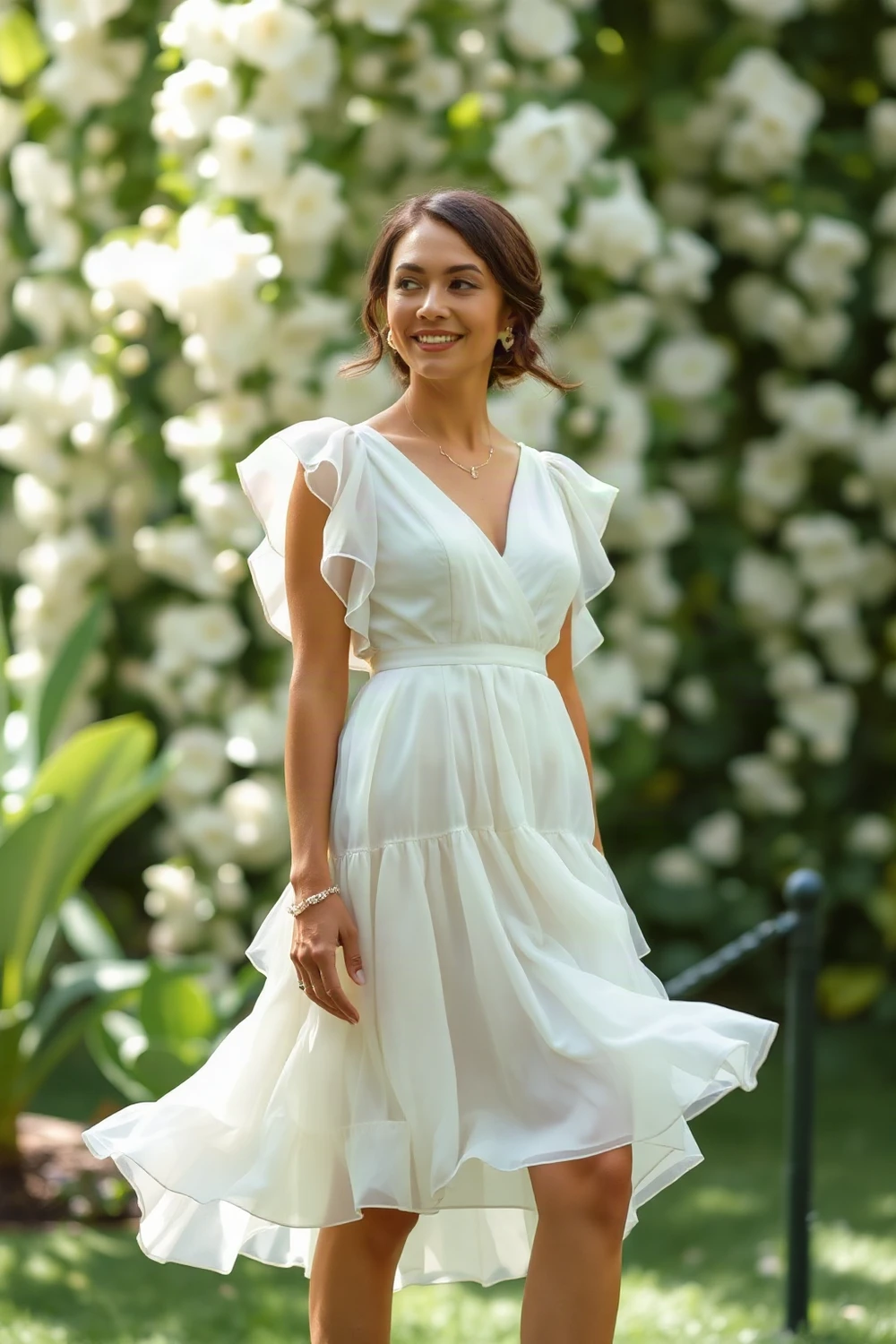
The third look softens a V-neckline and defined waist with fluttering sleeves. Shorter in front and longer toward the back, the skirt gains a rippling outline from a broad lower ruffle. Greenery and white flowers in the garden setting reinforce its fluid daytime character. Movement comes less from dense layering than from the light-looking edges lifting and falling around the legs.
An asymmetric hem can show the shoes while retaining a longer line behind, but its front-to-back difference should be observed in a breeze. Flutter sleeves add visual breadth at the shoulders without the fixed coverage of a close sleeve. Raise the arms, walk briskly and turn during a fitting to assess sleeves, neckline and skirt together. Check the longest point on steps and uneven outdoor ground.
A Tailored Civil Look with a Shirt Dress
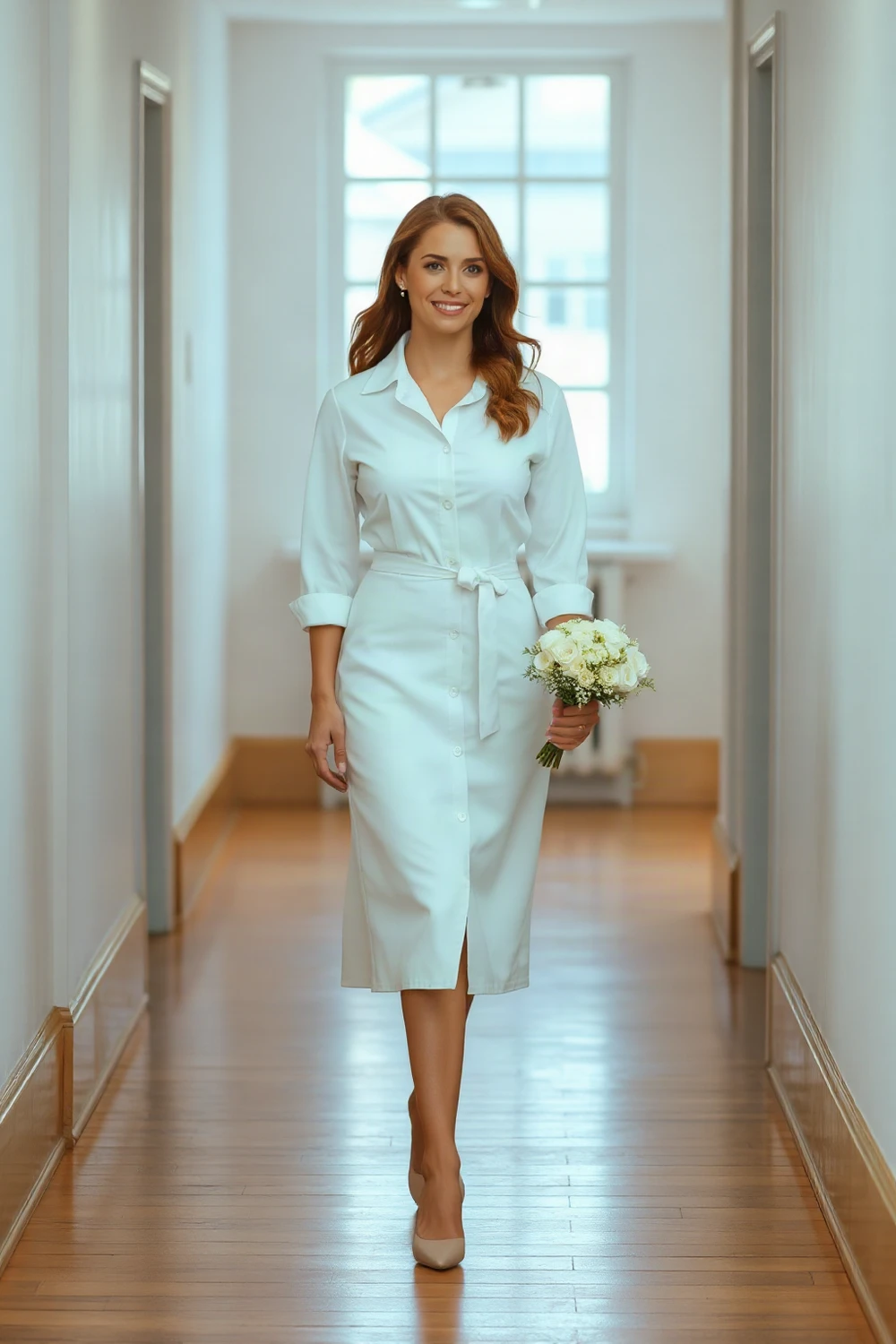
The fourth design gains its identity from a shirt collar, front buttons and a tie belt rather than romantic surface detail. Rolled sleeves, a straight midi skirt and a small front opening form a composed urban outline. Because the surface looks plain and matte, the cut and waist placement remain clear. A compact white bouquet and neutral shoes continue the restrained civil-ceremony mood.
With this cut, fit can often be judged by the button line: pulling across the bust or hips may create gaps, while the belt can shift upward when seated. Check the dress from the side and in motion, not only in a straight front view. The center opening may ease walking, but its position while sitting matters too. As the collar frames the face, small earrings, an uncluttered neckline and a compact, structured bouquet complement the tailored lines without hiding them.
Movement and Volume in a Full Tea-Length Skirt
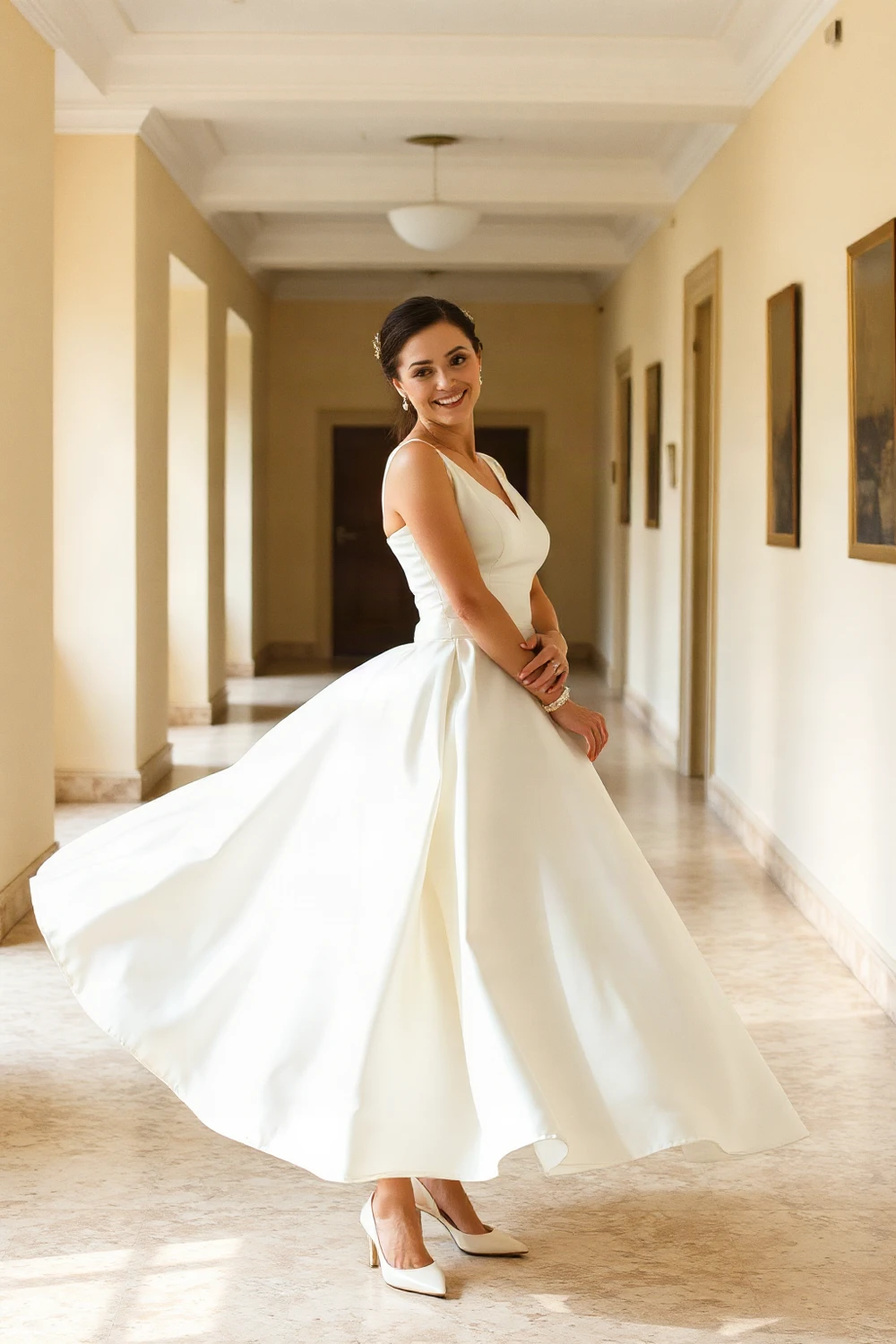
The fifth concept lets movement, rather than embellishment, lead. A clean V-neck bodice with straps joins a smooth, generously flared tea-length skirt. As the wearer turns, the skirt spreads sideways, broad folds catch the light and the shoes become fully visible. This shows that a shorter hem can still create ceremonial scale when the skirt has sufficient circumference.
That volume adds practical considerations. Closely placed tables, a narrow aisle or sitting in a small vehicle may make a broad skirt feel different from how it does during a spin. At a fitting, walk normally and sit as well as turning. A few centimeters at tea length can noticeably change the relationship between hem, ankle and shoe, so consider final length with the intended heel height. Because the surface is quiet, one focal accessory—a bouquet, earrings or distinctive shoes—may be enough.
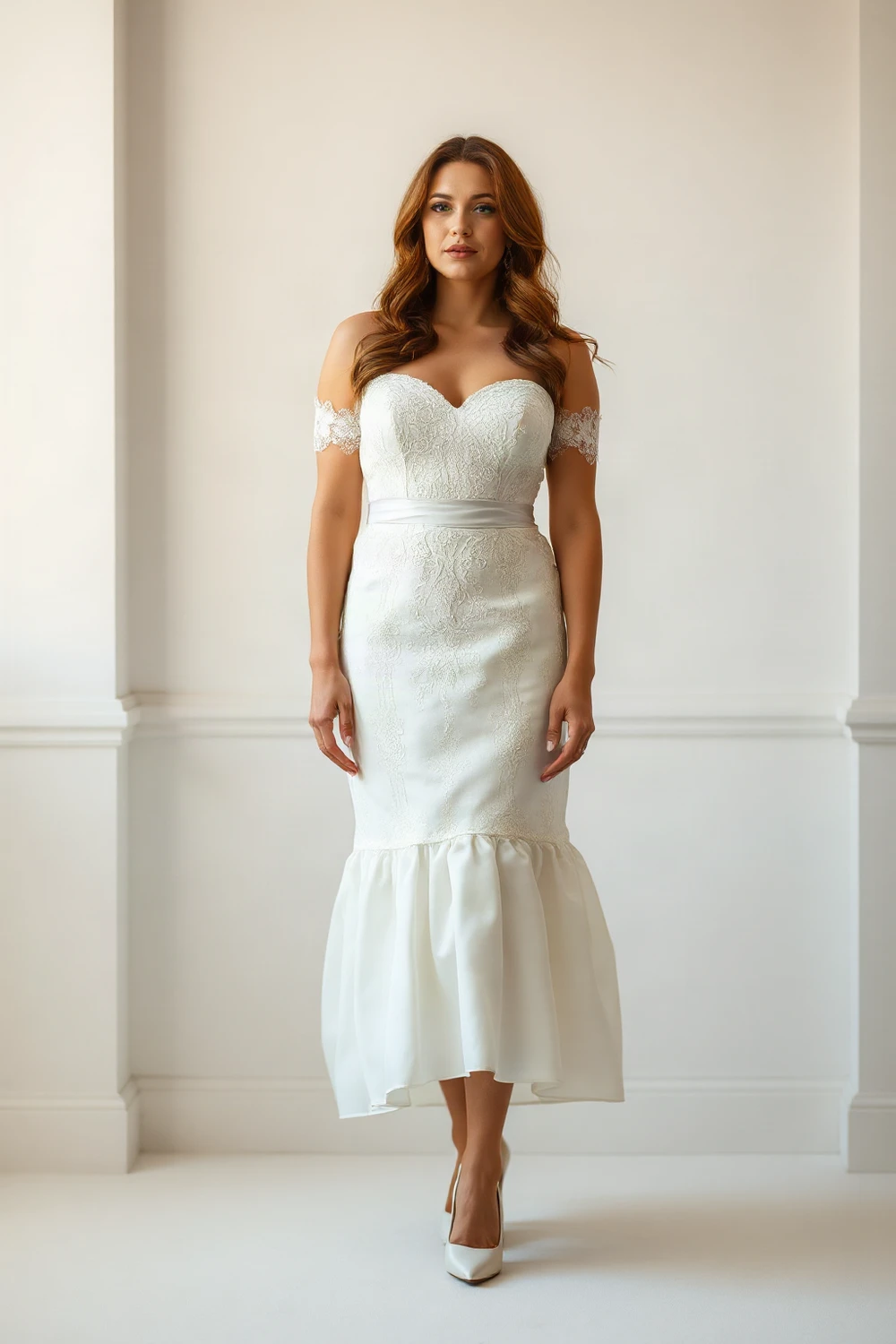
Off-the-Shoulder Balance in a Fitted Tea Length
The final look combines a lace-look sweetheart bodice, off-the-shoulder bands and a long, close-fitting middle section. A plain waistband interrupts the floral surface, while a smooth flounce beginning near the lower calf softens the narrow line. Unlike the broad sweep of the previous skirt, volume is concentrated at the hem, keeping the outline more vertical.
Test neckline security, arm movement and stride together. Off-the-shoulder bands may look balanced while standing but shift during an embrace or when the arms rise. Check whether the fitted section pulls while seated and whether the flounce allows comfortable walking. The sweetheart neckline and patterned surface already create a strong upper focal point, so very large jewelry or hair over both shoulders may crowd it. Simpler accessories preserve the relationship among the open neckline, defined waist and contrasting hem.
The central question in choosing a short wedding dress is not hem length alone, but how it interacts with cut and movement. A pencil skirt feels precise and controlled; layered or high-low hems create a softer ripple; a full tea-length skirt builds volume during a turn. A shirt dress depends on tailored structure, while a fitted off-the-shoulder silhouette concentrates attention on the neckline and lower flounce.
Begin with the setting and the movements expected throughout the day. Compare different skirt circumferences at a similar length and with the same shoe height. Sitting, walking, climbing steps, embracing and turning reveal more than a still mirror view. The strongest choice is not merely the silhouette that attracts attention in an image, but the one that retains its intended proportions in motion and suits the celebration’s pace.
Six visual concepts compare pencil, layered, high-low, shirt-dress, full-skirted and fitted silhouettes, with practical guidance on hem length, support, visible shoes and freedom of movement.
Frequently asked questions
How should the hem of a short wedding dress be chosen?
Fit the dress with the intended shoes and assess the hem from the front, side and in motion. A finish near the knee, calf or ankle can noticeably change the silhouette’s proportions.
Is a pencil skirt or a full tea-length skirt more practical?
A pencil skirt occupies less space but may restrict the stride. A full skirt creates more movement and turning volume, yet requires extra room when sitting, passing tables or using narrow aisles.
Why do shoes matter with a high-low wedding dress?
The shorter front makes the shoe color, toe shape and heel directly visible. Heel height also changes how both the front and longer rear sections sit in relation to the ground.
What should be tested when fitting an off-the-shoulder short dress?
Raise the arms, sit, bend forward and mimic an embrace. Check whether the shoulder bands, neckline and bodice support remain comfortably positioned through each movement.
Can a veil work with a short wedding dress?
Yes. Choose its length in relation to the dress’s focal point. If the design has a lace-up back or a highly mobile skirt, a veil that does not completely obscure that feature may feel more balanced.