Vintage floral lace wedding dresses derive their romantic character from more than the motifs themselves. Back exposure, sleeve length, neckline and the way a skirt moves all determine whether the result feels reserved, softly nostalgic or boldly sculptural. These six images range from a high-neck, long-sleeved design to a plunging-back mermaid shape, with short-sleeved A-lines and quieter fitted skirts between them. Choosing well is therefore less about finding the most decoration and more about understanding how each detail works with the body, the setting and the practical demands of the day.
A useful comparison starts with silhouette. Close-fitting skirts create a precise outline, whereas A-lines allow broader movement and gentler volume. Next come bodice support, arm mobility and the management of a train or veil. The lace and surfaces shown here are visual concepts; when evaluating an actual dress, inspect its sample, lining, weight, texture and appearance in different light rather than assuming those qualities from an image.
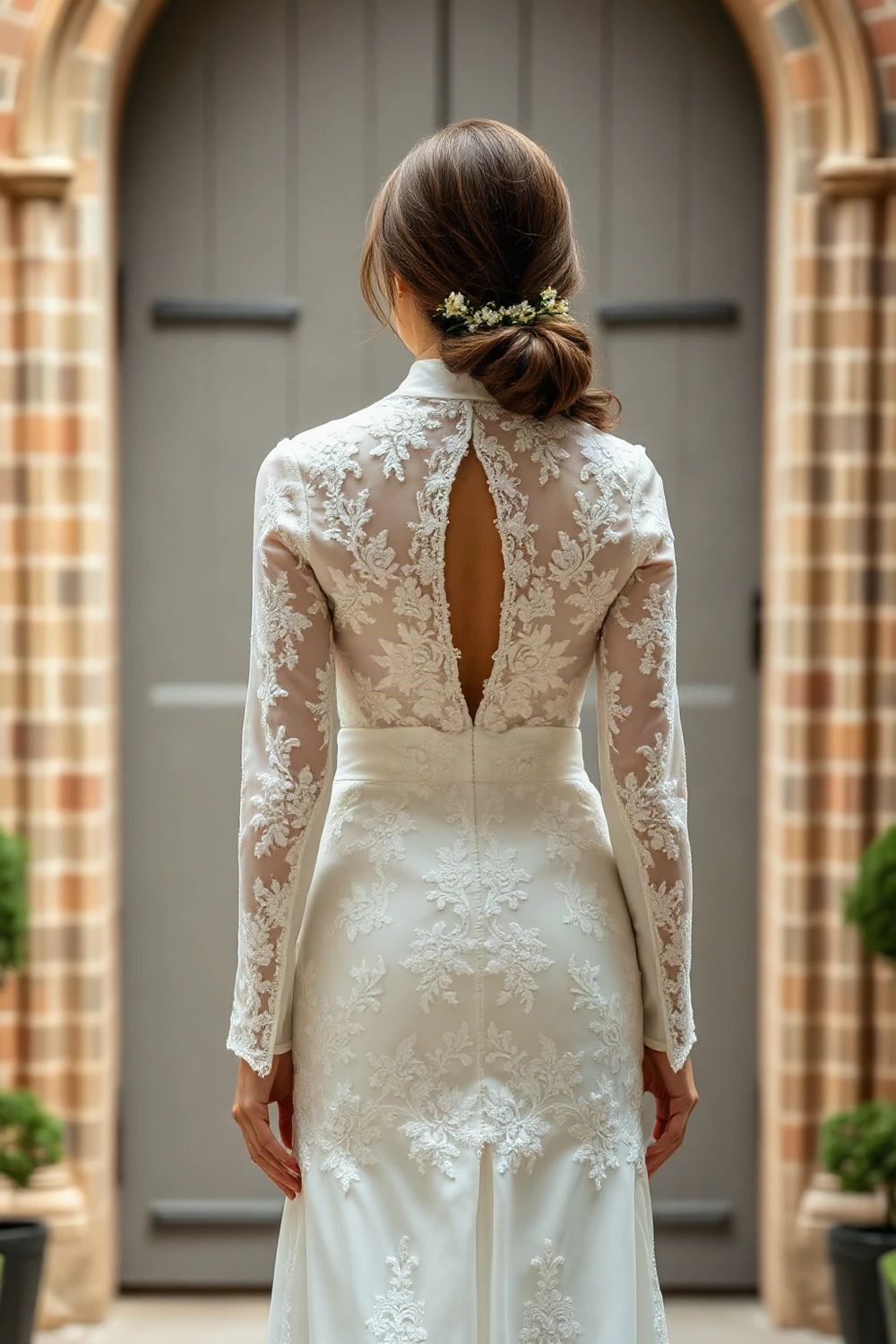
Balancing a High Neck with a Vertical Keyhole
The first design offsets the coverage of a high neck and long sleeves with one slim, elongated keyhole. Floral motifs run almost symmetrically beside the opening, making the back a focal point without exposing its full width. A defined waistband closes the bodice visually, while repeated motifs on the skirt connect the upper and lower areas.
This approach may appeal to someone who wants a recognizable back detail while retaining covered shoulders. Comfort still depends on careful fit: the collar should not press into the neck, the sleeves should permit reaching, and the edges of the opening should remain flat. A low updo keeps the pattern visible. If a veil is desired, a simple removable option can reveal the composition later rather than covering it throughout the event.
Support and Mobility in an Open-Shoulder Bodice
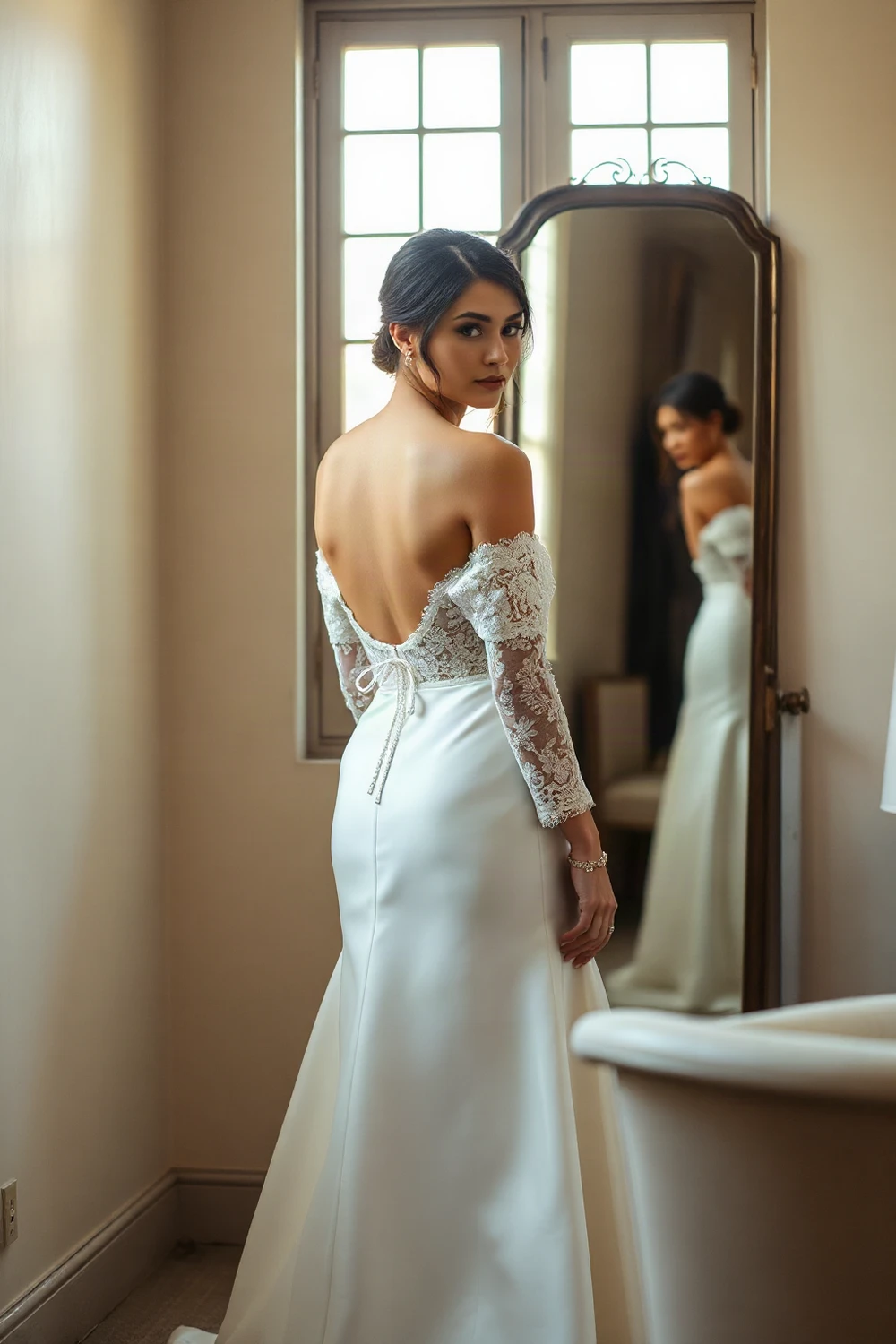
The second look combines long floral sleeves with an upper body that exposes the shoulders and most of the back. Narrow ties mark the base of the curved opening, while the smooth fitted skirt makes the patterned bodice look more prominent. The mirror also reveals how uninterrupted the quiet lower surface appears from the side.
With this cut, concealed support, custom fit and arm movement must work together. Raise the arms forward and overhead to see whether the shoulder line shifts; a static fitting pose will not provide the whole answer. Compared with the covered first design, it creates a freer neckline and a softer transition around the shoulders. The trade-off is that stable internal structure and exact alterations may become more important.
A Soft Vintage Direction with Short Sleeves and an A-Line
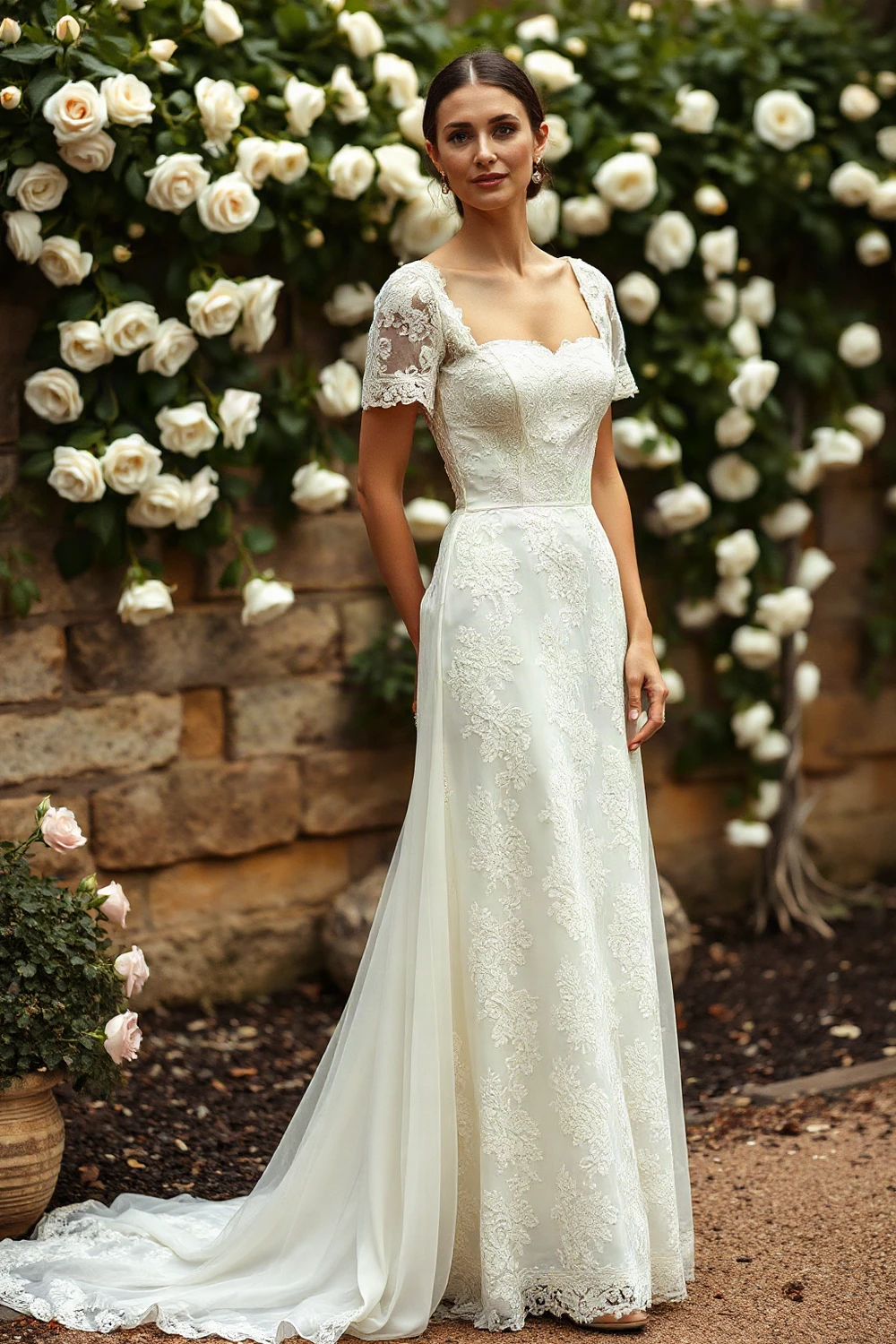
The third dress joins short lace sleeves and a broad angular neckline to a fitted waist and flowing A-line skirt. Large motifs on the front alternate with smoother side layers, adding pattern without making the whole skirt feel heavy. A modest train and defined hem finish the shape in a way that complements the surrounding rose garden.
Short sleeves offer more framing than narrow straps but can allow greater arm freedom than a full-length sleeve. Their openings should still be tested while sitting, and the wide neckline should remain stable during movement. Compared with a fitted skirt, the A-line provides more room for a natural stride. For an outdoor setting, also consider how the small train will pass over gravel, soil or narrow garden paths.
Proportion in a Plunging Back and Mermaid Silhouette
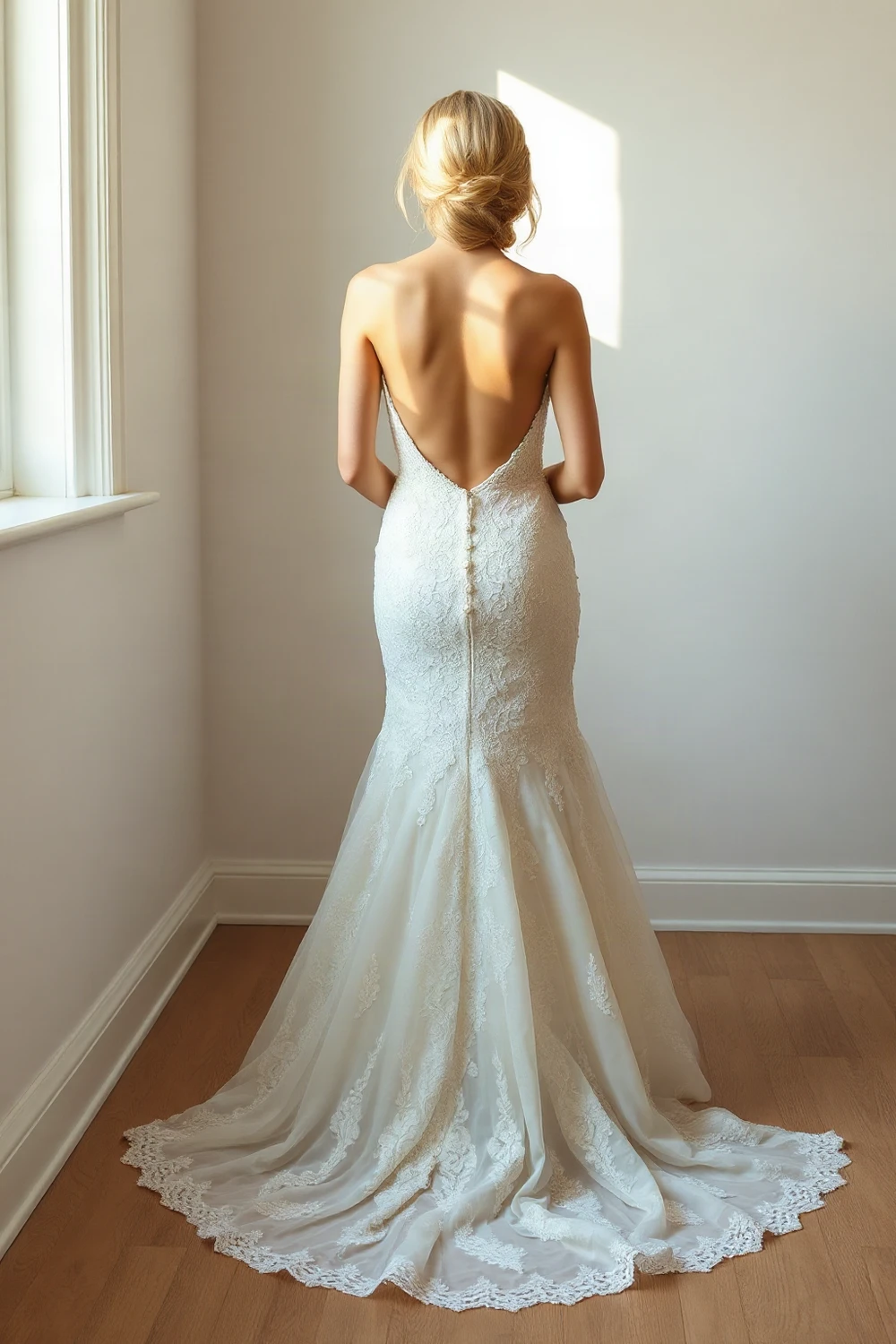
The fourth concept pairs a plunging V back with a cut that follows the hips before flaring near the legs. A line of small buttons visually connects the back and skirt, which expands into a rounded lace-edged train. This transition gives the lower silhouette as much emphasis as the open back and creates the most sculptural outline in the group.
A front-facing mirror is not enough when assessing a mermaid shape. Sit, climb a step, dance and take a full stride to check the available room around the legs. The broad train may create a strong photographic line but could need a secure way to be lifted later. An updo preserves the V shape; if a long veil is added, view it from behind to judge how much of the buttons and patterned train remains visible.
Completing a Quiet Skirt with a Veil and Bouquet
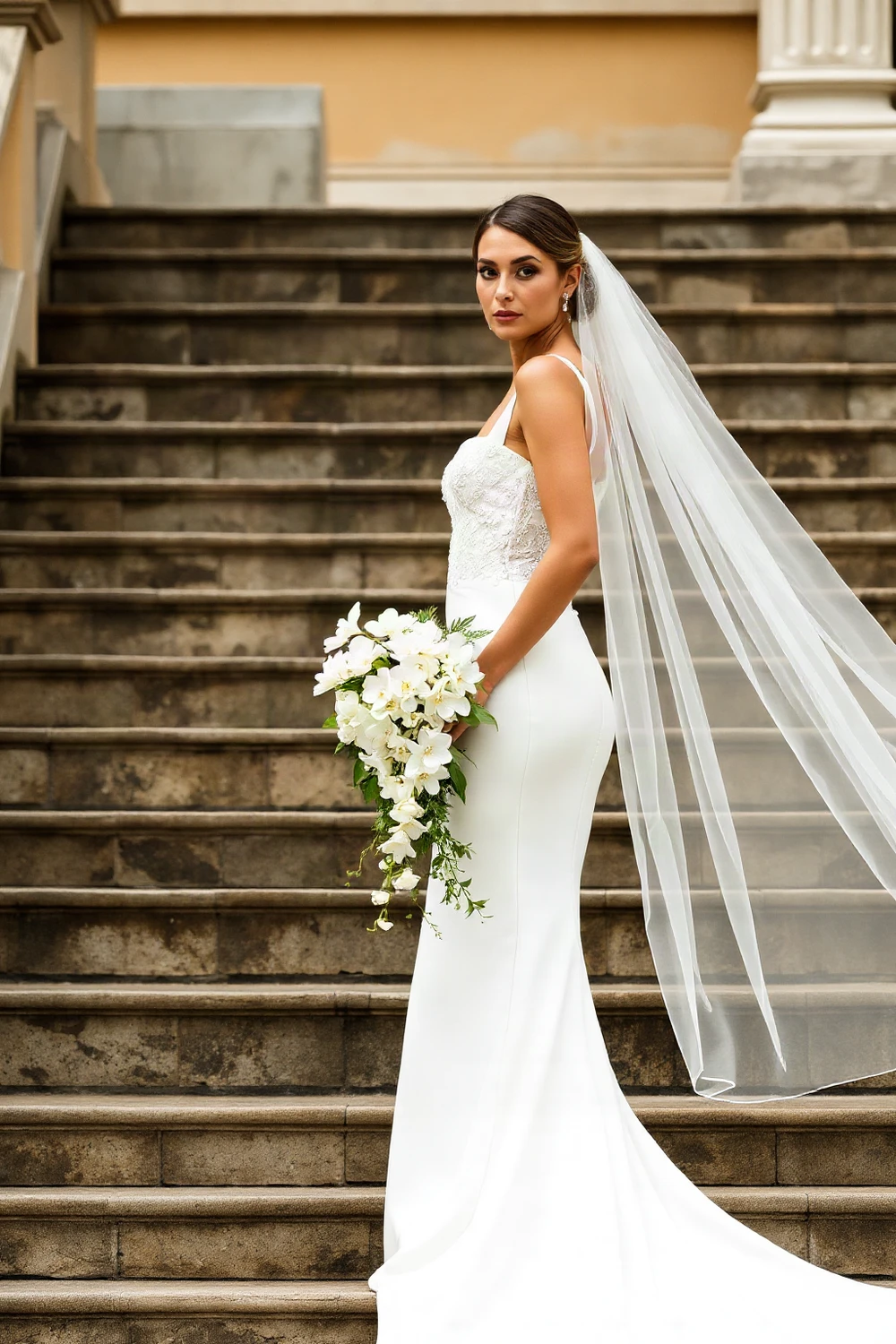
In the fifth image, floral detail is concentrated on the slim-strapped bodice, while the long fitted skirt remains almost entirely smooth. This distribution draws attention toward the face and waist. A plain long veil introduces light movement, and the cascading white bouquet repeats the vertical direction of the narrow skirt. Broad stone steps make all of these lengthwise lines particularly clear.
Accessory scale matters in this arrangement. A bouquet carried too high can cover the bodice, while a very long veil may require help on steps or outdoors. The understated skirt does, however, leave visual room for both elements. This balance suits someone who prefers controlled embellishment rather than a fully patterned lower half. During a fitting, test whether the straps stay secure and whether the bouquet’s shape and weight remain comfortable over time.
Balancing an A-Line Skirt, Veil and Rounded Bouquet
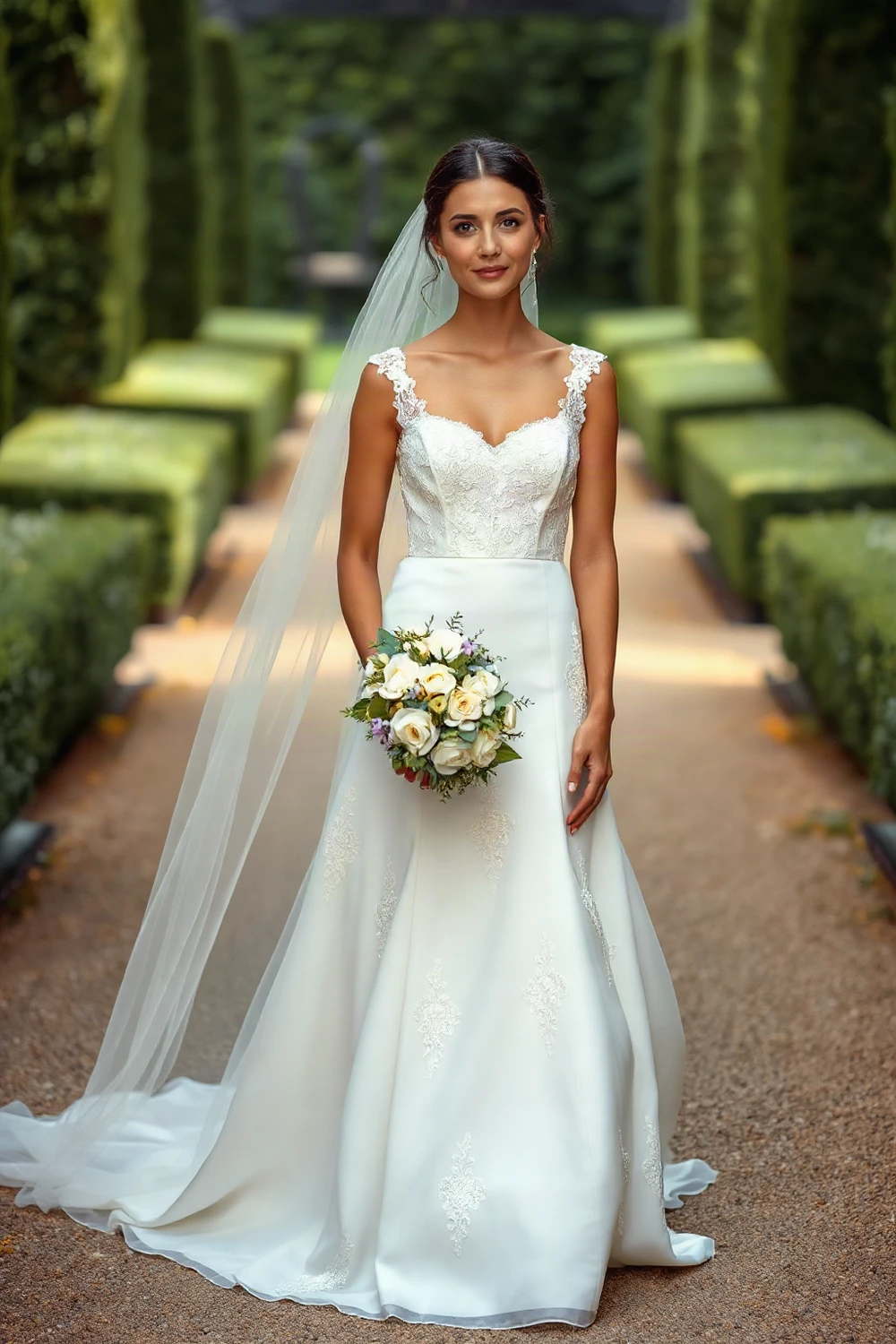
The final design joins lace straps and a patterned bodice to a predominantly smooth A-line skirt. Sparse motifs continue downward without filling the volume. The veil flows along one side, while the rounded bouquet forms a compact central focus. Symmetrical clipped hedges reinforce the calm balance of the silhouette.
This concept offers a middle ground between visible lace detail and relatively easy movement. Its shoulders are more open than those of the short-sleeved third dress, and its lower half is wider than the fitted fifth look. The bouquet should not conceal the neckline or waist, and the veil should support rather than overcrowd the limited skirt motifs. If the dress is intended for a garden route, test the veil length and the ability to lift the front hem on a comparable surface.
Together, these images show that a romantic or vintage impression is not tied to one floral lace wedding dress silhouette. A high neck and narrow keyhole create measured contrast, while low open backs make the rear view more assertive. Short sleeves and A-line skirts encourage softer movement; a mermaid cut and broad train produce a more defined shape. Concentrating pattern on the bodice can also leave more visual space for a veil and bouquet.
Start by identifying the practical quality that cannot be compromised: reliable support, arm coverage, stride width or a manageable train. Build the degree of pattern and the scale of accessories around that priority. Finally, view the dress from the front, side and back while sitting, walking and lifting the arms. Those active comparisons reveal far more about a suitable choice than a single still pose, however appealing its composition may be.
Compare high-neck keyhole backs, low open backs, short sleeves, fitted trains and softer A-line shapes to balance floral lace wedding dresses with veils and bouquets.
Frequently asked questions
How should support be assessed for a low-back wedding dress?
During a fitting, examine the internal structure, whether the opening’s edges stay flat and whether the bodice remains stable as the arms move. The appropriate support solution should be planned around the actual construction and the wearer’s needs.
Are long lace sleeves or short sleeves more practical?
Long sleeves create greater coverage and an uninterrupted patterned line. Short sleeves can frame the shoulders while allowing more of the arms to move freely. Compare tightness at the opening, elbow movement and overhead reach in the actual dress.
How can I choose between an A-line and a mermaid skirt?
An A-line widens independently of the hips, offering softer volume and generally more stride room. A mermaid cut follows the body closely before flaring. Test sitting, stairs and dancing as well as the standing silhouette.
What veil works with a heavily patterned lace dress?
If the back or skirt pattern is the main feature, a visually light veil with a simple edge can keep it legible. Review the veil and train together from behind, and consider whether the veil can be removed or secured later.
How can a bouquet avoid hiding a lace bodice?
Photograph the bouquet at its natural carrying height during a styling test. If the bodice is an important focal point, a controlled bouquet width or a slightly lower carrying position can leave more of the lace visible.