Long-sleeve wedding dresses differ through more than sleeve shape. The same wrist-length line can feel soft beside a deep wrap V-neck, sculptural beneath a high collar, light with sheer-looking floral detail, or graphic in opaque smooth fabric. A waist may sit naturally, rise below the bust, or emerge through diagonal draping. These six concepts compare a wrapped bodice, shimmering geometric top, maternity-oriented empire waist, minimalist high neck, lace-look jacket, and buttoned back. They show how neckline, sleeve, waist, and skirt form one composition rather than one ideal silhouette. A still image gives a first impression, but a choice should also consider sitting, walking, raising the arms, and the rear view, alongside proportions and accessories.
Connecting a Wrap V-Neck to a Defined Waist
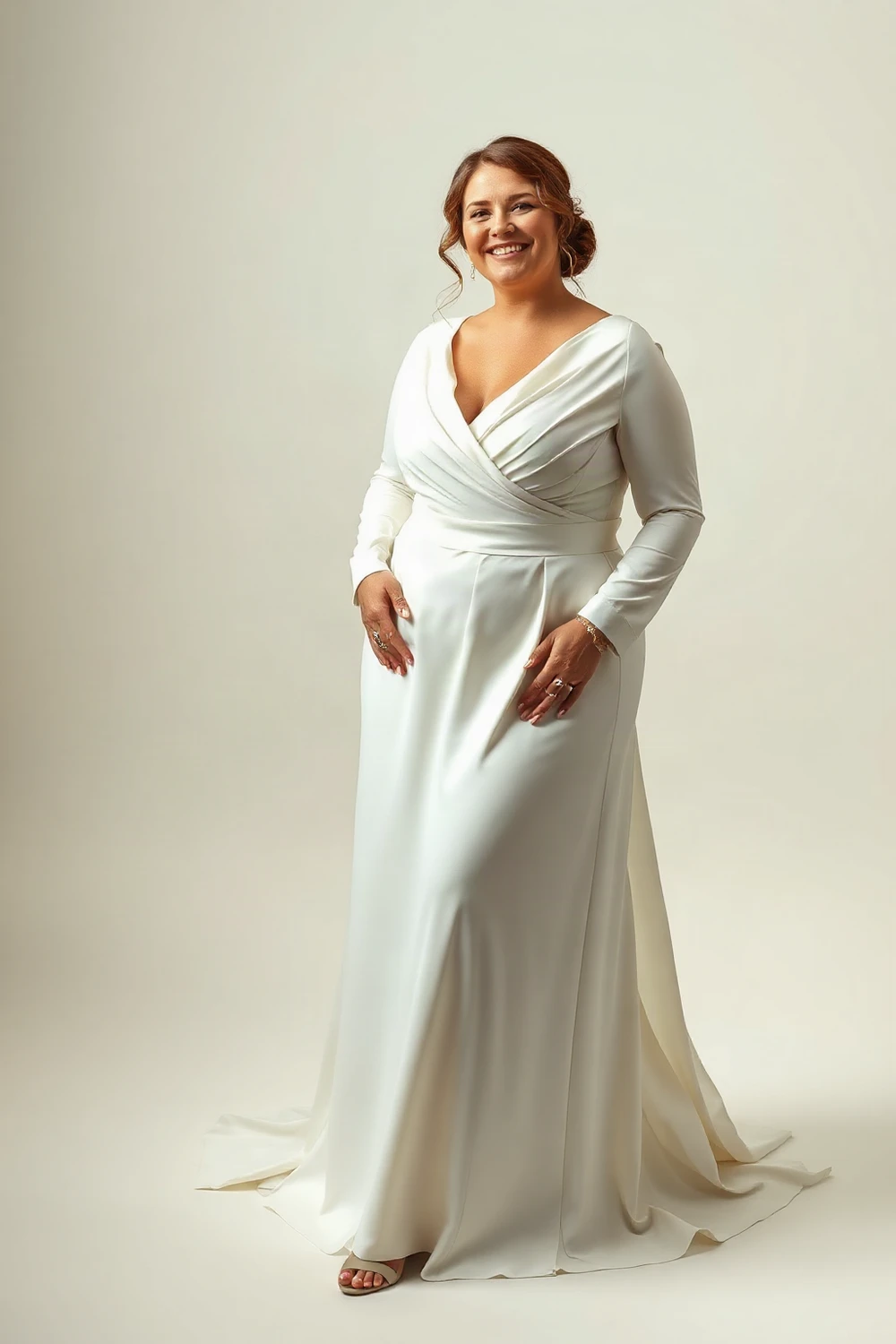
In the first look, close opaque sleeves calmly frame a wrapped bodice. The deep V opens the neck, while broad diagonal folds lead from bust to a substantial horizontal waistband. Rather than adding dramatic volume, the skirt widens gradually into a modest floor extension. Directional lines, not motifs, provide the interest.
Test whether the overlap stays settled while sitting, leaning, and moving. Since waistband height and width govern the relationship between upper body and skirt, compare front and side fitting photographs. The neckline permits a necklace, but the draping is already a focal point; earrings alone may be calmer. Walk in the intended shoes, confirming that the flowing hem allows enough step room without losing its long vertical line.
Balancing a Shimmering Bodice with a Plain Mermaid Skirt
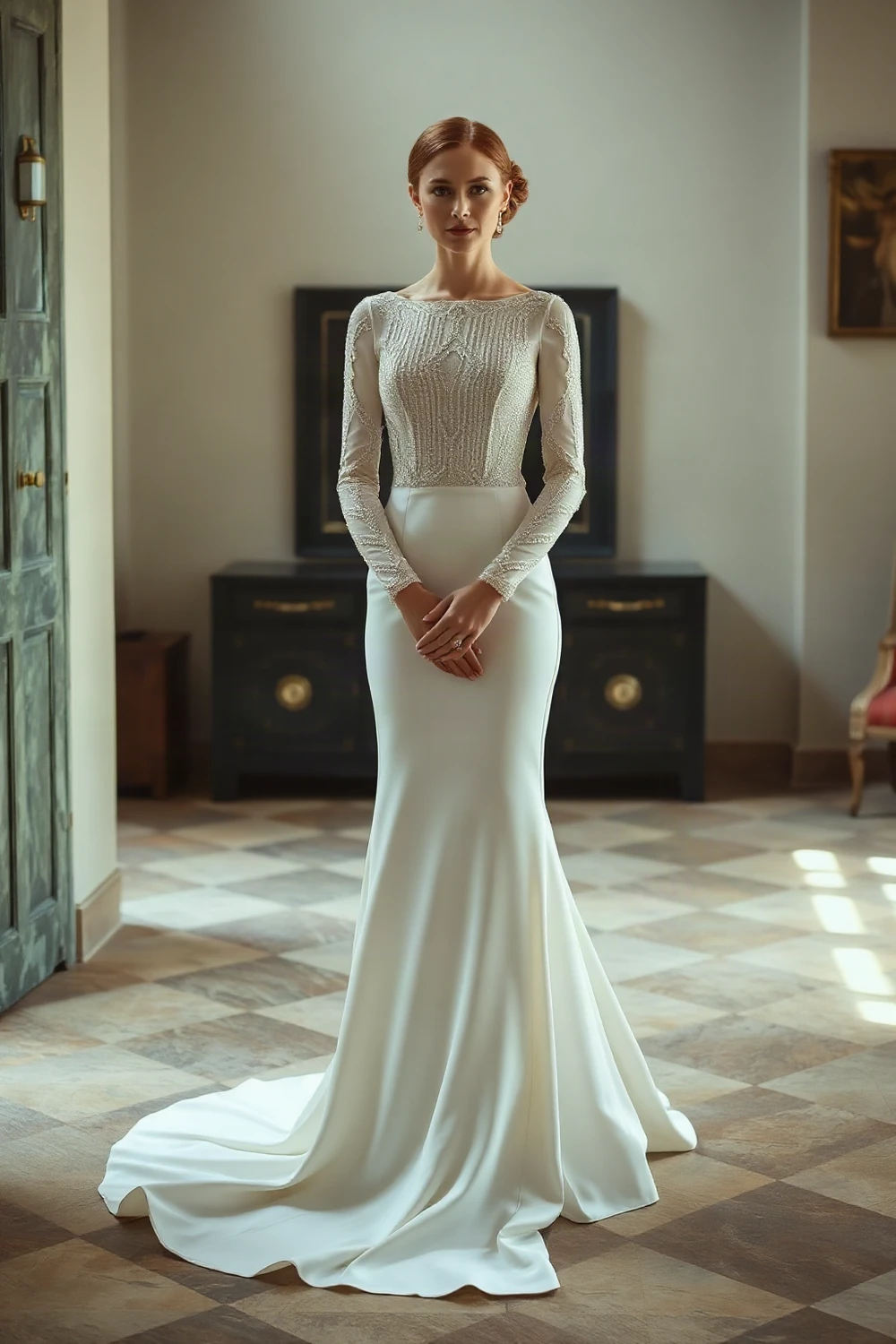
The second concept concentrates surface detail above the waist. A bateau neckline establishes a horizontal line, while shimmering geometric bands draw the eye toward the center and lower bodice. Related decoration extends from shoulders to wrists over sheer-looking sleeves. In contrast, the restrained, smooth mermaid skirt follows the body before widening at floor level: light and texture lead above, silhouette below.
This offers more definition than a plain dress without dense detail from head to hem. During fitting, move the shoulders to check the neckline, bend elbows and wrists, and test walking, turning, and sitting in the close skirt. The bodice already reflects light near the face, so modest earrings and a clean hairstyle can preserve the geometry. Several bright accessories might obscure the deliberate contrast between detailed top and quiet skirt.
Using an Empire Waist and Flowing Skirt for Maternity
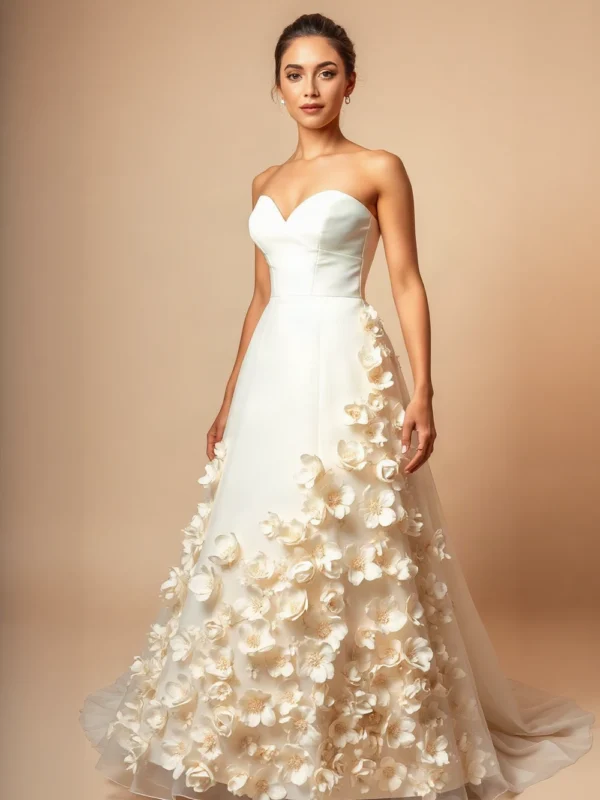
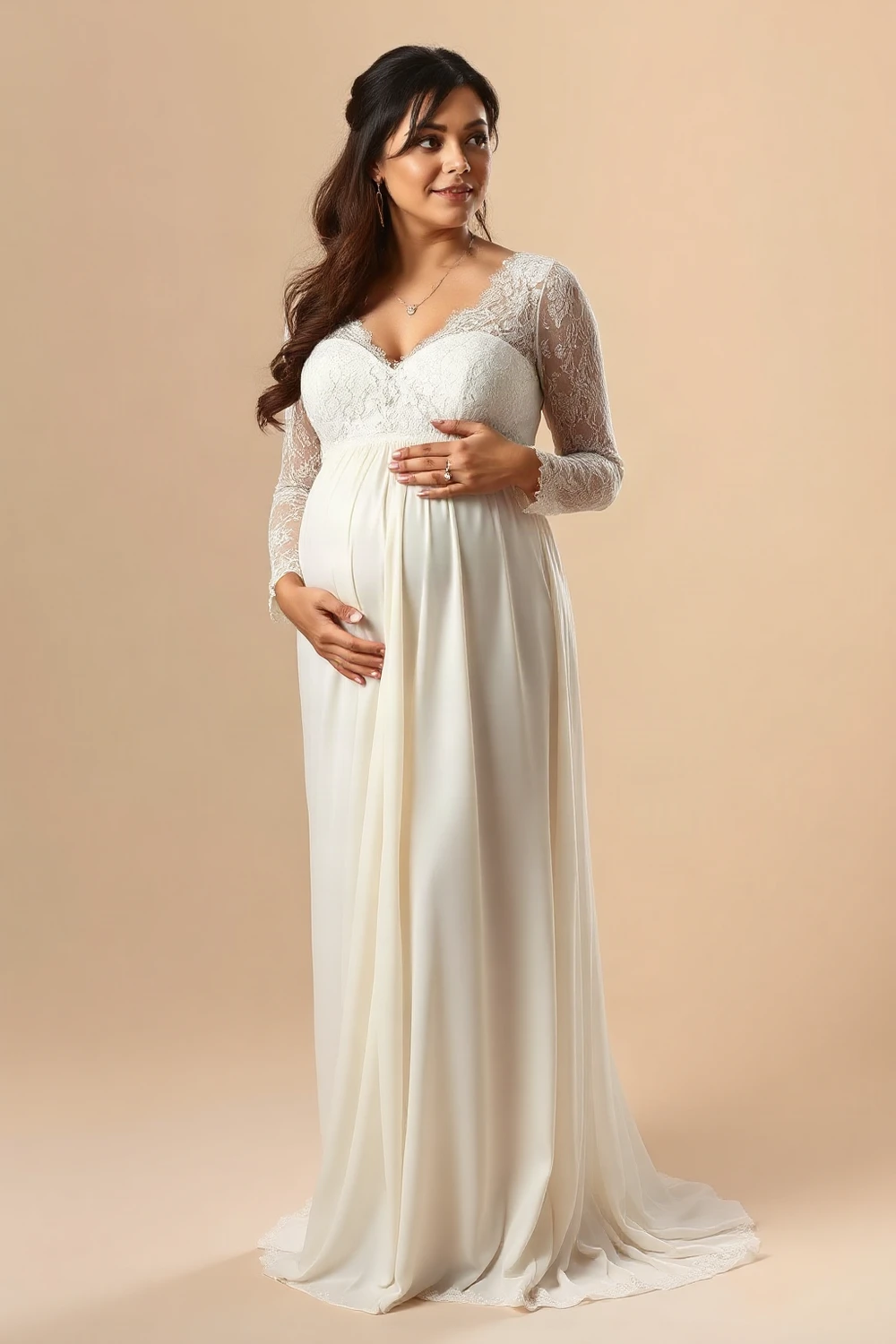
In the third image, a sweetheart bodice and floral, sheer-looking sleeves create a softly detailed upper section. The seam sits below the bust rather than at the natural waist, letting the pale skirt fall in free vertical folds. This avoids a strong horizontal line across the abdomen while retaining a clear starting point; continuous floral detail bridges bodice and sleeves to the plain skirt.
Maternity fitting should anticipate possible changes between appointments and the ceremony, not rely on one day’s measurements. Discuss alteration timing and adjustment allowance with a qualified fitter. Separately test bust support, sleeve range, lining contact, and seated space, and view the under-bust seam from front and side. As floral detail already surrounds neckline and arms, delicate earrings or a small hair accessory add finish without another strong element near the face.
Reading a High Neck, Draped Waist and Front Slit Together
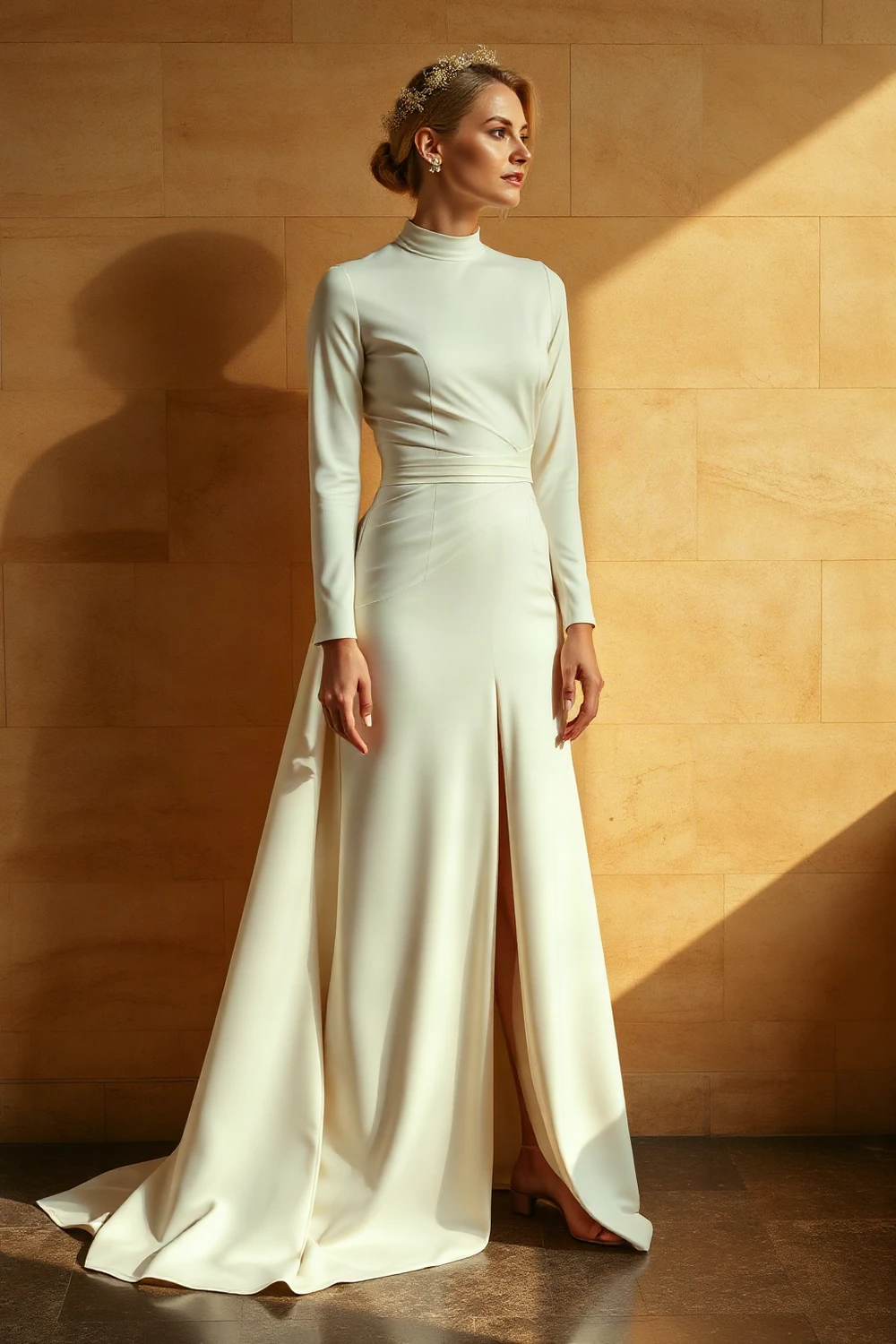
The fourth design combines three directional elements on one smooth surface: a close-framing collar, subtle diagonal draping into the waist, and a vertical skirt slit. Slim sleeves keep the upper body uninterrupted, while horizontal waist folds pause that length. The skirt widens toward the floor, its opening changing with each step. Strong directional light clarifies seams and folds.
During fitting, turn the head, sit, and reach forward to assess high-neck contact and movement. Judge the slit while walking and sitting, not only posed; shoe height changes how much appears. The enclosed neckline needs no necklace. Small earrings or a narrow hair ornament add emphasis without competing with the waist. Because an unpatterned surface reveals construction, inspect it under direct and softer light to understand its seams, folds, and internal layers.
Contrasting a Lace-Look Jacket with a Mermaid Skirt
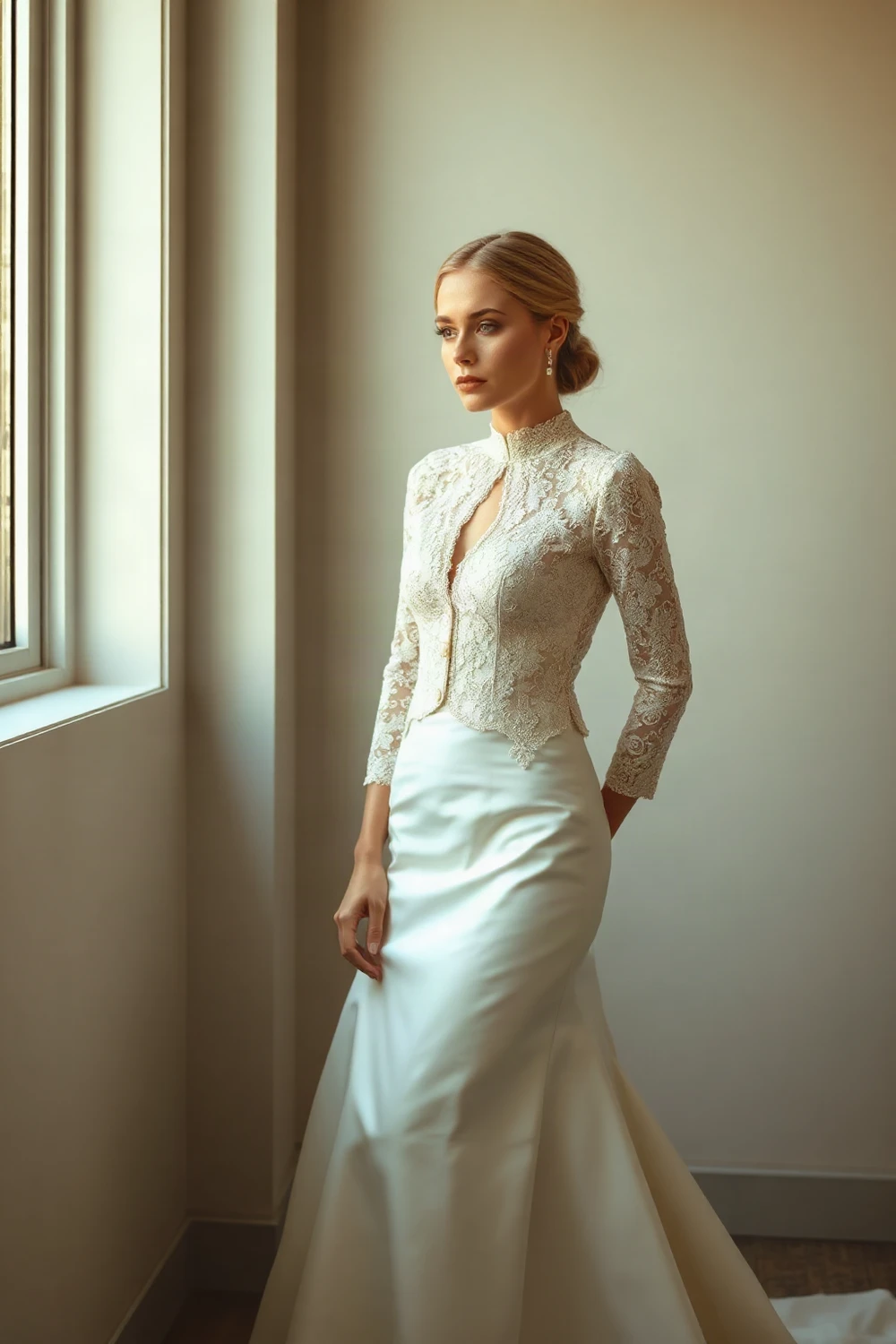
The fifth look features a high-collared lace-look layer resembling a short fitted jacket. Its narrow front opening reveals part of a sweetheart neckline, while pointed lower edges frame the waist. Floral sleeves meet a completely smooth mermaid skirt, creating a strong textural division within one pale palette. Window light reinforces it with small shadows across the patterned upper surface.
For vintage-influenced tailoring and visible layering rather than one continuous material effect, assess the upper layer with arms raised, body seated, and shoulders forward. Check collar contact and whether the front edges stay positioned. Test the mermaid skirt separately for knee room and a longer stride. With the prominent collar and floral surface, small earrings may suffice. If adding a veil, try positions that leave some structured shoulder and back detail visible rather than hiding the defining layer.
Building the Back View with Buttons and a Train
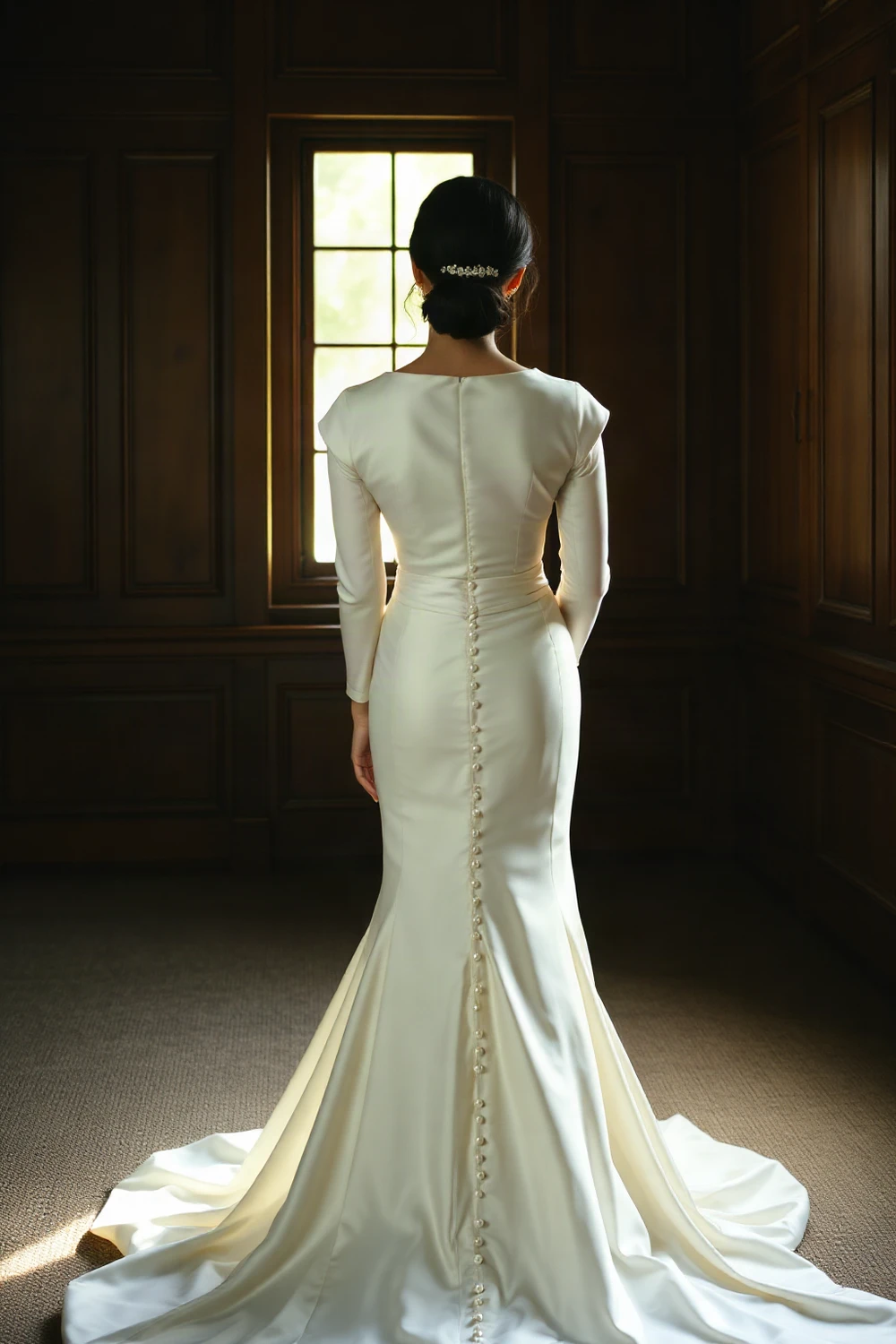
The final image centers the rear view. A wide, shallow neckline exposes the nape, while angular layered shoulder shapes structure an otherwise smooth upper section. Horizontal folds define the waist before covered buttons run down the close skirt to the train’s end. As the lower skirt opens to both sides, this line forms a continuous vertical axis.
Treat the buttoned back as both visual detail and practical closure. Ask how it fastens, check for seated pressure, and rehearse gathering the train after the aisle. A low updo reveals the neckline and start of the buttons; long loose hair can hide both. Add the intended veil during fitting and photograph everything from behind. This shows whether veil, hairstyle, shoulders, buttons, and train support one another or compete within the same narrow area.
A long-sleeve wedding dress never depends on the sleeve alone. An open wrap neckline softens the upper body; a bateau or high neck makes a more graphic frame. An empire seam releases a flowing skirt, while a natural waist, close mermaid line, or buttoned center back adds structure. Decide whether neckline, waist, surface, skirt movement, or back view should lead, then let the rest support it. Before choosing, photograph the dress from front, side, and back in more than one light. Sit, walk, and move the arms in the intended shoes and underlayers. The strongest balance remains visually coherent and practically manageable beyond a still pose throughout the event.
Compare long-sleeve wedding dresses through their complete proportions rather than their sleeves alone. Six visual ideas show how necklines, waist placement, skirt shape, surface detail and the back view can work together.
Frequently asked questions
Should a long-sleeve wedding dress have an open or high neckline?
An open V or wrap neckline leaves more visual space around the neck and chest, while a high collar creates a contained, graphic frame. Do not choose from appearance alone. Turn your head, sit, lean and raise your arms during the fitting to assess contact, stability and range of movement.
How can I test movement in embellished long sleeves?
Fully bend your elbows, reach forward and upward, sit in a chair and try a few gentle dance movements. Notice any pulling at the shoulders, elbows or wrists. Also assess how the lining, seams or decorative surface feel against the skin instead of checking only how the sleeves look in a standing pose.
How do I choose between a mermaid skirt and a flowing skirt?
A mermaid skirt follows the hips and legs before flaring, whereas a flowing skirt falls more freely from the waist or under-bust seam. Consider walking distance, stairs and seated time at the venue. Test both in the intended shoes by taking longer steps, turning and sitting.
What accessories work with a high-neck long-sleeve dress?
A high neckline already fills the space around the neck, so a necklace is often unnecessary. Compact earrings, a narrow headpiece or one controlled hair ornament can create a clearer composition. A very plain dress may support one stronger accessory, while a patterned bodice usually benefits from quieter pieces.
How should a buttoned back and long train be assessed at a fitting?
Ask how the buttons are secured, check their feel while seated and discuss any backup closure. Walk, turn and use stairs with the train, then rehearse how it will be gathered. Photograph the planned hair and veil from behind to see whether they obscure the button line or shoulder shape.