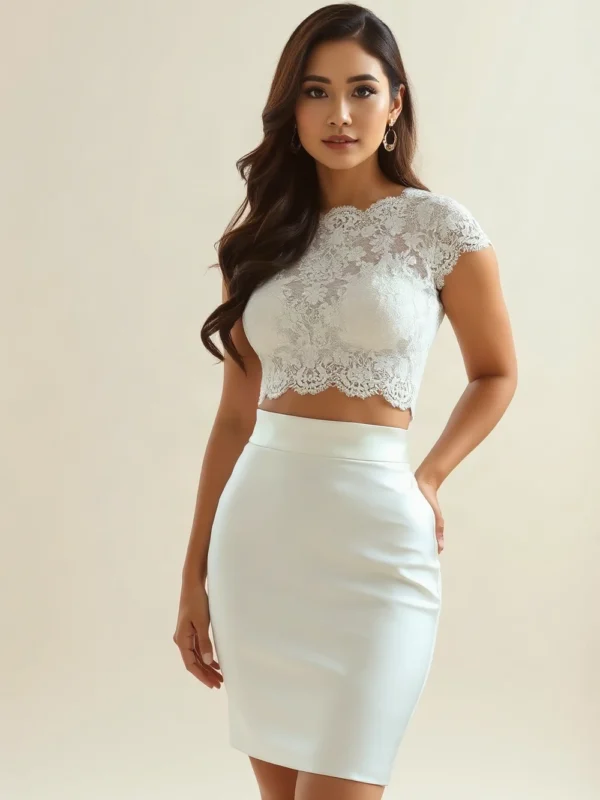
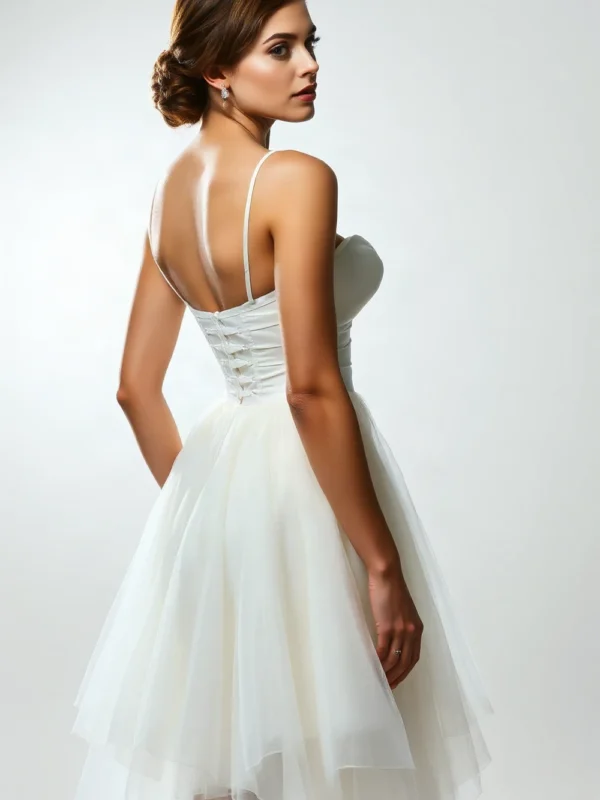
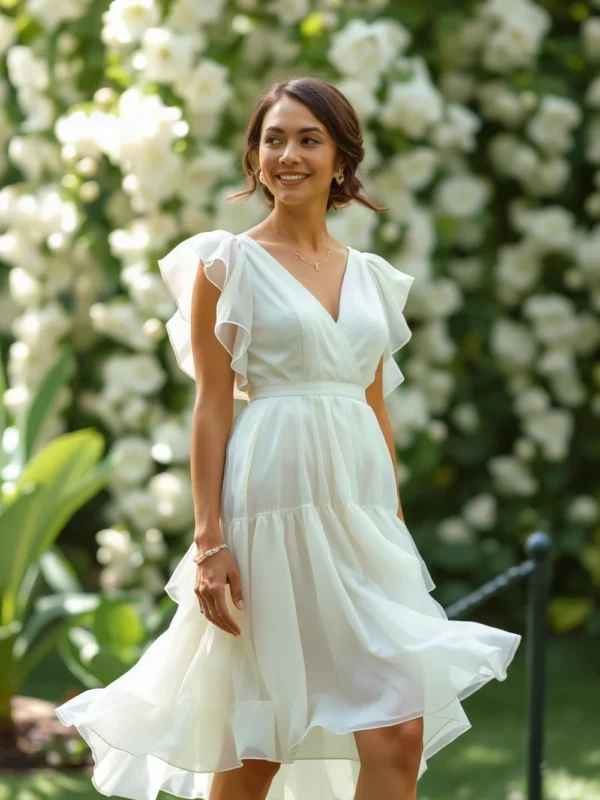
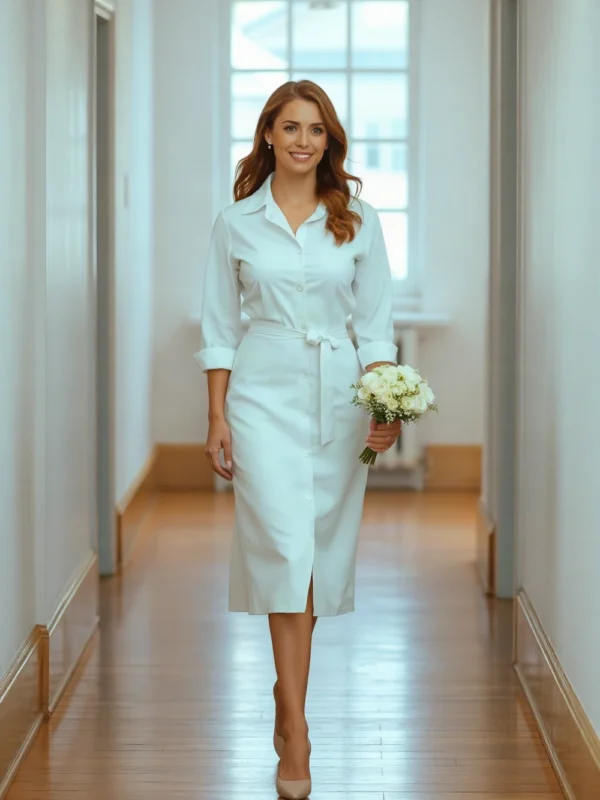
The shared theme of this gallery is how a bridal look can feel distinctive without a floor-length skirt or train. Six white concepts move from a narrow two-piece outfit to layered, asymmetric and generously flared skirts. As the hem rises, the shoes and the point where the dress meets the leg become more visible, so the balance of the entire silhouette matters as much as the bodice.
The first image presents the sharpest, most streamlined option: a lace-look cropped top paired with a smooth pencil skirt. The second changes direction with fine straps, an open lace-up back and airy, tulle-like layers. One creates a close, controlled line; the other expands from the waist and brings greater volume and movement to the lower half.
The third and fourth concepts offer contrasting approaches suited to a daytime setting. A V-neck high-low dress with flutter sleeves appears soft and fluid in a flower-filled garden. The collared, button-front midi dress is more tailored and urban. Its rolled sleeves, tied waist and front opening distinguish it from the more overtly romantic shapes elsewhere in the gallery.
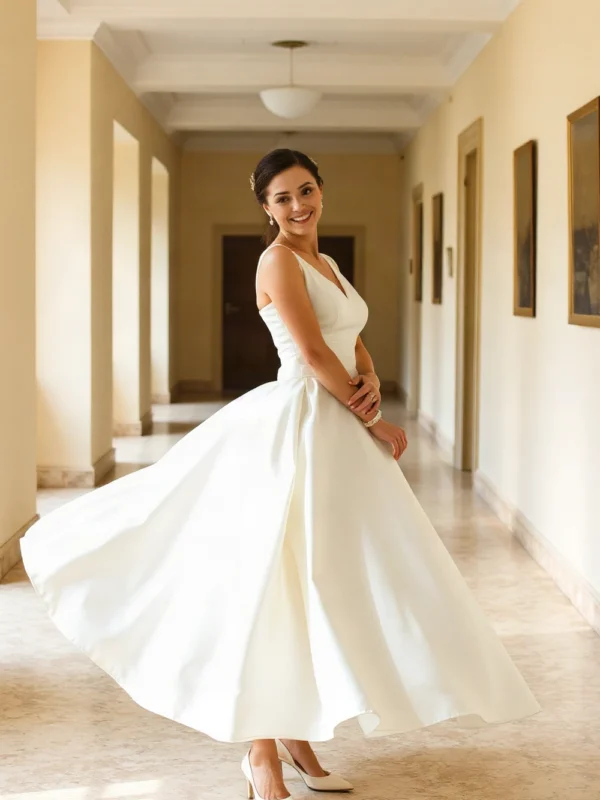
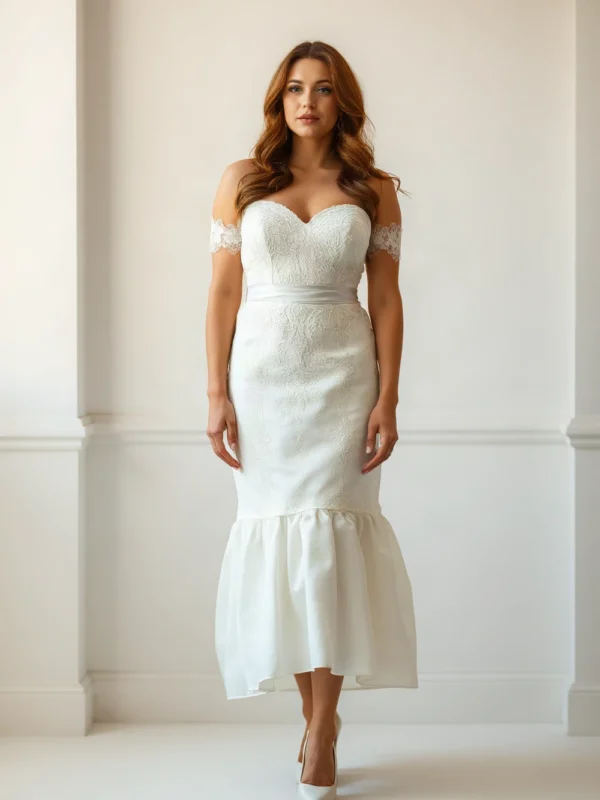
In the fifth image, a smooth, full tea-length skirt becomes the focus as it opens during a turn. The sixth design uses a lace-look surface, off-the-shoulder bands and a fitted midsection ending in a plain flounce. At a similar overall length, one produces a broad sweep while the other maintains a more vertical and controlled outline.
When choosing among these directions, consider the venue, time spent sitting, dancing plans and whether the shoes should form part of the look. During a fitting, do more than stand before a mirror: walk, sit, raise your arms and turn. Seeing how the hem and volume respond to those movements turns visual inspiration into a practical decision.