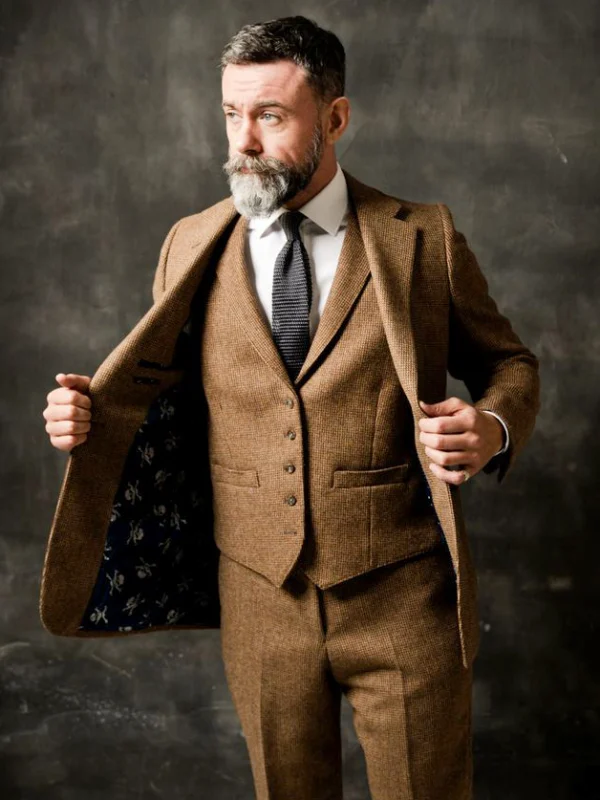
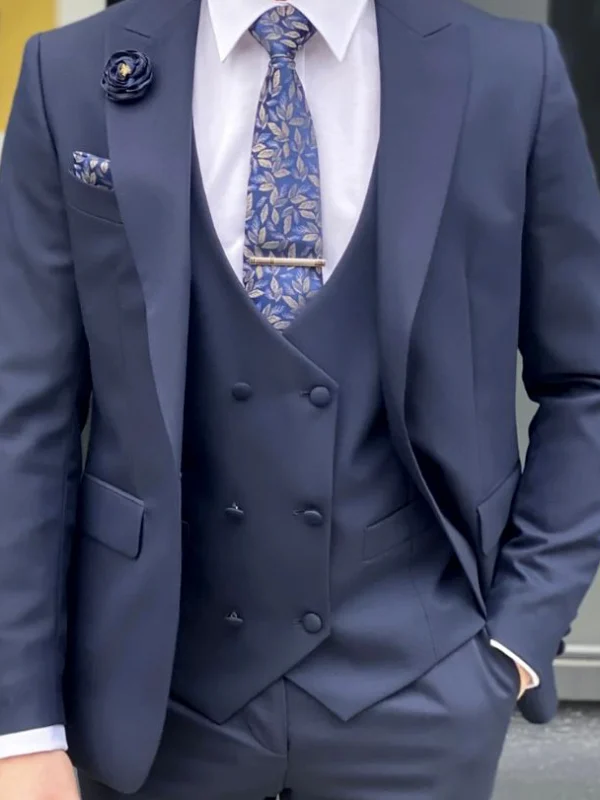
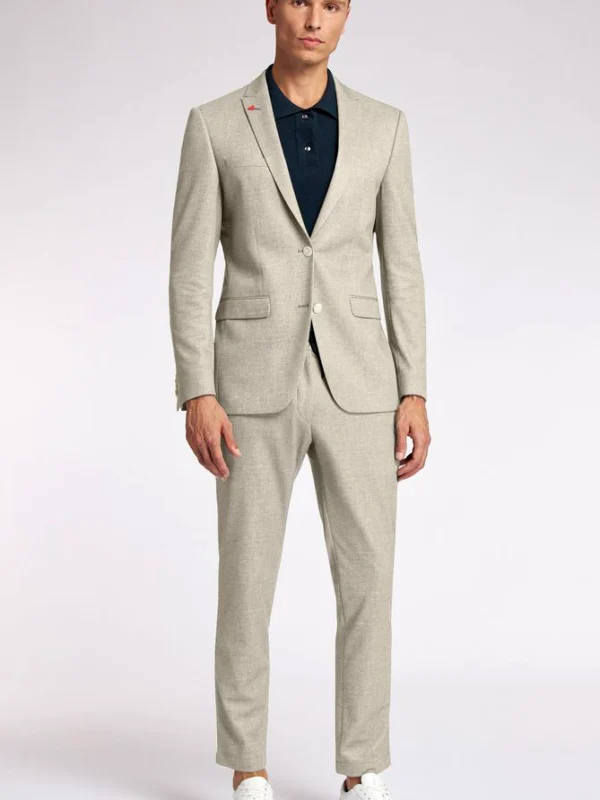
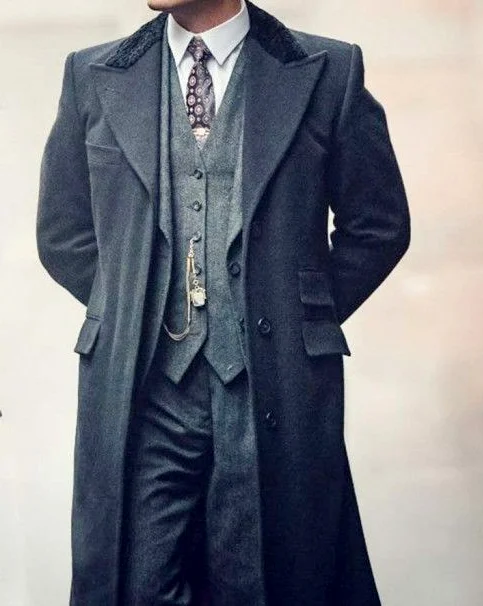
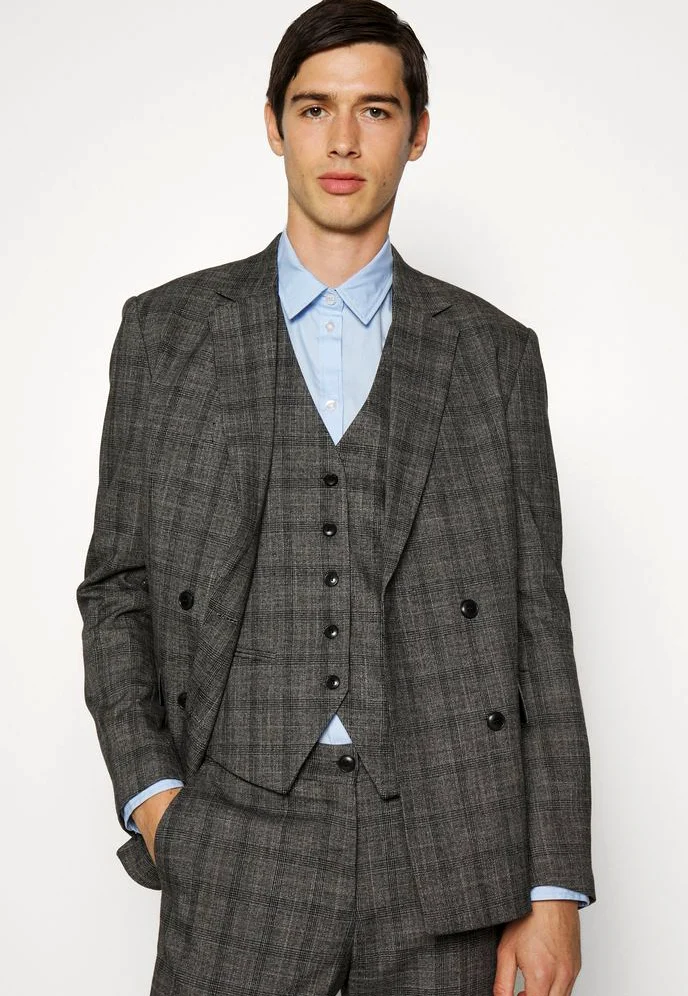
A secondhand suit needs more than a convincing style photograph. The actual offered pieces, current measurements, condition and remaining work matter. The four pictures here serve only as shape references: two differently coloured upper combinations, a long dark coat, a grey three-piece and a brown checked outfit. They establish neither used status nor age or material. Use them to describe the combination you want, then assess the concrete offer against the same clear questions. Keep the desired appearance and information about the actual product understandable as separate parts of your decision.
Define the actual secondhand suit offer first
Record which pieces are really included. Do jacket and trousers come together, is a visible waistcoat included, and is a photographed coat sold separately? Request current pictures of those exact pieces and their identifying information. An attractive combination can draw on several offers. Write down your complete need rather than only a colour. An existing shirt and your own shoes may stay while you search for the missing components that make the intended outfit work.
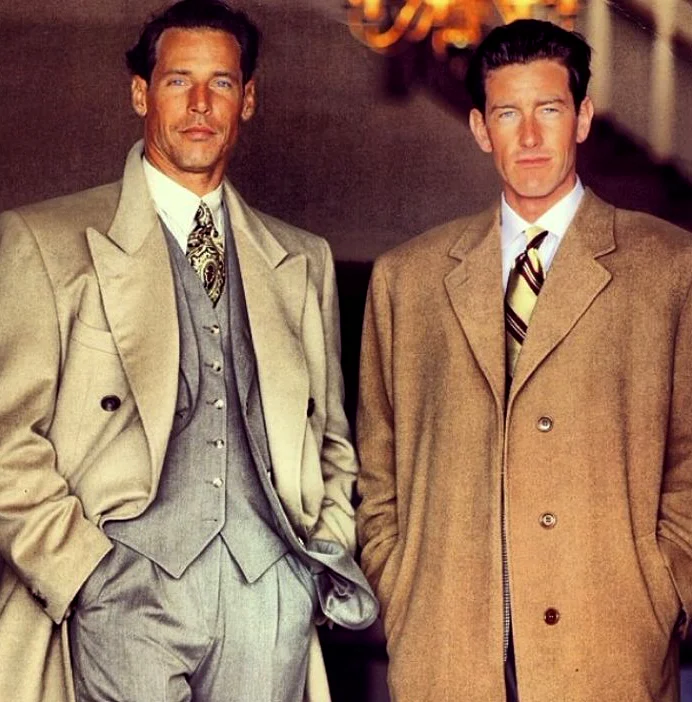
Separate the style idea from a claim about the garment’s history. Newly made clothing can look backward-looking; a used piece cannot be dated from checks, waistcoat or photographic setting. Ask what is known and record an unknown as open. Then decide which information matters to you. You can assess an appealing offer for its present-day shape without assigning a particular era or special origin to it. If age is your main goal, pursue that question independently of visual preference.
Assess condition through current detail views
Have the front, rear and accessible inner areas of the offered garment shown. Request details at collar, sleeve ends, pockets, waistband and hem as well. Ask about visible damage, known repairs and issues the general view does not explain. At an in-person inspection, look at those areas yourself. Use pockets and fastenings as intended. The aim is an understandable condition description you can compare with your planned use, rather than a broad quality judgement inferred from surface appearance.
Discuss lining and seams wherever accessible. A repair is concrete information rather than a reason to reject every garment automatically. Have the worked area shown and ask whether further work is recommended. If smell, marks or care remain unresolved, ask about professional assessment of the actual piece before committing. Do not promise yourself easy removal from a photograph. You need an honest basis for your preference and the later cost comparison, with unresolved points kept visible rather than absorbed into an appealing overall impression.
Combine current measurements with real movement
Ask for current garment measurements and how they were taken. Compare them with a suit that fits you today, using the same method where possible. An old size label alone does not explain how an altered piece now fits. Record shoulders, chest or waist, sleeves and relevant trouser measurements separately. If uncertain, have the measuring points shown. Similar numbers help only when they describe the same areas, and one favourable measurement cannot settle every part of the outfit.
Try the piece with your shirt and planned shoes wherever possible. Reach forward, sit, stand and walk several steps. Check jacket front, waistband and knee area independently. For a secondhand suit, an attractive price does not replace this movement comparison. Resolve open fitting questions on a remote offer before deciding. A narrow pose or a hand holding the jacket establishes no fit with relaxed arms. Describing the specific area and action gives the seller or alteration specialist a clearer practical question.
Ask about earlier alterations and further possibilities
Ask explicitly about known shortening, waistband work and other previous alterations. Have accessible worked areas shown. Assess a further change with a skilled provider on the actual garment. A visible seam cannot establish a general allowance for lengthening sleeve or trousers. Describe your goal as a concrete movement or preferred line so that the answer depends on available construction rather than a broad promise of perfect fit. Do not assume a small intervention before the area has been assessed.
Treat jacket, trousers, waistcoat and coat as separate tasks. Changing an inner jacket cannot automatically resolve space in a coat worn over it. Ask about scope, cost and another fitting. Choose trouser length with your shoes. If an important change remains unresolved, treat it as a buying question before commitment. A supposed minor adjustment should not be the foundation for selecting an otherwise unsuitable piece. Establish which real work can turn the offered shape into the outfit you actually want to use.
Use style references for layers and pattern
The long dark outer line in one reference suggests a concrete layering question. Wear the inner pieces first, then the actual coat open and fastened. Reach and sit in the complete arrangement. Compare without the coat too if you will remove it during the event. For a waistcoat, inspect back, fastening and waistband transition. A narrow central area under a jacket cannot explain the extra layer’s complete condition or fit. Both outfit states deserve assessment beyond an appealing open-front picture.
The grey and brown checks help explain your pattern preference. Decide whether you want it on one piece or distributed across several. Our checked suit guide adds shirt and accessory comparisons. The suit lapel guide supplies questions about upper shape. These aids cannot date an offer. Use them to show the seller or alteration provider the present-day arrangement you want. Enjoying a pattern does not require purchasing every accompanying accessory.
Compare total work and unresolved costs before committing
Compare price together with explained alterations, clarified care and missing pieces. Record each established amount and mark open costs. A cheaper offer may require different work from a dearer one. Compare secondhand suit options on the same basis. Decide whether the offered shape already appeals to you or whether several uncertain interventions would need to create the result. Several unresolved tasks are a different decision from one understood small change, even when the original price is attractive.
Record which fittings and sequence are realistic before your occasion. Ask the provider about the actual terms for viewing, delivery and any possible return; assume none. This is a practical offer question rather than a statement of general legal entitlement. Request important missing information specifically. A complete description of condition and work is more useful than more atmospheric pictures of the same unresolved product. Knowing which answer could change your decision helps keep the conversation concrete.
Record the chosen pieces and their care
Finally summarise what you have seen, measured and clarified. Which pieces are included, what work is agreed and which question remains open? Compare the complete outfit with your shoes, shirt and any bag. Add small accessories afterwards. A chain visible in a reference requires no purchase of your own. If a secondhand suit will be worn in your actual plan, the main pieces should already work without additional accents. This connects the appealing visual idea to a concrete usable combination.
Read the care label on every actual piece. GINETEX explains the symbols. Checks, dark colour and an older-looking style supply no cleaning method. Ask for assessment of the finished garment where instructions are absent or unclear. Your decision then connects a desired shape to current condition, understandable measurements and resolved work. That is a useful buying basis whether you want a backward-looking look or a quieter contemporary combination, with facts about the offered pieces kept clear beside your visual preference.
Assess the actual secondhand suit offer before committing. Compare condition, current measurements, earlier alterations and total work on the same basis.
Frequently asked questions
Do the style pictures establish used condition?
No. They show shape ideas. Request current condition information and pictures of the exact pieces in the actual offer.
Is the original size label enough?
No. Ask for current measurements and the measuring method; earlier alterations may affect the present shape.
Can I assume further alterations are possible?
No. Have the desired work assessed on the actual garment and clarify scope, costs and another fitting.
How should I compare two prices?
Include explained alterations, clarified care and missing pieces. Mark open costs and compare both offers on the same basis.