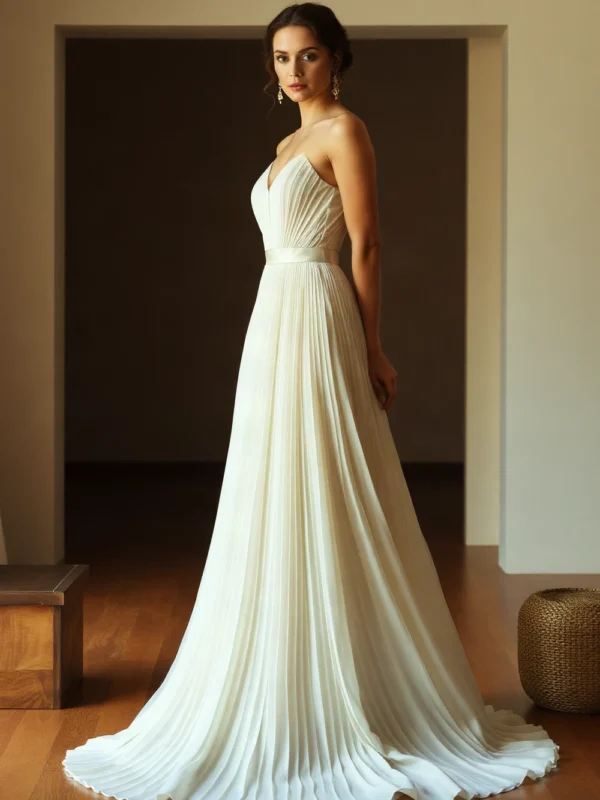
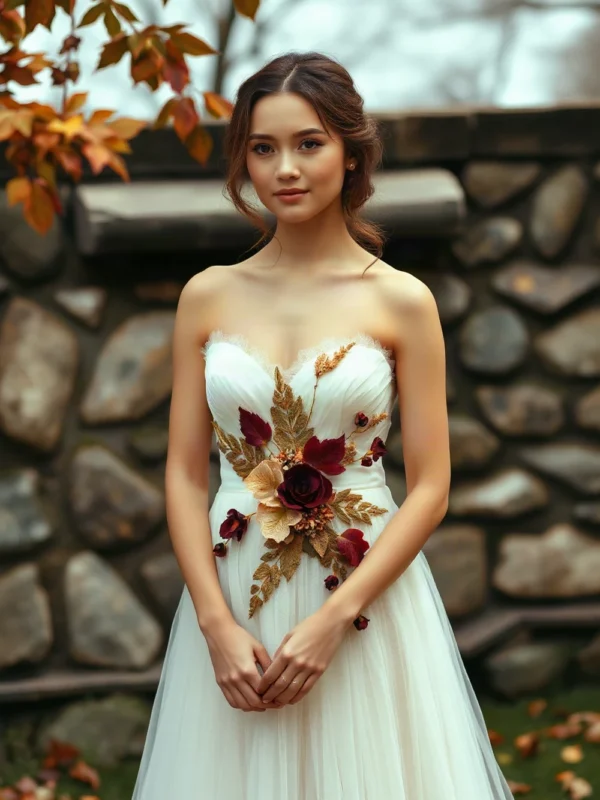
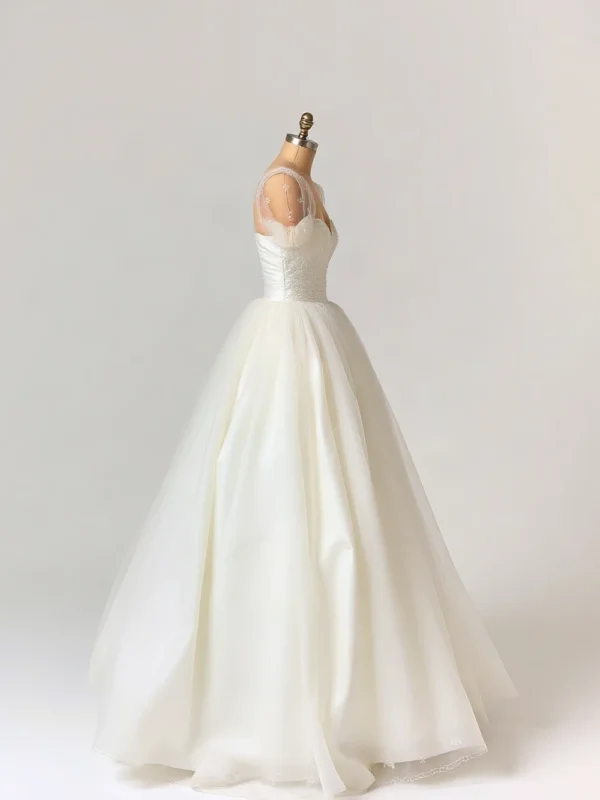
Princess ball gown wedding dresses are defined not only by full skirts but by how that volume relates to upper-body detail. Within the same pale palette and defined waist, a strapless sweetheart neckline, softly draped shoulder band, long lace sleeves or deep V back can redirect attention. Flower scale and placement also change the effect: flat botanical lace follows a bodice, raised roses animate a skirt, and small pearl-like pieces read as texture rather than a continuous motif.
Use these six visuals to compare where detail sits, not to prescribe one ideal dress. Images cannot verify fiber content or a purchasable product, so the discussion stays with visible silhouette, surface and composition. First decide whether you want attention near the face, shoulders, waist, back or skirt. At a real fitting, test neckline support, arm movement, the skirt’s floor space and train management while walking, sitting, embracing and dancing.
Concentrating botanical lace on a sweetheart bodice
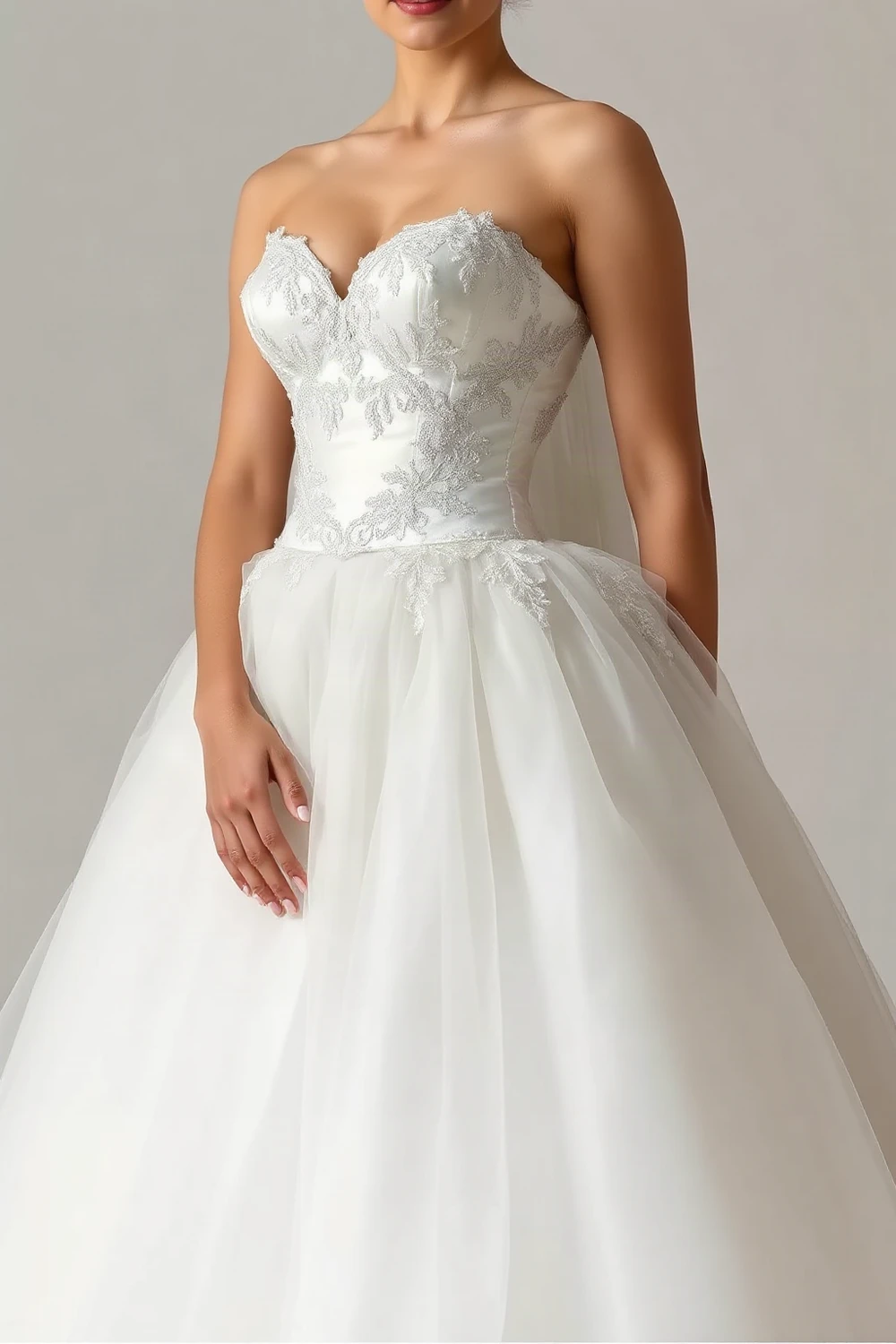
The first look sets a richly patterned bodice above an almost plain, voluminous skirt. Its strapless sweetheart neckline exposes the shoulders, while pale botanical forms run from the upper edge toward the waist. A few motifs cross the transition, avoiding an abrupt division, but the broad skirt stays calm and open.
This distribution places floral emphasis near the face without covering the whole gown in pattern. At a fitting, check where the upper edge sits from the front and side and whether it stays stable while reaching or turning. See whether lace direction and bodice seams share a lengthening effect. Leaving the neckline free of a large necklace can keep the sweetheart contour and botanical pattern clear rather than create a competing focal point.
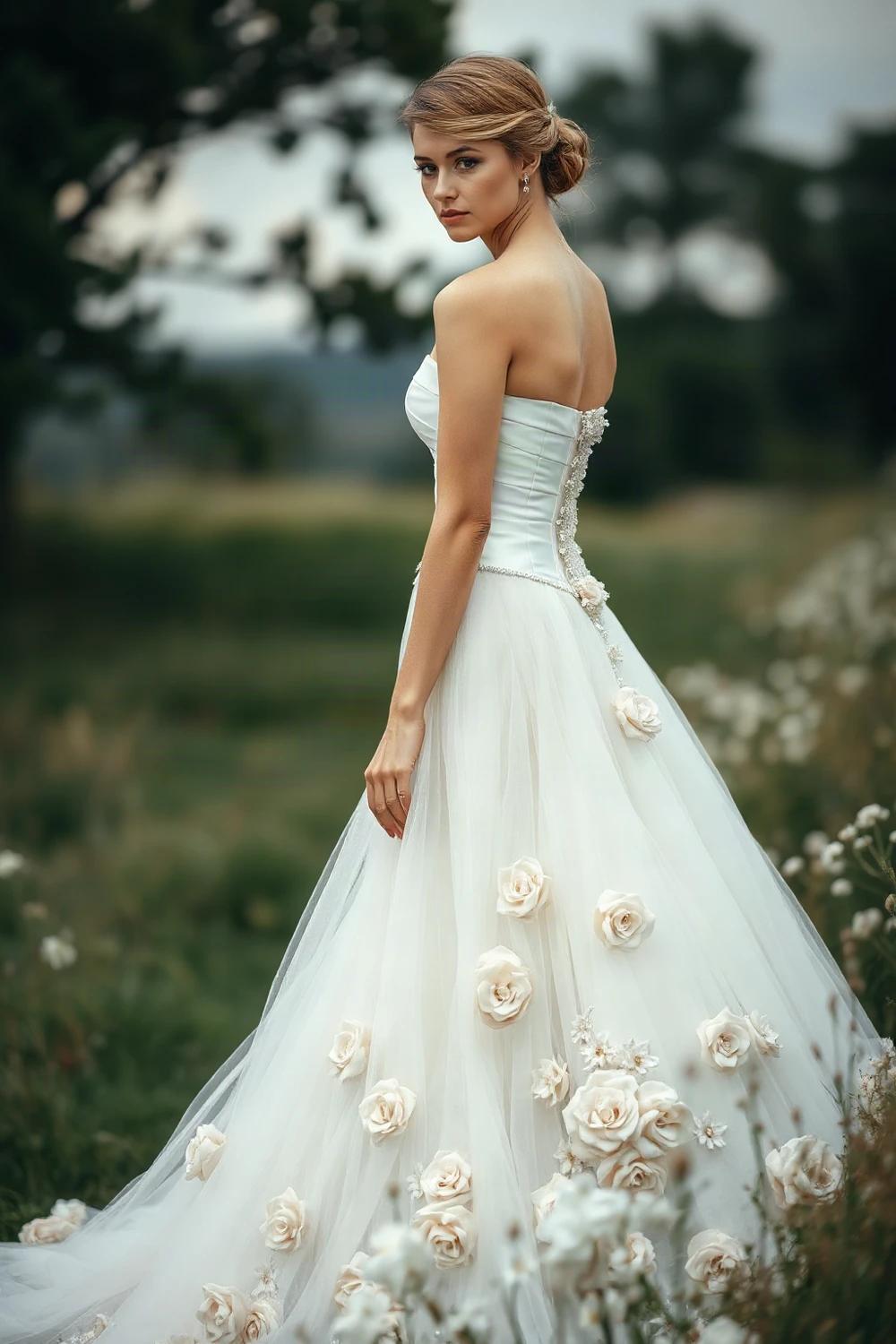
Creating rhythm with raised roses on the skirt
In the second visual, a relatively smooth strapless bodice leaves the floral narrative to the broad skirt. Large cream-white roses appear at wide intervals near the waist and increase toward the hem. The garden setting reinforces the romantic association, but the gown’s defining feature is each appliqué’s raised surface, which creates more depth and shadow than flat lace.
Scale is crucial: large flowers remain distinct in wider photographs but may compete with an elaborate bouquet, decorated veil or dense venue florals. Check placement around the sides and back, since an empty area may stand out in processional or ceremony images. At a fitting, sit, climb steps and gather the skirt to learn where appliqués meet hands and nearby surfaces. Calmer, linear accessories usually preserve the skirt’s impact.
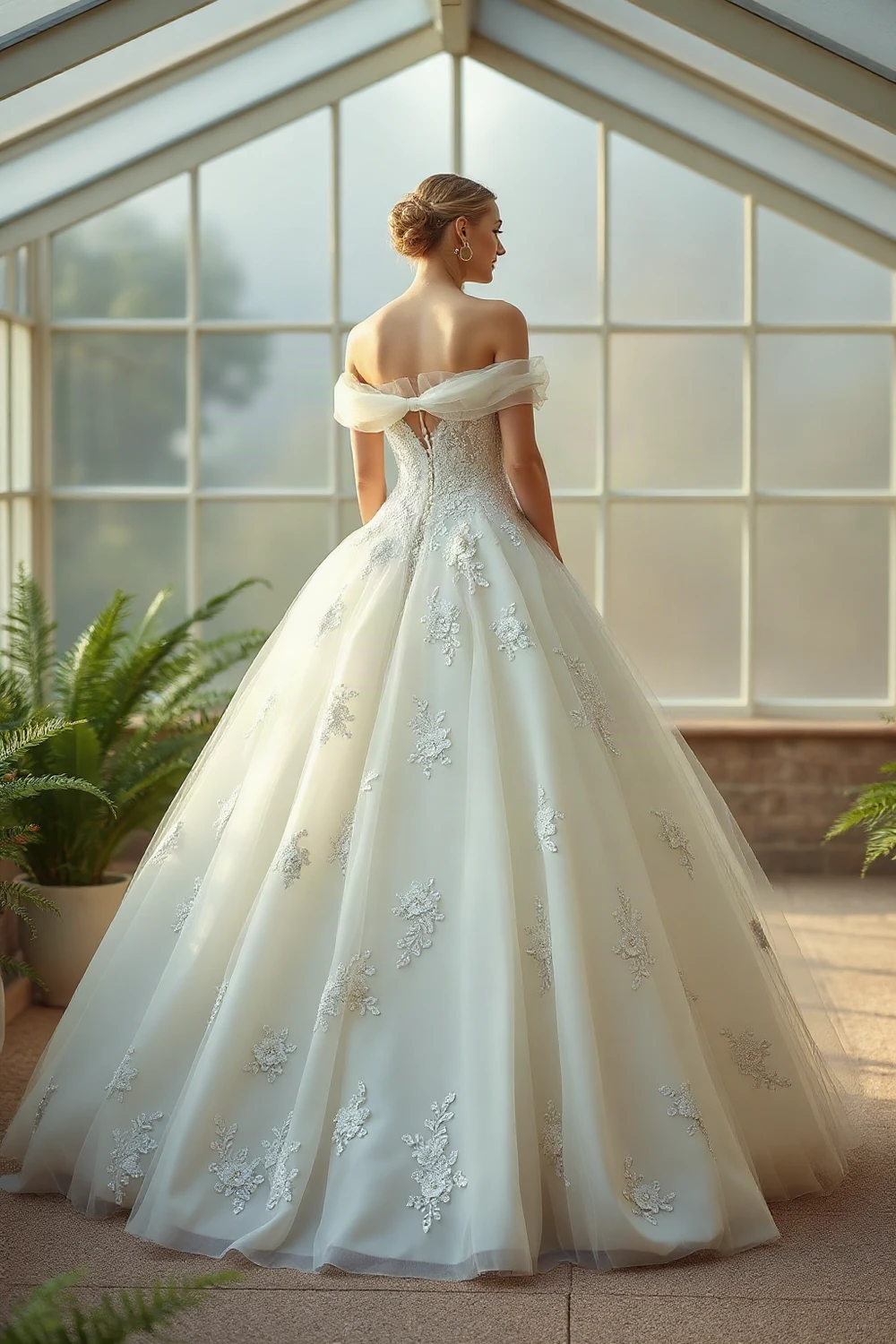
Balancing an off-the-shoulder band with spaced motifs
The third look adds a soft off-the-shoulder band, a horizontal counterpoint to the skirt’s long vertical flow. Fine texture and a small opening animate the fitted bodice’s back, while leafy lace motifs sit at wide intervals across the full skirt. Ample pale ground remains visible, so the gown feels decorated without looking continuously patterned, and the panel-like folds stay legible.
Test this shoulder line in motion: reach forward, embrace, sit and mimic dancing to see whether the band rises, twists or presses the arms. Consider its horizontal emphasis before adding a strong necklace or shoulder accessory. Its motif density falls between dimensional roses and a completely smooth skirt. On the actual gown, check whether motifs bunch at the waist or look accidental near the hem.
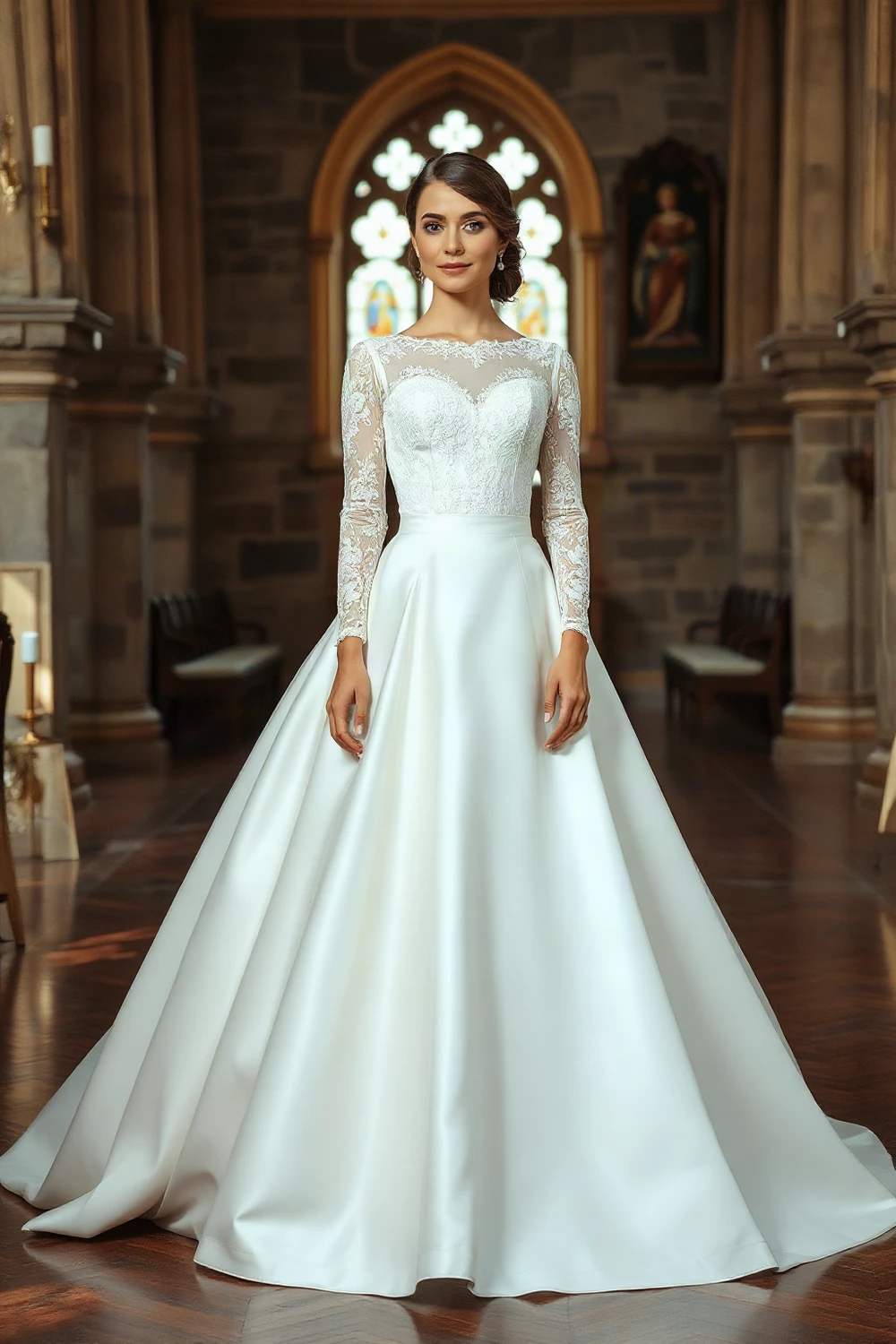
Letting long lace sleeves lead above a plain skirt
The fourth concept concentrates floral lace in an illusion bateau neckline and long fitted sleeves, leaving the wide skirt smooth and monochromatic. A sweetheart-shaped inner bodice creates a second neckline beneath the translucent layer. This gives visual coverage to shoulders and arms while keeping the area around the face light. The plain skirt becomes a spacious background rather than another decorative competitor.
Compare more than coverage. Bend the elbows, lift the arms, check wrist length and assess comfort beneath the arms. View the illusion boundary under several lighting conditions. Because lace already frames the neckline, prominent earrings or a restrained hair accessory may provide enough definition without a heavy necklace. Sit and watch how the smooth skirt’s large folds settle, since creasing and reflected light are more noticeable on an unpatterned surface.
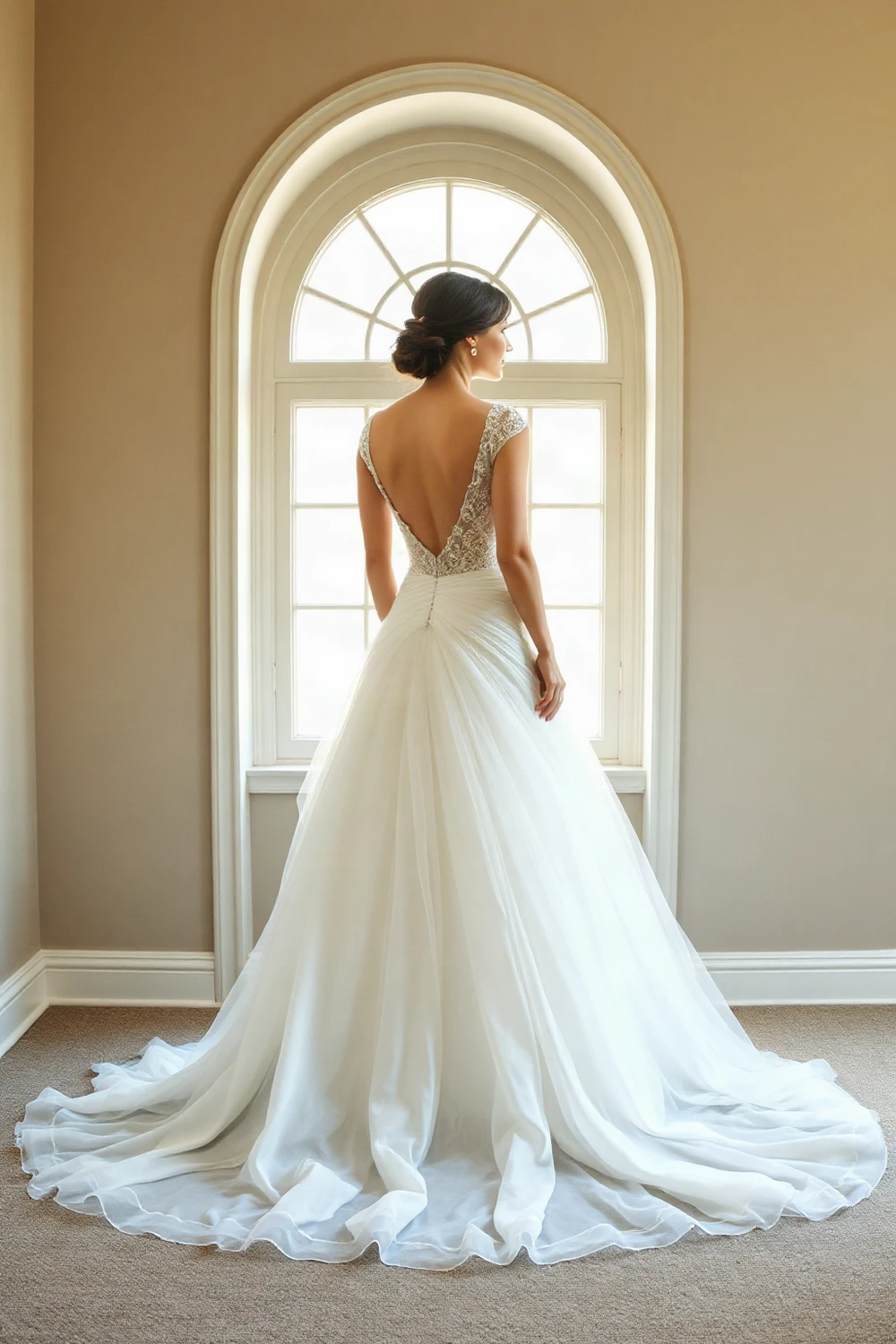
Pairing a deep V back with a fluid skirt and train
The fifth image shifts decoration from the front, making the rear view primary. Wide floral lace-like edges frame a deep V from shoulders to waist. Diagonal gathering sends the fine skirt outward from the center into a long rounded train. Though the lower half looks more fluid than the gallery’s domed princess skirts, the open back and broad floor spread remain strongly ceremonial.
Choose a deep back with a support and movement plan. Check that internal structure stays hidden, shoulder edges hold when you lean forward and the gathered waist does not pinch. A low bun keeps the lace frame visible; loose hair softens it but may cover the defining feature. When judging the train, consider the processional route, dance floor and rough outdoor ground, plus a workable way to lift or secure it later.
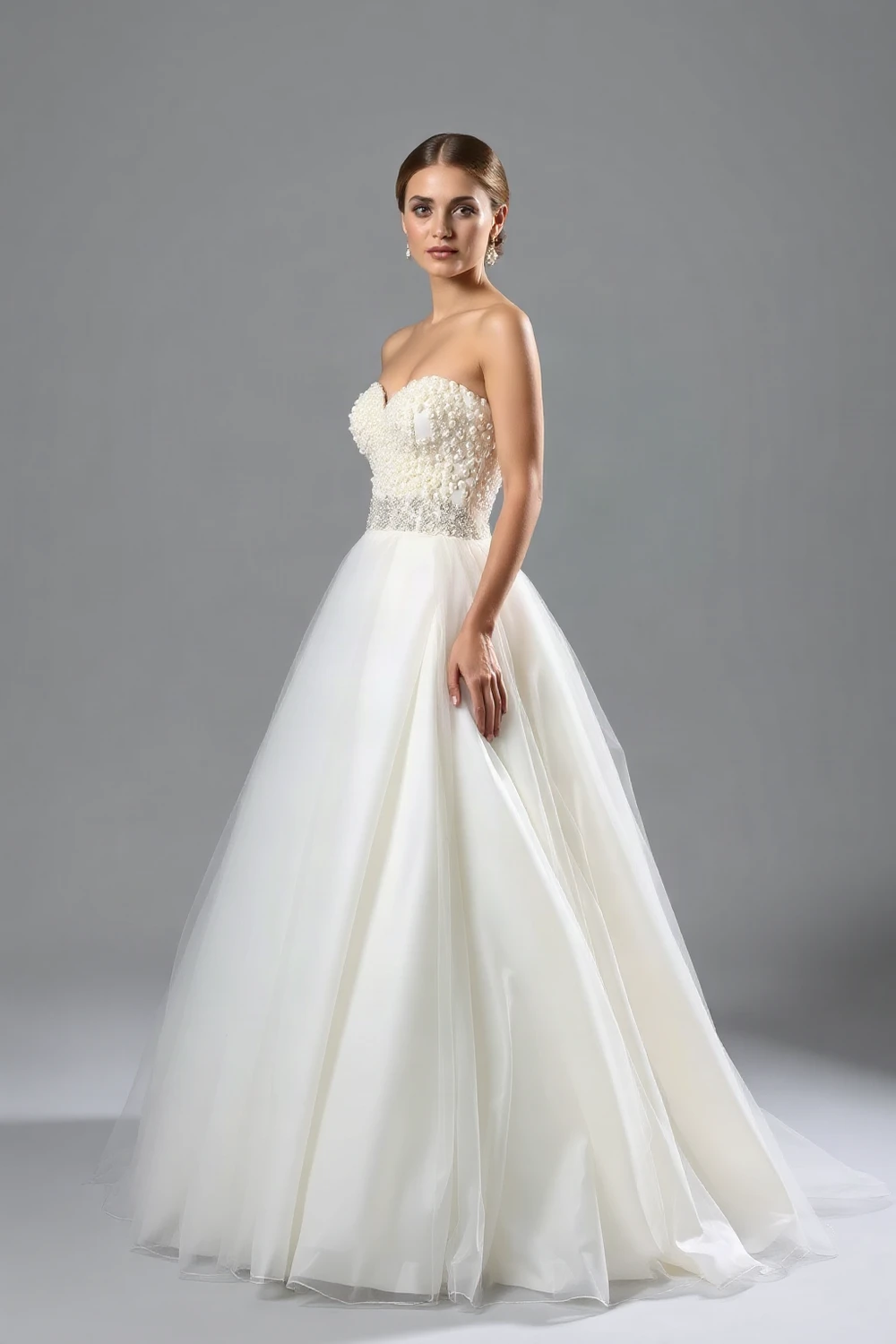
Making pearl-like texture the focus above a quiet skirt
The final look returns to a strapless sweetheart shape but replaces botanical drawing with many small raised details. Rounded pearl-like pieces create dense light and shadow across the bodice, while a finer sparkling band marks the transition to the fuller, quieter skirt. The layered lower section falls in long vertical lines, giving the granular upper surface visual space instead of repeating it throughout.
This suits someone who prefers texture to a recognizable floral motif. Small details may merge into one luminous surface in distant photographs yet appear distinct close up. At a fitting, note where inner arms brush the relief, whether bouquet stems catch and how the waist feels while seated. Rounded earrings or pins can echo the shape, but several extra sparkling elements may dilute the bodice as focal point.
Across these six princess silhouettes, the key difference is not simply the amount of decoration but its placement. Botanical lace and pearl-like relief draw attention to the bodice; raised roses and spaced motifs activate the skirt. Long sleeves frame the front, while a deep V and spreading train define the back.
Build a shortlist by choosing the focal area first, movement needs second and accessories last. View each gown from front, side and back, then sit, walk, raise the arms and turn on a comparable floor if possible. This sequence lets lace and floral ideas support rather than overwhelm the silhouette, while preserving princess scale and matching the venue, day’s pace and preferred appearance across distances and angles.
Compare sweetheart necklines, off-the-shoulder draping, lace sleeves, deep V backs and dimensional florals across six princess silhouettes, with practical guidance for balancing a detailed bodice and full skirt.
Frequently asked questions
Should a princess wedding dress have large floral appliqués or small lace motifs?
Choose large appliqués for a dimensional detail that remains visible from a distance. Widely spaced small motifs create gentler movement while preserving more uninterrupted skirt surface. Compare both with the scale of the bouquet and venue decoration.
What should be tested when fitting a strapless sweetheart neckline?
Raise the arms and turn to see whether the upper edge stays secure. Check the height of the central notch, pressure beneath the arms and the appearance of the support lines from both the front and side.
Can an off-the-shoulder band restrict movement?
It can, depending on its cut and construction. Try embracing, reaching forward, sitting and making dance movements. A band that rises, twists or presses against the arms may not reveal the problem in a stationary pose.
Which hairstyle keeps a deep V back visible?
A low bun or hair swept to one side exposes the V-shaped lace frame. Loose hair creates a softer effect but may conceal part of the feature. Test the hairstyle with a rear photograph before deciding.
What skirt surface balances long lace sleeves?
A smooth full skirt gives dense sleeve motifs room to stand out. A decorated skirt can also work, but its motif scale and density should not compete with the sleeves and should be assessed under lighting similar to the venue.