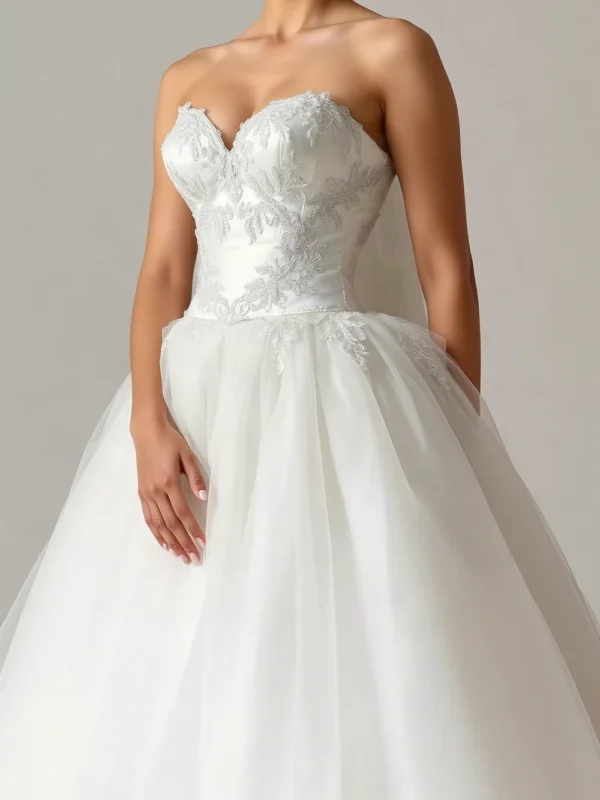
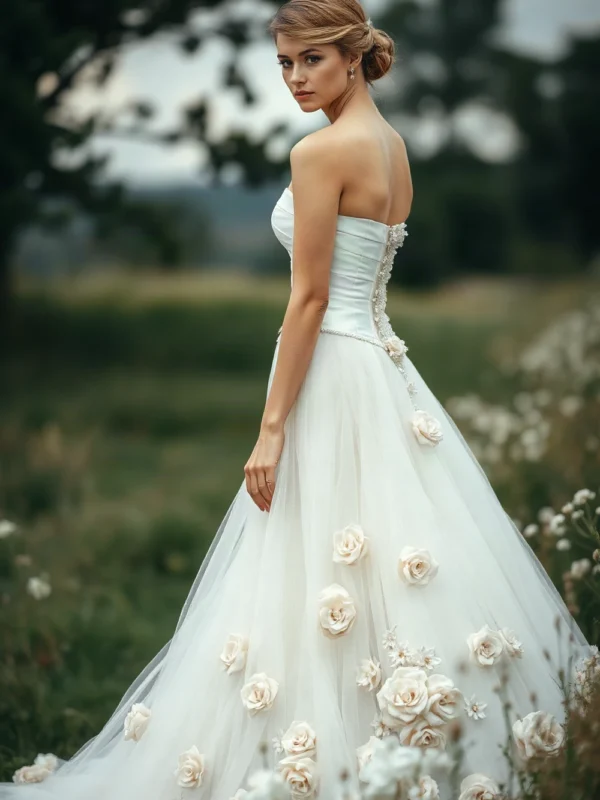
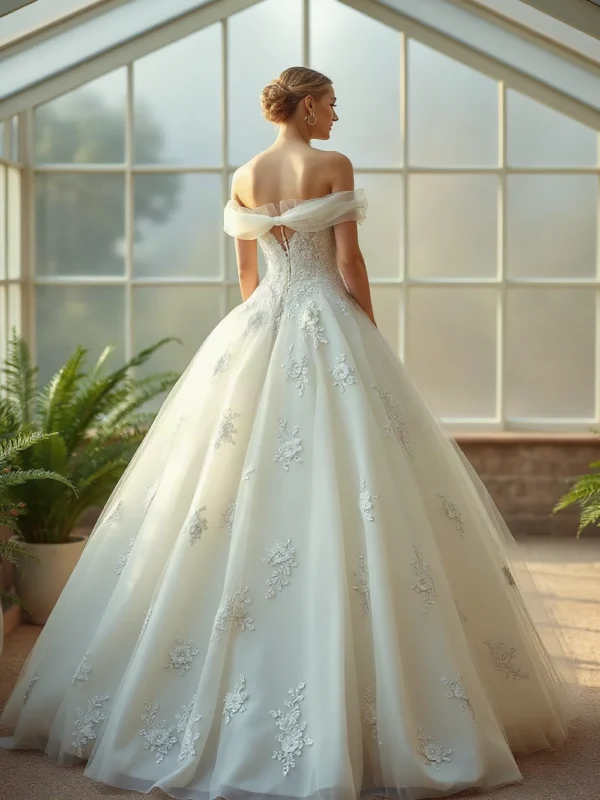
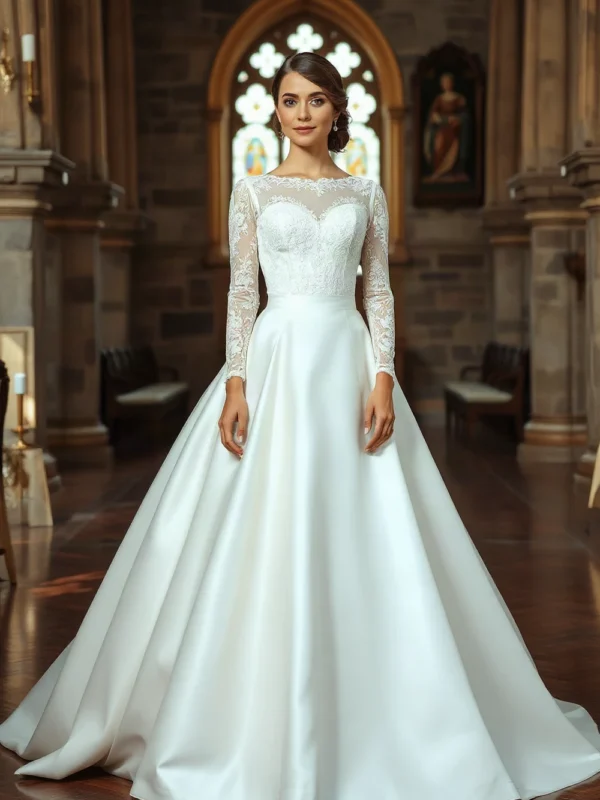
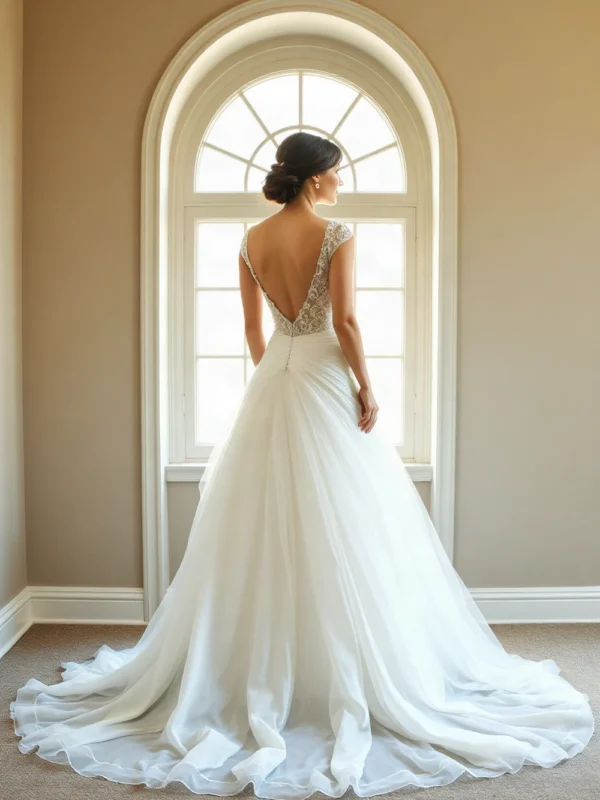
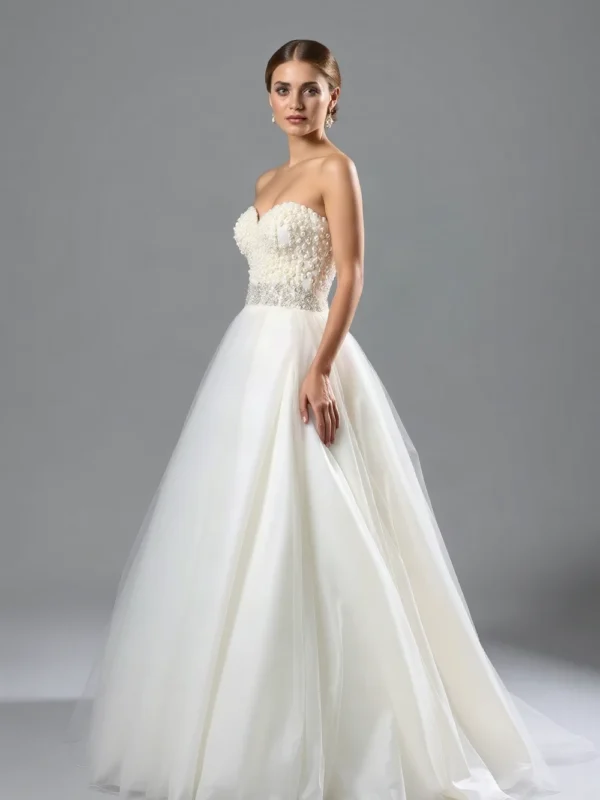
The shared foundation of this gallery is a light-colored princess silhouette that expands from a defined waist. What changes is the location of the decoration. The first and final looks concentrate attention on the bodice, while the middle examples move flowers, lace and structural interest onto the skirt, sleeves, shoulders or back.
The first image pairs a sweetheart strapless bodice covered in flat botanical motifs with a soft, relatively plain skirt. The final image also uses a strapless neckline, but its bodice has a grainier surface made from many small, pearl-like raised pieces. The useful distinction is between a recognizable organic pattern and dense texture that becomes clearer at close range.
The garden look presents the gallery’s most conspicuous dimensional flowers. Large rose-shaped appliqués are scattered across the skirt and become more numerous toward the hem. In the greenhouse scene, smaller leafy motifs sit at wider intervals on a very full skirt, while a softly draped off-the-shoulder band adds a horizontal line. One approach is sculptural and emphatic; the other preserves more open surface.
The long-sleeved look keeps floral lace around the illusion neckline, bodice and arms, leaving the broad skirt nearly plain. It is a useful reference for someone who wants visible sleeve detail without an all-over patterned gown. The deep V-back example reverses the emphasis: lace frames the back, and a fluid skirt spreads into a rounded train rather than holding the same domed volume as the fuller skirts.
When narrowing the options, consider the distance from which each detail should be legible. Test sitting, raising the arms, walking and turning in a similarly proportioned silhouette. A venue’s aisle width, flooring and light can also make raised appliqués, a long train or a reflective smooth surface more or less practical, even when each looks effective in a still image.