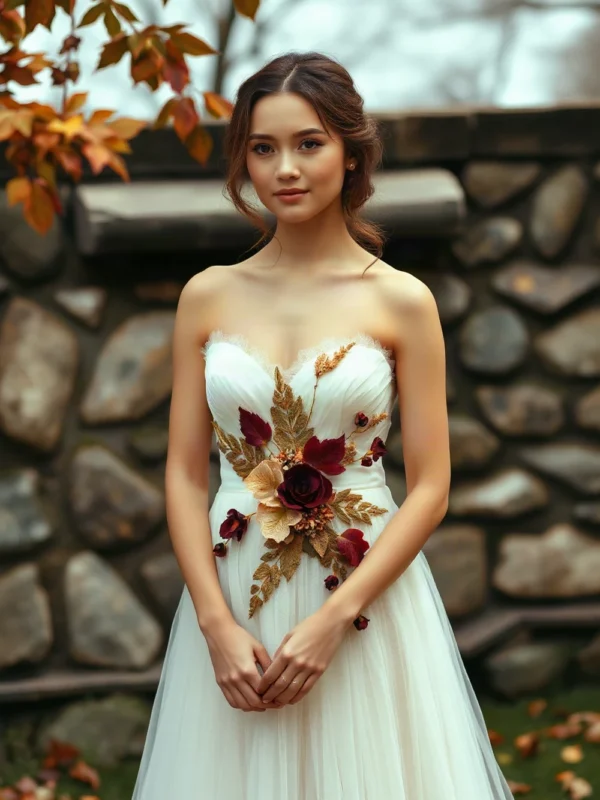
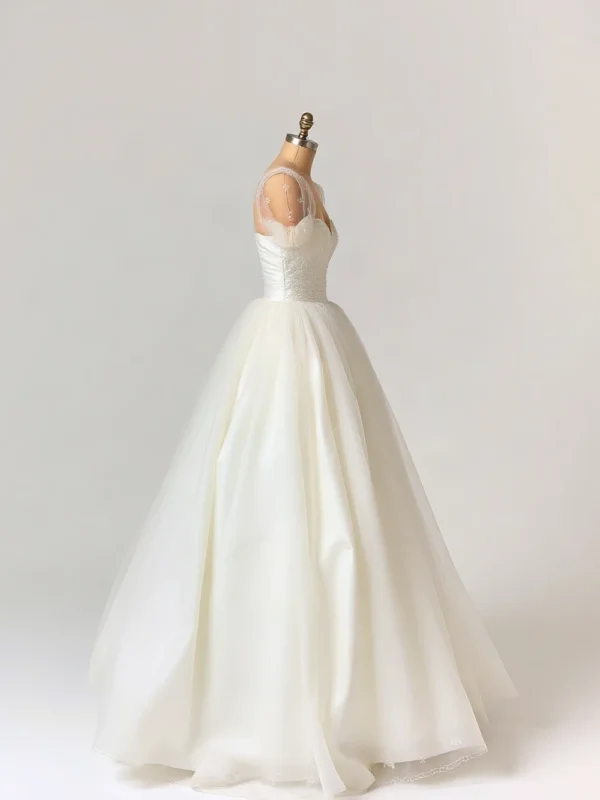
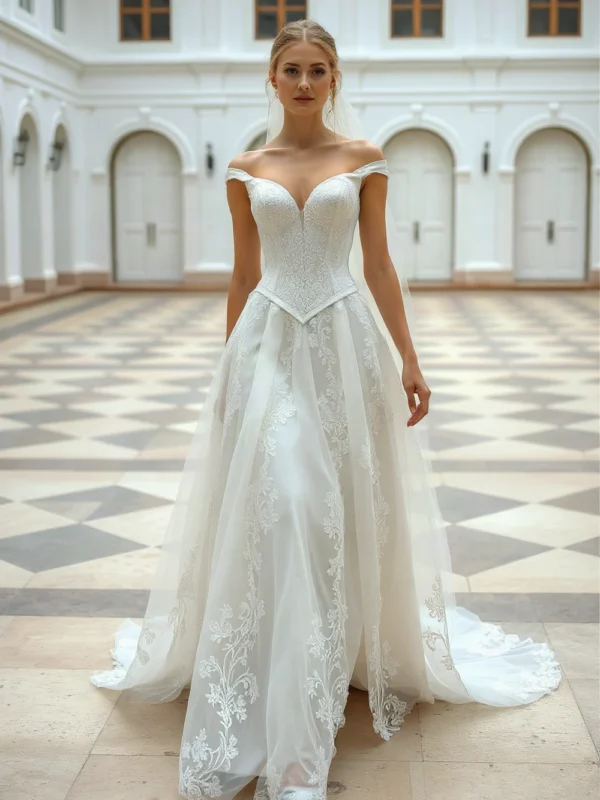
Within 2027 wedding dress ideas, a sculptural effect can come less from dense decoration than from the way a smooth surface is folded, pleated and directed around the body. These six visual concepts share a restrained ivory palette, yet they construct the shoulders, waist and skirt volume in distinctly different ways. Translucent shoulder draping creates a soft frame; radiating pleats supply linear movement; a peplum introduces a clear horizontal accent. The differences among mermaid, A-line, ball-gown and narrow column silhouettes influence more than the still image. They can change stride, sitting comfort, dancing space, accessory choices and the management of a train. A useful comparison should therefore consider neckline support, waist placement, skirt width and rear volume as a connected composition. The following guide treats the images as visual inspiration rather than available products, translating each structural idea into practical questions to bring to a fitting.
Softening an A-Line with Sheer Shoulder Layers
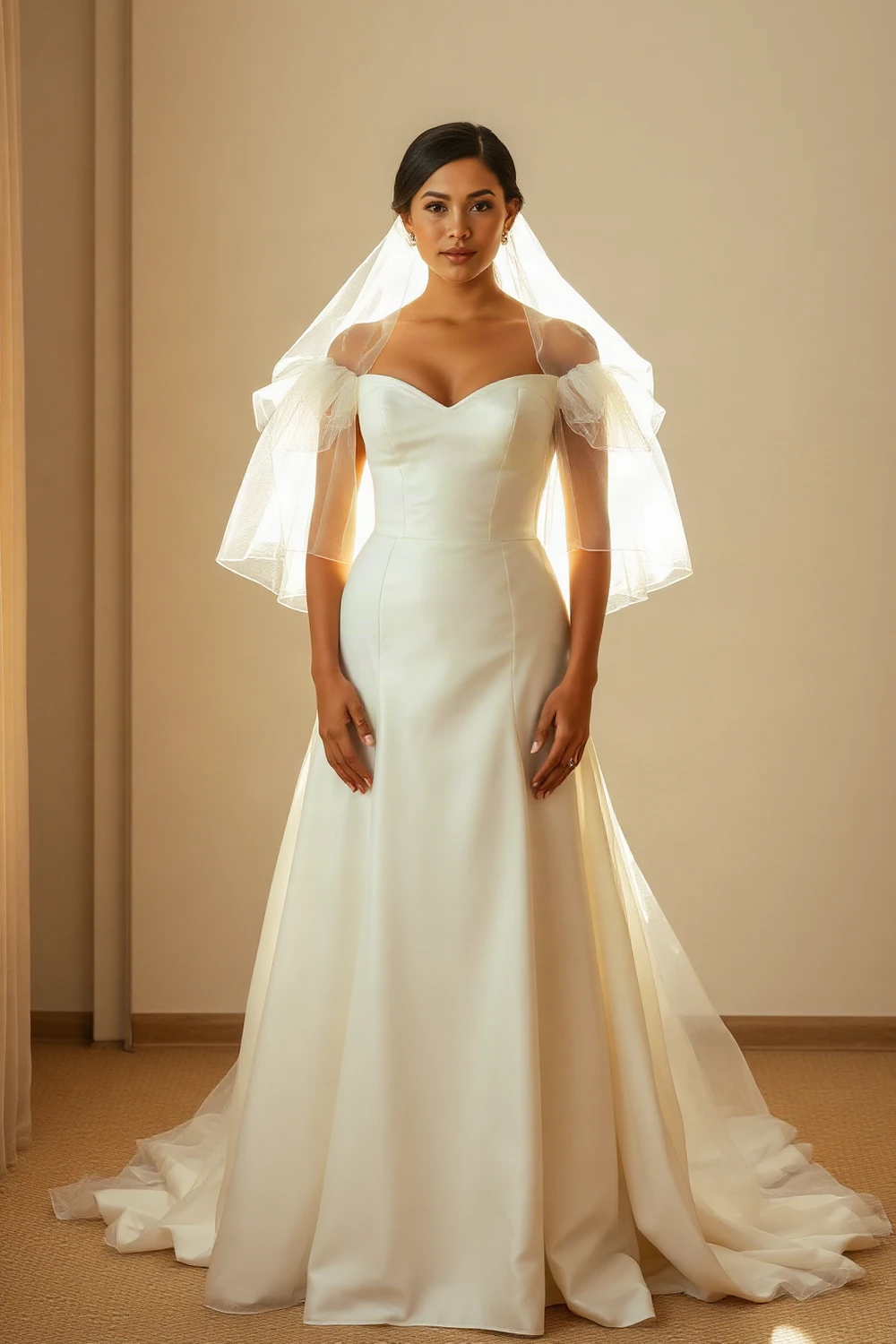
The first look combines a seamed sweetheart bodice with a calm A-line opening from the natural waist. Its most sculptural gesture comes from broad translucent layers crossing the shoulders and gathering around the upper arms. They continue visually into the bright veil-like form behind the figure. The result feels more framed than a completely strapless bodice, but lighter than a conventional sleeve. During a fitting, check whether these pieces tighten when the arms rise, remain orderly beneath or beside a veil, and retain their shape under different lighting. The widening skirt may give more step room than a fitted mermaid shape, although it occupies more floor space. Since movement already surrounds the shoulders, small earrings or a simple hairstyle can leave the upper composition clear rather than adding another dominant element near the neckline.
A Continuous Line in a Clean Mermaid Shape
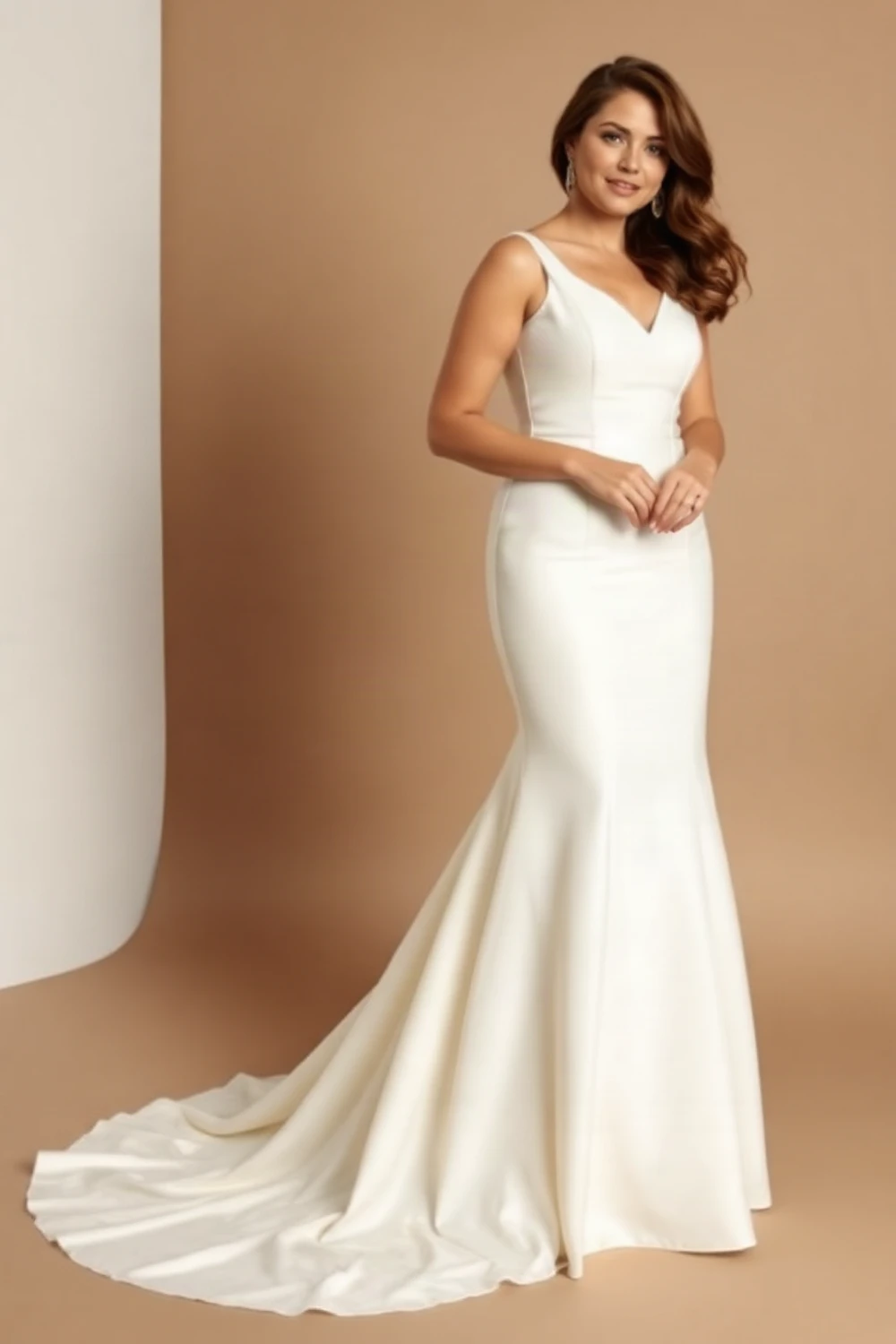
The second concept creates an uninterrupted, close line from the wide-strapped V-neck to the area around the knees. The lower skirt then flares into a train displayed mostly to one side, making the silhouette the principal feature of the unpatterned surface. Compared with the broad ball gown in the fourth image, it produces less horizontal volume, but its narrow knee area may shorten the natural stride. A fitting should move beyond standing before a mirror: walk at a normal pace, use a step, sit and turn. Consider the depth of the V-neck together with the stability of the straps. Because a clean surface does not disguise construction, smooth seam behavior through the waist and hips matters. The train’s securing or lifting method should also be matched to the floor, reception activities and desired rear view.
Creating Linear Volume with Radiating Pleats
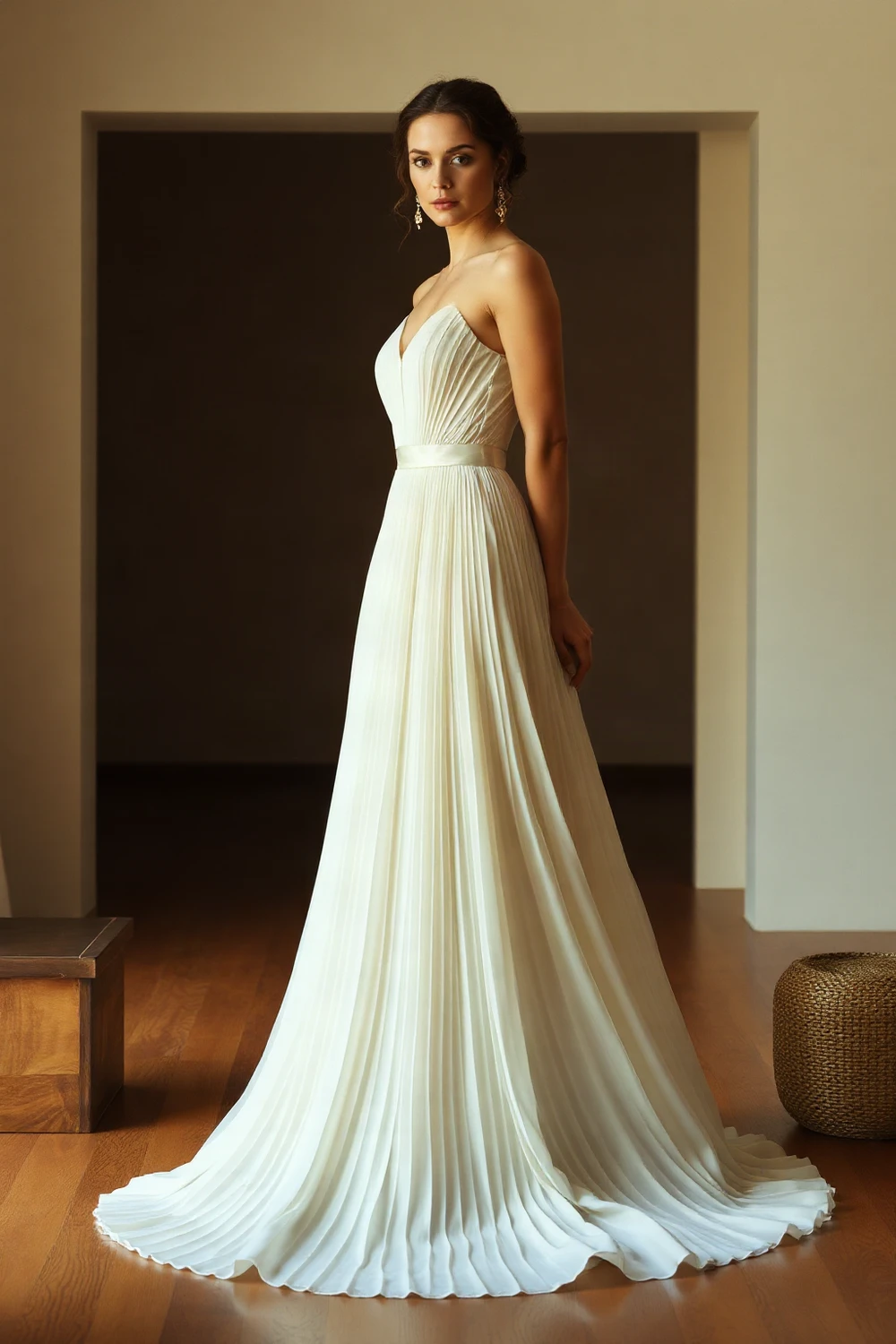
In the third look, sculptural impact comes from repeated fine pleats rather than a few large folds. Lines on the strapless bodice fan outward from the center, while a plain waistband clearly separates the upper and lower sections. Vertical pleats continue throughout the wide skirt, making its volume appear rhythmic instead of solid. Their changing shadows may become especially noticeable while walking or turning. The fitting should show whether the folds remain orderly at the waist, recover after sitting and spread cleanly at the hem. Secure support, neckline position and bodice length need to work together on a strapless design. Highly intricate jewelry could compete with the many narrow lines, whereas focused earrings leave the pleated structure in charge. If a veil is included, a restrained edge can avoid obscuring the pattern of light and shadow.
Balancing Ball-Gown Volume with a Waist Bow
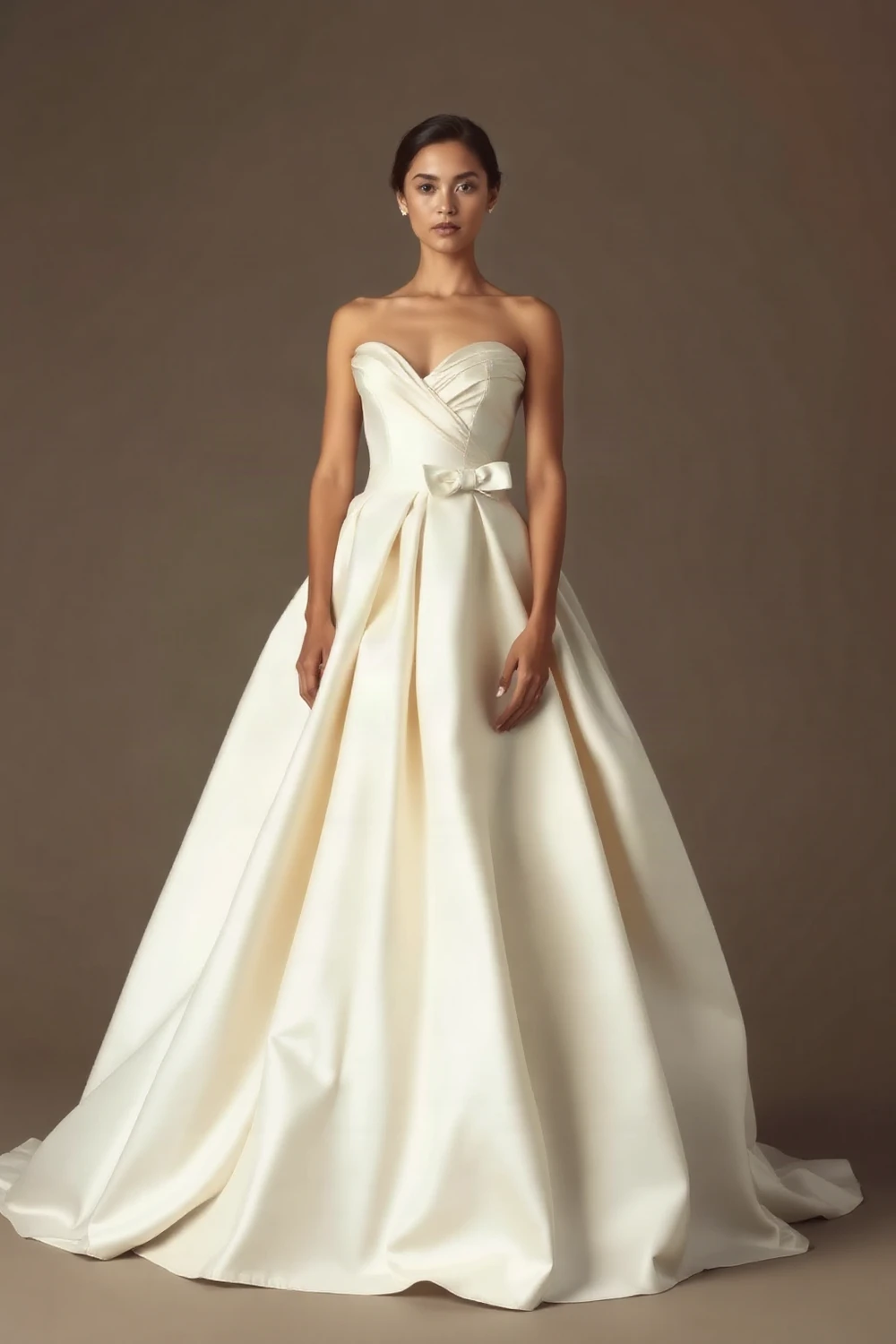
The fourth concept directs broad crossed neckline folds toward a small bow at the waist, then expands into a ball-gown skirt with deep, widely spaced folds. Large planes and pronounced shadows give it formal impact even without surface ornament. Although the bow is modest in size, its central position makes it a strong focal point; an added belt may divide that focus. This skirt can provide more step space than a fitted silhouette, but it needs greater planning around doorways, transport, seating and the dance floor. During a fitting, sit to see how the volume settles and whether the folds return cleanly when standing. If a long veil is part of the styling, use rear photographs to compare its shape with the skirt instead of judging them separately. Simple jewelry will keep the folded bodice and waist detail readable.
Using a Peplum to Define Waist and Hips
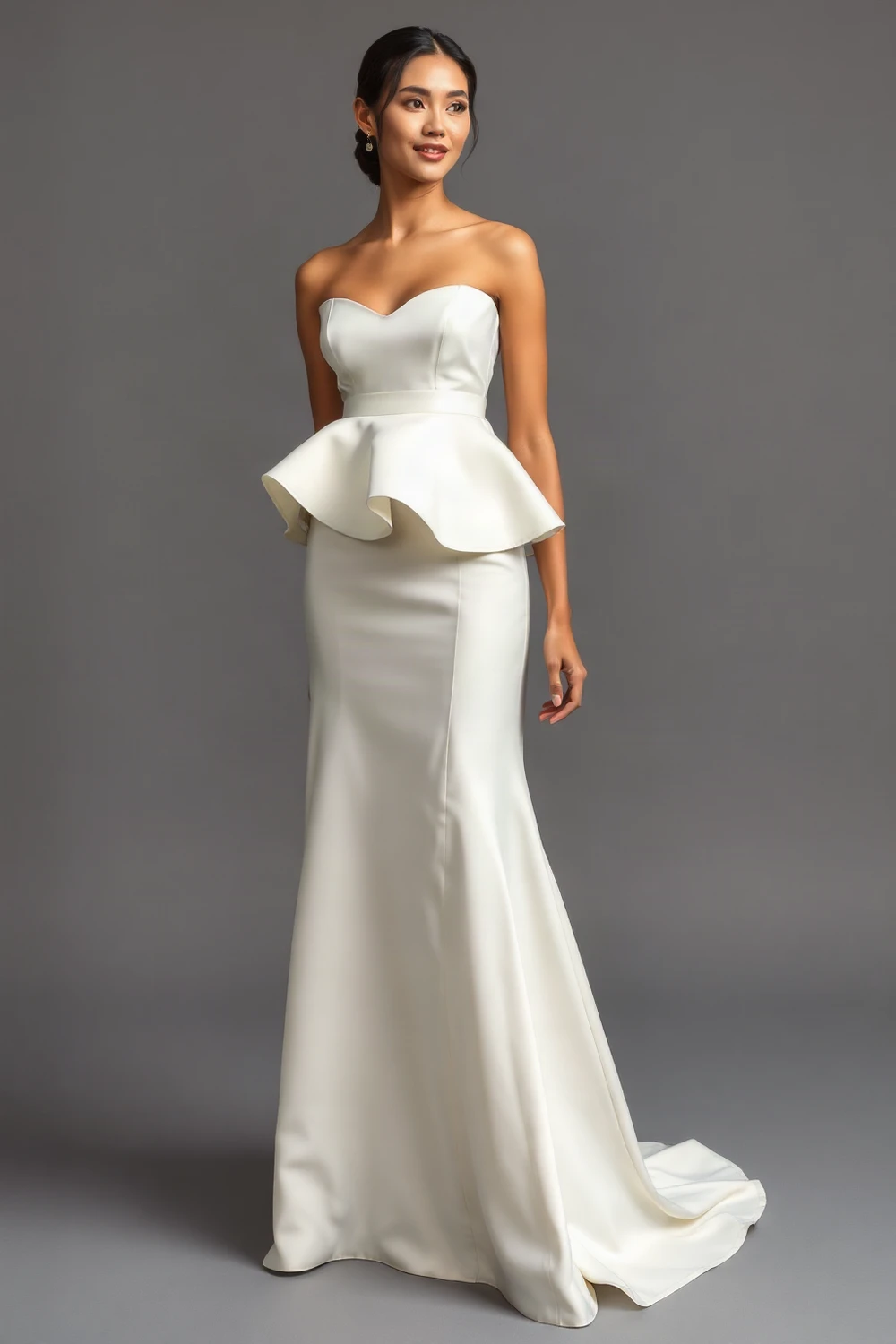
The fifth image inserts a rippling peplum between a strapless sweetheart bodice and a narrow skirt. This horizontal layer makes the waist more distinct while projecting outward around the hips. Unlike the continuous shoulder-to-hem flow of the second concept, the body is read in three clear zones: bodice, peplum and skirt. The precise height of the peplum therefore matters; even a small shift can change the apparent proportions. Review it from the side, sit, and let the arms hang naturally to determine whether the fold compresses or interferes with the hands. The fitted lower section requires its own stride and stair test. Because the peplum already acts as a powerful waist feature, a broad belt, dense wrist jewelry or an accessory ending directly at hip level could make the composition feel crowded. Quieter additions preserve its graphic outline.
Framing the Neck with Folded Off-Shoulder Bands
The sixth look crosses broad bands below the shoulders, forming a defined frame around the neck and collarbones. In contrast to the light translucent movement of the first image, these folds appear fuller, more graphic and controlled. A close skirt balances that upper volume with a calm vertical line, while the rounded train broadens the view at floor level. Movement is as important as appearance with this neckline. Raise the arms, embrace and rehearse a few dance movements to see whether the bands remain positioned and the bodice stays supportive. Walk in the intended shoe height to assess the narrow skirt’s step room. Although the train looks clean, its wide arc still requires turning space and a practical lifting method. Leaving the neck open or choosing small earrings can preserve the clear geometry of the crossed neckline.
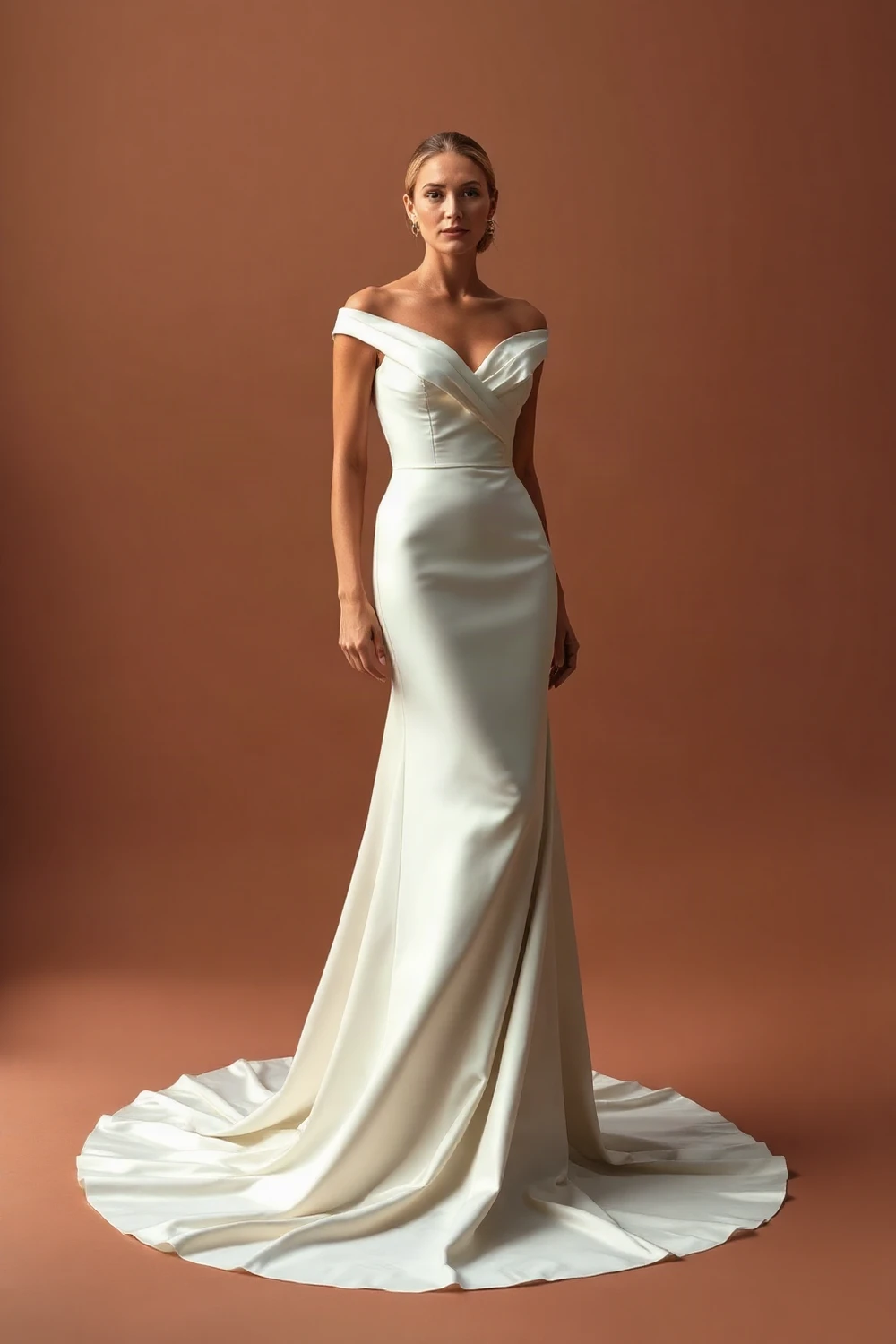
These six concepts show that sculptural wedding dressing does not point to a single silhouette. The same restrained palette can feel soft with sheer shoulder folds, rhythmic with radiating pleats, formal with a waist bow, graphic with a peplum or balanced with a crossed off-shoulder neckline. Begin by identifying the detail that attracts you, then test what it asks of movement, support and accessories. Take front, side and rear fitting photographs; sit, walk, turn and raise your arms. Include aisle width, floor texture and the day’s movement plan when comparing skirts and trains. The strongest choice is not merely the dress that makes an immediate still-image impression. It is the combination of neckline, waist, skirt and train that remains visually coherent and comfortable throughout the celebration you are actually planning.
Compare folded necklines, radiating pleats, peplums and contrasting skirt volumes across six visual concepts, with practical guidance for balancing sculptural impact, movement and accessories.
Frequently asked questions
Which feature should I test first on a sculptural wedding dress?
Start with the structural focal point: a folded neckline, pleats, bow or peplum. Test it while sitting, walking and raising your arms. It should retain its intended position without restricting the movements your day will require.
How do I choose between a peplum dress and a clean mermaid shape?
A peplum separates and emphasizes the waist and hip area with a horizontal layer. A clean mermaid design provides a more continuous line. Compare both from the side and test sitting, stairs and stride room before deciding.
What jewelry works with folded or pleated wedding dresses?
When the neckline or waist is already a strong focal point, small earrings or one restrained accessory usually leaves the construction clearer. A fine necklace can work with an open neckline, provided it does not compete with the direction of the folds.
Can a full ball gown work in a smaller venue?
It can, but aisle width, space between tables, transport and the dance floor need advance consideration. Rehearse sitting, turning and passing through a doorway, and decide how the skirt and train will be managed after the ceremony.
What should I check when fitting a strapless or off-shoulder neckline?
Assess bodice support, edge stability and arm movement together. Raise your arms, embrace and imitate a few dance movements. Adjustments should be based on active use rather than a motionless standing pose alone.