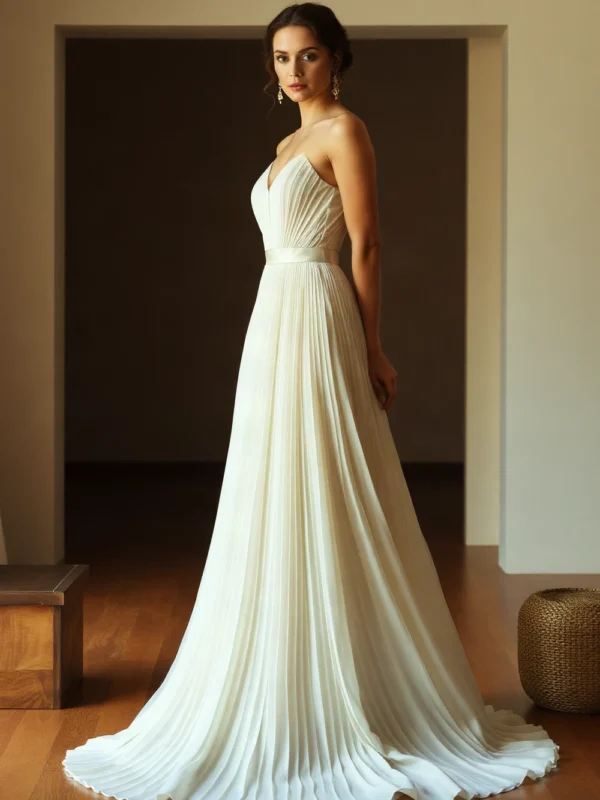
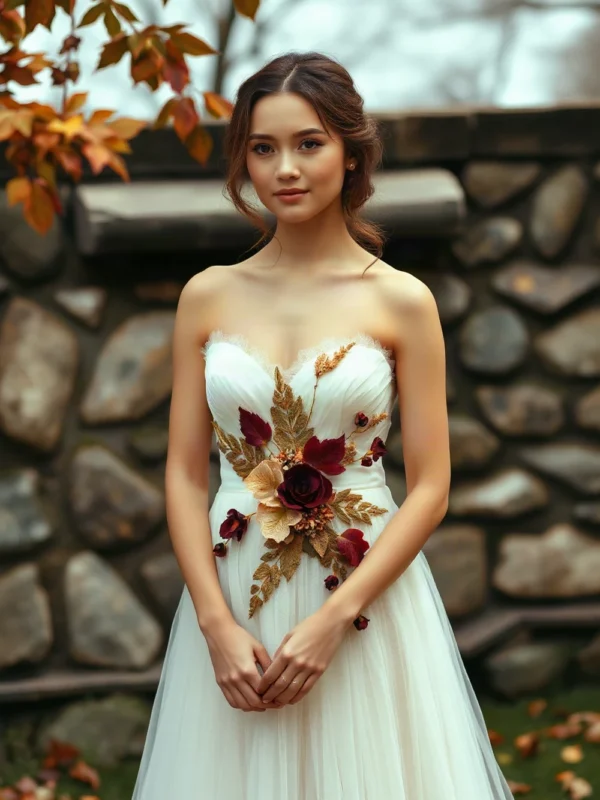
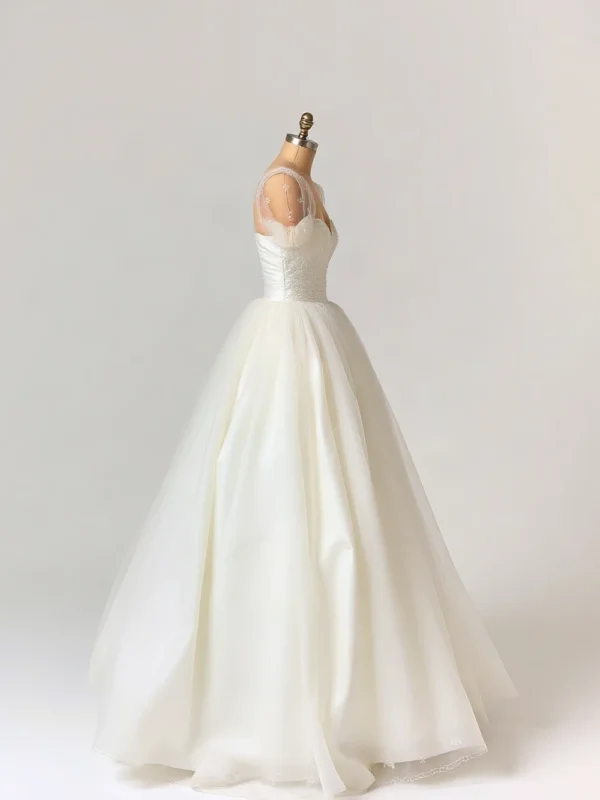
Basque-waist off-the-shoulder lace wedding dresses combine the horizontal openness of a lowered neckline with a shaped corset and a waist that descends toward the center. Together, these elements determine how the torso connects to the skirt. Yet the waist point may be short or elongated, the shoulder bands smooth or lace-like, and the skirt restrained, layered or covered with descending motifs.
The six images explore that shared idea from distinct directions. Compare how the neckline, corset and skirt reinforce or compete with one another. They offer visual inspiration but cannot establish the support, material behavior or comfort of a real dress; assess those qualities during a fitting by lifting the arms, walking, turning and sitting.
Warm Color and an Encircling Lace-Look Border
The first concept uses a warm ivory tone to connect the textured bodice with a softly illuminated full skirt. A lowered shoulder line leads into a plunging sweetheart shape, while dense lace-like detail tapers into pointed waist motifs. The transition moves from concentrated pattern above to broad folds below, with a botanical-looking border returning around the hem. Sunlight strengthens the contrast between luminous ridges and shaded pleats.
This balances bodice decoration with an otherwise open skirt. Check the warm color in daylight, since lining, interior lighting and surrounding colors can shift it. A continuous hem border frames the spread skirt, but must coordinate with shoe height and final length. During a fitting, walk, turn and gather the skirt to confirm that the edge clears the floor and the pointed waist details remain smooth.
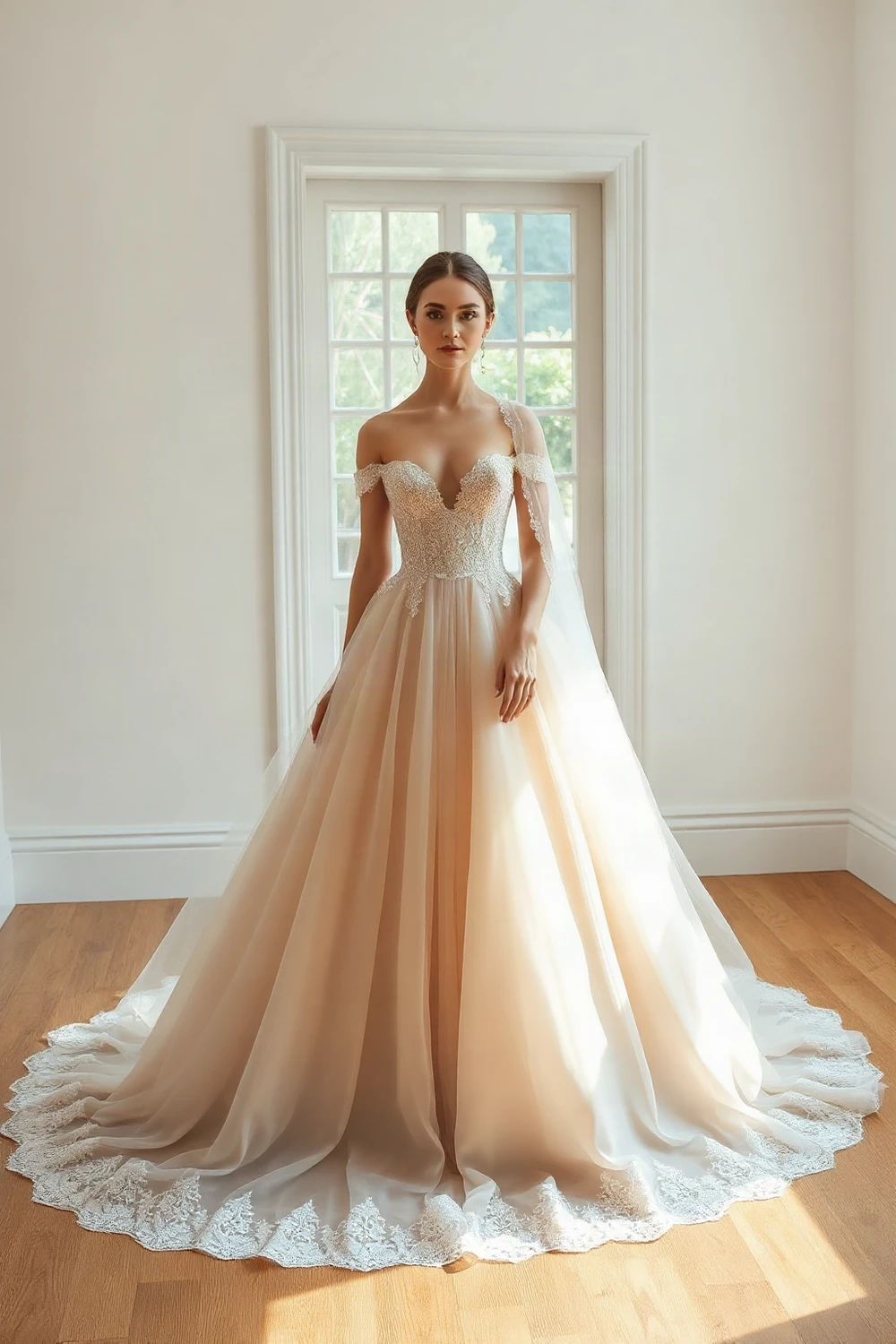
Layered Volume for Ceremonial Movement
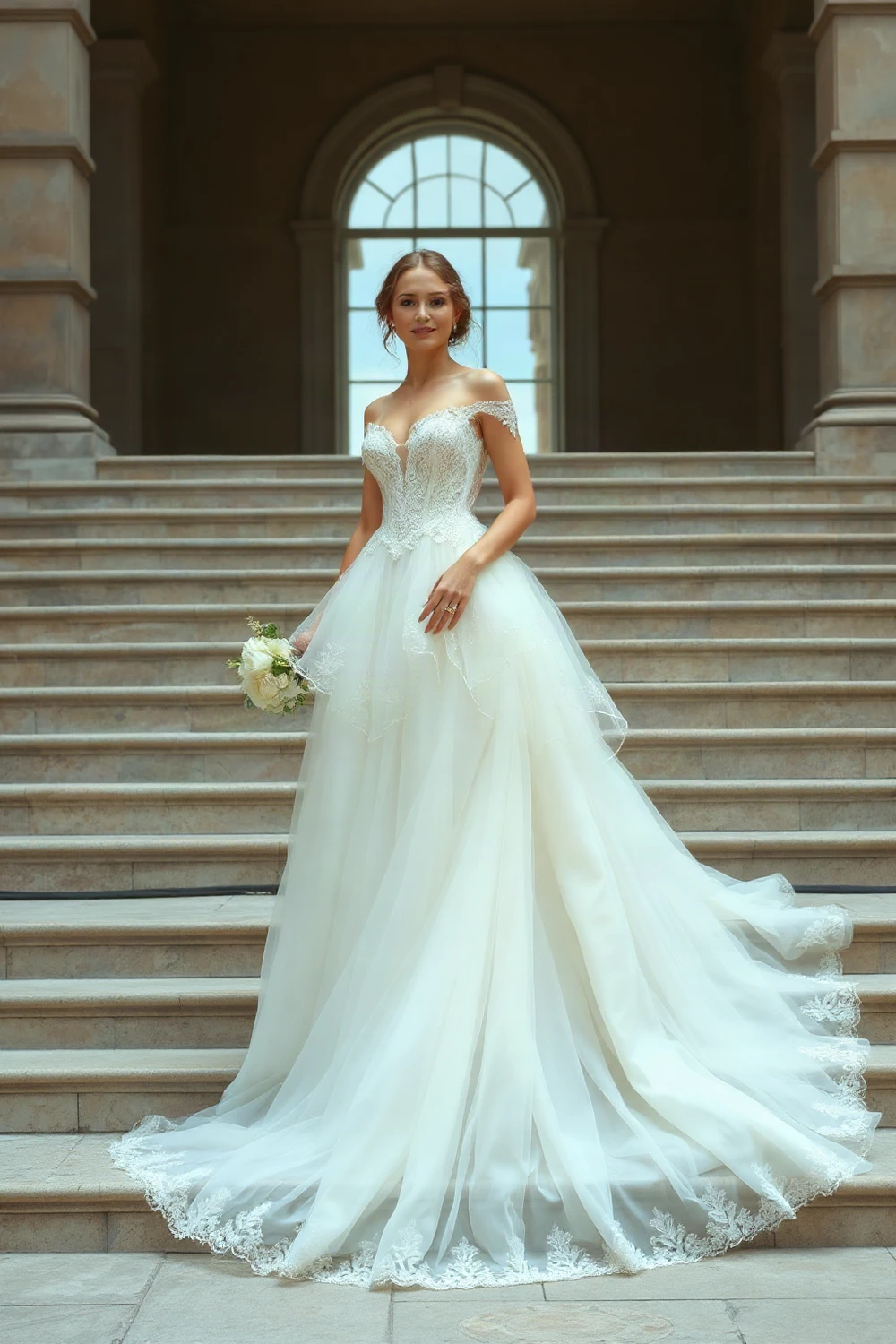
In the second image, a fitted lace-look corset meets a white skirt broadened by multiple soft layers. Repeated horizontal steps emphasize the dress's length and side-swept train. Delicate lowered shoulder bands stay visually light, letting the skirt dominate, while scattered detail near the lower edge frames the volume without covering the entire surface.
This silhouette can feel ceremonial in a wide aisle, entry hall or open setting, but narrow passages may require active skirt management. Stairs exaggerate the train's apparent length, so also assess it on level flooring. Test how far the skirt spreads, whether the layers catch and how the train can be gathered. Repeat while holding a bouquet or reaching forward. The volume should support the intended entrance and photographs without making walking, turning or sitting unnecessarily difficult.
Corset Channels and Shoulder-Band Width
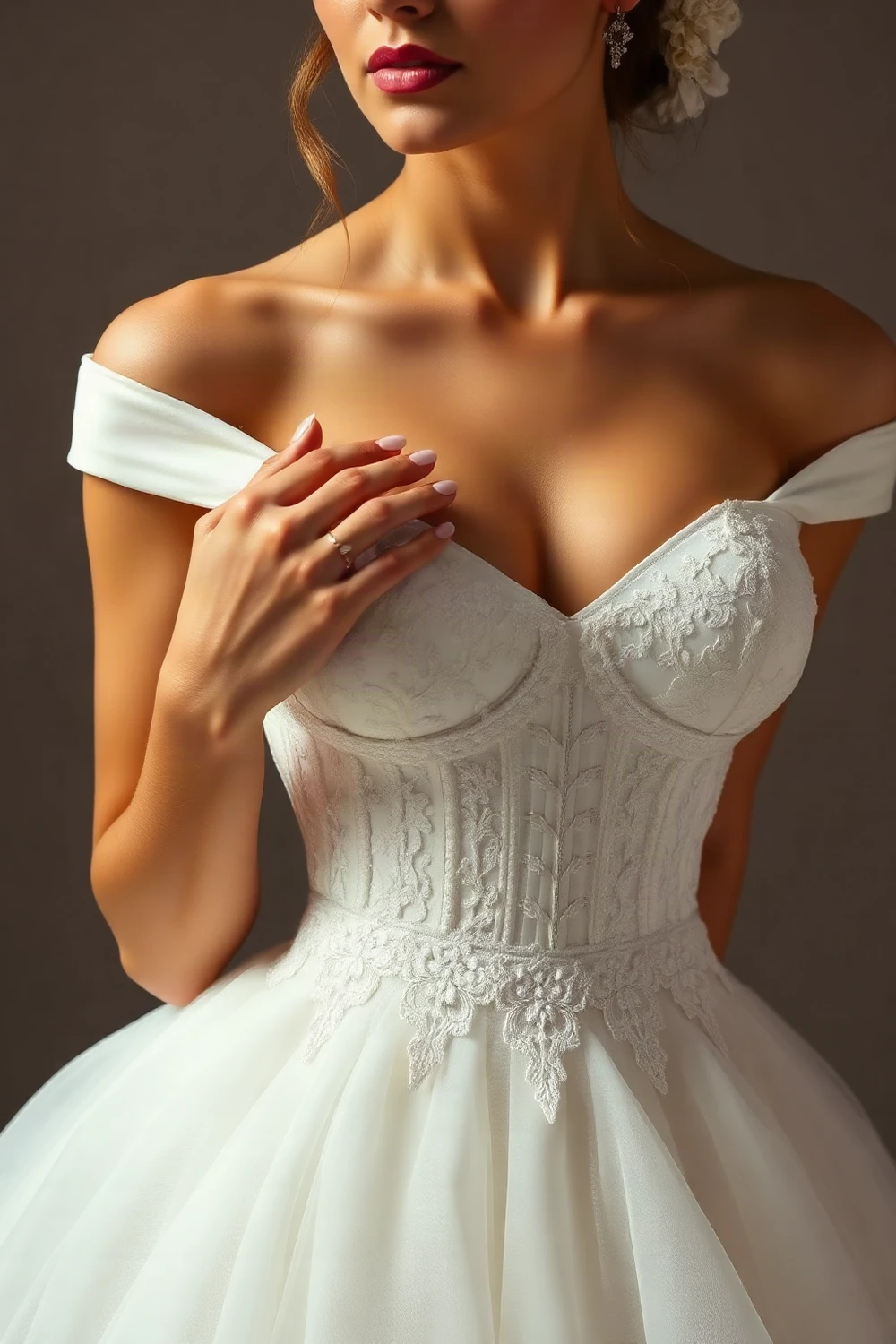
The third image moves closer to construction. Wide smooth bands draw a horizontal line below the collarbones, while shaped cups and vertical corset channels direct the eye downward. Lace-like motifs follow those channels, integrating pattern with the appearance of structure. Floral points grow denser at the waist and extend onto the pale skirt.
A corset that looks precise in a still close-up must remain balanced in motion. Wide bands can appear calmer and more graphic than narrow decorated straps, but may show more tension when the arms lift. During a fitting, reach forward, raise the arms and sit. Check for cup gaping or overflow, pressure along the channels and curling at the lower appliqué-like points. Only the front is visible, so the image gives no evidence about the closure or actual support system; inspect both on the specific dress.
An Elongated Basque Point Against a Quiet Skirt
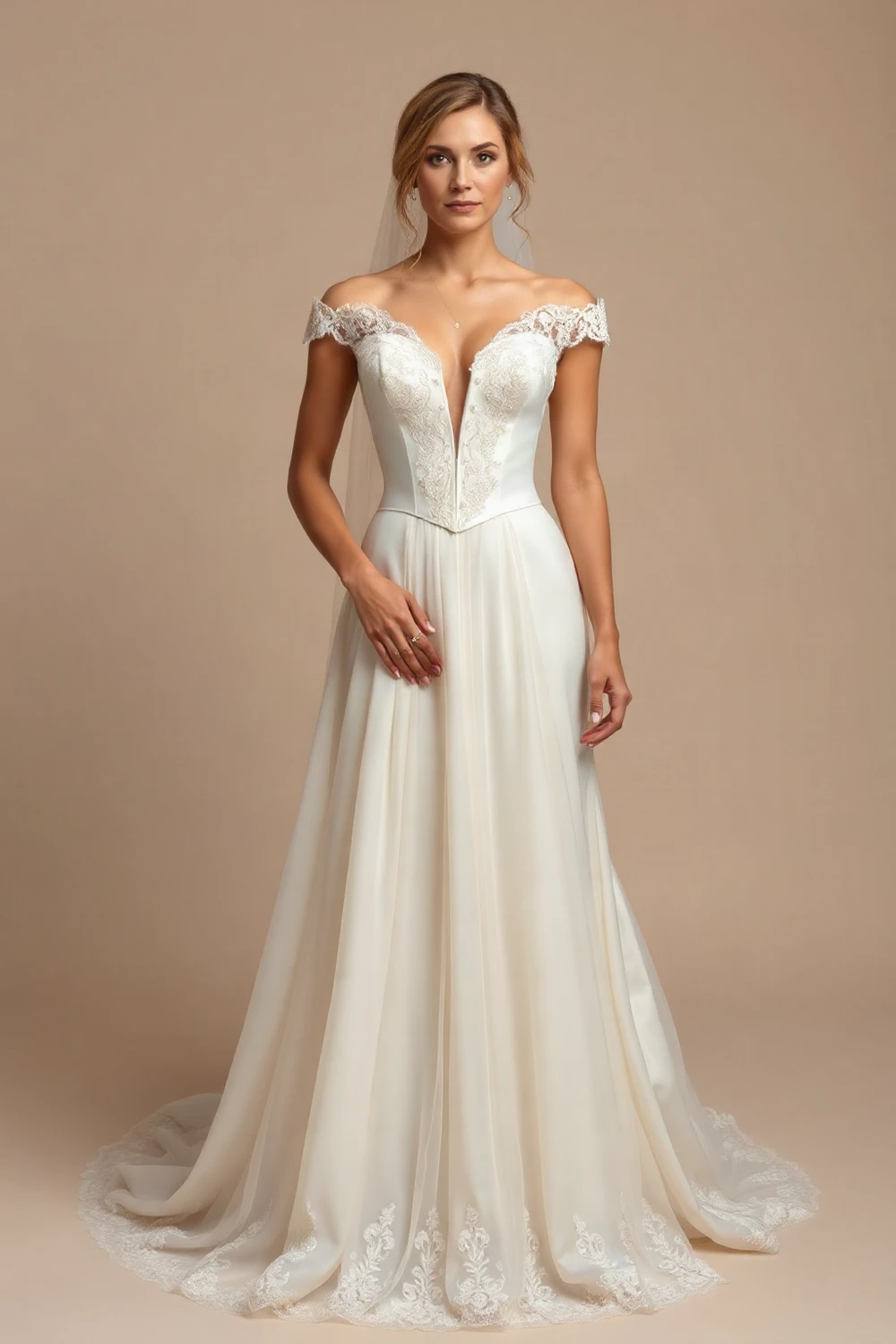
The strongest line in the fourth concept is the long Basque point descending from the corset's center. A deep V neckline begins that direction above, while lace-like shoulder edging softens the open upper line. Restrained vertical folds expand beneath the point, returning attention to the shaped bodice and elongated center. Decoration near the hem completes the composition without filling the skirt's middle.
A long point can visually extend the torso, but its ideal length is not purely aesthetic. If it meets the body's natural bend, it may fold or press while sitting. Examine the natural waist, lower corset edge and skirt starting point together, standing and seated. The quiet skirt works because it keeps the Basque shape visible. If considering a more elaborate veil, compare its edge beside the shoulder detail so two strong patterns do not compete around the neckline.
Keeping Lace Detail Around the Neckline
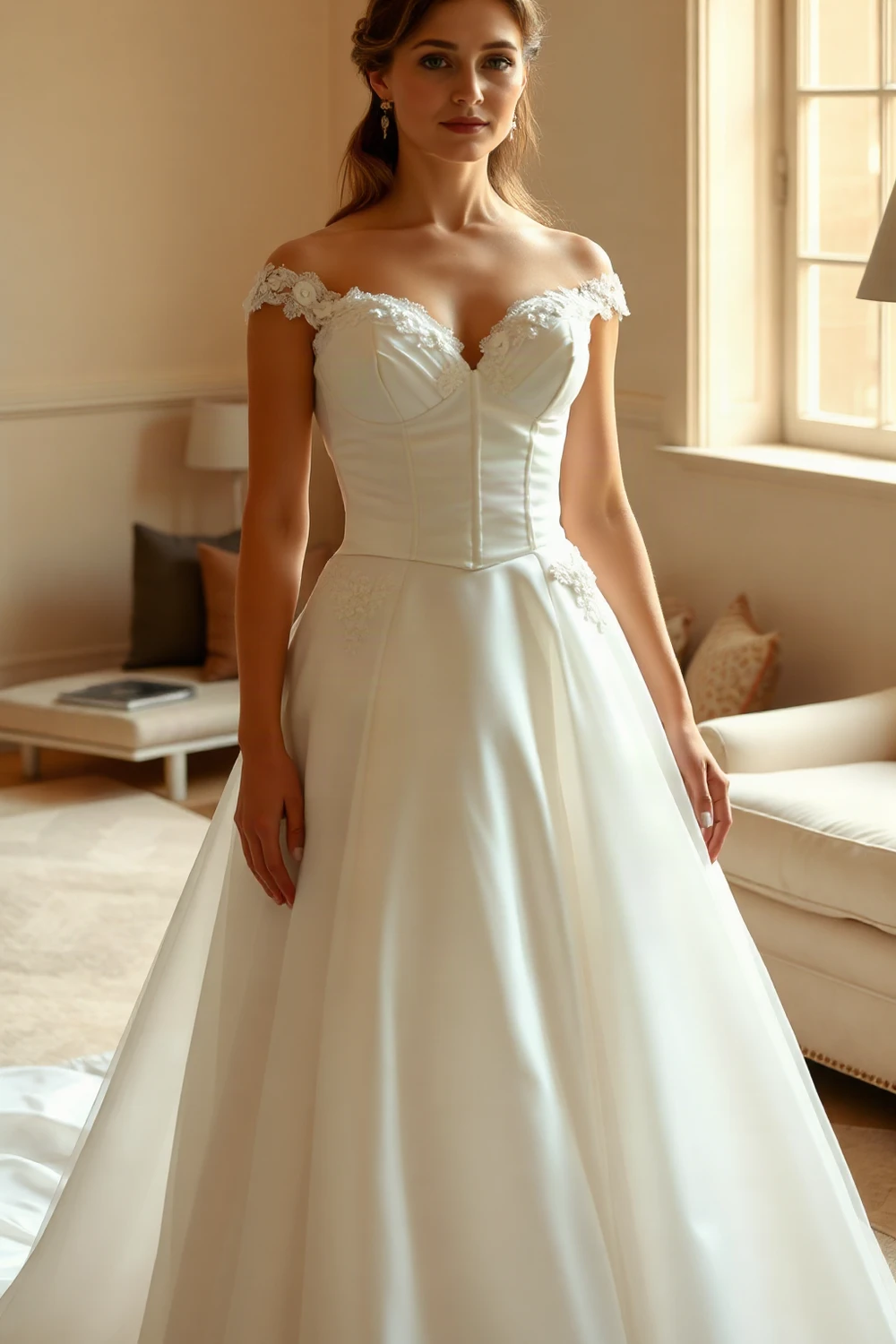
The fifth concept departs from densely patterned bodices by keeping most of the corset smooth. Floral lace-like detail remains along the sweetheart edge and short lowered shoulder bands, while vertical seams convey corset structure across a gently reflective surface. A short central V at the waist meets the broad, clean skirt without an extended point.
This suits someone seeking an open-shoulder corset effect with less surface pattern. The smooth bodice gives jewelry, a veil or bouquet a quieter background, although it may reveal pulling and fit irregularities more clearly than dense texture. Inspect the front and side under different light directions. The shorter point occupies less vertical space than an elongated Basque waist, but its seam must still align comfortably with the natural waist. Test the shoulder edging against the skin and move the arms repeatedly to ensure the bands neither twist nor migrate upward.
Motifs Continuing from Corset to Skirt
In the sixth image, lace-like pattern continues beyond the sharply defined Basque waist. Long upper-skirt panels carry botanical motifs down over a quieter underlayer. Narrow smooth shoulder bands contrast with the fine bodice texture, while the pointed center connects the torso to vertical spaces between panels. The skirt keeps its breadth while gaining a continuous head-to-hem direction.
This suits extensive decoration without equal density across the skirt. Long panels can separate, overlap or shift while walking, so a stationary front view is insufficient. Watch them while turning, gathering the skirt and moving from the front and side. The waist point should remain centered, and panel openings should begin coherently around it. With substantial skirt detail, a simpler veil edge can preserve a deliberate order of attention instead of surrounding the silhouette with competing motifs.
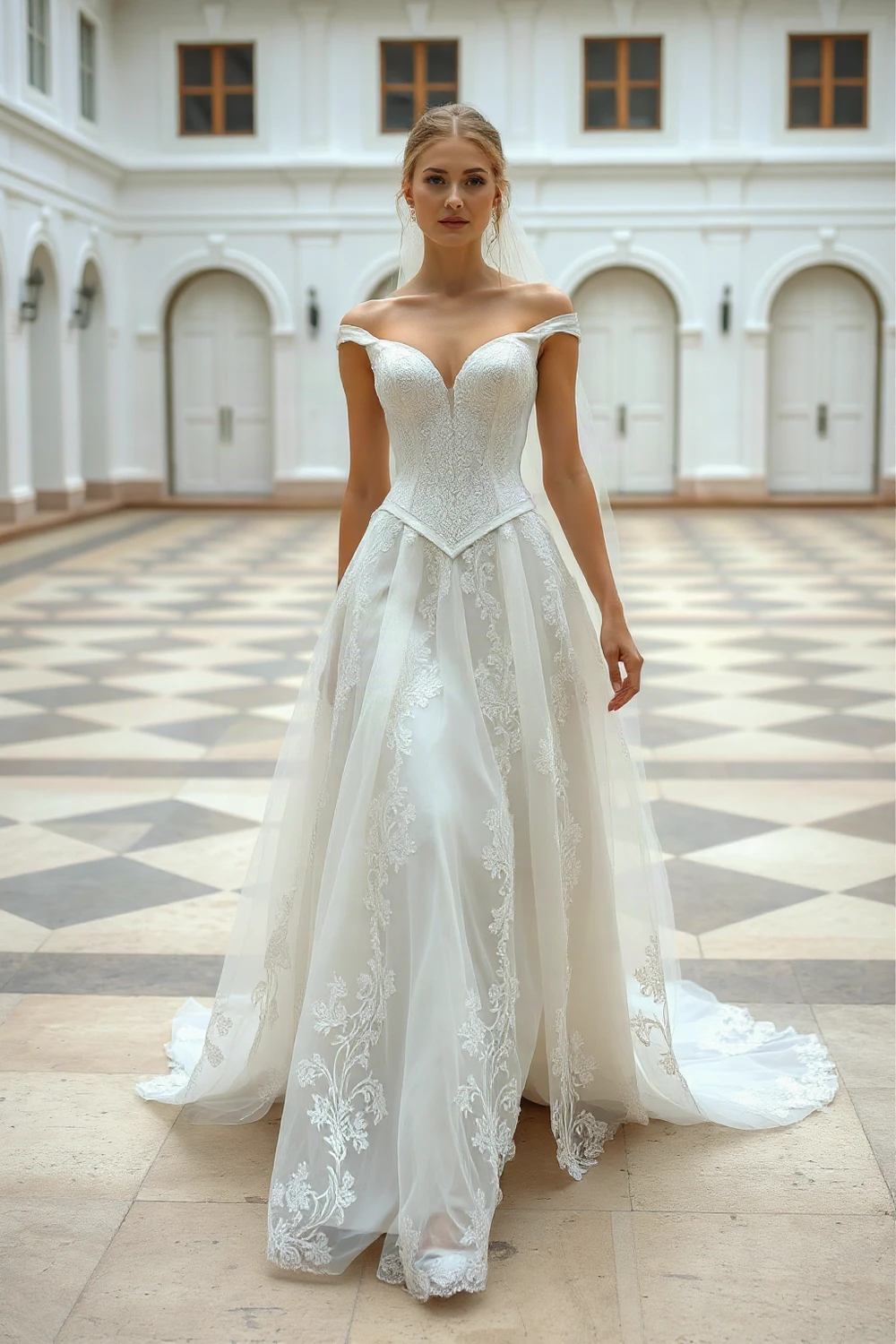
Choosing among Basque-waist off-the-shoulder lace wedding dresses is less about collecting the most detail than establishing a clear hierarchy. An elongated, sharply pointed waist stays visible against a quiet skirt, while a shorter point and smooth corset concentrate decoration near the face. Layered volume creates ceremonial movement; long lace-look panels create continuous vertical rhythm.
Before deciding, view the dress from front and side under different lighting, then raise the arms, sit, walk and turn. Assess the shoulder bands, cup contact, waist point and skirt as one system. The images can clarify the visual balance you prefer, but the final choice should rest on fit, venue, movement plans and the construction of the actual dress, not one posed view.
Compare Basque-waist depth, off-the-shoulder bands, lace-look corset lines and skirt volume to create a wedding-dress silhouette with a clear, balanced visual direction.
Frequently asked questions
How long should a Basque-waist point be?
Judge its length together with the natural bend of the torso, not by appearance alone. The point should remain flat while standing and should not fold or press when seated. Comparing shorter and longer options with the same skirt height and shoes provides a more useful fitting test.
How can I test whether off-the-shoulder bands restrict movement?
Reach forward, lift the arms toward head height, hold the hands as if carrying a bouquet and sit down. If the bands rise, twist or pull the corset out of place, adjustment may be needed. Width, placement and skin contact all affect comfort.
Should I choose a densely patterned or smooth corset?
Dense lace-look pattern integrates decoration with the corset lines and creates a detailed focal point. A smooth corset keeps embellishment near the neckline and gives accessories a quieter background. Compare either choice with the visual weight of the veil and skirt rather than judging the bodice alone.
Where is a large layered skirt easiest to manage?
Wide aisles, open ceremony spaces and generous passageways provide room for volume. Narrow routes, frequent stairs and compact seating areas may require more active skirt or train management. Test walking, turning, sitting and gathering the train on a level surface before deciding.
What veil works with long lace-look skirt panels?
A simple-edged veil can preserve focus when botanical motifs already extend down the skirt. If detail is confined to the bodice or hem, a more decorated veil may remain balanced. Compare motif scale and overlap around the shoulders, where the veil and lowered neckline meet.