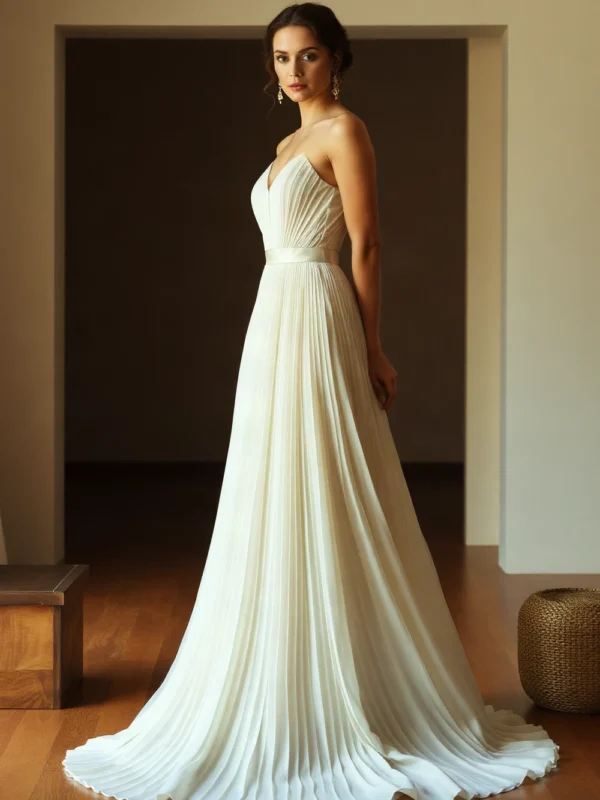
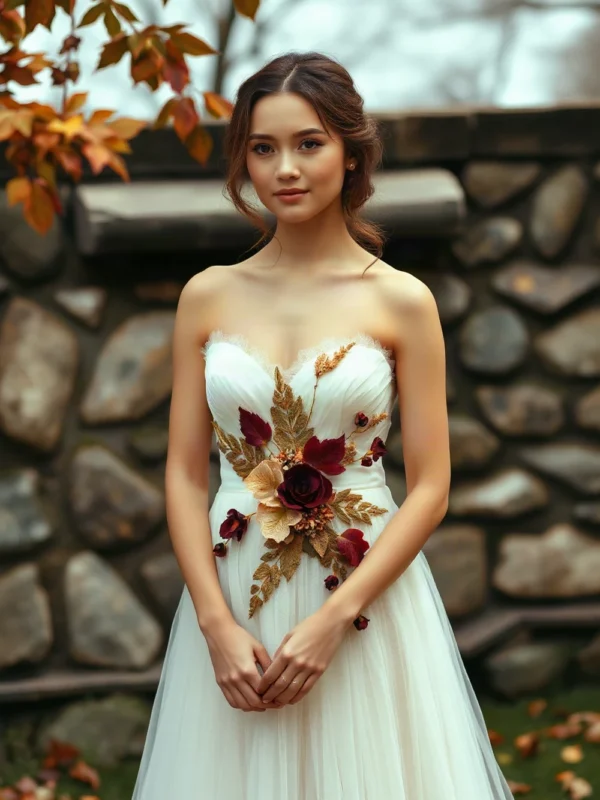
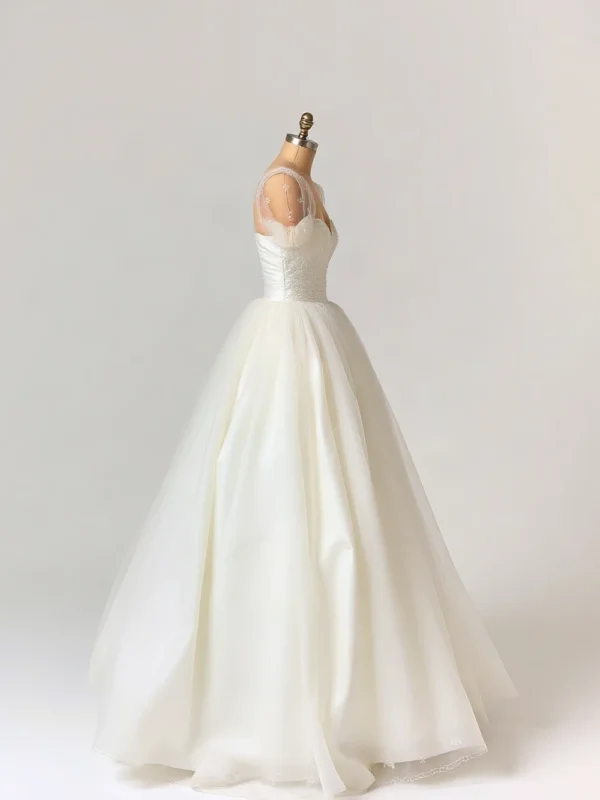
Princess ball gown wedding dresses share a recognizable foundation—a defined waist and an expansive skirt—but volume alone does not explain their effect. The direction of a bodice, the presence of shimmer or pattern, the openness of the back and the structure of the train can make the same broad silhouette feel polished, ornate, romantic or airy. These six visual concepts provide concrete comparisons, moving from a draped V-neck and two very different sweetheart bodices to a centrally ornamented train, an open floral back and a tiered skirt.
Rather than choosing from a single front-facing image, it is more useful to consider how a gown balances from the front, behind and in motion. Venue lighting, aisle width, seating, hairstyle and veil choice all change how the details are perceived. The following sections treat the images as style inspiration rather than available products, using each one to clarify proportion, focal point and practical priorities for a fitting.
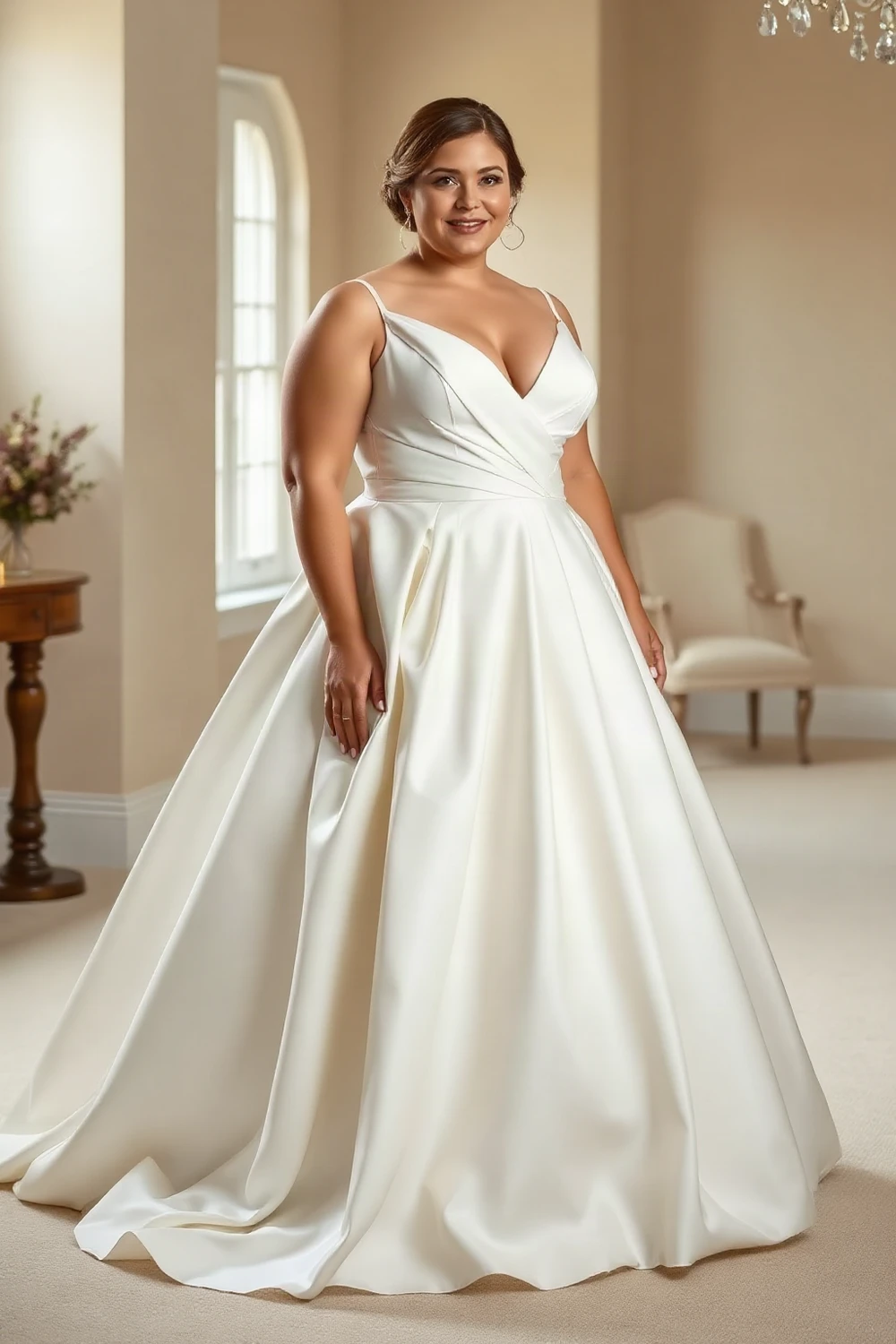
Direction and waist emphasis in a draped V-neck
In the first look, slim straps and a deep V-neck lead into diagonal folds that converge near the waist. The full, smooth skirt has substantial visual volume, but the directional bodice prevents the design from feeling rigid. This approach can suit someone who wants movement across the front without relying on dense applied decoration.
Do not judge only the depth of the V during a fitting. The position of the straps, the way the folds meet on both sides and the relationship between the seam and natural waist all affect the overall proportion. A luminous plain surface reflects light in broad areas, making every fold and seam noticeable. Front and side photographs under different lighting can therefore be helpful. Emphasizing earrings rather than a necklace may also preserve the long visual line created by the neckline.
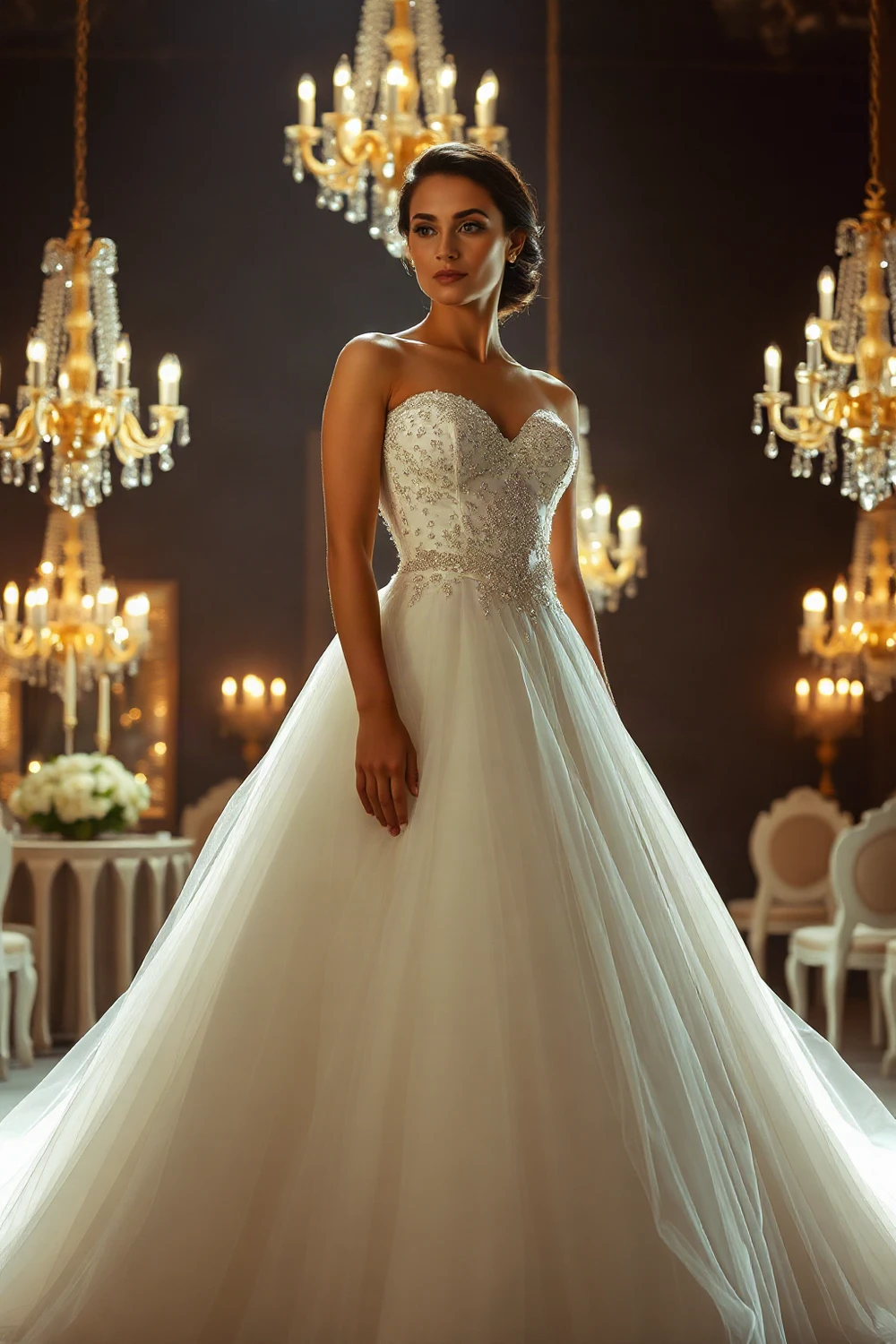
Controlling the focus of a sparkling sweetheart bodice
The second concept concentrates its visual weight in a strapless sweetheart bodice covered with bright, silver-toned detail. A narrow waist division organizes the transition to a softer layered skirt, which expands without competing with the upper section. Because the dark room and warm chandeliers make the decoration appear especially dramatic, it is sensible to view a similar treatment in daylight too.
A prominent bodice can provide a strong focus in both the ceremony and close portraits. At the same time, a statement necklace, elaborate veil and dense hair accessory could crowd the same area. Test a strapless neckline while raising the arms, sitting and turning rather than relying on a stationary mirror view. If shimmer is the central priority, let the skirt, bouquet and jewelry play quieter supporting roles. This creates hierarchy without removing the sense of occasion.
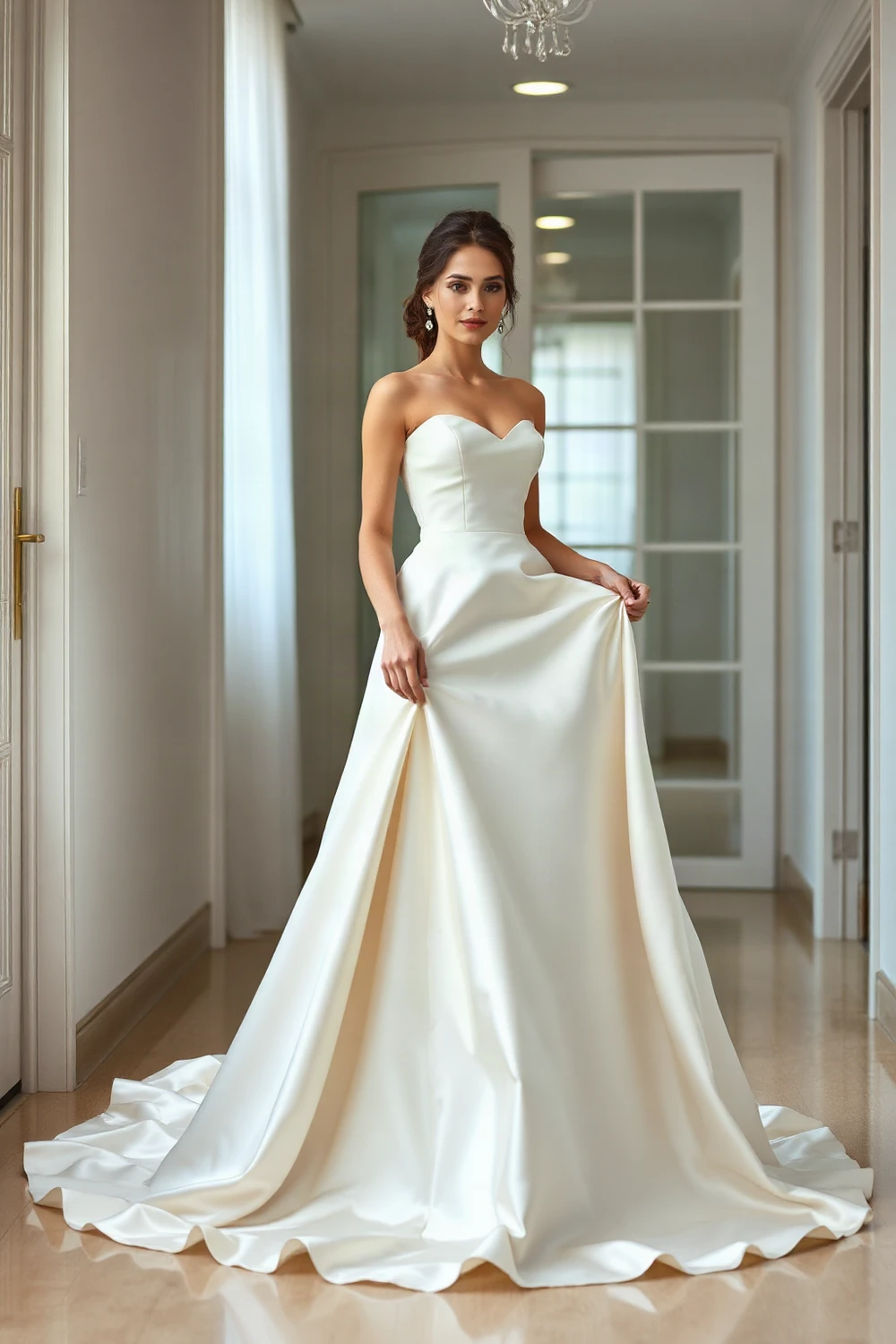
Why construction matters on a clean sweetheart gown
The third gown combines a strapless sweetheart neckline with an undecorated bodice and a broad, smooth skirt. Such a surface may look simple at first, yet seam direction, neckline symmetry and waist position become much more apparent. The bright corridor reinforces this sculptural clarity and shows how large folds, rather than ornament, shape the composition.
A clean design gives accessories room, but it does not require every possible addition. A shorter veil can leave the neckline and shoulders open, while defined earrings create a controlled focal point near the face. During a fitting, lift the skirt slightly to observe the folds, check the hem around the selected shoes and watch how the train follows a turn. If the embellished option feels too busy but you still want clear princess volume, a restrained construction like this provides a strong starting point.
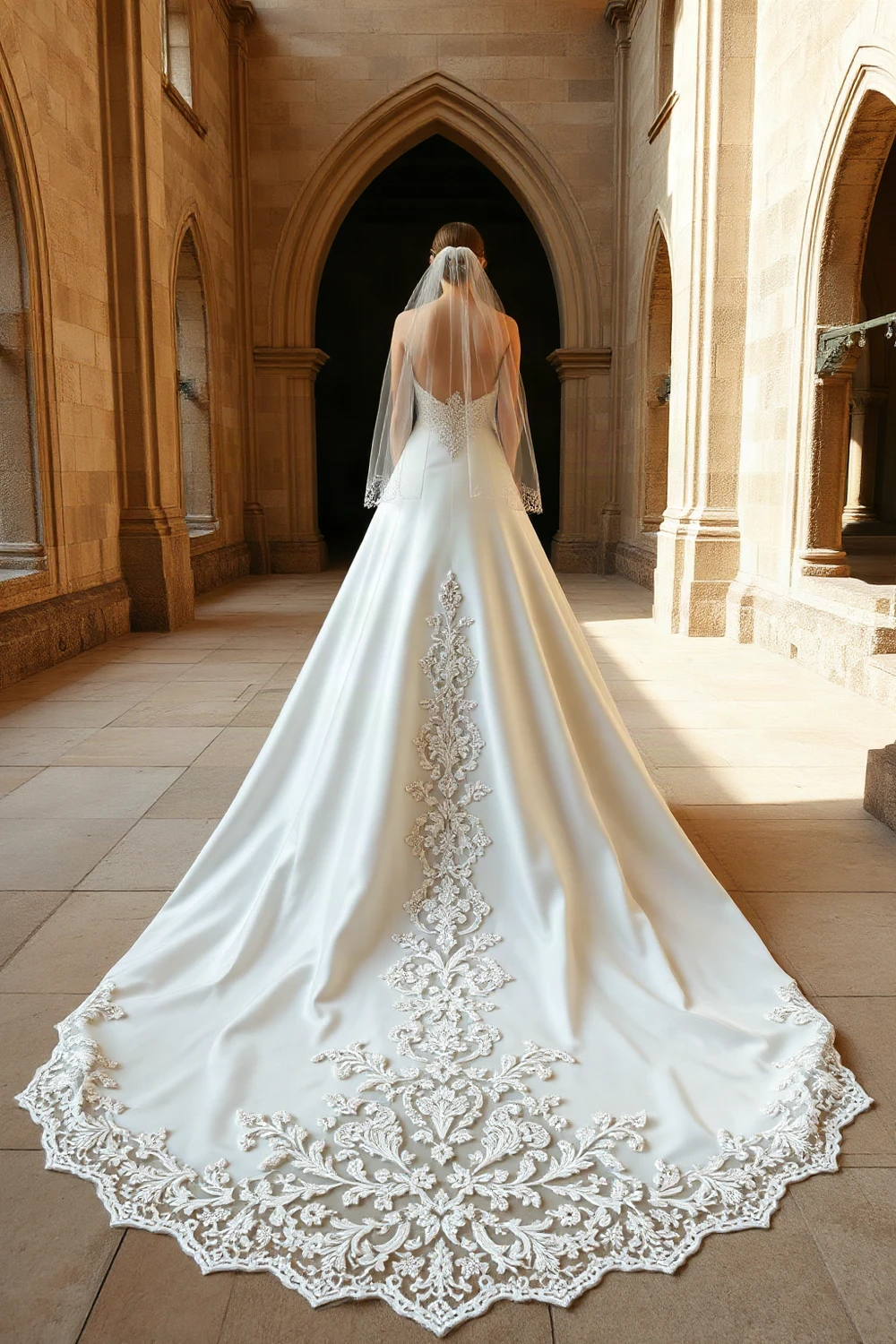
Building a rear composition with an ornate train
The fourth image turns the back of the princess gown into the main design field. A central ornament begins below the open back, travels over the quiet surface and expands where it meets the decorated edge of the long train. The stone arches reinforce this vertical symmetry. A short veil frames the upper section without hiding the ornament below.
A train of this scale may be most expressive during the walk and ceremony, but its management later in the day deserves equal attention. Test whether the bustle interrupts the motif and how the train behaves on stairs or through narrow passages. Veil density matters as much as veil length: when the train already has a strong border, a quieter edge prevents the two elements from competing. Rear fitting photographs, a turning test and a view of the bustled gown reveal more than a stationary front mirror can.
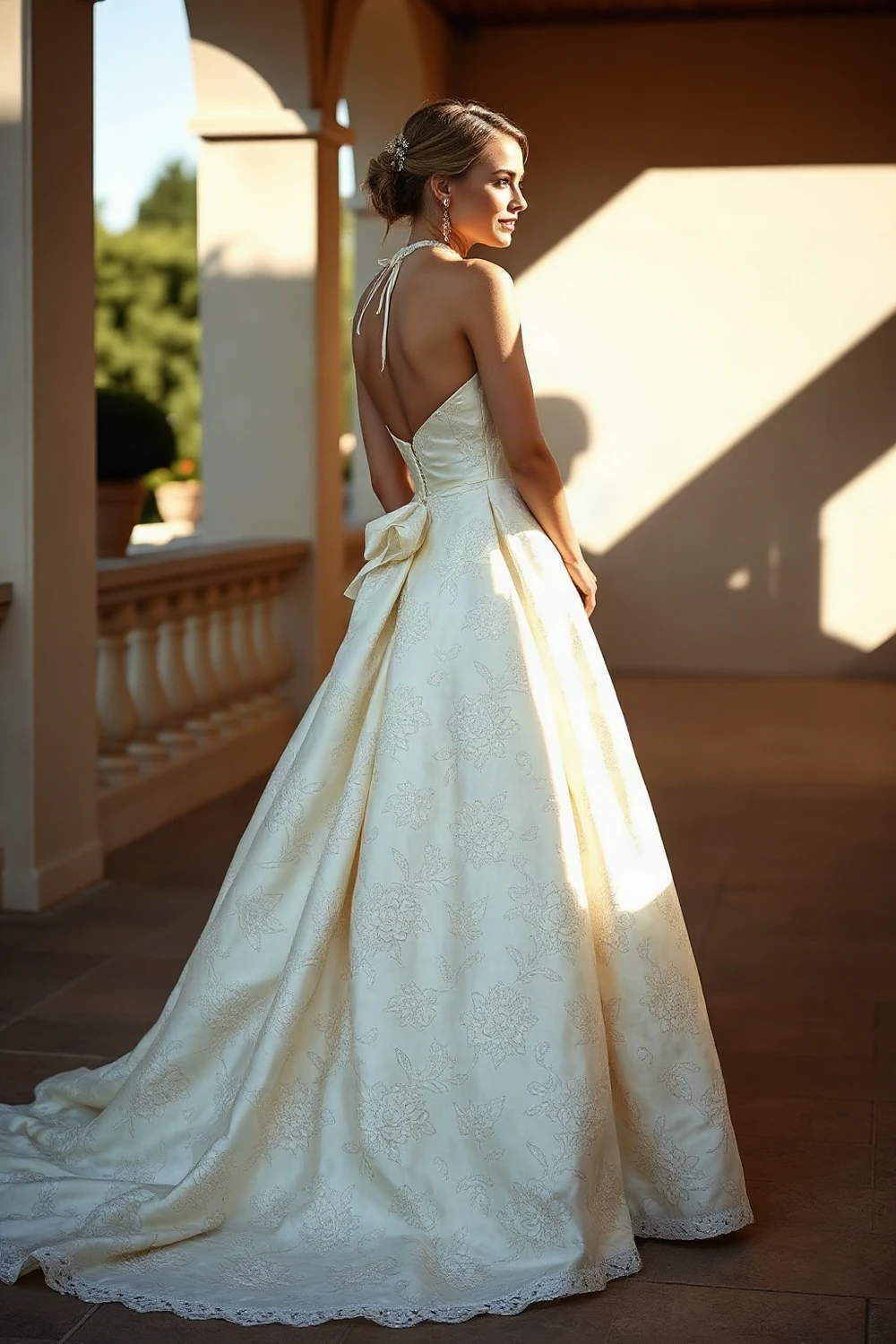
Connecting an open back, bow and floral surface
In the fifth look, halter ties and a deep open back connect to a floral full skirt through a bow at the waist. The low-contrast motifs cover the surface but remain restrained from a distance, allowing the back line to stay dominant. In direct sunlight, the pattern becomes a secondary layer rather than the only focal detail.
Hair and veil choices directly affect this arrangement. An updo leaves the ties visible, while a long, opaque or richly decorated veil may cover both the back and bow. Check not only the depth of the opening but also the stability of the side edges and comfort at the neck. If you enjoy pattern but do not want heavily raised embellishment, a tonal surface offers a quieter alternative. Sit during the fitting to see how the bow responds, and compare the motif under indoor light, shade and brighter conditions.
Creating volume and motion with a tiered skirt
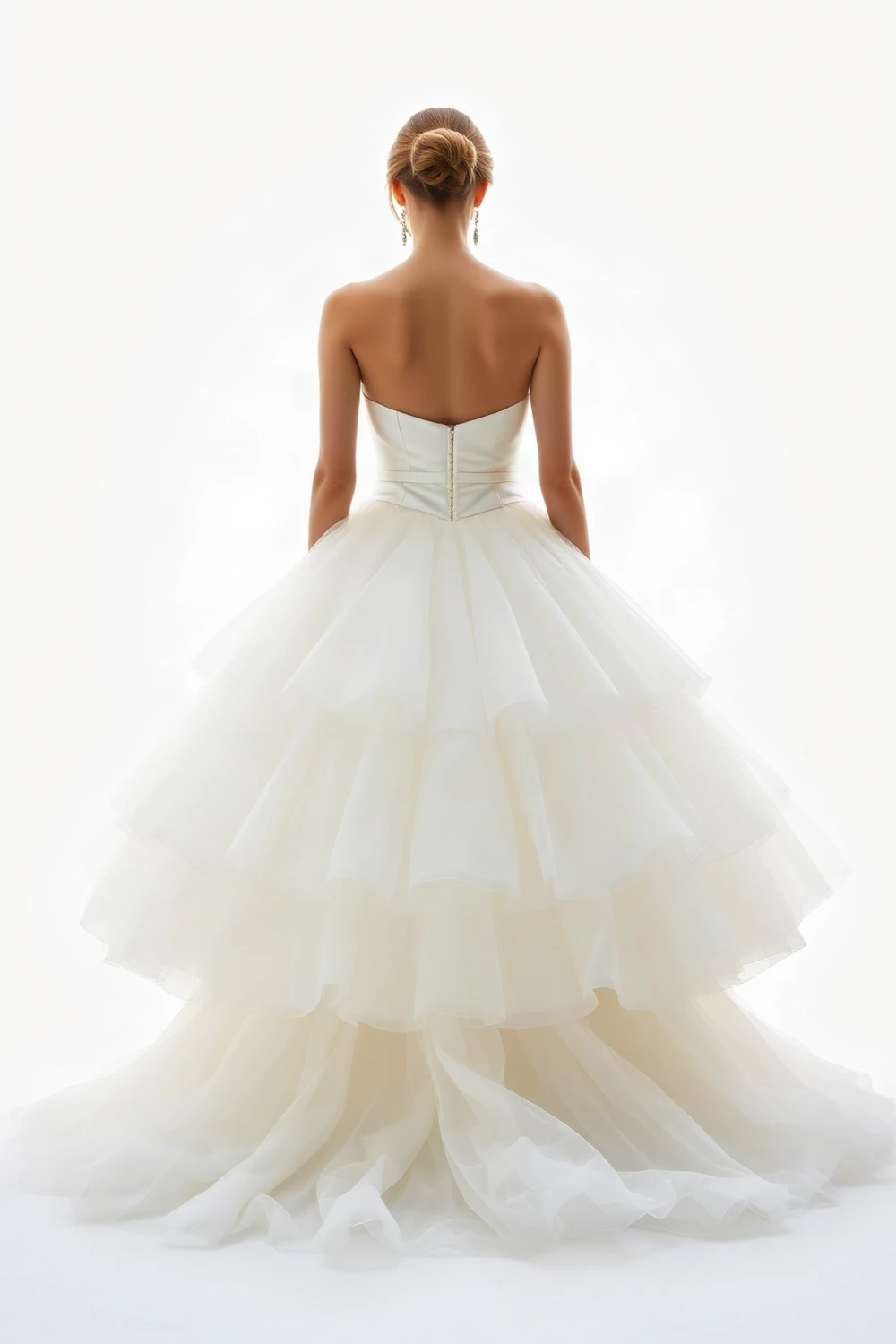
The final concept builds its princess effect through horizontal tiers rather than reflective embellishment. Below a clean strapless back, broad lightweight-looking layers create an interrupted but fluid rhythm. The white background removes competing details, making the tier shadows and relaxed train easy to read.
A tiered skirt can create strong photographic volume, but the final choice should be based on movement as well as appearance. Observe how the side width relates to doorways, chairs and the dance area, and how the lower layers touch one another while walking. Compared with a single smooth skirt, this structure feels more animated; compared with the ornate train, it tells a lighter visual story. A shorter or especially transparent veil can preserve the tiers, while a restrained bodice keeps the skirt architecture in the leading role.
A balanced princess silhouette is not created by collecting the greatest number of details. It comes from deciding which element should be read first. A draped V-neck supplies direction, a sparkling bodice establishes a bright focal point, and a clean sweetheart design emphasizes structure. An ornate train serves the ceremony, an open back and bow strengthen rear portraits, and a tiered skirt foregrounds movement.
When creating a shortlist, compare every option under similar conditions: front and rear views, more than one type of light, sitting, walking, turning and, where possible, wearing the intended veil. Include the venue’s passages and the later reception in the decision. Once neckline, surface, back and train follow a clear order of priority, a princess ball gown becomes more than a large skirt; it becomes a coherent silhouette suited to the way you want to look and move.
Compare draped and embellished bodices, clean surfaces, open backs, tiered skirts and ornate trains to see how individual details change the balance of a princess ball gown silhouette.
Frequently asked questions
Which accessories balance a heavily embellished sweetheart bodice?
If the neckline and embellishment already create a strong focal point near the face, statement earrings may be sufficient. Test the earrings, necklace, hair piece and veil together in the same light before deciding which elements to remove.
What movements should be tested with a long ornate train?
Practice straight walking, turning, stairs, narrow passages, approaching a chair and bustling the train. Use a rear photograph to check how the bustle changes the central motif and decorative border.
What veil works with a deep open back?
A short, restrained or very transparent veil can preserve the visibility of halter ties, a bow or the open line. If you prefer a long veil, compare its motif and border density with the back details rather than considering length alone.
Is a clean luminous skirt easier to style than an embellished one?
It can provide more accessory freedom, but seams, wrinkles, waist placement and hem length become more visible on a plain surface. Evaluate the complete look with shoes, veil and venue lighting instead of assuming simplicity requires less attention.
What should be checked when fitting a tiered princess skirt?
Notice where the volume begins, how the side width passes through doors and how the layers settle while sitting, turning and dancing. Add the intended veil to confirm that it does not obscure too much of the tier structure.