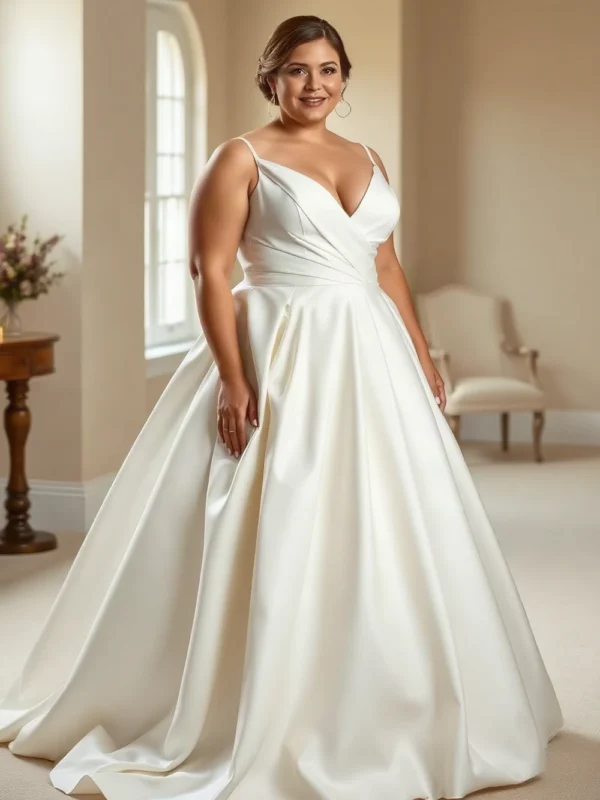
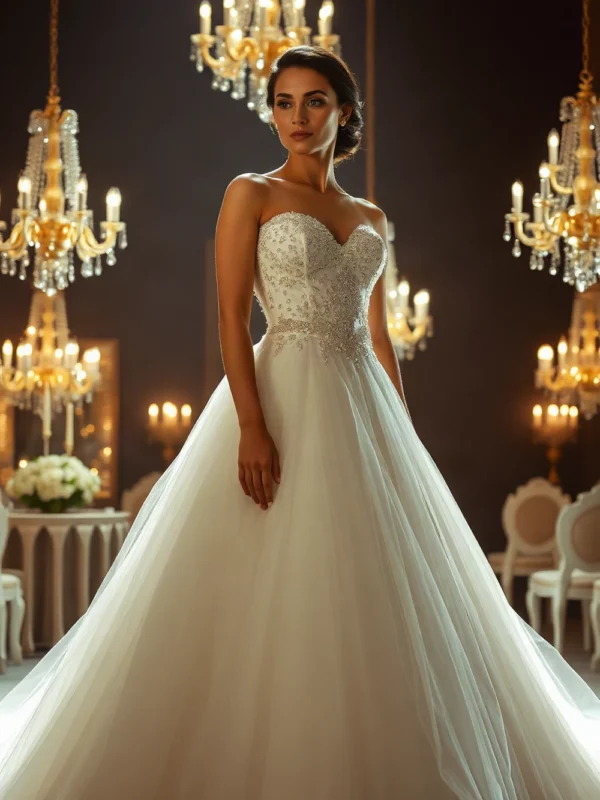
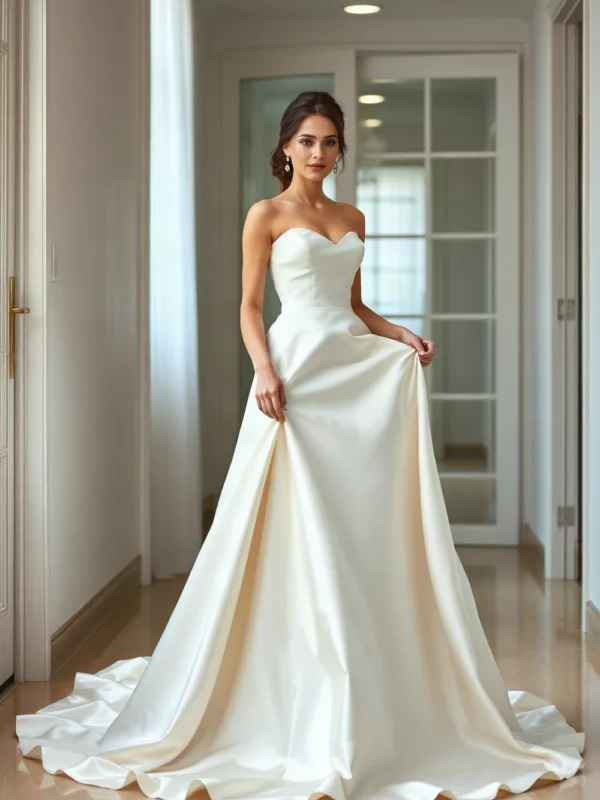
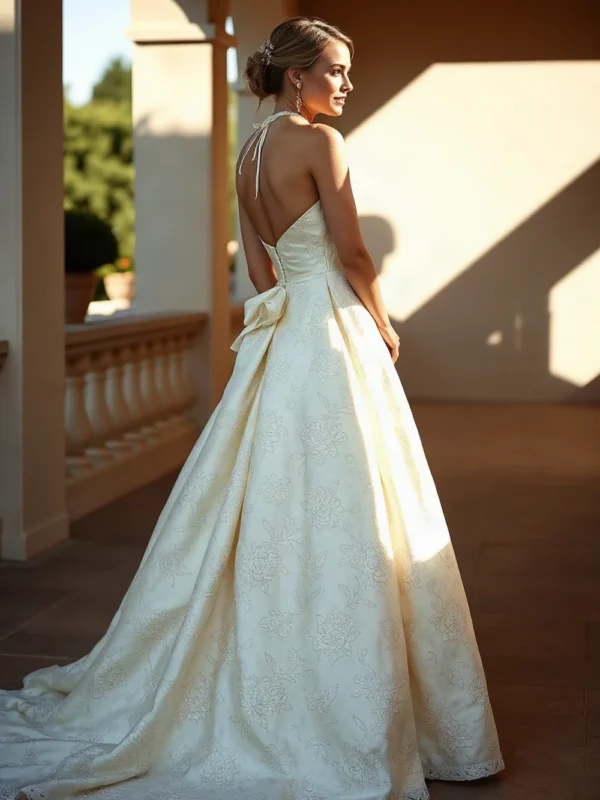
All six images share a princess foundation: a defined waist followed by a skirt that expands toward the floor. That common outline nevertheless produces markedly different impressions. The first three concepts make the front designs easy to compare. A diagonally draped V-neck creates directional softness, a sparkling sweetheart bodice pulls attention upward, and a clean sweetheart neckline makes construction and proportion the main story.
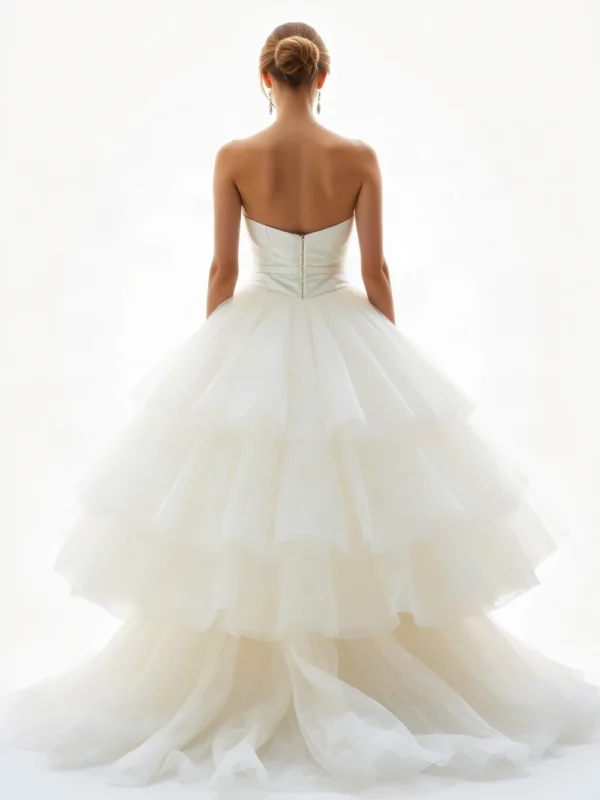
Surface treatment also changes how volume is perceived. The smooth, light-reflective skirts in the first and third images appear more sculptural. The second combines a densely embellished bodice with softer, translucent-looking skirt layers. In the sixth, broad horizontal tiers turn the skirt’s structure—not applied decoration—into the dominant feature. These are useful distinctions when deciding whether the gown should read as polished, luminous or airy.
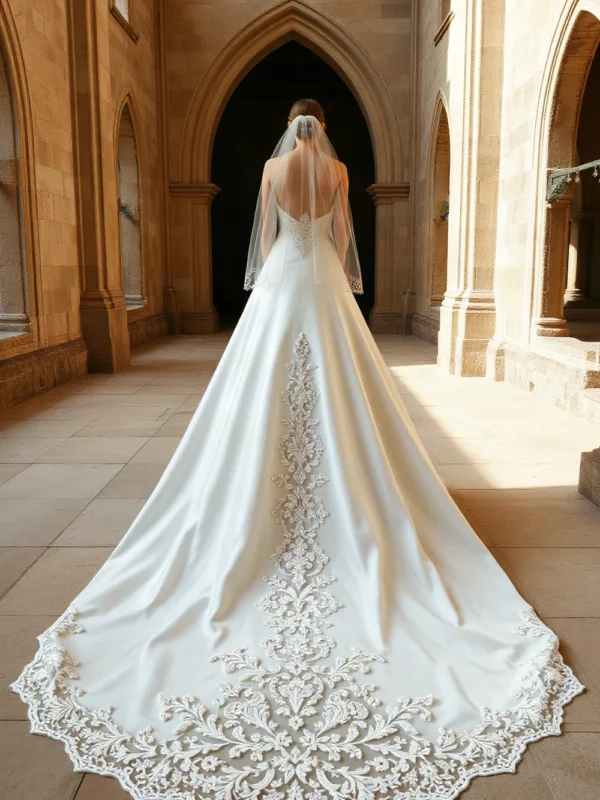
The final three concepts shift attention to the back. The fourth uses a long central motif and a richly bordered train to build a ceremonial rear composition. The fifth feels lighter, combining a deep open back, halter ties, a waist bow and a subtle floral surface. The sixth contrasts a restrained strapless bodice with expansive tiers, allowing shadow and movement to describe the design.
Setting influences every comparison. A dark chandelier room intensifies the reflective sweetheart bodice, while a bright corridor reveals the seams and folds of a plain surface. Stone arches reinforce the symmetry and length of an ornate train. On the sunlit terrace, warm ivory coloring and low-contrast floral lines become more apparent. Consider how a preferred detail may look in both the ceremony light and the reception environment.
Begin with one non-negotiable priority: a defined neckline, quiet surface, memorable back or dramatic train. Then assess sitting, walking, turning and dancing rather than judging only a still front view. When the secondary choices support that priority, the volume feels intentional and the details no longer compete.