Midi, tea-length and high-low wedding dresses make the hemline more than a choice of length: it affects how clearly shoes appear, how the skirt moves during a walk and how formal the silhouette feels. Although the terms can overlap, they mark useful differences. Midi spans a broad area between knee and ankle, tea-length usually finishes distinctly around the calf, and high-low creates an intentional contrast between a shorter front and longer back.
These six ideas show that shorter hems are not confined to one aesthetic. A fitted short-sleeved dress, tailored wrap silhouette, slender-strapped style with a sweeping train, square-neck column, three-quarter-sleeve A-line and strapless full skirt serve different practical and visual priorities. Choosing among them requires more than a front-facing pose: side and back length, seating comfort, stairs, support, stride, and the relationship between hem and footwear all need attention during fitting.
Placing the Flare on a Fitted High-Low Silhouette
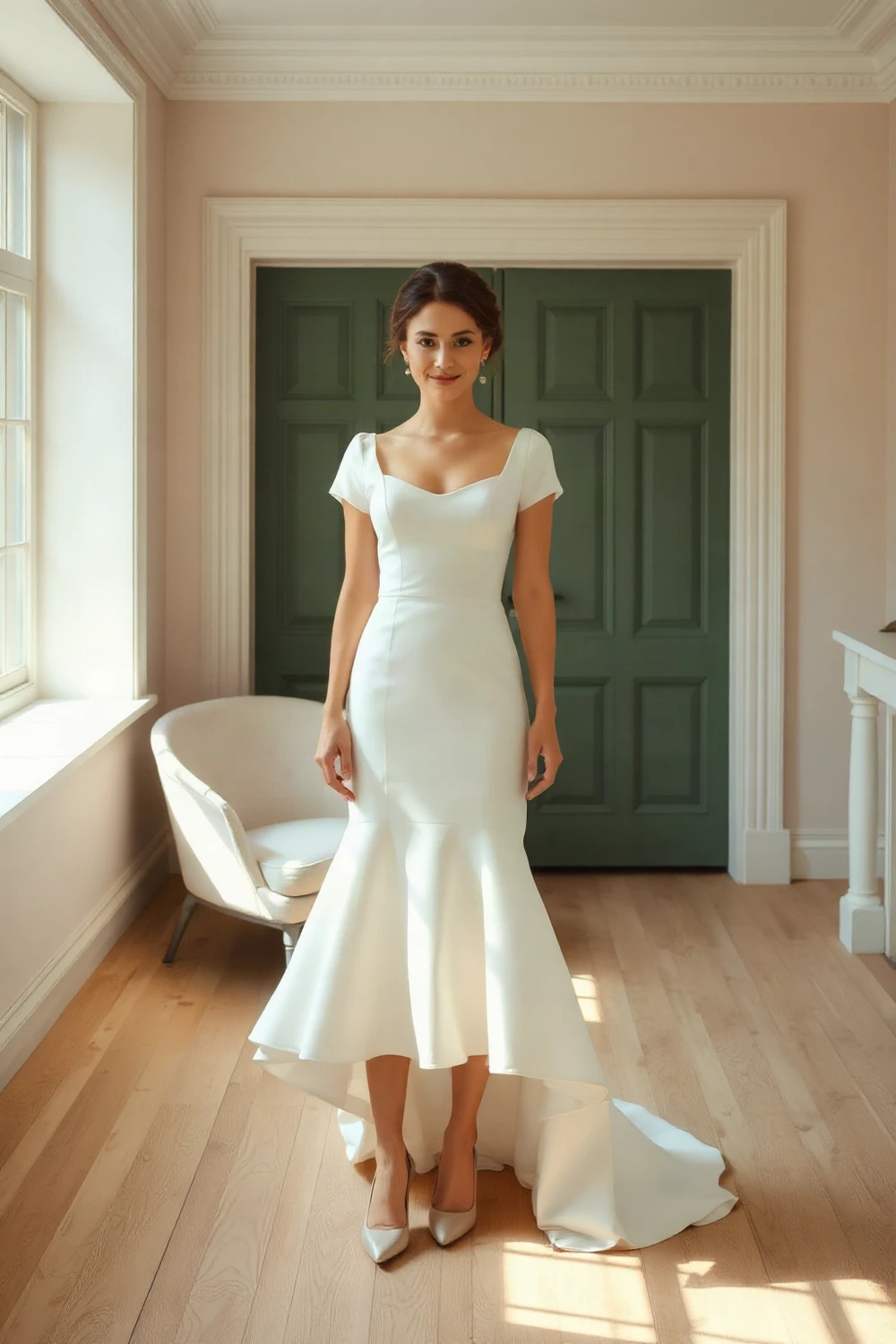
The first look follows the torso and hips, then widens around the lower leg. Short sleeves and a softly curved neckline keep the upper section quiet, while the front hem fully displays the shoes. A floor-reaching back brings traditional bridal length to the midi front. It suits someone who wants a concise front silhouette without losing the effect of a small train.
The central fitting question is where the flare begins. A very low transition can restrict stride; a higher one alters the balance of fitted and flowing areas. Test an ordinary walk, a quicker turn and sitting in a chair. If the venue has stairs, decide beforehand how to lift or manage the back. Because the shoes remain visible, comfort matters as much as colour or toe shape.
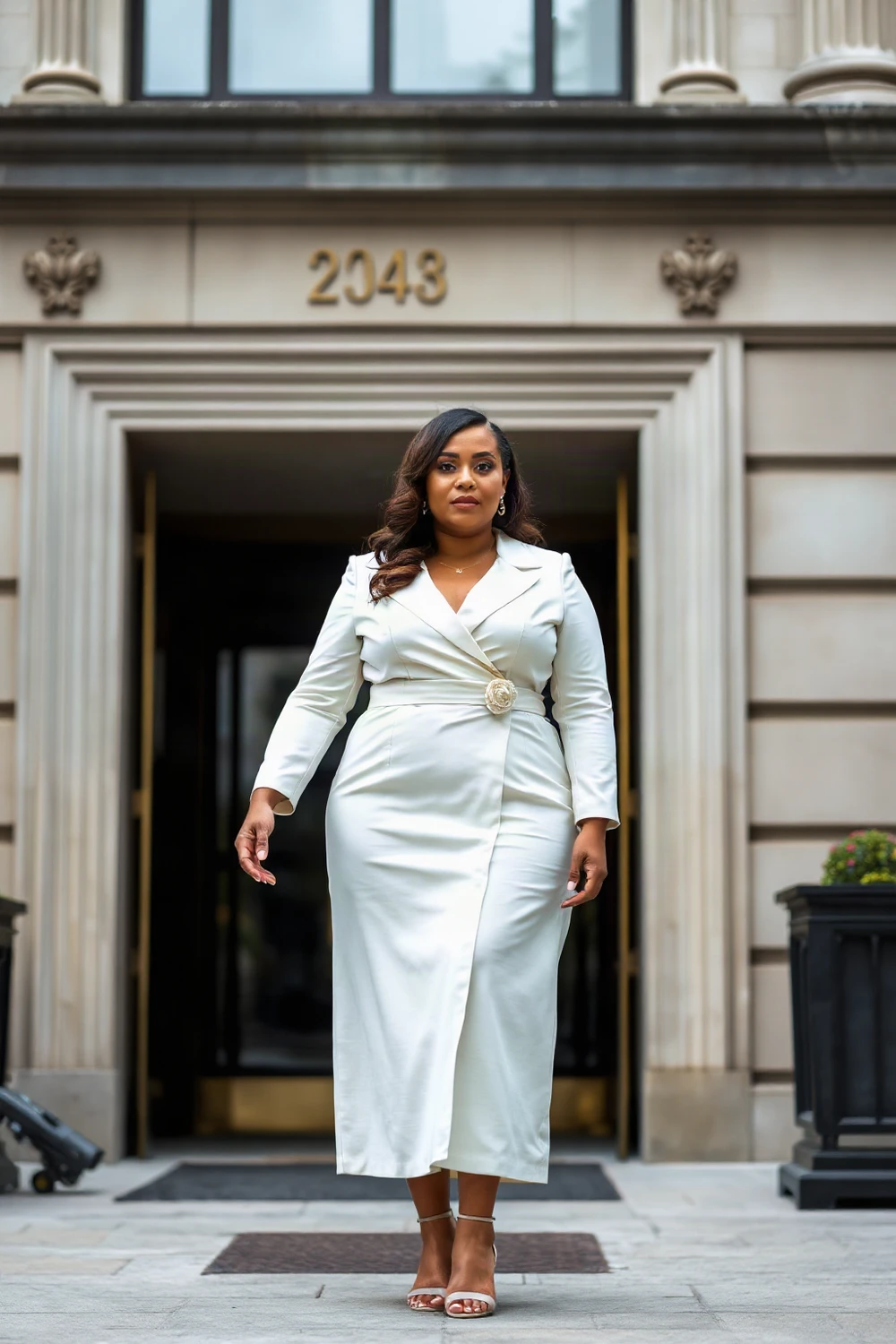
Lapels, Waist Placement and Stride in a Wrap Midi
The second idea interprets a wedding dress through the structured language of a long jacket. Broad lapels, full sleeves and a crossing closure give the upper body clear geometry. A circular accent draws attention to the waist, while the straight midi skirt keeps the composition urban and controlled. It offers a train-free outfit distinguished from an everyday dress by deliberate tailoring and monochrome presentation.
Evaluate a wrap shape in motion. Sit to check that the front stays covered, move the arms to confirm the lapels remain aligned, and bend the elbows to assess sleeve ease. The straight skirt has less volume than an A-line but may leave less room for a long stride. Since the waist detail is already a strong focal point, smaller jewellery lets the lapel structure remain clear.
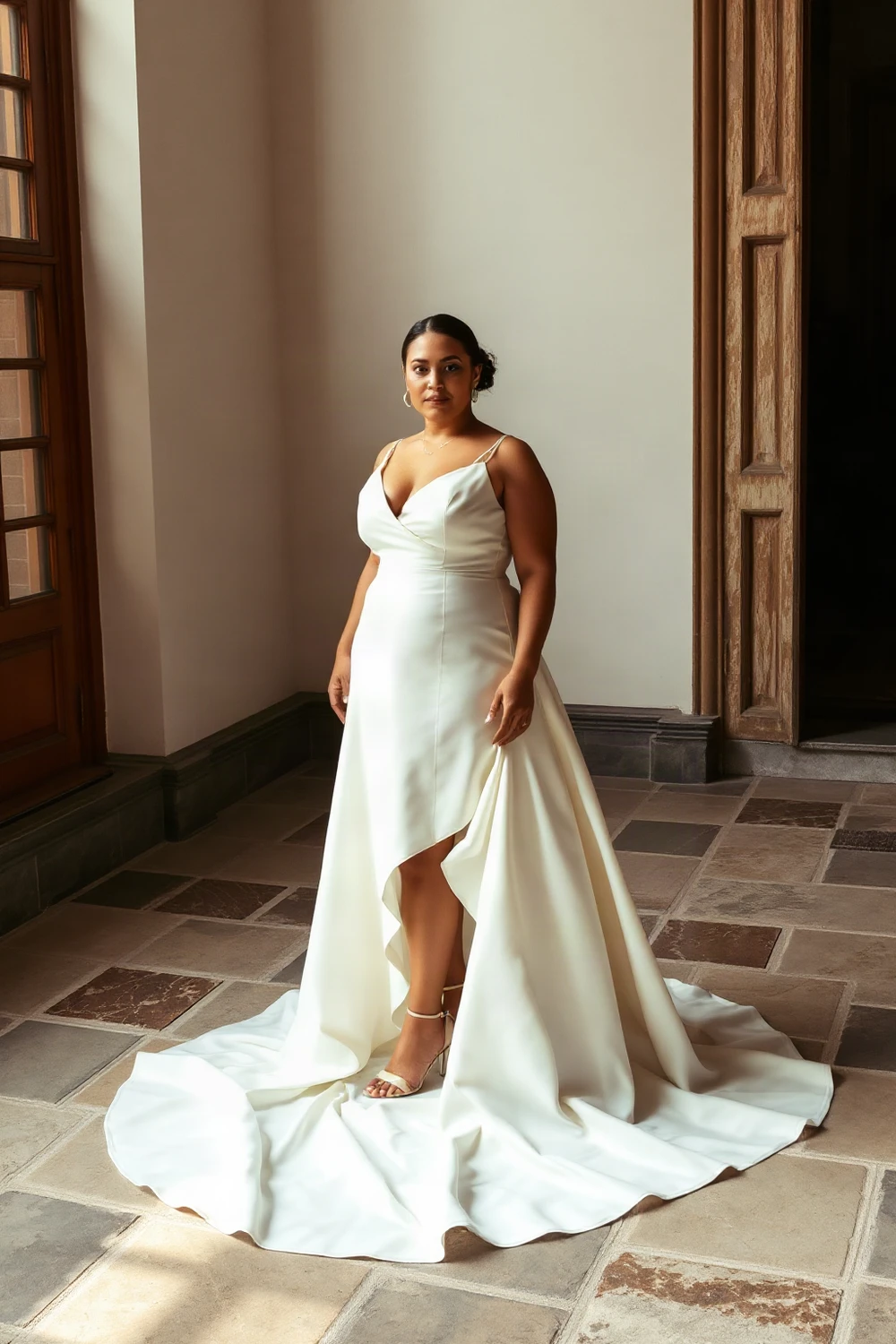
Planning Movement Around a Dramatic High-Low Train
The third look pairs a slender-strapped V-neck bodice with an asymmetric skirt that exposes the leg in front and spreads broadly behind. Its length contrast is the strongest of these examples, creating a theatrical outline. The open front displays each step and the footwear, while long side panels shift volume toward the back. It suits a vision in which both short and sweeping proportions are unmistakable.
Use a fitting area larger than the space before a mirror. Make a full turn, pass through a narrow doorway and try stairs if possible. Check whether the front opening stays centred and how the panels move around the legs. Test upper-section support actively, because slender straps should not carry the dress alone. A broad train creates dramatic movement but needs more management in crowds and on outdoor surfaces.
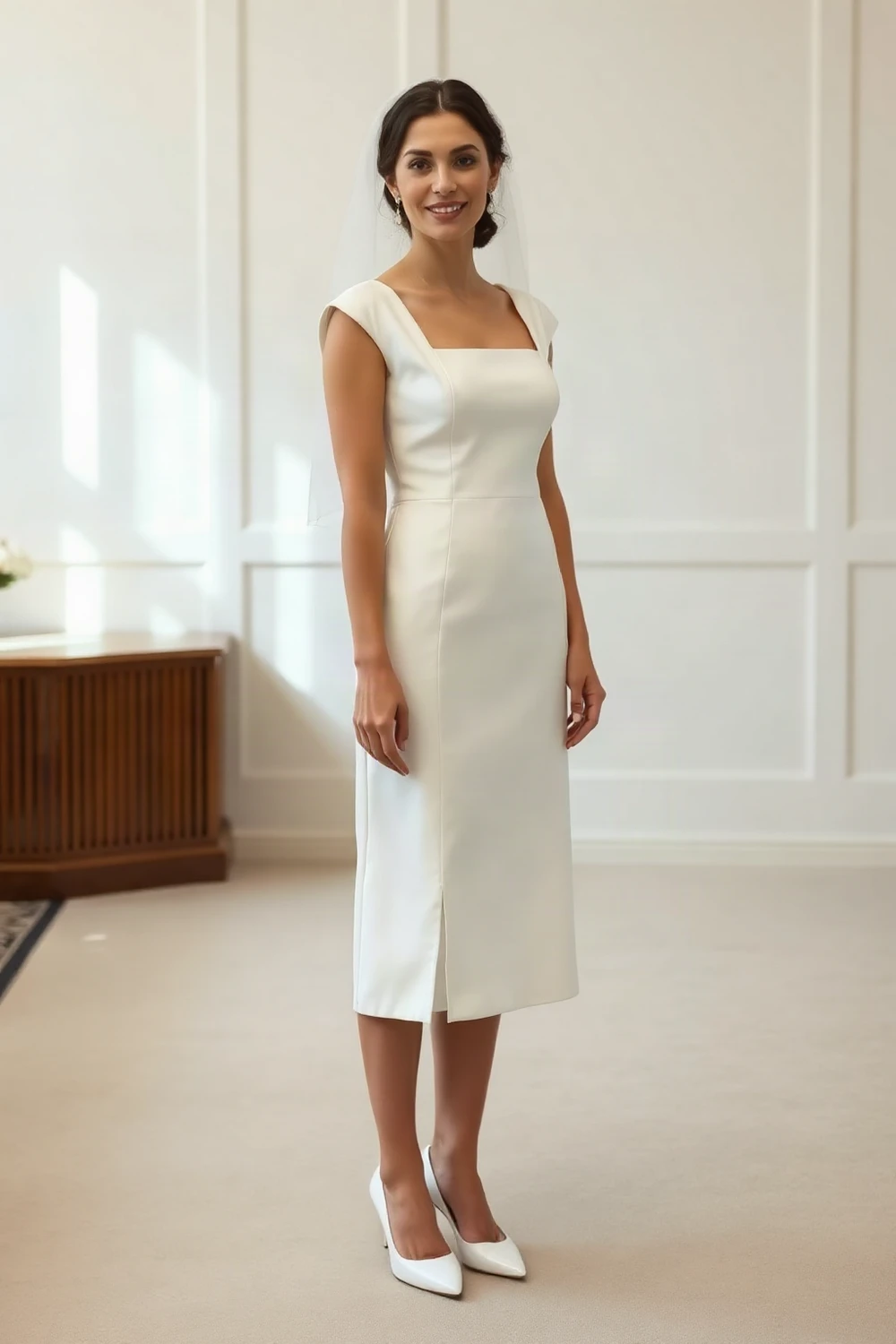
Maintaining a Clean Line in a Square-Neck Midi
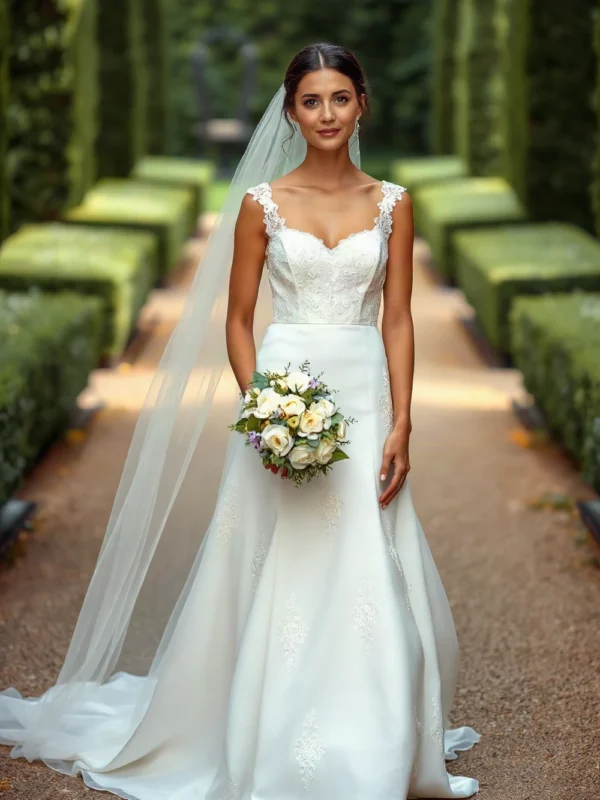
The fourth look combines a square neckline and small shoulder-covering panels with a narrow, straight midi skirt. Vertical seams make an uninterrupted line down the body, and a short front slit allows movement. A fine veil supplies bridal context without covering the plain surface. This controlled silhouette suits a civic ceremony with narrow corridors or anyone who prefers definition to expansive skirt volume.
Assess neckline width, depth and shoulder placement together. The shoulder sections should not flare outward as the arms rise, and the front edge should not fall away when seated. With a narrow skirt, stride room and slit position are especially important. Review the slit while walking and using steps, not only in a static pose. Because visible shoes affect the final proportions, complete the hem fitting in the intended heel height.
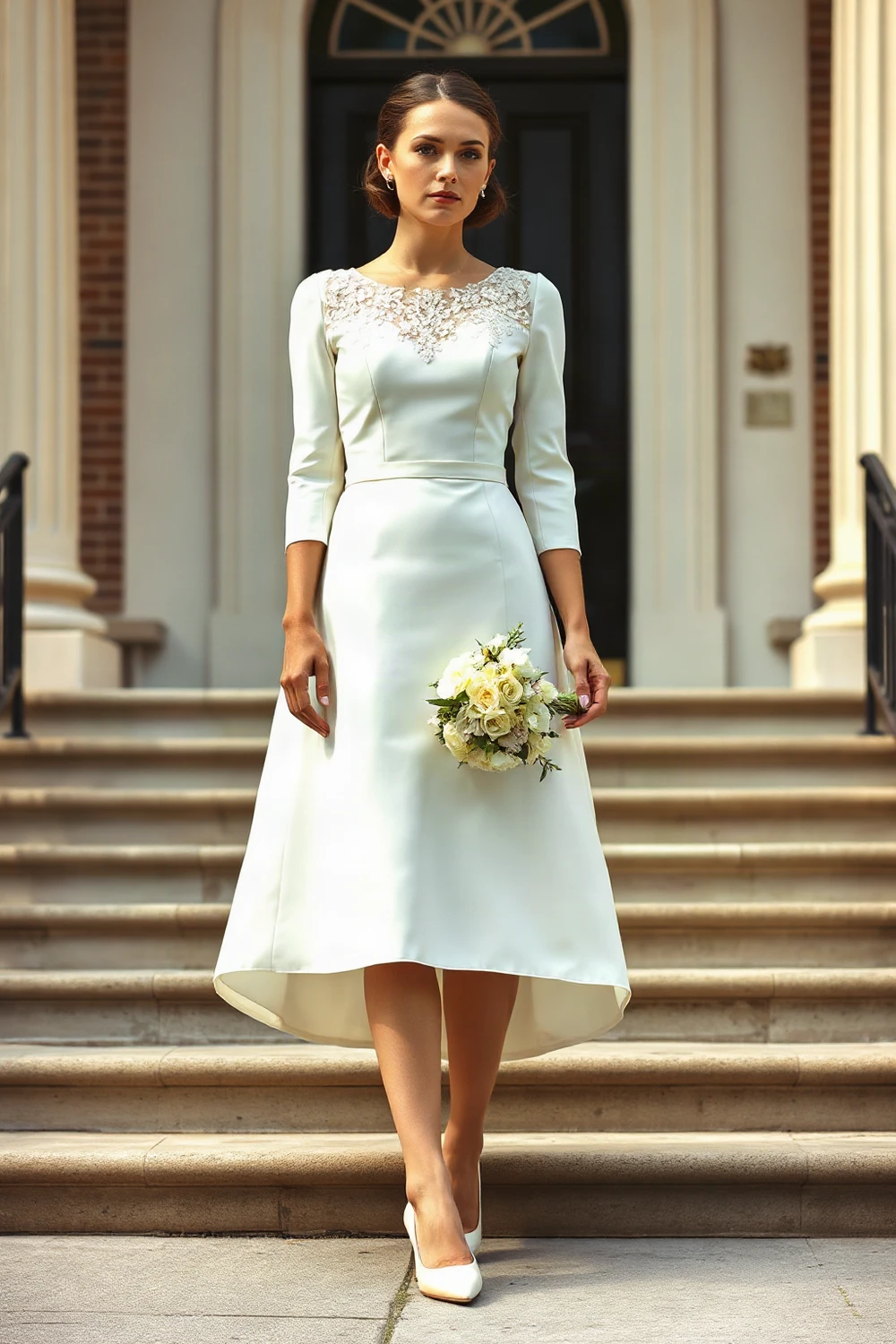
Balancing Three-Quarter Sleeves with a Tea-Length Skirt
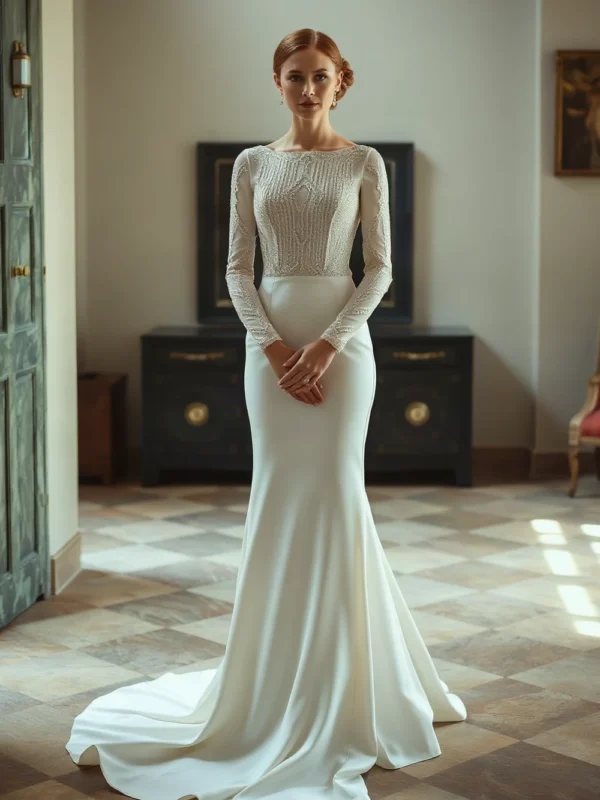
The fifth idea balances a more covered upper section with the movement of a shorter A-line skirt. Three-quarter sleeves extend the arm line, while pale neckline decoration lifts the focal point toward the face. The skirt opens from the waist, ends around the calf in front and drops slightly behind. It is a measured version of the high-low principle without a substantial train.
Assess sleeve and skirt movement in the same fitting. Bend the elbows, carry a bouquet at different heights and extend both arms to check comfort. An A-line generally offers more walking room than a narrow column, although its wider hem reacts more to wind and stairs. The decorated neckline needs no necklace; compact earrings may be enough. Even the modestly longer back should be checked for contact with the heel when walking down steps.
Support and Accessory Scale for a Strapless Long Midi
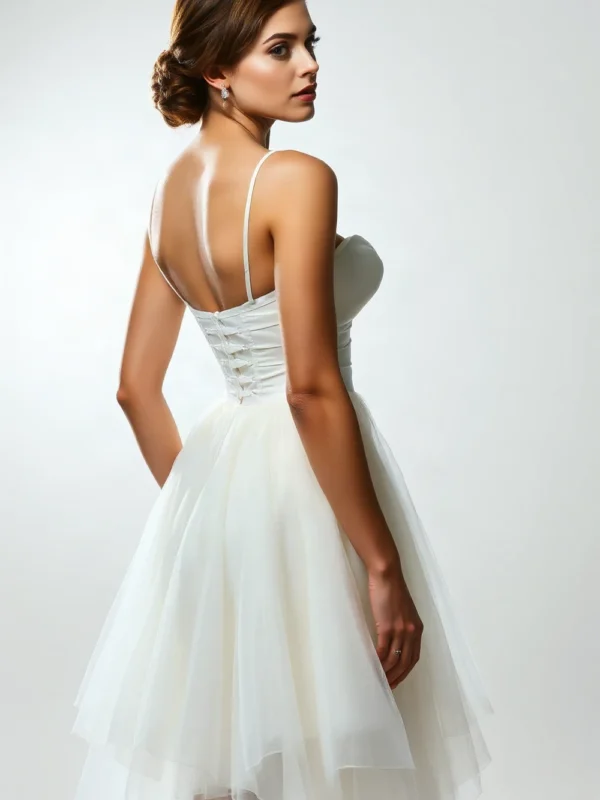
In the sixth look, a straight strapless bodice meets a wide, long-midi skirt. The hem approaches the ankle without touching the floor, bridging standard tea length and a full-length dress. Short gloves add texture and a ceremonial reference to the otherwise unembellished surface. The widening skirt provides more volume than fitted midi options while leaving the shoes visible.
For a strapless design, first test security in motion, not appearance while still. Sit, raise the arms, reach forward and climb stairs; the neckline should remain stable without repeated adjustment. Ensure the long front hem clears the shoe with every step. If wearing gloves, rehearse holding a bouquet and exchanging a ring, noting any wrist tightness. Because the broad skirt and gloves already make clear statements, restrained jewellery preserves visual balance.
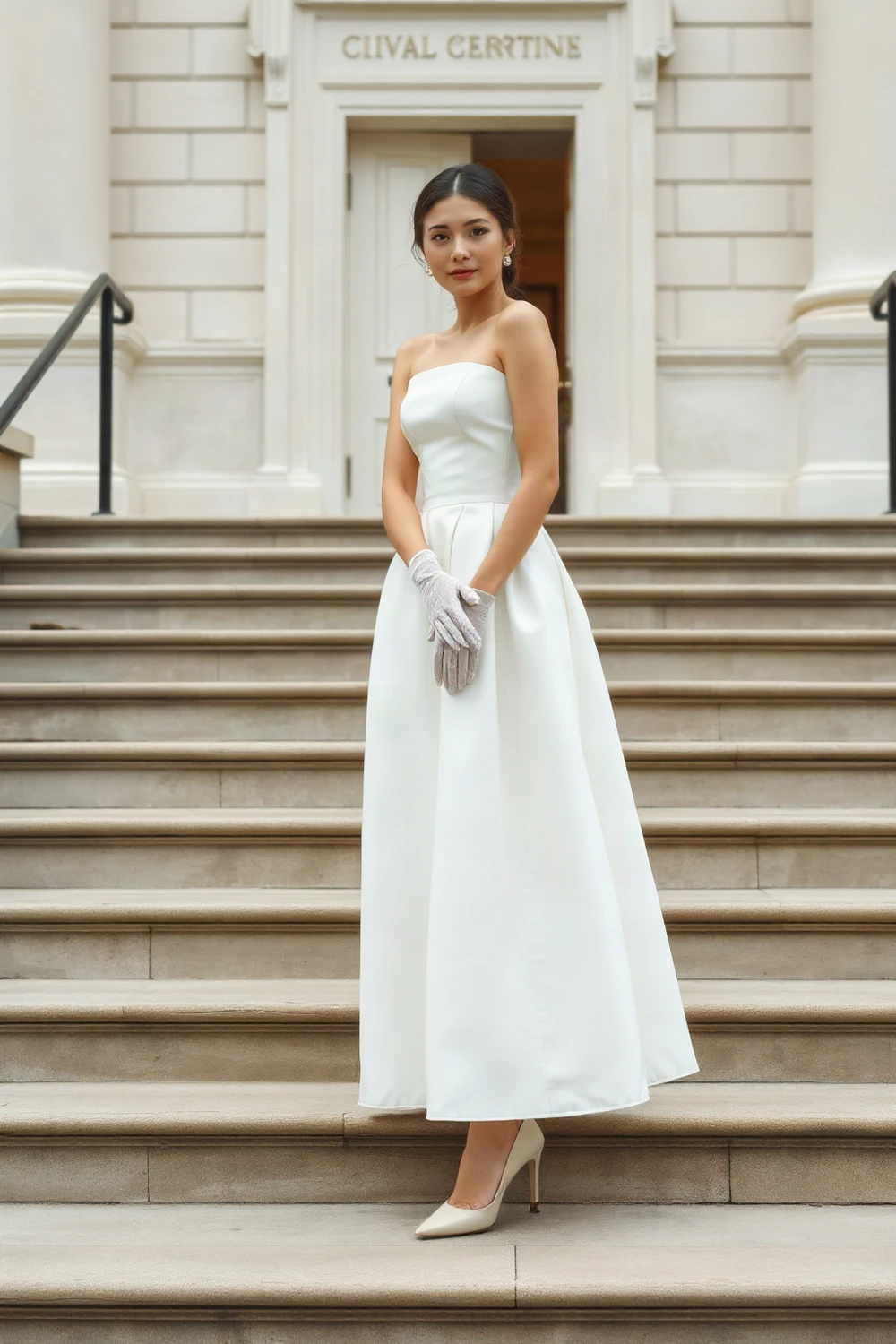
The right shorter or asymmetric wedding dress cannot be chosen by hem length alone. Venue stairs, walking distance, seating, visible footwear and upper-body support work as one system. A fitted high-low creates a sharper contour, a wrap midi brings tailored structure, and a sweeping train produces pronounced movement. The square-neck column prioritises simplicity, the sleeved A-line balances coverage with swing, and the strapless long midi gives a clean ceremonial proportion.
After establishing a shortlist, try every silhouette with the intended shoes. Walk, sit, turn, reach and use stairs rather than relying on a still pose. The best choice retains its intended proportions while remaining manageable throughout the ceremony and celebration.
A visual guide comparing midi, tea-length and high-low wedding dresses through skirt movement, necklines, sleeves, trains, visible shoes and practical ceremony settings.
Frequently asked questions
What is the practical difference between midi and tea-length wedding dresses?
Midi is a broad term for hems between the knee and ankle. Tea length usually creates a more specific finish around the calf. The exact position should be chosen with the wearer’s proportions and intended shoes in mind.
Can a high-low wedding dress work at a venue with stairs?
Yes, but the back length and width need to be tested on steps. A sweeping train may require a lifting or fastening plan, while a modest difference between front and back is generally easier to manage.
How should shoes be chosen for a shorter wedding dress?
When shoes remain visible, their colour, toe shape and heel height affect the silhouette. Prioritise comfort for walking and stairs as well as appearance, and complete the final hem fitting in the same pair.
Is a narrow midi skirt or an A-line midi easier to move in?
An A-line usually provides more stride room. A narrow midi creates a more controlled outline but may need a slit or additional ease. Test both shapes by sitting, taking long steps and climbing stairs.
How can the support of a strapless midi wedding dress be checked?
Do more than stand before a mirror. Sit, raise the arms, reach forward and climb steps to confirm that the neckline stays in place. Reliable support depends on the fit and internal structure of the bodice.