A high-neck wedding dress can frame the neck with a higher edge while still showing a sheer-looking upper area. In the principal reference, a round outer neckline sits above a deeper V-shaped motif arrangement. Separate neckline height from the actual coverage you want. Three lower-neckline references help compare straps, bare shoulders and jewellery. Choose the line you want to see on yourself, then check how the real dress connects it to sleeves, hairstyle and the complete skirt. The depth of decoration alone may not describe the garment’s outer neckline.
Recognise the high-neck wedding dress by its outer edge
Look only at the top garment edge first. In the main picture it sits round and close to the neck, with floral forms spreading across the upper area to short side sleeve sections. Decoration below draws a deeper V-like shape. These lines have different roles in the visible arrangement. Decide whether you want the higher frame or a genuinely more open front like the strapped comparisons. A deep motif does not answer that choice. Pointing out the real edge during a fitting can distinguish it clearly from the decoration beneath.
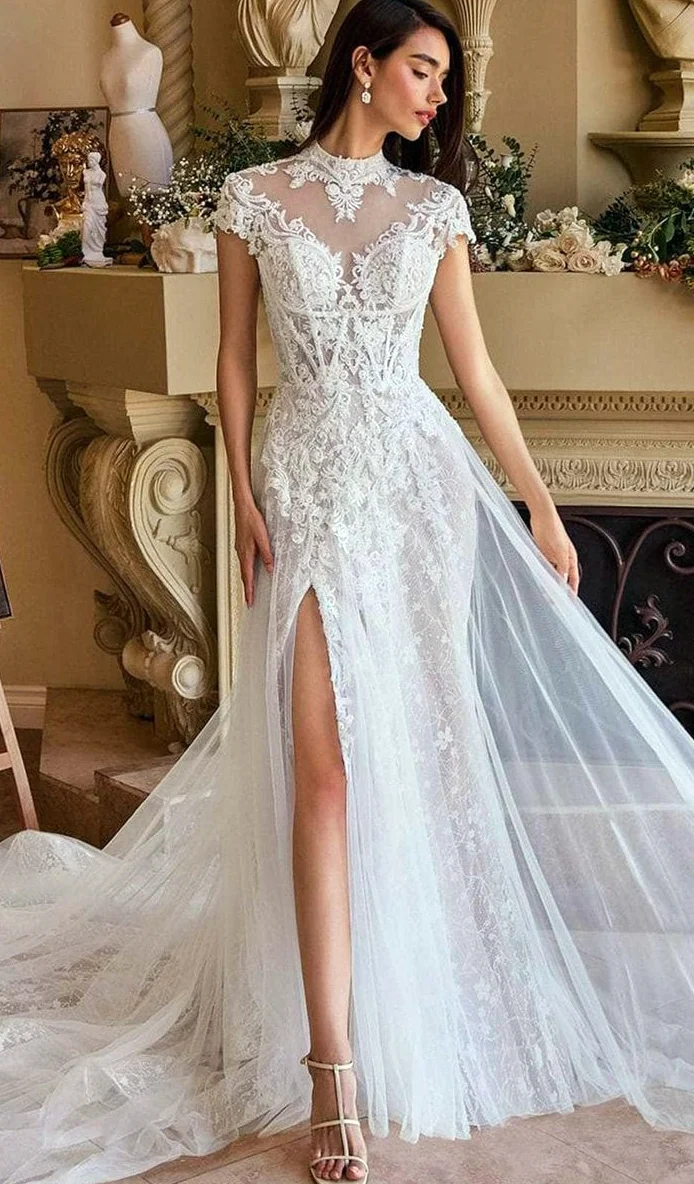
View the actual candidate’s upper edge from front and slightly to the side. Compare its height with your intended hairstyle and a normal relaxed stance. If you want another form, describe it specifically: higher round, wider at the sides or lower and open. Any change needs confirmation on the real construction. Choose that visible line before judging floral density; similar decoration can frame the face differently on two differently cut dresses. If you are choosing between hair worn up or down, compare both beside the same neckline.
Choose coverage separately from neckline height
The main reference’s upper area allows skin to remain visible between floral shapes. A higher outer edge is therefore not equivalent to a fully opaque covered section. Decide which areas you want visible and where you prefer more coverage. The sheer wedding dress guide helps describe that choice. Available cloth layers or alterations must be shown on the selected model. Request its own close front and side views rather than ordering only by the phrase high neck, particularly around chest and side waist.
Wear the intended underwear during the fitting and assess chest and sides in conditions relevant to your actual use. Check the transition between the upper pattern and denser lower bodice too. If you want another layer, ask for the specific possibility to be explained and shown on that dress. Assume neither an invisible standard solution nor a particular level of coverage from a white photograph. The actual worn combination matters. Raise and relax your arms to see whether a previously unnoticed edge becomes visible, then describe the precise change you want.
Compare earrings and necklace in separate trials
A longer earring hangs beside the face in the principal image while the upper floral frame already registers clearly. Fit your real dress with only the intended earrings first. Check their distance from the neckline looking straight ahead and turning your head. A longer shape may sit beside the edge or overlap it visually. Choose the effect you enjoy on yourself rather than length from an isolated product picture. If the earring ends beside a floral shoulder detail, compare a shorter pair before introducing another jewellery item.
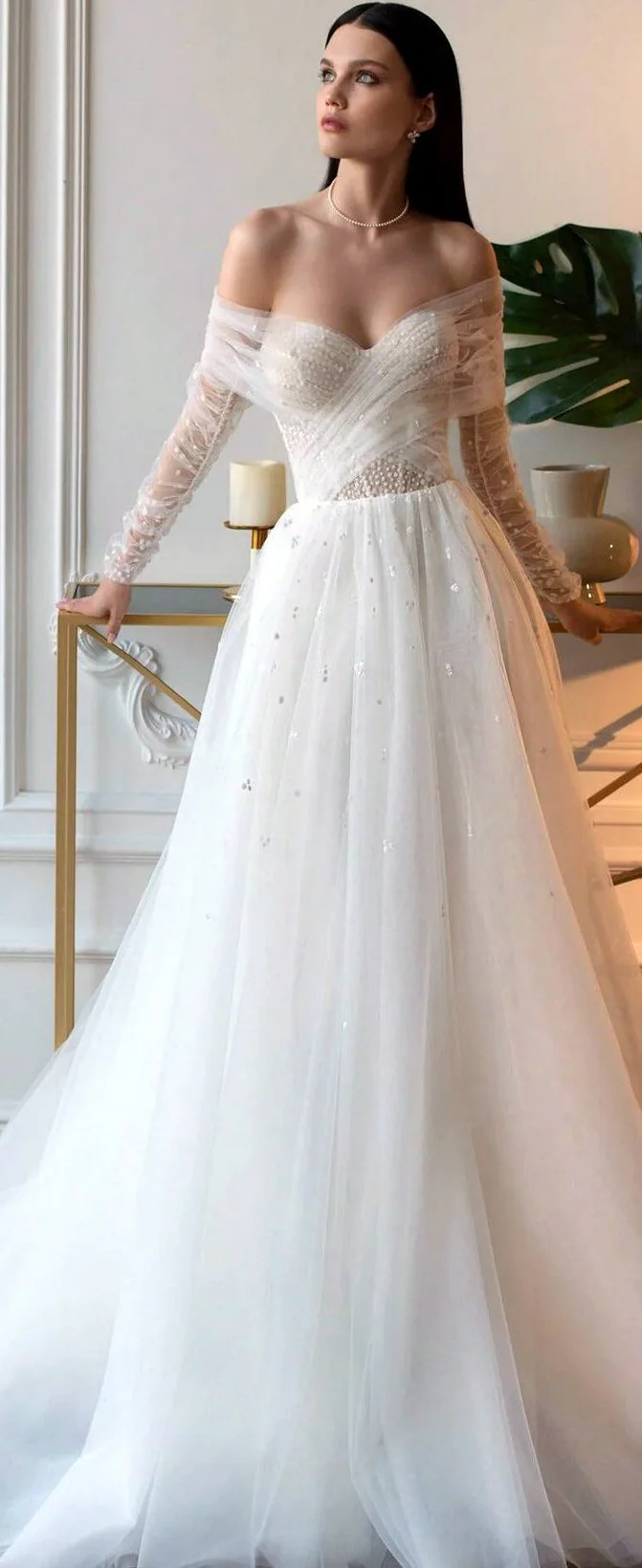
The off-shoulder counterexample has a short pale necklace above an open upper area. Use it to prompt your own comparison with and without a necklace, rather than transferring identical jewellery quantity onto a higher edge. If floral shapes already provide the desired accent, a quieter jewellery plan may suit your preference. The bridal accessories guide develops choices between hair, ear and neck pieces. Judge against the actual neckline and hairstyle; a necklace’s attractive appearance over bare skin cannot establish the same relationship over a patterned high collar.
Select shoulders and sleeves beside the higher neck
The principal image pairs the higher round edge with short floral shoulder and sleeve areas. Two fine-strap V references leave arms more exposed, while the off-shoulder dress has long sheer-looking sleeves and diagonal upper draping. Compare the amount and direction of side coverage first. Do you want short shoulder details beside the higher line or a longer arm frame too? These are different dresses, not proof that every sleeve can be exchanged. View the desired neck and sleeve together on an actual candidate instead of combining them from separate photographs.
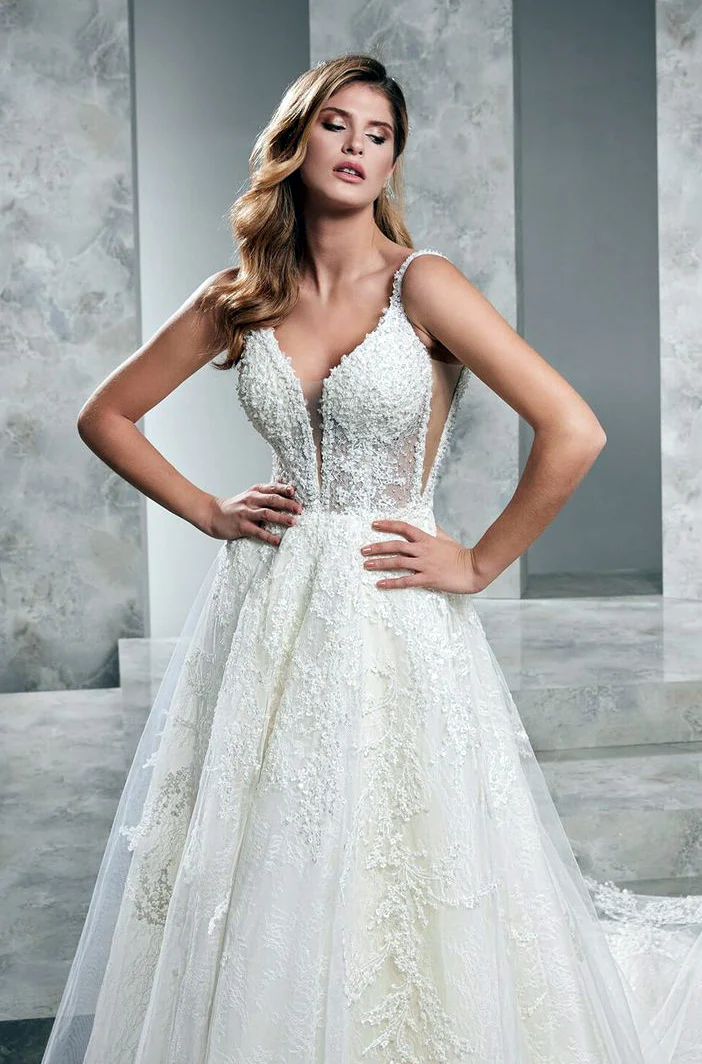
Reach both arms forward on the real candidate, then let them relax. Observe the upper edge and the points where shoulder and sleeve begin. Sit and turn your head afterwards without deliberately pulling the shoulders back. You can describe whether a particular edge bothers you or whether you want to readjust the bodice after movement. Alteration discussions need that specific location and actual dress rather than an assumed strap function. Repeating several movements assesses your own conversational and seated use instead of only the outline in one held pose.
Assess the high-neck wedding dress as a complete silhouette
The principal reference has a close upper skirt, a front slit and trailing side cloth. The lower-neckline comparisons have more flared skirts. Your neckline choice therefore does not automatically decide the skirt. Photograph the actual candidate full length in your shoes, considering neck to waist first and the whole line to the floor afterwards. Look for another real model if needed rather than combining bodice and skirt from different pictures as a confirmed option. A desired high neck with broader skirt needs its own actual full view.
Walk and sit in the real skirt shape. Add intended flowers or a small bag to see whether they hide an important bodice detail. A prominent neck frame may direct attention upward, but the object you carry also determines what remains visible. The slit needs its own movement trial for the front leg and shoes. The picture records a pose rather than every possible way of handling the dress. Bring the real object to the fitting so you can judge the photographed hand position against your own use and normal stride.
Check the neckline and actual fastening together
Request the real back view and fastening explanation as well as the front. With a higher neck, your own use includes putting on and removing the dress and deciding whether to arrange help. The principal photograph does not show these steps. Try only the specific model’s intended handling. If hair or earrings need a different position during dressing, test that sequence too, so you assess the higher edge beyond a finished photograph. A practical trial with longer earrings can clarify their proximity to the collar and your hand movements.
Before cleaning or pressing, obtain the selected garment’s information. GINETEX explains care symbols; use the real label. Your high-neck wedding dress should then meet four decisions: intended neckline, deliberate coverage, suitable handling and jewellery you enjoy beside shoulders and sleeves. Actual composition or internal construction requires product information. Visible floral forms cannot replace it, but can help select the upper frame specifically. Make the final choice on the real model you wear rather than assuming similar decoration gives different dresses identical features.
Choose a high-neck wedding dress by its outer neckline and intended coverage first. Then try earrings, hair and sleeves before assessing the complete dress sitting and walking.
Frequently asked questions
Does a high wedding dress neckline need a necklace?
Try the actual dress with your earrings and no necklace first. Add one only if you like its distance from the edge and the overall effect with your hair.
How do I choose more upper-body coverage?
Describe the area you want covered and request a specific option shown with the intended underwear. A high edge alone does not explain the transparency between motifs.
Which movements should I test with the high neckline?
Turn your head, reach your arms forward and let them relax. Then sit without deliberately drawing your shoulders back and check the position of the upper edge.



Thoughts on this article