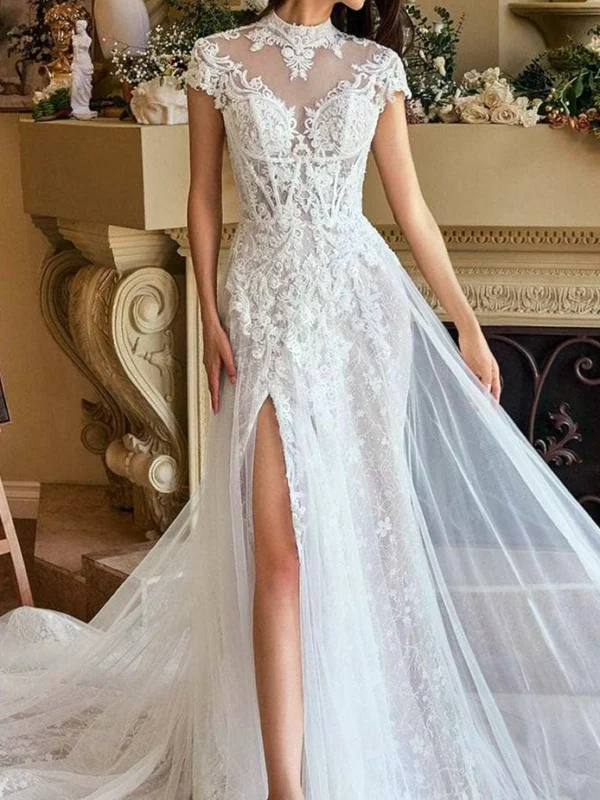
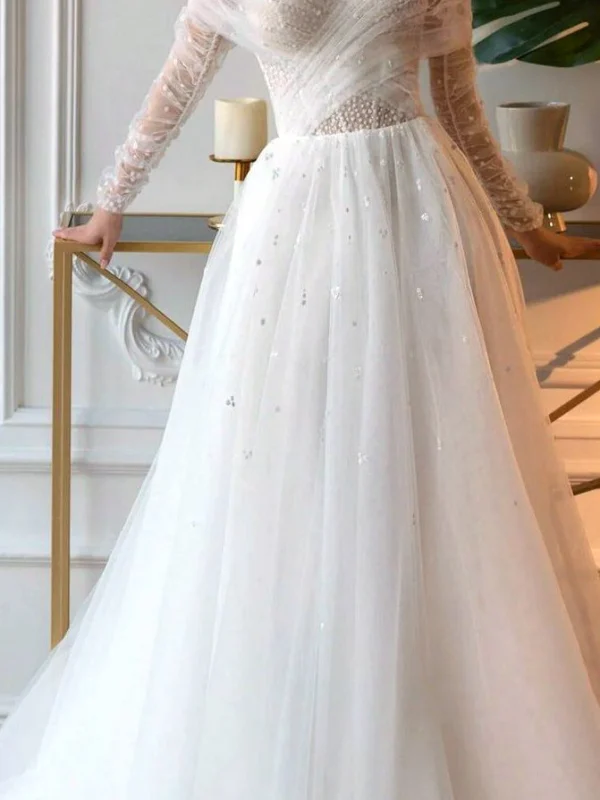
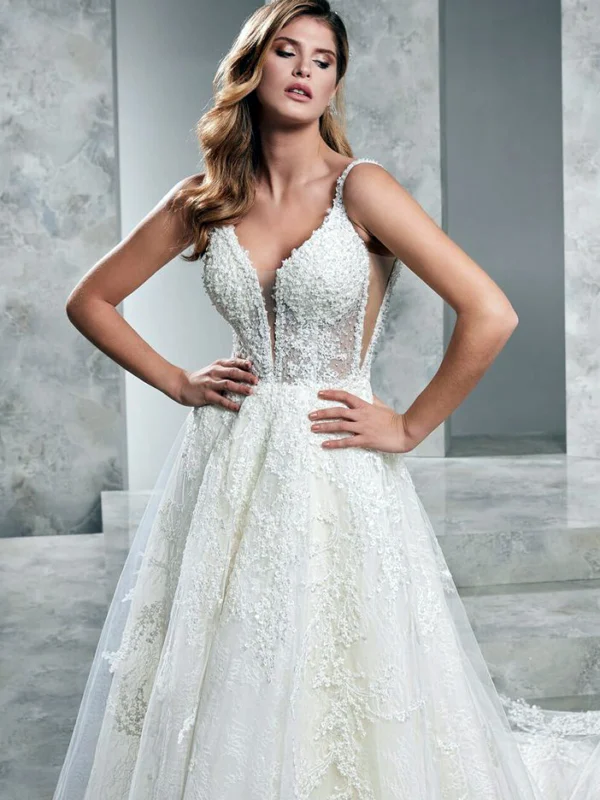
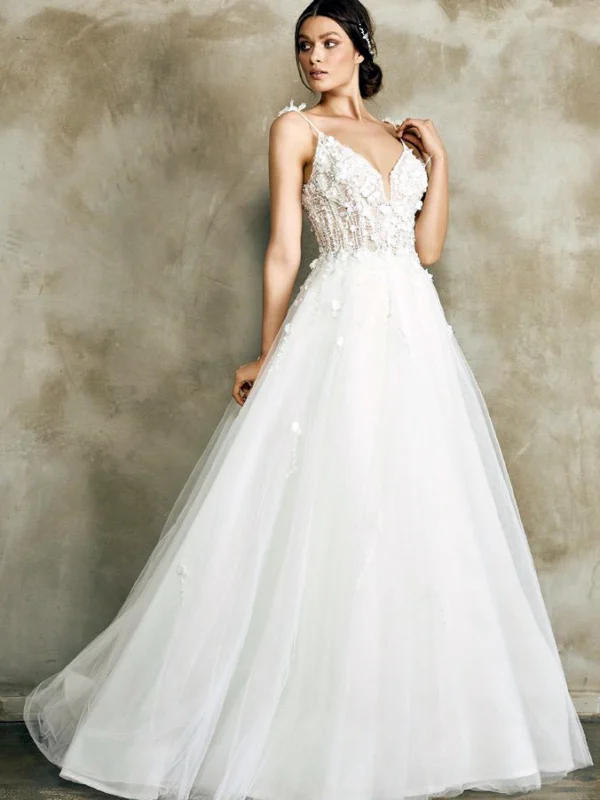
Wedding dress necklines are compared here through one high outer curve and three more open alternatives. The high example combines a floral upper layer with short sleeve sections; denser decoration below outlines a deeper V. Another dress has bare shoulders, long sleeves and diagonally arranged fabric across the chest. Two further examples use thin straps and a V neckline, with different decoration density and skirt coverage. Choose the actual upper edge first, before reading a deeply drawn motif as an equally deep open neckline. They describe different features of the garment.
Then compare jewellery and hair on your own dress. The short necklace in the off-shoulder example and the long earring beside the high neckline are separate suggestions, rather than a required amount of jewellery. Try one option at a time to understand its effect. A final choice also needs the real side and rear views, sitting and relaxed arms. These are four different dresses: a desired combination of high neckline, another sleeve type and a wide skirt must exist on the available model or be discussed specifically with its provider.
Guide to comparing these images
Compare the V fronts within one upper family
The two thin-strap V references let you stay with a related upper route while considering different surface distribution. One has a densely decorated bodice and visible waist-side areas; the other moves from floral drawing into a quieter skirt. Record which part of the middle you want to compare on a real dress, leaving the actual coverage question to that candidate.
The long-sleeved open-shoulder dress offers a separate diagonal across the chest. Compare that diagonal with the floral high-frame reference as directions within the upper surface, keeping their outside neckline boundaries clearly marked.
Keep a picture and a written request together
For each preferred detail, save a short note naming its source image and a second feature you do not require. For instance, interest in the diagonal chest area need not include the photographed necklace. At the fitting, place a complete photograph of the real candidate beside that note. This prevents a collection of attractive details from silently becoming a claim that one dress offers all of them.