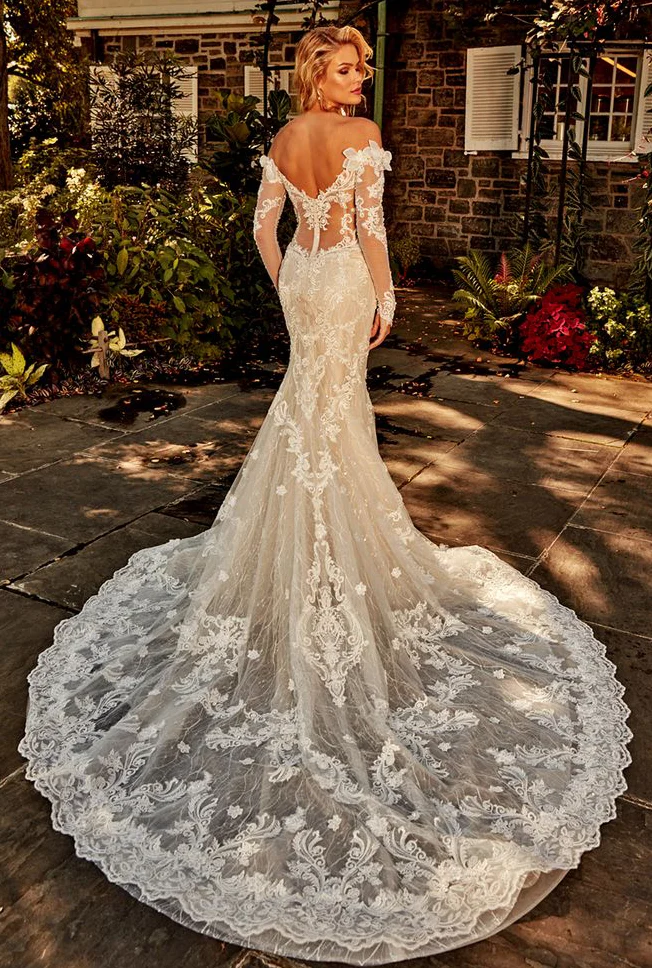
A V-shaped back as an alternative introduces a more angular upper opening here. Long patterned sleeves sit beside exposed shoulder areas. Pale floral lines divide the rear and narrower long dress. The lower skirt widens into a spread patterned edge, while the person turns their head sideways. The main comparison concerns the more pointed-looking finish beside the softer rounded backs elsewhere. Similar overall exposure does not establish the same boundary shape.
Place an actual candidate with comparable rear coverage beside a U version if your preference remains unresolved. Perhaps you mainly like an open area; perhaps you specifically want a curve without a point. Keep sleeves and skirt as comparable as possible initially. Otherwise, a preference for long sleeves may accidentally be read as a decision about the rear edge. Answering those questions separately makes the result easier to explain.
Assess the line in a relaxed stance with hair moved aside, then add your intended hairstyle. Patterning establishes neither internal support nor fibre composition. Use the visible contrast without naming this photograph a U back. Your later request can then be more precise than wanting the same exposed rear: choose a rounded lower turn or a more angular finish on the garment you actually try.