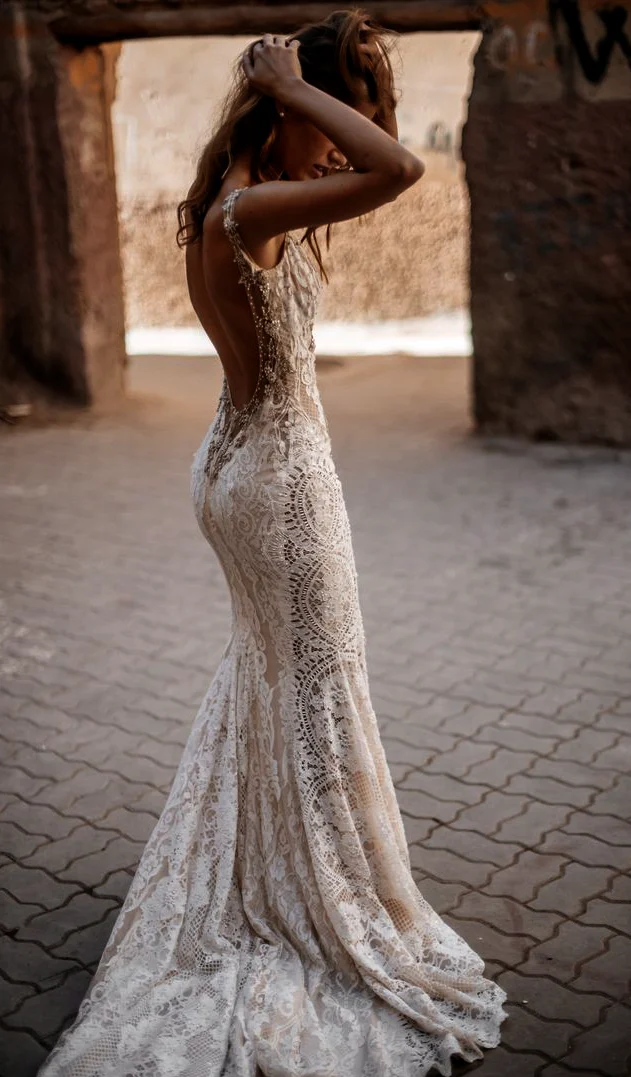
A side view of a deep rounded back shows a longer curved opening here. Fine shoulder lines frame the upper area. Small curling motifs continue across the fitted hip area into a widening lower skirt. One hand rests above the head while the upper body turns sideways. The two back borders are therefore not presented under identical conditions. The picture explains the side route particularly well without answering every question of a straight rear view.
Use this angle if you want to inspect the transition beside the arm. On a real candidate, add a neutral rear view first. Lower both hands and temporarily clear hair from the opening. Decide whether depth and curve still appeal in that state. Test the raised-arm position afterwards as another movement rather than expecting the photographic pose to equal your own relaxed stance.
Compare smaller border motifs independently of the open area. You may enjoy their density while seeking a broader or shorter opening. State both wishes. The closely following silhouette is not a fixed target for your body. Request an actual offered version and assess the rear line in your own ordinary position rather than reproducing the turn in the picture. That makes the comparison specific to your preference.