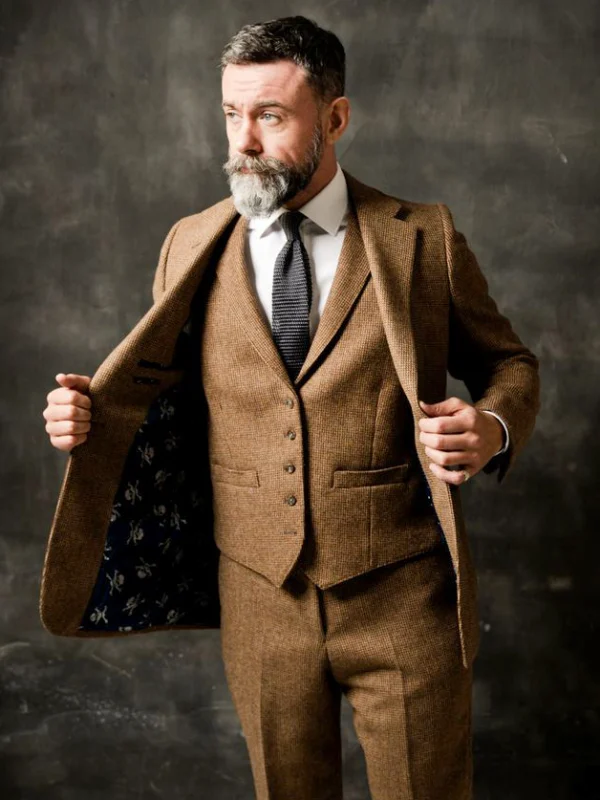
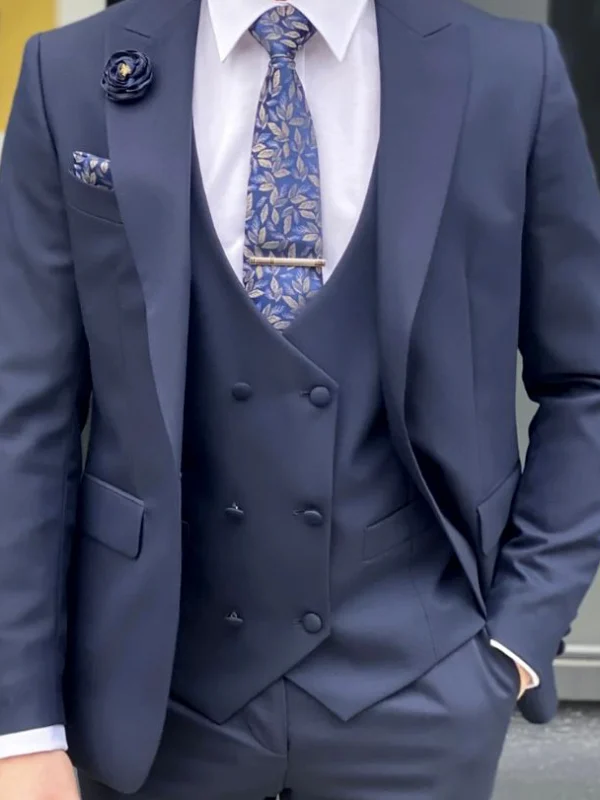
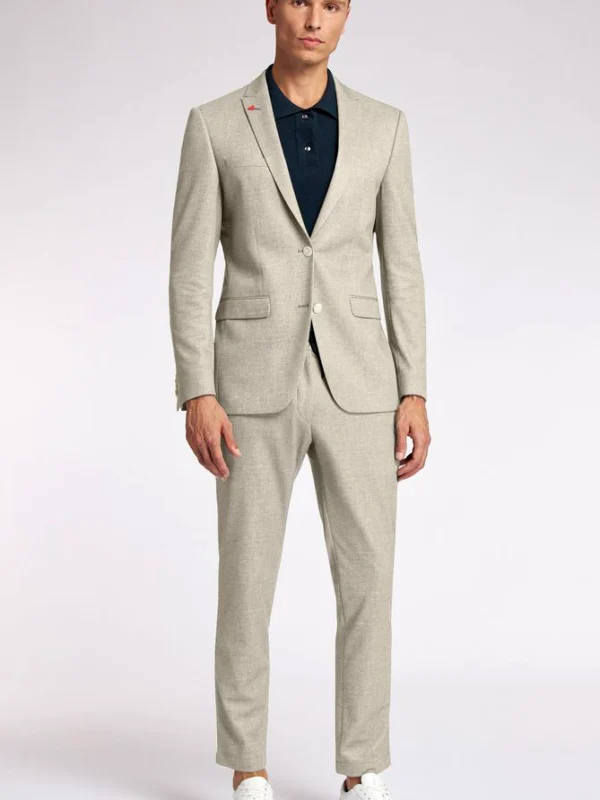
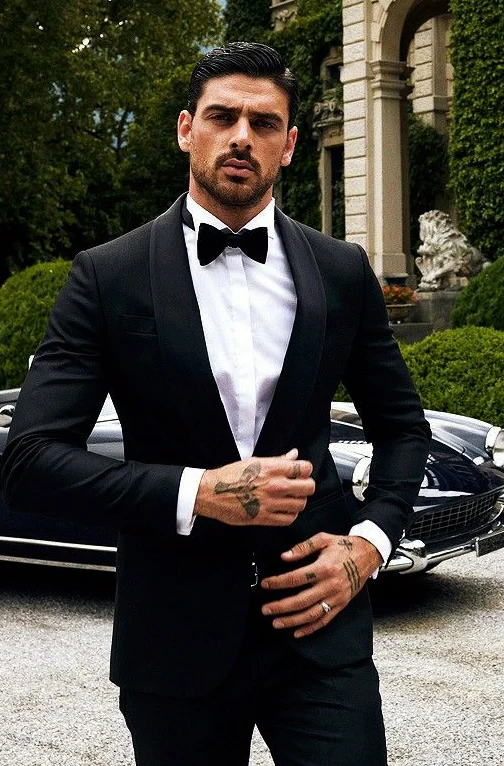
A dark suit can look different with a pale shirt, tonal inner layers or an added waistcoat. Choose the colour division you want for your actual occasion before selecting more accessories. The four references differ clearly: two combine black upper outfits with a pale shirt and bow tie, one uses an entirely dark arrangement, and another shows a navy two-piece with a lighter shirt and tie. Those differences create useful questions. Compare colour divisions first, then construction and movement in the actual garment. A photograph offers an idea; a fitting establishes whether that idea works for you.
Start a dark suit comparison with occasion and shirt contrast
Read the invitation before sorting the pictures by personal preference. If a particular form of dress is named, clarify unfamiliar expectations with the host. A bow tie in a photograph does not establish suitability for every formal event. An open collar in another picture does not establish what your own event expects either. Note your role and the likely sequence: greeting guests, making a speech or sitting through a long meal.
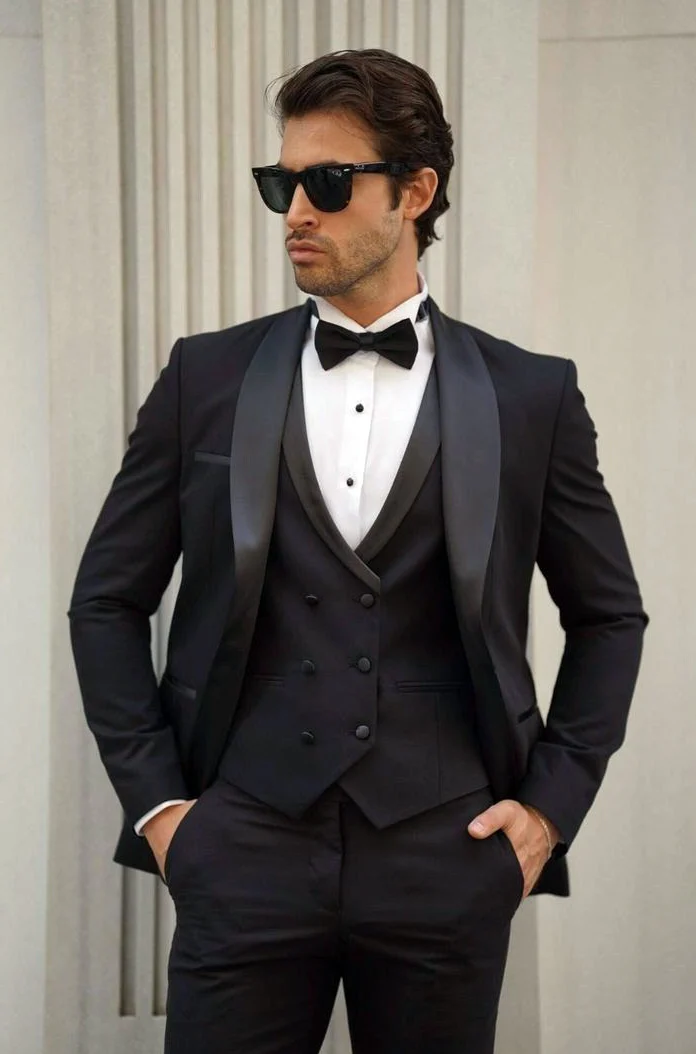
Then compare the two black bow-tie references. The first adds a waistcoat beneath the jacket, while the second gives the jacket front more independent emphasis. There is no need to pick a universal winner. Think about whether you will remove the jacket later and what you want the remaining outfit to look like. That answer leads to a fitting with or without a waistcoat, rather than a decision based on the impressive setting behind the wearer.
Choose a pale shirt or a darker inner area
A white shirt creates a clear light area between neck and jacket in the first two references. The entirely dark outfit reads more continuously, while the pale blue shirt with the navy suit creates another transition. When choosing a dark suit, make this comparison before concentrating on one particular tie. Try two inner layers in the same jacket and keep lighting and posture similar so that the difference is easier to judge.
A dark top does not have to match the jacket exactly to please you. Look at both surfaces under the actual light and decide whether you deliberately enjoy their difference. A screen can represent close shades differently. Wear the intended trousers as well, rather than deciding from a small upper-body crop. The appearance does not establish fibre, cloth weight or a special temperature-related property of the offered garment. Obtain product information separately for those questions.
Separate a close shape from insufficient movement
Ask to see the actual jacket in its intended fastening arrangement. Look at shoulders, chest and waist without holding the front in place with a hand. Raise your arms into a greeting and reach for an item on a table. Then sit down. Describe pulling, pressure or an upper section that rises so that the fitter can assess the possible cause on the real garment.
A narrow photographic pose does not prove that a smaller size is right. Compare sizes or cuts where useful and repeat the same movements in each. Notice how you feel after standing again. If you keep rearranging the jacket, bring that into the fitting conversation. A dark suit can have a clear, close outline, but that outline still needs to accommodate your actual movements. Ask about realistic alterations instead of a general promise of perfect fit.
Judge the trousers with the intended shoes
The full-length navy reference shows the relationship between jacket length, trousers and footwear. Parts of that information are absent from the more closely framed black outfits. Request complete front, side and rear views for an online offer. Do not use the visible upper trousers as a substitute for judging the hem. Decide the finished length on the actual garment with the shoes you intend to wear.
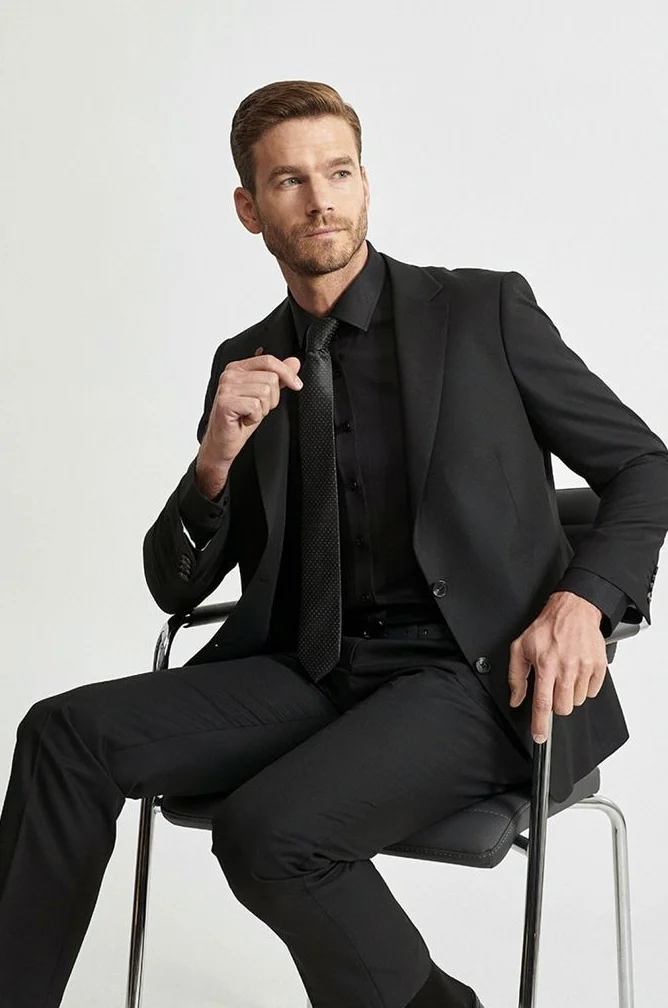
Walk normally, take a longer step and sit in an ordinary chair. Check waistband and knee area separately. A looser waistband does not automatically solve every upper-leg tension, and a different hem length does not change the basic trouser cut. If you want several shoes to work, bring them to the fitting and discuss the compromise before shortening. That produces a length chosen for your use rather than a measurement guessed from somebody else’s photograph.
Test a waistcoat as part of the complete outfit
The first reference shows a waistcoat between the shirt and open jacket. Try that additional layer with the actual trousers. Sit and watch where its lower edge meets the waistband. Open and remove the jacket if you plan to do so during the event. Do not assess the waistcoat only through the small section visible beneath a closed outer layer. Its ordinary appearance matters when it becomes a larger part of the outfit.
Record material and care information for each piece as well. Similar colours do not necessarily mean identical composition. Our checked suit guide helps compare a complete outfit, while the suit lapel guide adds questions about jacket shape. Both are shape references and establish no unseen properties in the garments pictured here. Use them to narrow the question you want to ask at a fitting.
Add accessories by function and intended contrast
Once your dark suit arrangement works, add a tie or bow tie, pocket square and any watch individually. Compare how much contrast you want to retain. A clearly pale shirt may supply enough separation for your taste, or you may prefer another small coloured area. The decision follows your chosen effect and the invitation, rather than a fixed number of supposedly essential accessories.
Try the watch beneath the real sleeve while bending your arm. Put the things you must carry in the pockets and look at the jacket again. A pocket photograph cannot show how your phone or keys affect your outfit. Plan another carrying option if you want the pockets empty. Test the outer layer for travel and waiting too, rather than introducing it for the first time on the day of the event.
Record alterations, care and the next wearing
Have proposed jacket and trouser work explained separately, then confirm scope, timing and cost with the actual provider. Plan a final fitting with the agreed inner layers and shoes. Repeat sitting, reaching and walking afterwards. An alteration works for your purposes when the complete outfit functions under the conditions in which you intend to use it, rather than simply improving a standing photograph.
Read the label before any treatment. GINETEX explains the care symbols; the actual garment’s instructions remain the starting point. A dark colour does not supply a fixed cleaning frequency. Keep care and alteration information together and note which existing pieces you want to use with the suit again. The finished look then rests on a clear colour idea, suitable fit and a combination you have actually tested.
A dark suit changes with a pale shirt, tonal inner layers or a waistcoat. Compare contrast, then check the complete outfit with your shoes while moving.
Frequently asked questions
Does a bow tie establish suitability for every formal invitation?
No. Check the actual requirements and ask the host about unfamiliar wording; a photograph establishes no universal dress-code fit.
Does a dark suit need to be very tight?
No. A clear close outline still needs to accommodate your movements. Compare sizes or cuts using the same sitting and reaching tests.
What extra check does a waistcoat need?
Try it with the actual trousers, seated and without the jacket. Check where the lower edge meets the waistband.
How should I choose trouser length?
On the actual garment with planned shoes. Walk and sit, and compare other footwear before agreeing to shortening.