Backless wedding dresses are defined by more than how much skin they reveal. How the shoulders enter a V, whether the edge is plain, lace-like or folded, and whether buttons, lacing or a bow emphasize the closure all reshape the rear silhouette. These visuals compare a sharp plunging V, a finely bordered low back, crossed draping, a low U with a long-tailed bow, and corset lacing. The covered final look is a counterpoint: buttons and a compact bow create a focal point without an open neckline. Consider movement alongside appearance. Shoulder mobility, sitting comfort, support, hairstyle and veil placement can change how each line reads. A design should keep its proportions while walking, turning and celebrating, not only in a still rear-view pose.
Preserving the Shoulder Line Around a Deep V
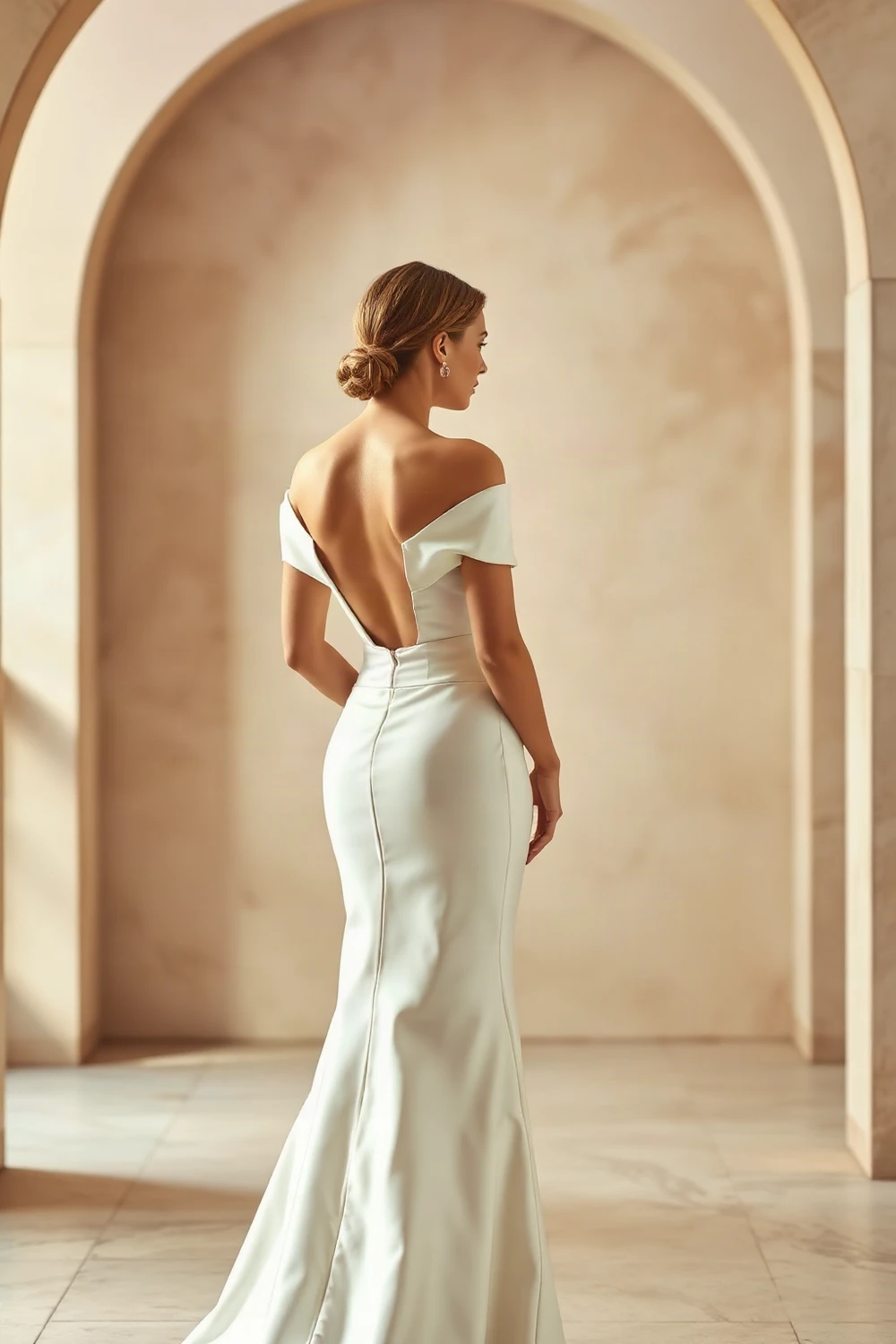
In the first look, broad off-the-shoulder bands frame a deep V approaching the waist. With no dense surface decoration on the smooth, close-fitting silhouette, the eye follows a clean route from shoulders to center. It suits someone seeking a sculptural statement rather than romantic lace. At a fitting, raise the arms, reach forward and turn to see whether the bands rotate or the point lifts from the body. Support must stay within the opening and suit its construction. The pictured low bun clears the nape and shoulders. Photograph veil attachment positions from behind: its opacity and layers may softly reveal the V or hide the feature that defines the dress.
Creating Vertical Flow with Edging and Buttons
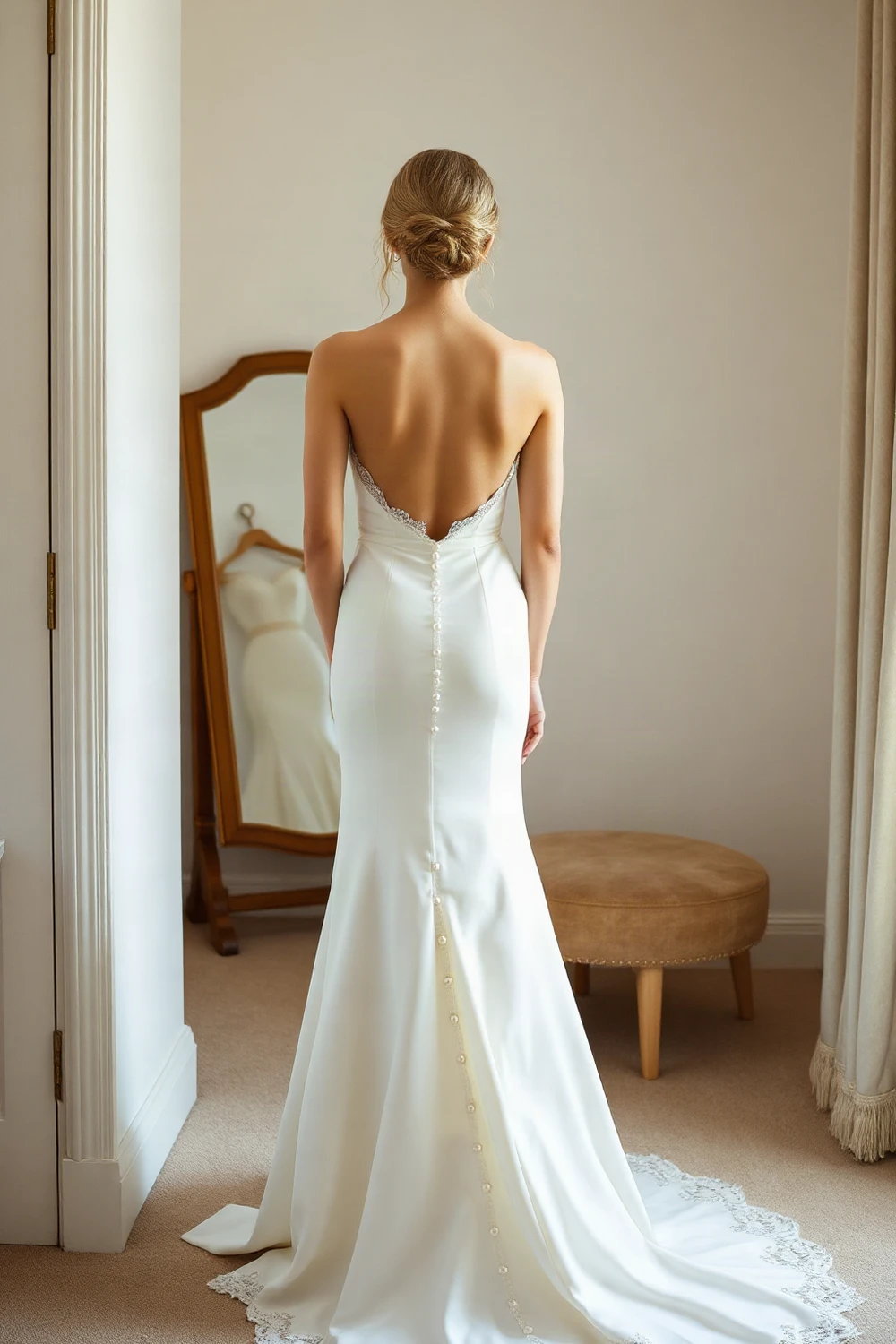
The second image gives the low V a fine lace-like border and sends a trail of small buttons toward the train. Unlike the first look's sharp simplicity, the edge softens the boundary against the skin while the buttons draw the eye downward. The skirt remains narrow through the upper leg, then opens gradually without interrupting that vertical route. Check that the border lies flat, the point meets the waist cleanly and the buttons remain centered while walking. The image does not show whether they are the closure, so confirm dressing time and access separately. The modest train may feel less dominant than a long, sweeping version, but its fine border still needs a walking test. An updo reveals where the edging and button trail begin.
Softening an Open Back with Crossed Draping
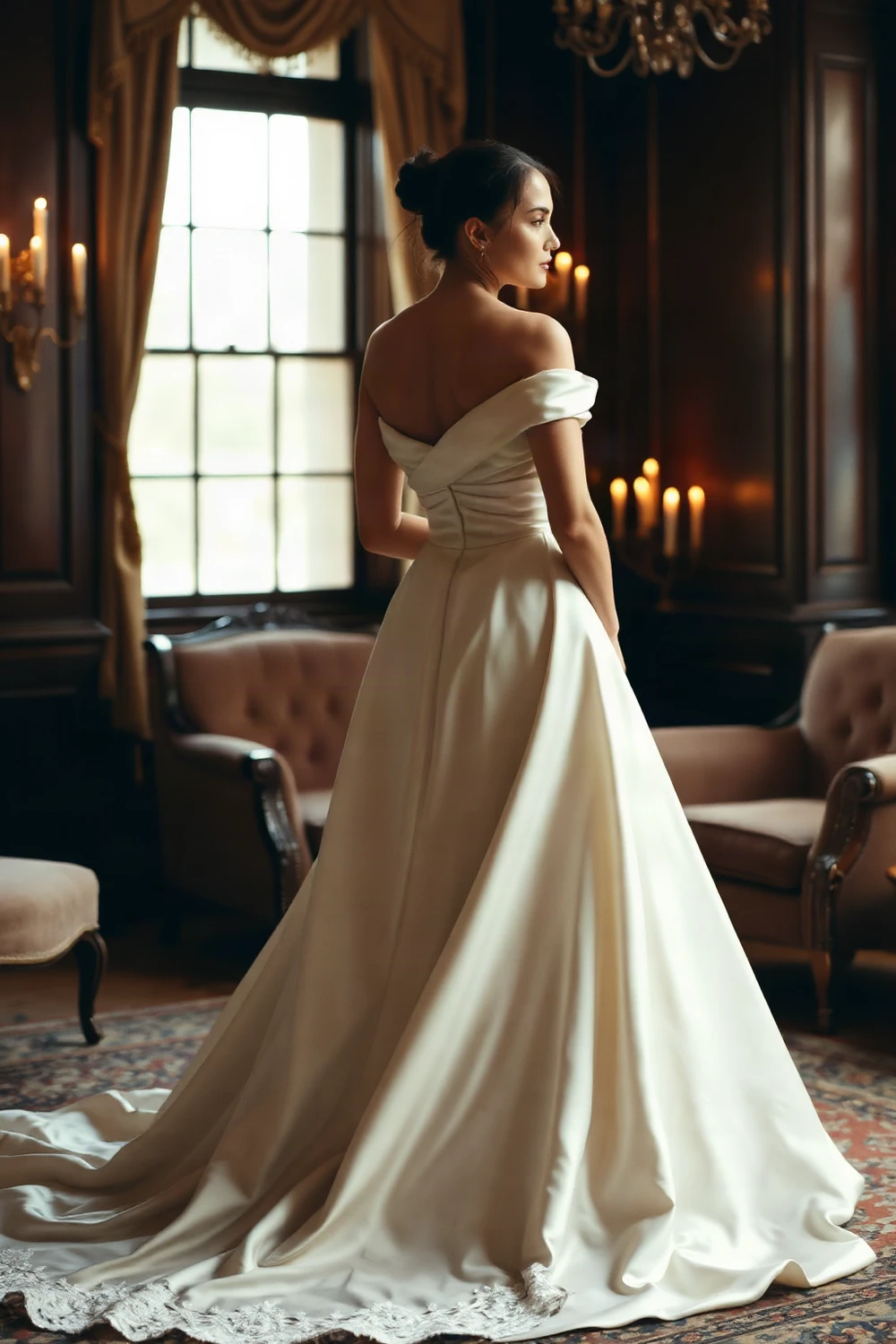
In the third concept, broad pieces cross behind the shoulders, shaping the opening with soft folds instead of a sharply cut edge. The draped upper section and substantially fuller skirt with long train emphasize the balance of volume above and below the waist, suiting a formal or romantic direction. At a fitting, compare the folds on both sides, then bring the shoulders forward and move the arms to see whether the layers loosen, twist or change height. Because the draping is prominent, restrained jewelry can avoid crowding the neckline. A dense or opaque veil may conceal both the crossed construction and much of the train edge. Test attachment points and transparency levels in full-length rear photographs rather than viewing the veil alone. The pictured updo preserves the breadth of the folded shoulder line.
Balancing the Scale and Movement of a Large Bow
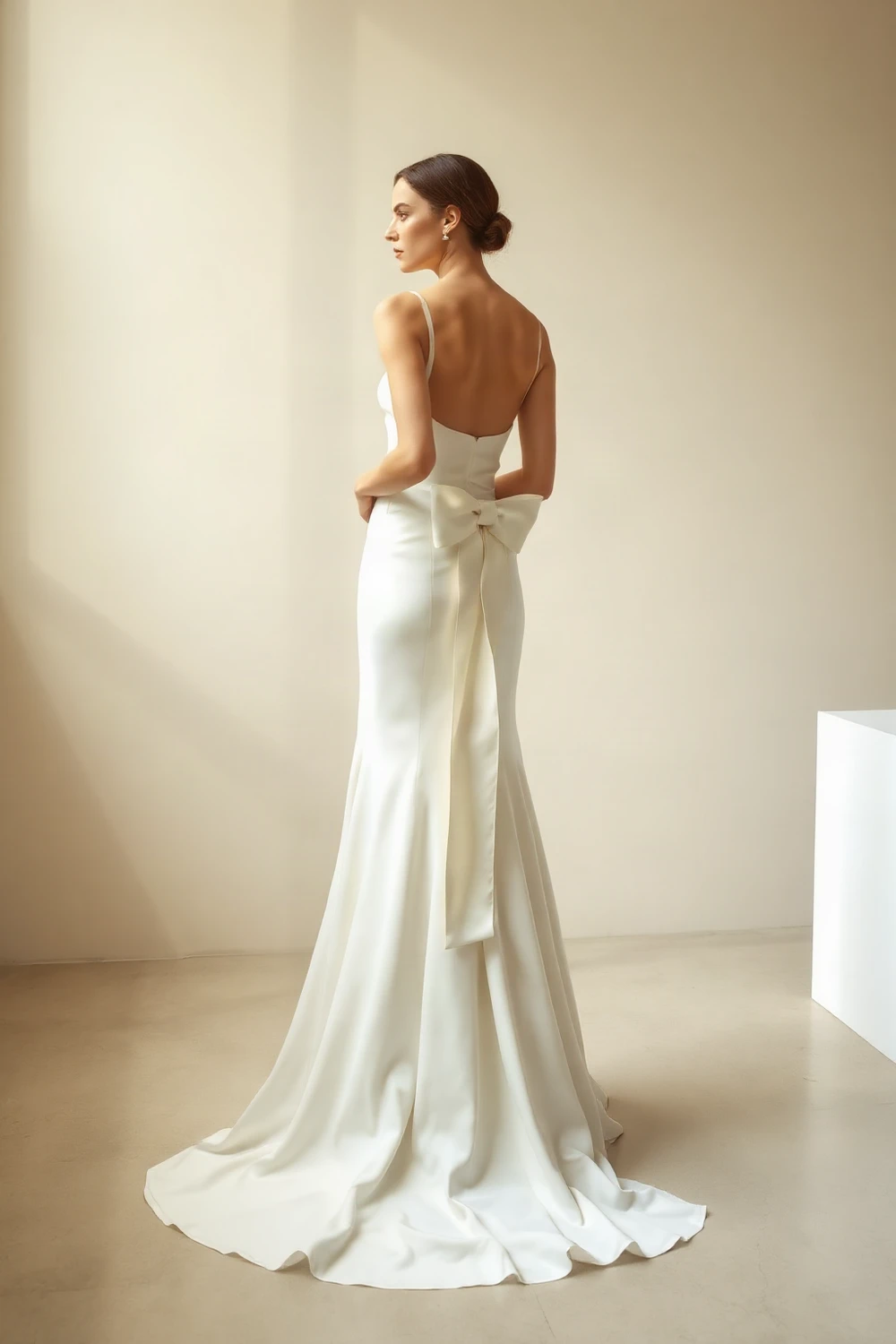
The fourth visual pairs a narrow-strapped, low U-shaped back with a large bow just below the waist. Its long tails descend through the center of the fitted skirt, creating a horizontal interruption and a strong vertical accent. The bow is part of the silhouette's architecture rather than a small embellishment, offering a pronounced back detail without all-over decoration. Its scale raises practical questions. Sit against a firm chair, walk and lift the train to see whether the bow compresses, its tails crease or the layers tangle. The straps should remain equal in length so the low curve stays symmetrical. A long, full veil could obscure the bow; a shorter, lighter or removable style reveals it more clearly later in the event. A restrained updo prevents competition among the low neckline, bow and hairstyle.
Managing Fit and Order in Corset Lacing
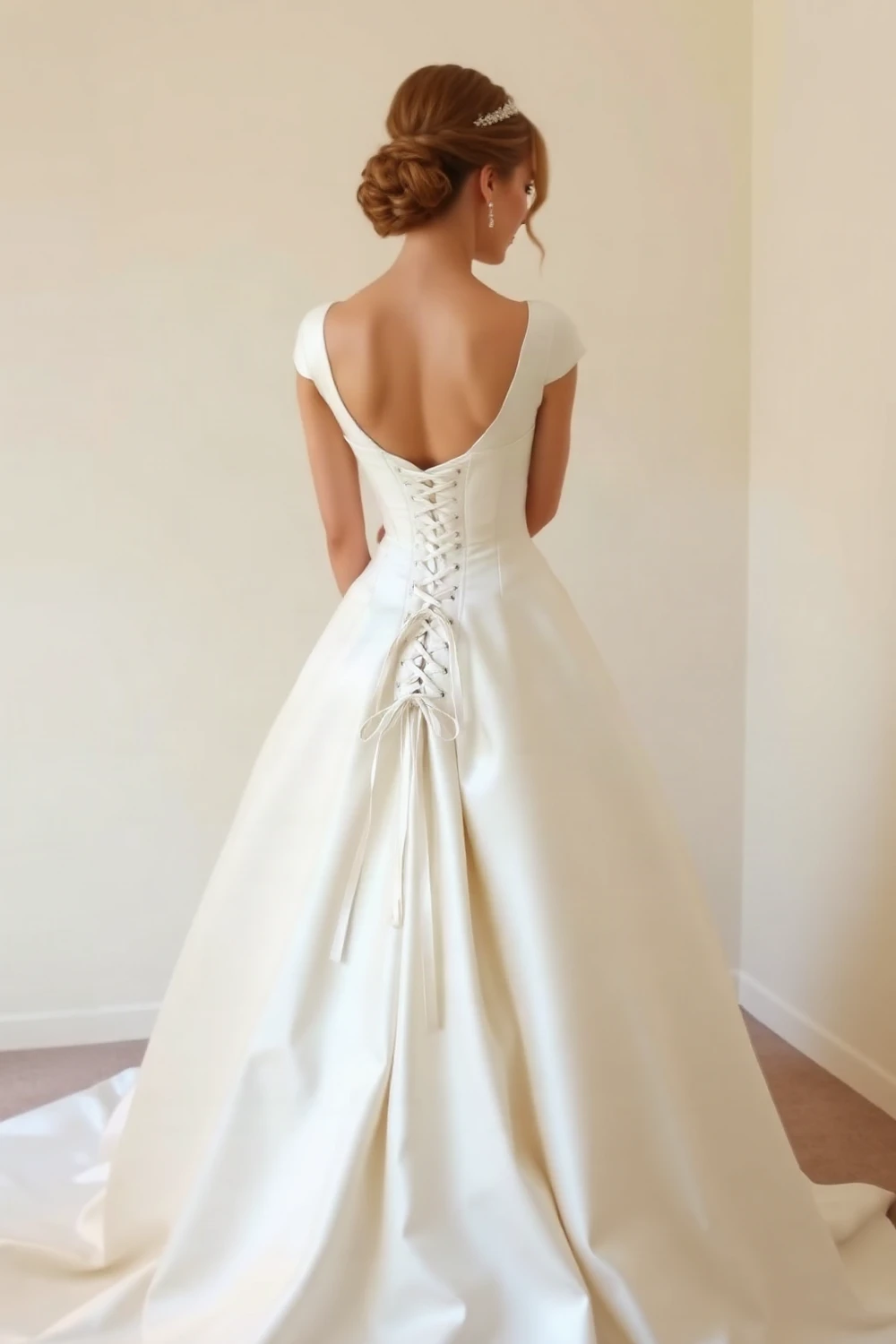
The fifth look combines a broad U-back, cap sleeves and crisscross ties extending below the waist. Against the full skirt's softer volume, the lacing forms a structured central rhythm. It is a stronger closure motif than the fine button trail, but its adjustable appearance does not guarantee fit. Tension must be consistent from top to bottom so the side edges neither curl nor pull unevenly. Secure the loose ends and test the knot while sitting and bending. If tension changes the opening's depth, establish the preferred tying method before finalizing accessories. An updo keeps the U-shaped line and crossing pattern visible. Choose someone who can reproduce the lacing on the day. When testing a veil, ensure its comb does not rub the upper loops and its layers fall without catching on the ties.
Using Buttons and a Bow on a Covered Back
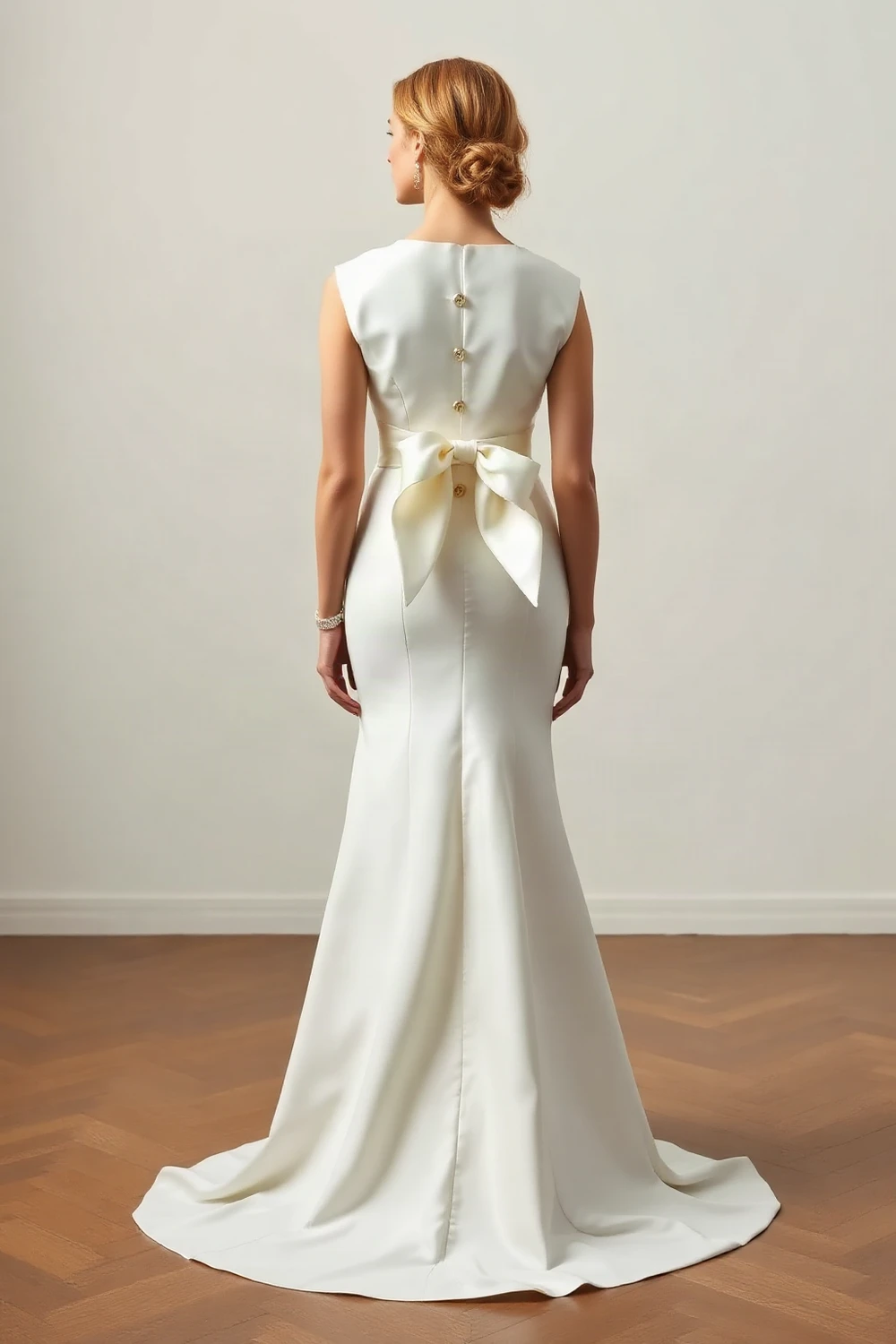
The final image shows that a strong rear design does not require a low opening. Its sleeveless bodice rises to the nape; a short central button row and compact waist bow divide the covered surface. A fitted skirt widening below the knees maintains orderly symmetry. Compared with the fourth visual's dramatic, long-tailed bow, this one creates a shorter, more controlled horizontal accent. It offers more coverage without losing a focal detail. During a fitting, reach forward to test the bodice across the shoulder blades, sit against a chair to see whether the bow keeps its shape, and check whether the buttons irritate the nape. Loose hair could hide the upper route; a low or mid-height updo exposes it. If the veil comb sits near the buttons, inspect contact points and photograph the back to ensure the waist bow remains visible.
The most useful comparison is not which back is lowest or most decorated, but how its opening, closure and skirt form one composition. A sharp V emphasizes clean geometry; lace-like edging and buttons trace a delicate route; draping adds softness; lacing brings structure; and a bow can feel romantic or graphic according to scale. A covered back can be equally distinctive. After making a shortlist, test each option with the intended hairstyle, veil and support. Record the back while walking, sitting, reaching, embracing and turning, not only in a still pose. Movement reveals whether an edge lifts, a tie shifts or a bow compresses. The best choice preserves the feature you value while maintaining a balanced, secure and comfortable fit throughout the occasion.
Compare plunging V-backs, lace-edged openings, corset lacing and sculptural bows as practical inspiration for choosing a wedding dress silhouette, hairstyle and veil.
Frequently asked questions
Which hairstyle keeps a plunging V-back visible?
A low or mid-height updo usually leaves the nape and shoulder line clear. If you prefer loose hair, photograph it from behind during the fitting to see how much of the opening it covers.
Can a large back bow be worn with a veil?
Yes, but the veil’s attachment point, length and fullness may conceal the bow. Test both together at full length and check that the veil falls without catching on the loops or tails.
What should be checked when fitting a corset-laced back?
Look for even tension, flat side edges and a knot that remains comfortable while sitting. Walk and move the arms to confirm that the ties stay secure and the opening retains its shape.
How do buttons and corset lacing create different effects?
Buttons make a fine, continuous vertical trail, while crisscross ties create a bolder rhythm and more visible structure. Also compare dressing access, fastening time and comfort during movement.
Can a covered wedding dress back still make a statement?
Yes. A waist bow, contrasting buttons or a strong center seam can create a clear focal point on a covered surface. Test hair and veil placement so those details remain visible.