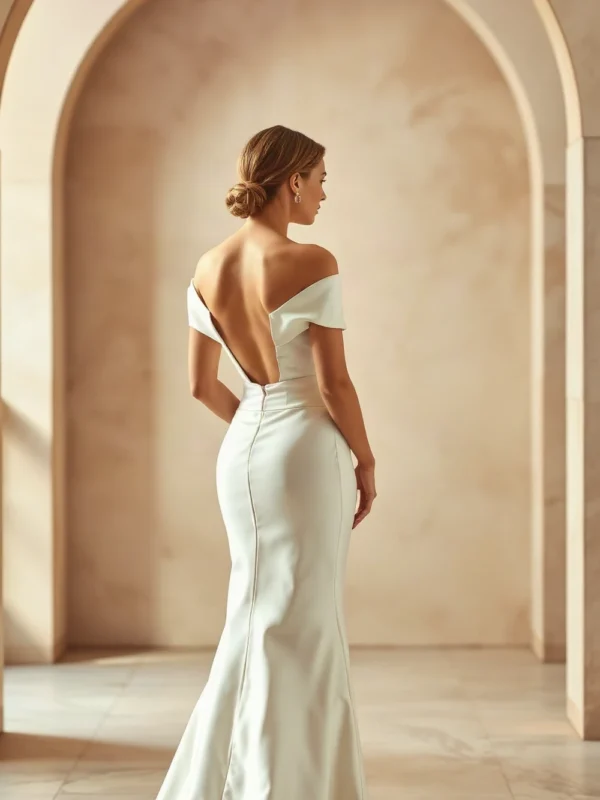
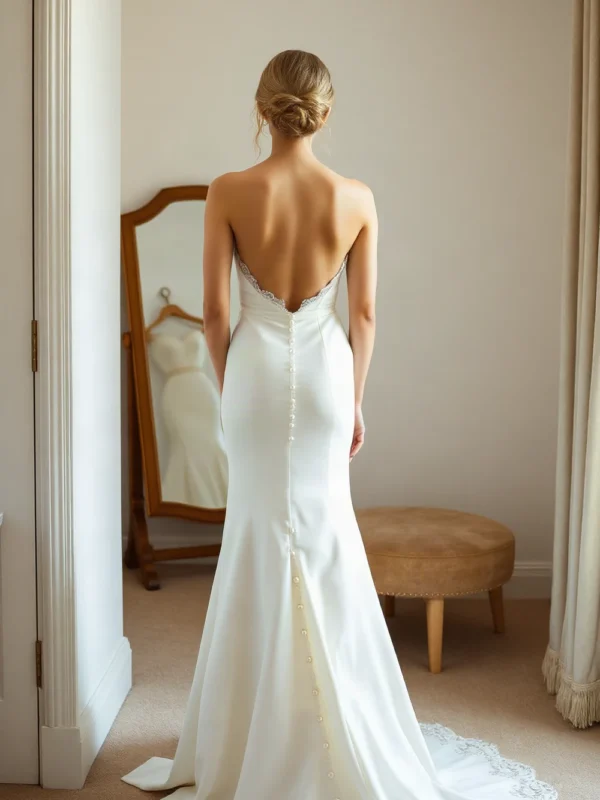
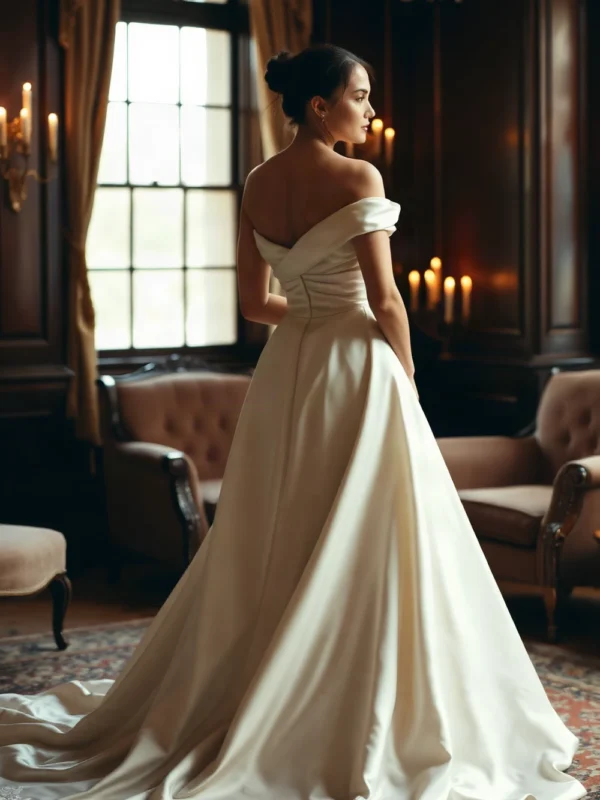
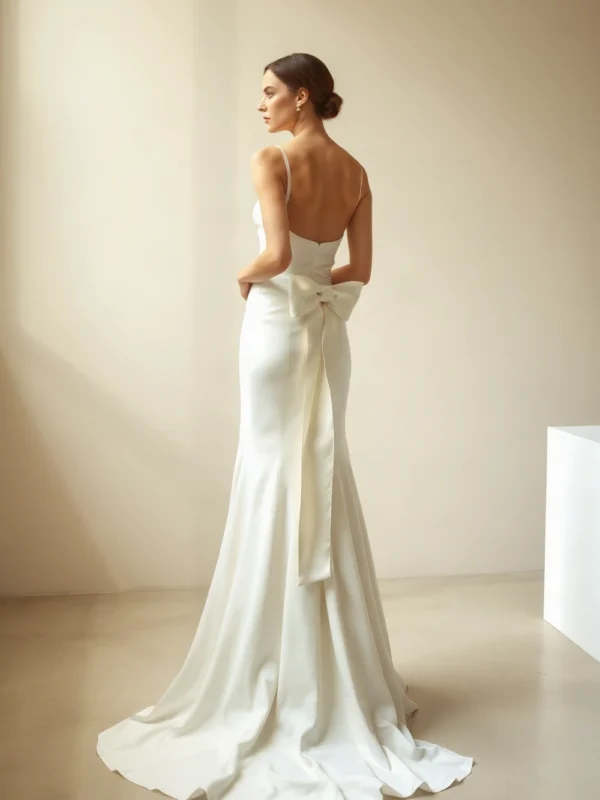
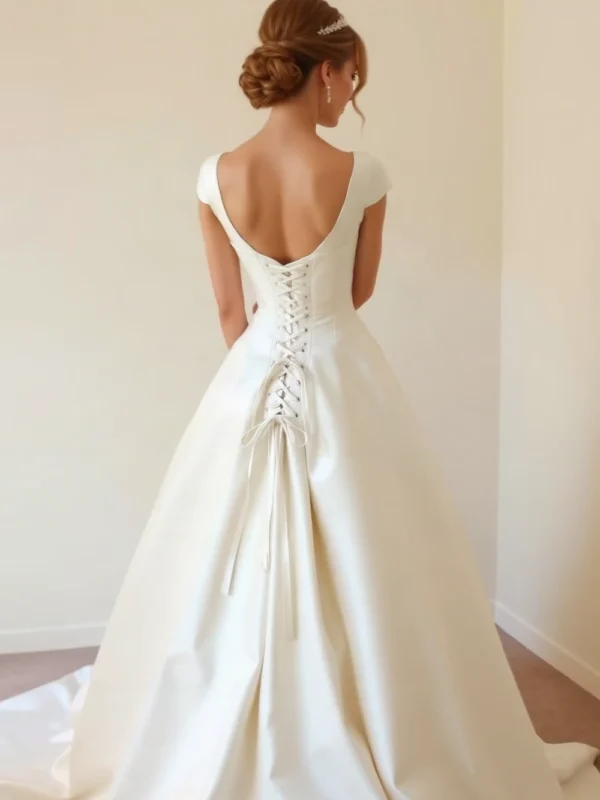
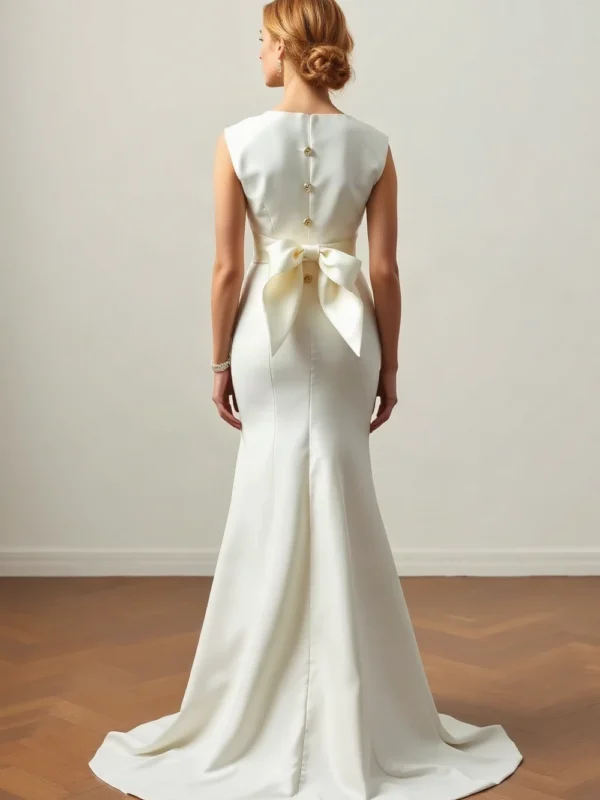
The shared theme of this gallery is the line that defines a wedding dress from behind. The first three looks place the opening itself at the center: a plunging V framed by off-the-shoulder bands, a lace-edged low V and a softer open back shaped by crossed draping. The final three show how a large bow, corset lacing or a compact bow on a covered back can become the focal point instead.
The first image relies on clean geometry. Broad bands lead toward the waist while the close-fitting skirt keeps attention on the deep opening. The second image uses a finer boundary; narrow lace-like edging outlines the V, and small buttons draw the eye into the short train. The third raises and softens the edge with folded draping, then balances it with a much fuller skirt. The depth of an opening therefore matters alongside whether its border is plain, decorative or layered.
The two bows demonstrate the effect of proportion. In the fourth image, a broad bow sits above the hips and sends long tails down the center of a narrow silhouette. In the sixth, shorter loops and tails sit squarely at the waist on an otherwise covered back. The first feels more elongated and dramatic; the second is compact and graphic. During a fitting, check how either version behaves against a chair and while the train is lifted.
Corset lacing creates a different rhythm in the fifth image. It runs from the low U-shaped opening past the waist, connecting a fitted, paneled bodice with a full skirt. Even when lacing appears adjustable, its tension, knot placement and stability during movement require attention. A buttoned back offers a finer uninterrupted route, whereas crisscross ties create stronger contrast and visible structure.
Do not assess any of these ideas only in a still rear-view pose. Raise your arms, sit, walk and turn while observing the neckline edge, straps, ties and bow. Test the actual hairstyle and veil placement at the same fitting whenever possible. A deep opening can remain clear with restrained accessories, while lacing or a covered buttoned back benefits from hair that leaves the center visible. The useful choice is the one that preserves its intended line while feeling secure in motion.