
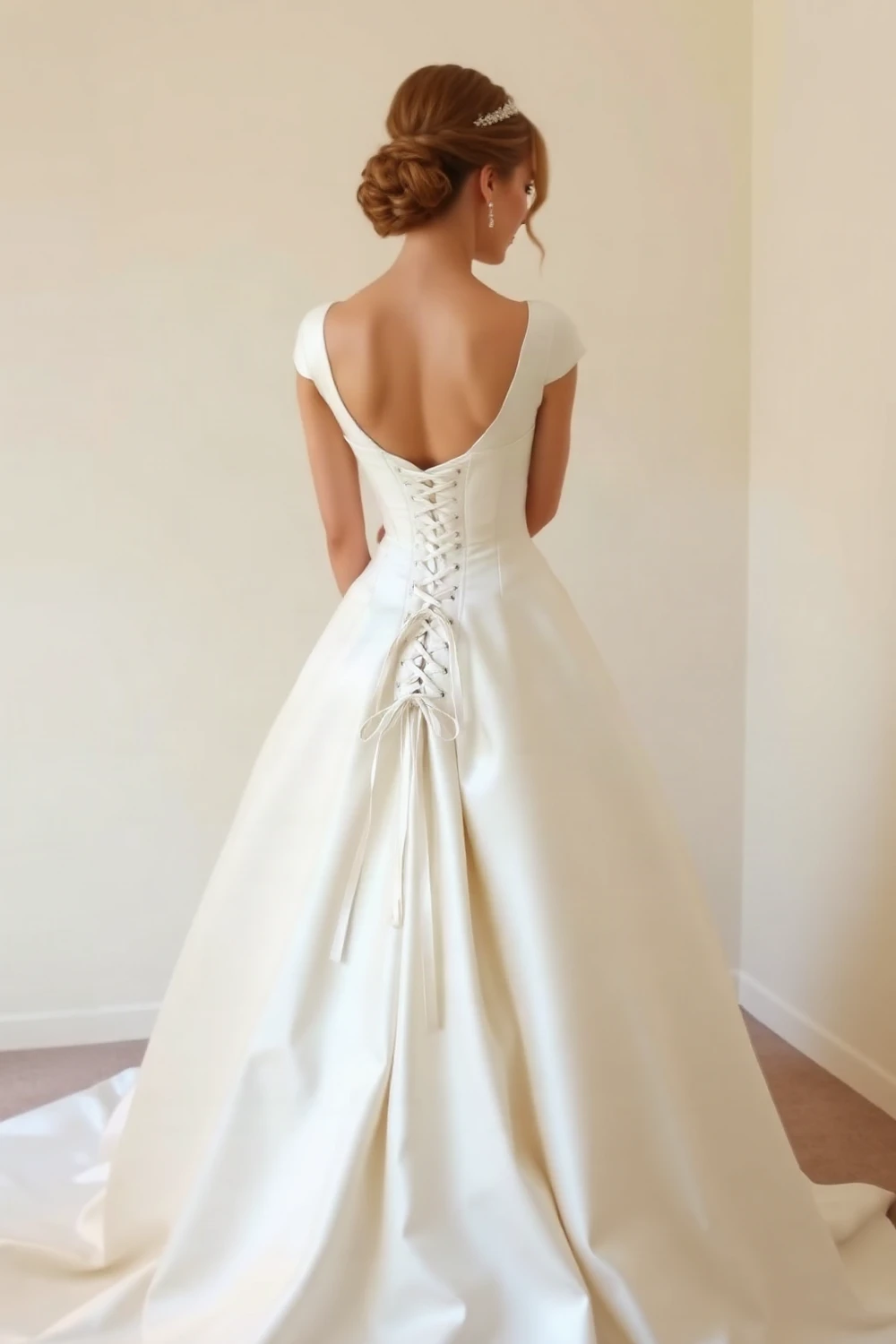
In a plain, pale room, the dress opens into a broad, low U across the back. Short cap sleeves gently frame the shoulders. A paneled center section closes with white ties that cross repeatedly and continue below the waist; loose ends hang beneath the final knot. From there, the ivory skirt expands into a full A-line shape and falls in soft folds across the floor. Vertical seams on the smooth surface reinforce the orderly geometry of the lacing.
Although lacing looks more adjustable than a fixed zipper or a button trail, the image alone cannot establish how a real garment would fit. Tension should be distributed evenly so the edges do not curl or pull, and the knot must remain comfortable when sitting. Compared with the delicate buttons in the second image, the ties create a stronger rhythm and more obvious structure. An updo keeps both the U-shaped edge and the crossing pattern visible. If a veil is worn, its comb and lower layers should be tested to ensure they do not catch on the upper loops or disturb the tied ends.