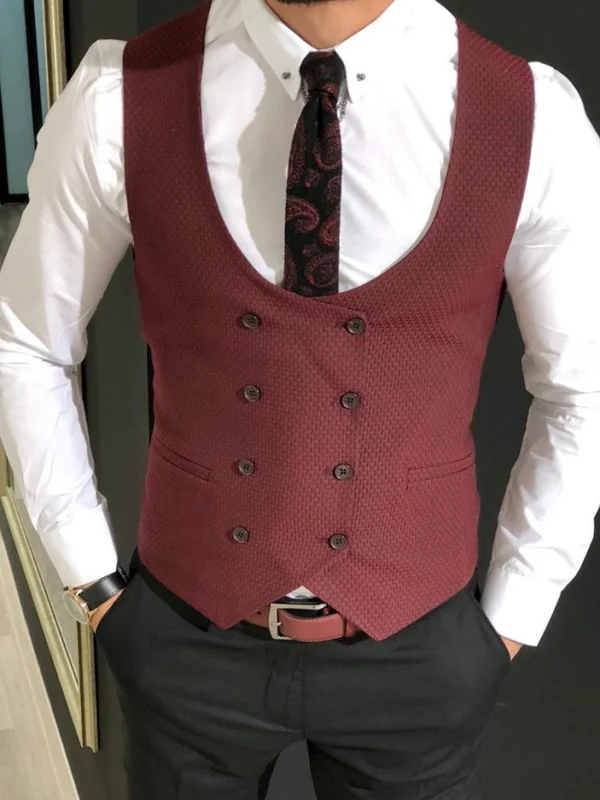
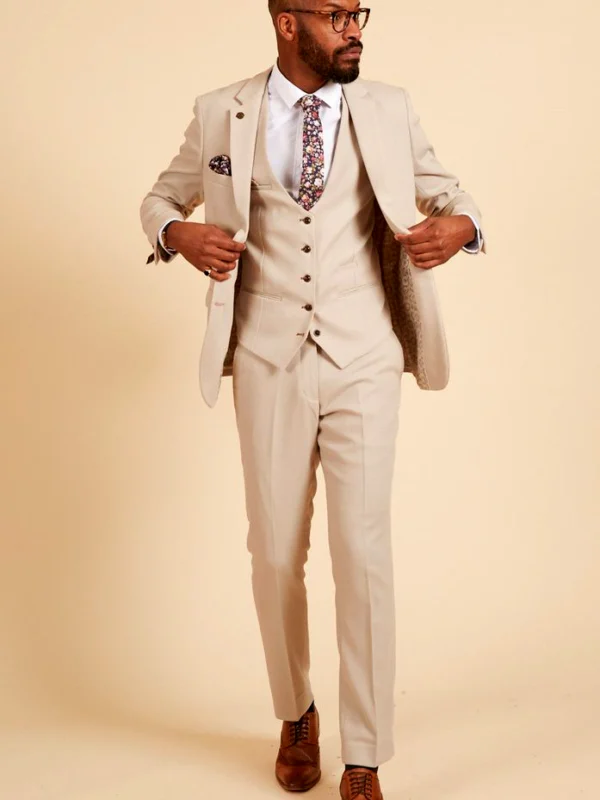
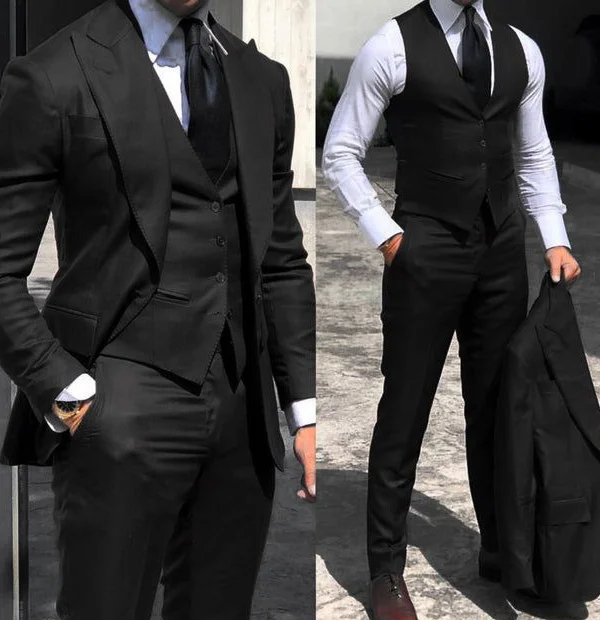
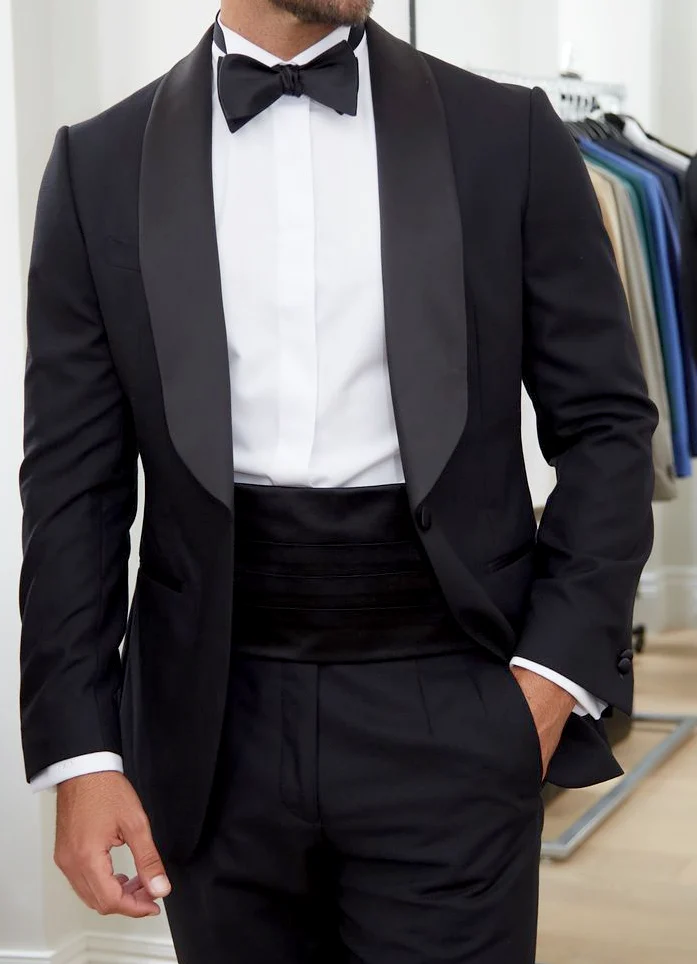
Tailored suits for men can be offered through very different processes. A useful comparison answers two separate questions: how will this suit be made, and what shape do you want to wear? A close dark jacket, patterned waistcoat combination or formal bow-tie look initially provides a style reference. These photographs cannot establish how the pictured garments were manufactured. Use them to describe lapels, proportions and accompanying pieces. Then clarify the actual commission through the starting pattern, adjustments, fittings and agreed result. This gives you specific work to compare instead of relying on the word tailored.
Tailored suits for men: ask where the pattern begins
For an individual-pattern proposal, ask whether a pattern will be created specifically for you and who will develop it. The Savile Row Bespoke Association requires an individually cut paper pattern for its full members’ bespoke garments. That is a named standard you can inspect, rather than evidence about the suits photographed here. Ask each provider to explain their own method. Words such as exclusive or personal do not answer the pattern question or establish which corrections your particular order includes.
Made-to-measure may begin with an existing block that is adjusted. Huntsman describes its made-to-measure service on that basis. Find out which starting shape suits your preferred outline and which adjustments are planned. Distinguish this from alterations to an existing ready-made suit. Those may be a suitable route when the original garment already meets much of your brief. Choose according to the actual scope, rather than a universal hierarchy that ignores your body, occasion and available time. The right comparison concerns the problem you need the work to solve.
Build a useful brief from your real routine
Describe when you will wear the suit. Several hours at a desk call for different trials from a reception followed by a long dinner. Note whether you often wear an overcoat, which pockets you use and whether you want a waistcoat. Choose one main use before treating every possible situation as equally important. The grey outfit beneath a brown coat shows how much an outer layer changes the visible chest area and shoulder impression. This relationship can become a specific preference in your own brief.
Bring a shirt and the intended shoes. If you own a suit already, use it to explain concrete experiences: comfortable shoulder width, sleeves that feel too short or a waistband that bothers you when sitting. Everyday words are sufficient; you do not need to diagnose a cutting fault. Ask how the proposed work would address that experience and where its limits are. The men’s suit guides support comparisons between visible styles. A clear brief makes later choices easier to evaluate than a collection of conflicting inspiration photographs.
Check jacket and trousers before decorative details
Stand naturally rather than holding your chest higher throughout the fitting. Look at the shoulder line, collar and front edges with your arms relaxed. Fasten the jacket as intended and observe the area around the fastening. A hand in a pocket changes tension, so include a neutral stance in the comparison. Reach forwards, sit down and stand up again. If something pulls uncomfortably, ask about the actual cause and remedy. Avoid treating every fold as proof of poor work; describe the pressure or movement that is troubling you.
Check the trouser waistband while standing and sitting with the intended shirt. Empty the pockets first, then add only objects you actually plan to carry. Assess the leg line and hem with your chosen shoes. A cropped upper-body photograph cannot show trouser length; you need a complete view for that decision. Discuss changes on the real garment. A closer waist and a different leg shape are distinct requests and should not be merged into a general instruction to make everything slimmer. Observe both seated comfort and the way the trousers settle when standing again.
Choose lapels, waistcoat and formal accents deliberately
The dark references differ through contrast and accessories. A black shirt with a dark tie produces a more continuous colour area than a white shirt with a dark tie. The bow-tie combination adds a broad dark waist area and a differently presented lapel. Choose these visible features in relation to your invitation and desired effect. An elegant photograph cannot replace a host’s actual clothing instructions. Descriptions such as a quiet dark surface or clear light-dark contrast are enough to express a preference; neither needs a manufacturing claim.
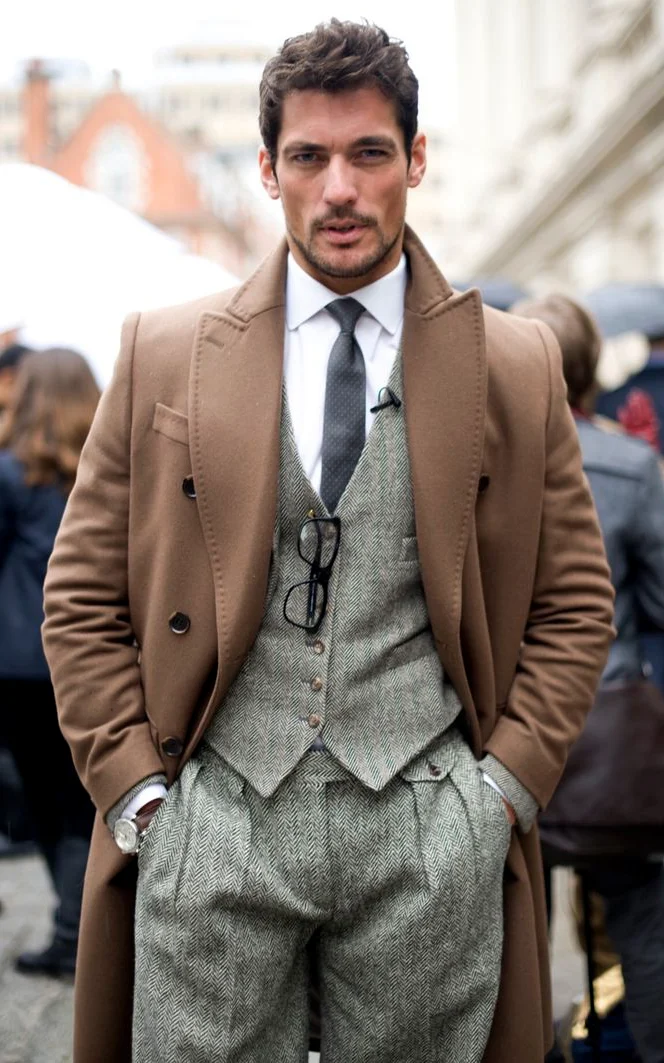
The decorated dark combination adds a waistcoat, pocket square and chain. Assess the basic suit before including these elements, then add them separately. A waistcoat changes the visible centre of the outfit, while a chain introduces another line. The checked suit guide offers additional questions about coordinating patterns. Use only the comparisons relevant to your own selection. Fibre, brand and manufacturing location need genuine product information, even when the surface seems familiar in a picture. An appealing appearance is not evidence of those details.
Weigh the scope against your main priority
Compare two realistic routes against the same three priorities. An existing suit might need only sleeve and hem adjustments, while a new order opens decisions about shoulders, pockets and waistcoat. Identify the indispensable requirement, such as a comfortable seated waistband, before optional details. An interesting button choice should not tie you to a basic shape that misses your main need.
Clarify fittings, completion and care
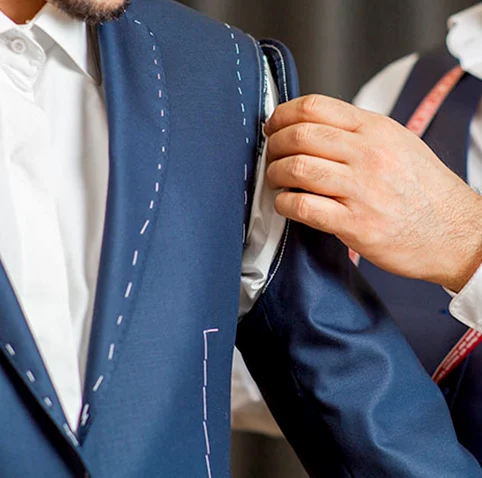
Before deciding, ask which fitting stages are planned, when changes will be discussed and what the agreed price covers. Find out how a remaining issue at the final fitting would be handled. Plan your actual event date with room for those steps instead of borrowing a general delivery time from another offer. At collection, work through the brief and movement checks together. The visible temporary-looking stitches in the blue detail image show a stage of work; they cannot establish an entire production route by themselves.
Keep composition and care information alongside your order notes. GINETEX explains care symbols; use the actual suit label to select treatment. Finally, assess whether the proposed work solves your real need. A suitable existing garment with limited alteration and a newly commissioned garment can both be sensible choices. What matters is that the promised work is clearly described and that you have tested the finished shape in your ordinary posture, with the pieces you will actually wear.
Separate an individual pattern, an adjusted house block and alterations to an existing suit. Use photographs for visible preferences and verify the making process separately.
Frequently asked questions
Does a well-fitting suit photograph prove bespoke manufacture?
No. It shows an outline. The starting pattern, production process and agreed work need separate evidence.
What should I ask about made-to-measure?
Ask which existing block is used and what adjustments to posture, shoulders and proportions are possible within that particular service.
Are alterations the same as an individual pattern?
No. Alterations change an existing garment. An individually created pattern starts differently; ask the provider to identify the proposed route clearly.
What should happen at the final fitting?
Wear your intended shirt and shoes, sit and reach, and check all agreed details. Record any remaining adjustments with the provider.