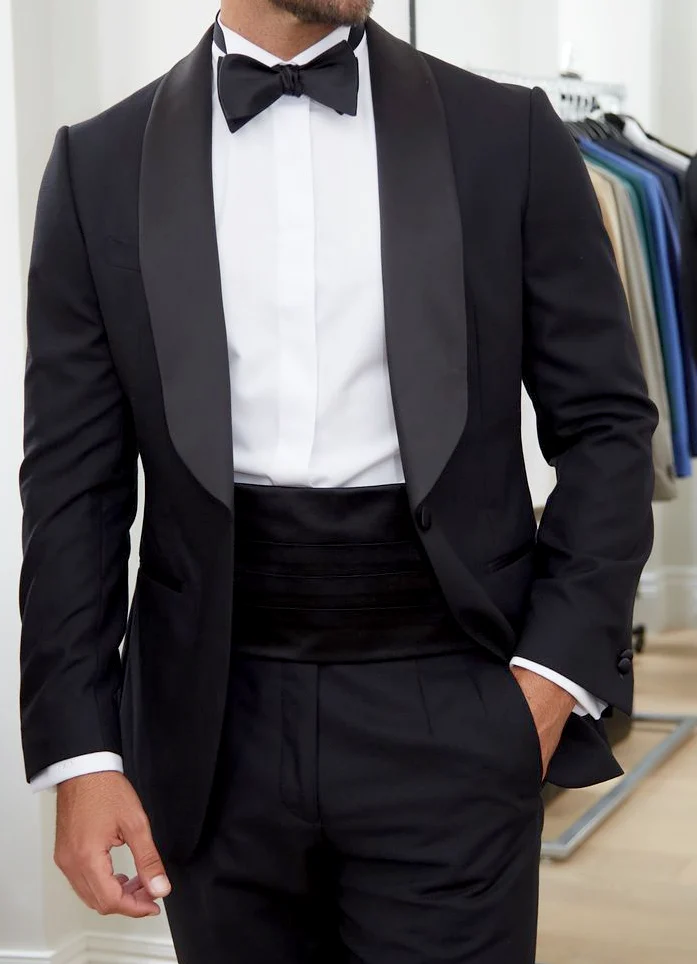
A bow tie and dark waist area create a clear formal centre in this photograph. The white shirt contrasts strongly with the dark jacket, while broad lapel surfaces frame it. One hand rests in a trouser pocket. That changes tension across jacket and trousers, so the image is not a neutral fit assessment. It is especially useful for comparing the visible upper elements.
If you want this effect, start by describing the light-dark contrast and broad horizontal waist section. Check which actual pieces would create that area in the proposed outfit and how they sit when seated. Compare the combination with the intended shirt and keep your arms relaxed for the first view. The crop cannot establish trouser hem length.
Check suitability for the event against the invitation. A dark jacket with a bow tie does not prove an individual pattern either. Use the reference for design preferences and investigate the making process, composition and agreed adjustments independently through the actual order.