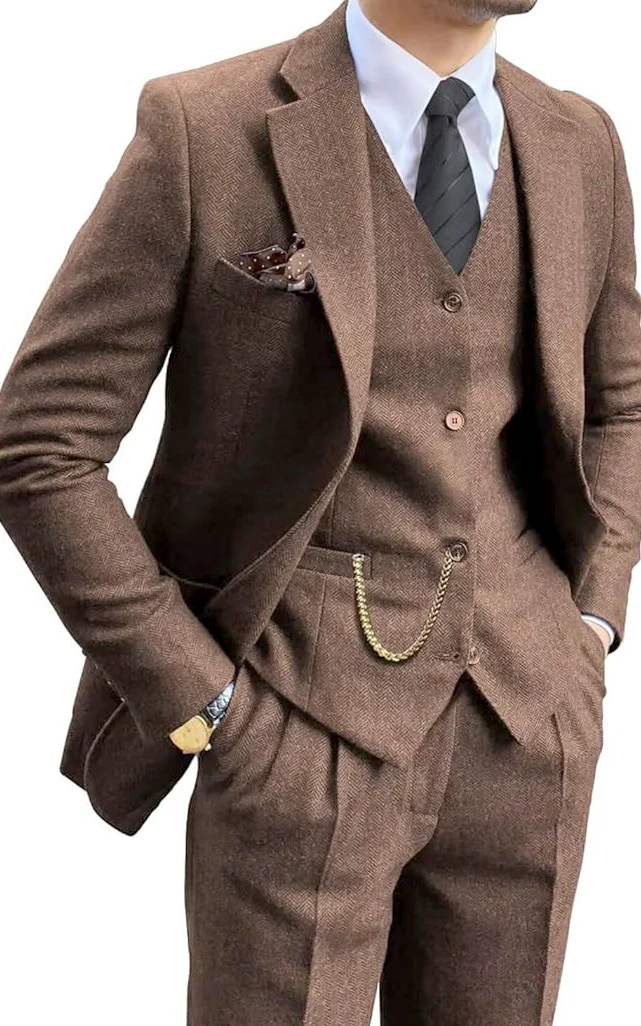
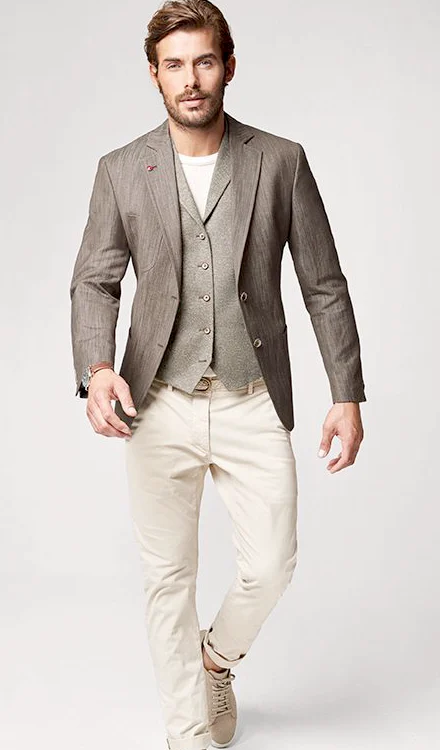
A retro suit can express your preference for a particular visual arrangement without needing to be an authenticated historical garment. Start by describing what you actually like: a waistcoat beneath the jacket, a small repeating pattern, a different trouser line or a pocket accessory. The reference here shows a brown patterned three-piece with a pale shirt, dark tie and visible chain. It does not establish an era, maker or fibre. Use those visible elements to plan your own outfit, then test the real pieces together. A convincing choice needs to suit your event and ordinary movement as well as your interest in an older-looking style.
Define your retro suit through specific features
Write down two or three features before shopping. Perhaps you want the extra closed area of a waistcoat and a relatively quiet shirt; perhaps the small pattern is the main attraction. Avoid asking one garment to represent every image you associate with the past. A large lapel, narrow trouser and prominent chain can each lead the eye differently. Compare one change at a time against an outfit you already understand. This makes your request useful to a shop or alteration professional and prevents an attractive accessory from becoming the reason to accept an unsuitable fit. You can describe a style preference without assigning an unverified decade to it.
Retro suit: compare the jacket and waistcoat as one outfit
The waistcoat in the photograph adds buttons and a patterned area between the open jacket and tie. Try a similar arrangement with the jacket both open and in its intended fastened position. Look at the transitions near the neck and waist instead of judging each piece in isolation. Then remove the jacket. If you expect to do that at the celebration, the waistcoat becomes a visible garment in its own right. Ask about its back construction and see it from the side. The front image cannot establish matching fabric everywhere or explain how the pieces will sit on you after several ordinary movements.
Assess the trousers beyond the cropped photograph
A retro suit still needs trousers that work when you sit, walk and climb a stair. This picture does not show the complete lower leg or footwear, so it cannot settle your preferred hem. Wear the shoes you intend to use and compare waistband position, seat and stride. Ask what an alteration would change: length alone, the leg line or another area. Do not request several changes simply because a reference feels old-fashioned. Decide which proportion matters to you and test that particular difference. A complete view in an ordinary stance is more useful than recreating the hand-in-pocket pose throughout the fitting.
Compare pattern at a normal viewing distance
The small repeated angular pattern gives the brown surface a visible rhythm. Its appearance does not identify a particular fibre or method of manufacture. Stand back from the mirror first, then move closer. Decide whether the suit reads as a continuous colour area from across a room and whether you like the pattern close up. For a retro suit with an active surface, compare a relatively quiet shirt before introducing another pattern. If you enjoy mixed patterns, add one at a time and look again from the same distance. This preserves a clear comparison instead of changing shirt, tie and accessories simultaneously.
Use neckwear to frame the upper area
The reference combines a light shirt with a dark tie. That creates a separate central line between the waistcoat panels. Try the planned tie on the actual shirt and look at how much remains visible when the jacket is opened and fastened. A bow tie creates another distribution, but it should also belong to your invitation and preferences. Ask the host about unclear requirements rather than treating retro styling as a dress code. If you prefer an open collar, compare it honestly as a different outfit. There is no need to make one combination serve every possible event you might attend.
Give the chain and pocket detail a purpose
The visible chain and patterned pocket accessory are small features with considerable visual effect. Before repeating them, ask what you want them to contribute. A chain in a photograph does not establish a working watch, an antique item or any other provenance. With your actual accessory, check how it is attached and whether it interferes when seated. Put the intended pocket detail into the real jacket rather than judging it in your hand. A retro suit may already express your preferred idea through its waistcoat and pattern; further decoration should be a deliberate choice. Try removing one piece and compare the result.
Plan repeat wear and the event together
Build the full event outfit first, including shoes and any outer layer. Then test one alternative using pieces you already own. You might want the jacket with another pair of trousers or the waistcoat with a different shirt, but those combinations need their own fitting rather than a promise of automatic versatility. Notice what changes when a matching surface is divided. Check the invitation again before choosing the final version. Record which complete arrangement you intend to wear so that a last-minute accessory change does not undo the balance you preferred at the fitting. A small wardrobe plan is more useful than buying several speculative additions.
Read the actual care information before committing
Ask about the composition and care of jacket, trousers and waistcoat separately. The word retro describes your styling intention, not a treatment instruction. GINETEX distinguishes washing, bleaching, drying, ironing and professional textile care. Follow the actual garment label rather than assuming the same method across all three pieces. For another pattern comparison, see our checked suit guide; for upper proportions, use the suit lapel comparison. The GINETEX explanation helps with the symbols. Finish with documented product details, an agreed alteration plan if needed and a complete outfit you have actually tried. That gives your chosen visual idea a practical foundation.
Build a retro suit through pattern, waistcoat and proportion. Compare complete real outfits while keeping visual style separate from age and fibre information.
Frequently asked questions
Is a retro suit automatically historical?
No. Retro describes a desired visual style here; age and origin need separate evidence.
What does a waistcoat add to a retro suit?
It adds a visible area between shirt and jacket. Test it without the jacket and at the waistband while seated.
Does the angular pattern establish a fibre?
No. Visible pattern cannot prove composition or manufacturing technique.
Do I need to repeat the chain?
No. Compare with and without it and check the attachment on the actual accessory.