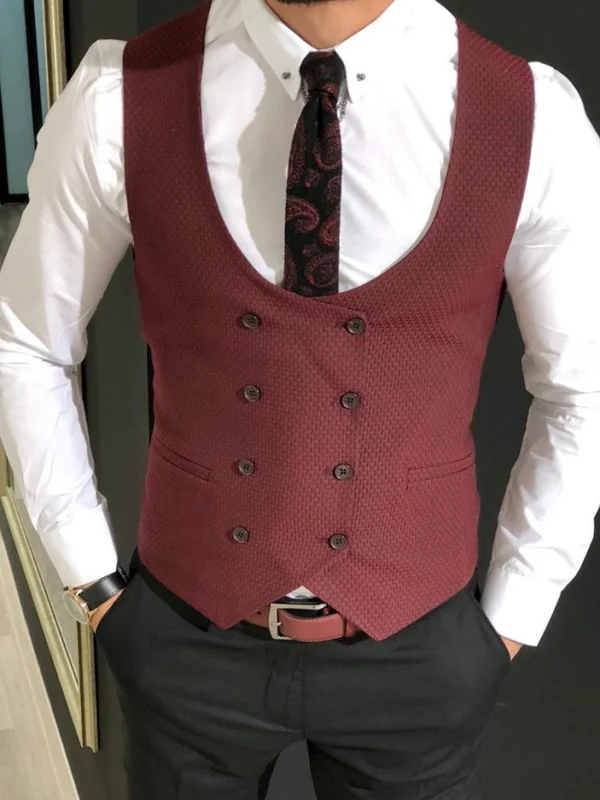
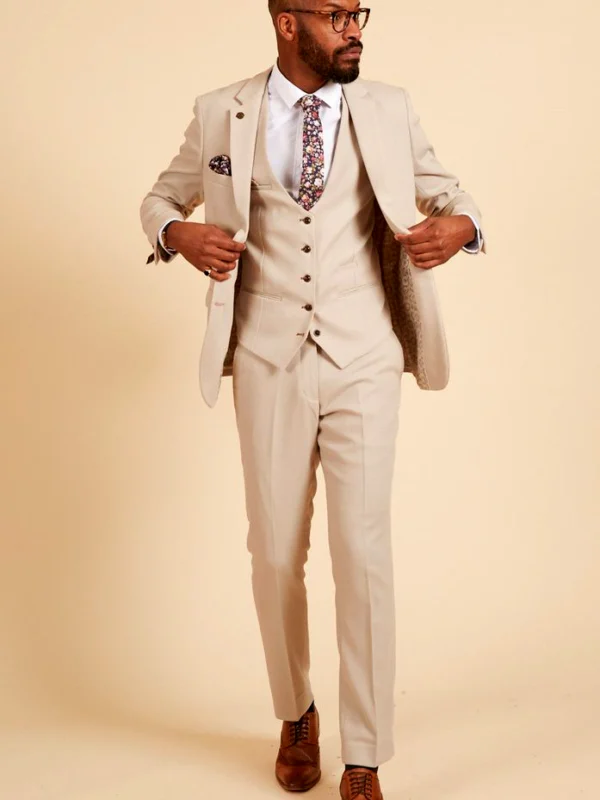
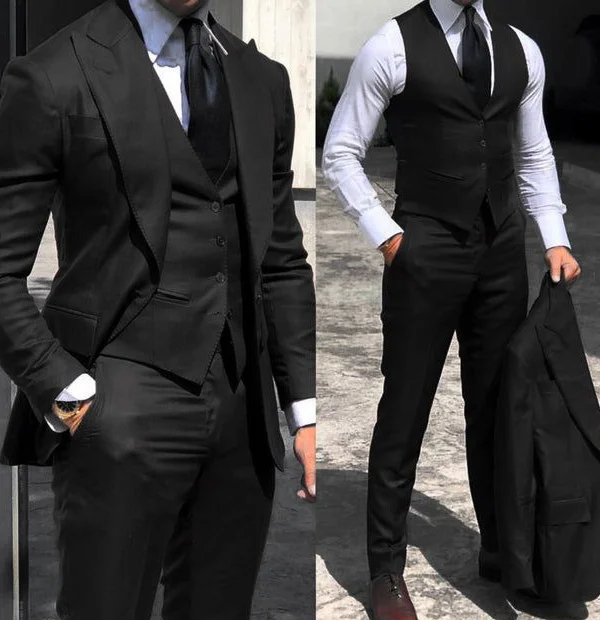
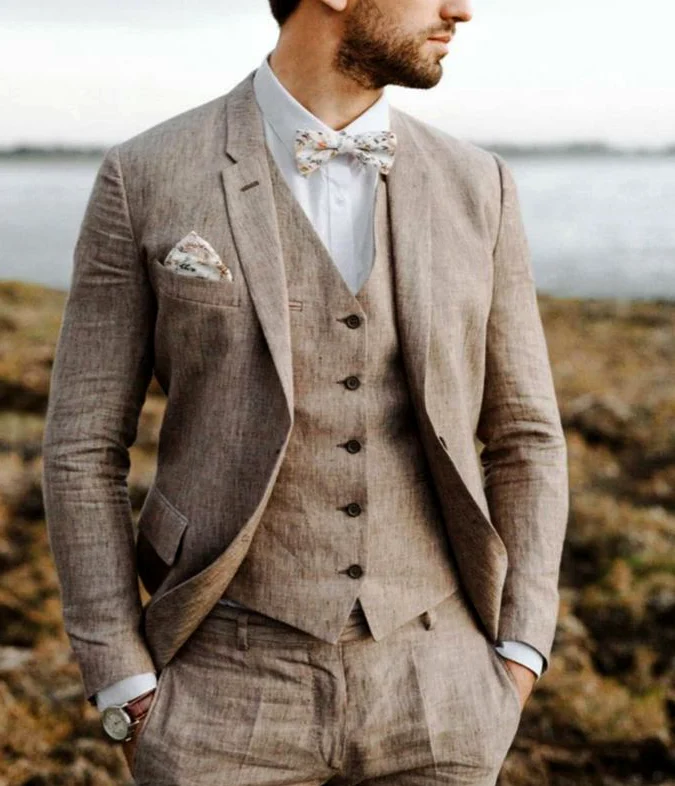
An organic cotton suit needs to be assessed through the information attached to the actual product. A beige colour, matte-looking surface or outdoor setting cannot prove cotton content or organic origin. The four photographs here show different outfit structures: a light brown three-piece, a pale suit with a T-shirt, a dark double-breasted design and a muted purple three-piece.
They provide styling comparisons rather than certification evidence. Establish what the organic description refers to separately from choosing a silhouette. Then consider the invitation, the fit and which pieces you genuinely expect to wear again. This keeps the product claim and the practical wardrobe decision clear enough to evaluate on their own terms.
Ask exactly what organic cotton suit means here
Read beyond the largest heading in the offer. Ask which components have which fibre composition and what the organic wording actually describes. The outer fabric, lining and other parts may require separate information. A description that says cotton has not, by itself, explained a claim about organic origin. Request the specific composition and supporting information for the model you are considering.
Keep the product name and exact variant beside the answer so that the association remains clear. If an organic cotton suit comes in several colour options, request documentation for the specific version you intend to choose. A general statement about a brand’s values does not automatically answer a question about one suit. Neither an appealing natural setting nor a familiar pale colour should stand in for that missing product information.
Read a certification label as a complete statement
If the particular product is promoted as GOTS certified, check more than the logo. The official labelling guidance also identifies the label grade, certification-body reference and the certified entity’s certification number. Ask for a readable, complete label and a clear association with the actual offer. A mention of a certified business alone does not make that association. If the details remain unclear, seek clarification from the stated body. None of the pictured suits is presented here as certified. If a seller cites another scheme, read that scheme’s own requirements rather than transferring the meaning of one mark to another. Colour and visible texture do not resolve any of these questions.
Organic cotton suit: separate product evidence from fit
Create one short list for product information and another for fit. The first can cover composition, the exact organic claim, its evidence and care instructions. The second covers shoulders, chest, jacket length, waistband and the movements you need. This reveals whether an offer provides interesting documentation but still needs fitting work, or fits well while leaving an important description unsupported.
Those are separate decisions. Asking better questions does not require giving up the shape you like, and a verified claim does not make an uncomfortable pair of trousers wearable. Resolve the open points before committing and keep written answers with the product identifier so that you can compare them accurately later.
Compare three pieces with two pieces
The light brown and muted purple references add a waistcoat beneath the jacket. This introduces another visible area between shirt and coat and changes the outfit when the jacket is opened or removed. Try a similar three-piece without its jacket as well as with it. Check where waistcoat and trouser waistband meet when seated and standing again.
A two-piece does not require that extra coordination, but reveals the shirt differently. If you are considering an organic cotton suit as a three-piece, decide using the event’s likely sequence: will you remain in the jacket or remove it later? The pictures help illustrate these design choices. They say nothing reliable about the fibre composition of the separate components or the provenance of the material used.
Place the T-shirt version in the actual occasion
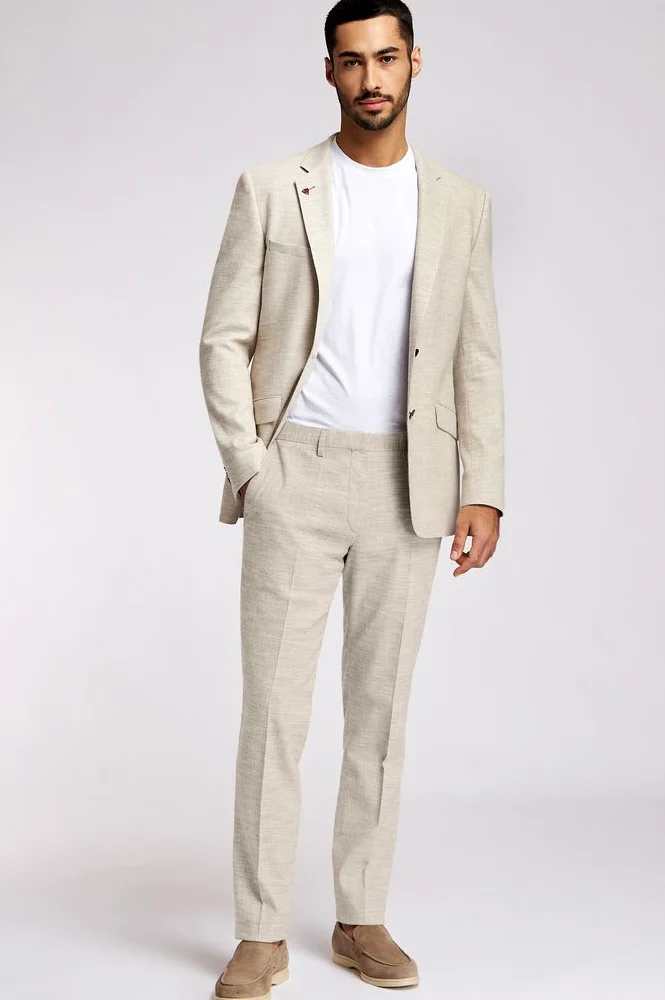
The pale suit with a white T-shirt creates a different impression from a shirt, tie and waistcoat combination. This is not a universal dress-code rule. Read the invitation and ask if a specific shirt or neckwear arrangement is expected. Try two inner layers in the actual jacket and compare neckline, hem and the transitions between pieces. A simple T-shirt can create a continuous light panel, while a shirt collar divides the neck area differently. Add the relevant shoes to both trials. If you hope to wear the pieces separately later, build a second complete outfit at the fitting rather than assuming versatility as an automatic benefit of buying the suit.
Test the double-breasted design as its own shape
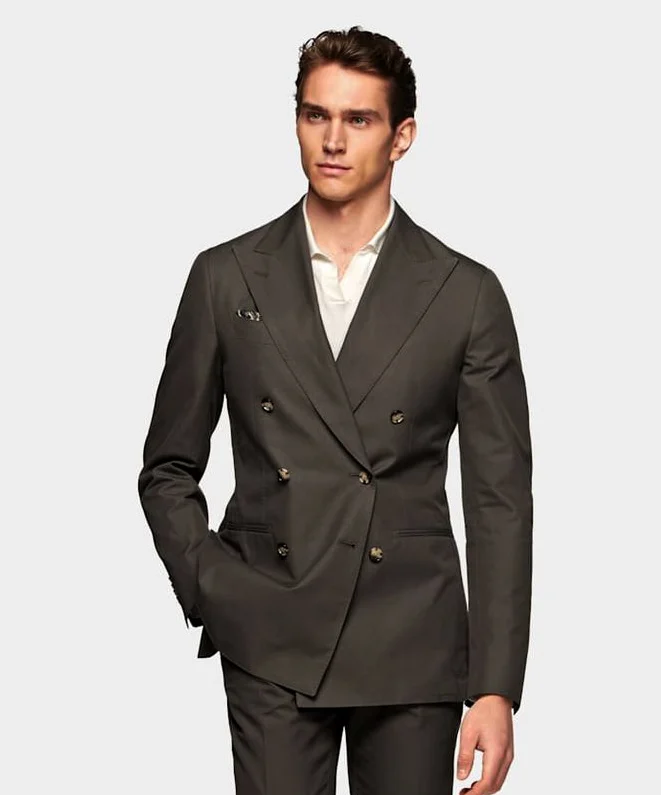
The dark double-breasted reference has a broader overlapping front and two visible rows of buttons. Compare it with a single-breasted jacket of similar length if you want to understand that particular difference. In the intended fastening arrangement, see how the coat lies over chest and waist. Raise your arms for an ordinary greeting and then sit as you would at a table.
Ask the provider about the intended button use and have necessary changes assessed on the actual garment. A narrow-looking studio photograph does not prove sufficient movement or establish that a smaller size would be better. The useful test involves your body, the chosen underlayer and the real jacket together.
Include trousers, shoes and care in the decision
Check suit trousers with the footwear you intend to use. Compare the waistband, stride and length while walking, and decide any shortening in that combination. If separate wear matters to you, identify existing tops you would really use with the trousers and try them where possible. Read the complete garment’s care label too. GINETEX distinguishes washing, bleaching, drying, ironing and professional textile care. The word cotton cannot provide one treatment for every constructed jacket. Clarify unfamiliar instructions before the first attempt, and check each piece of a multi-part outfit. That turns care into a practical planning question instead of a property assumed from a fibre name in an advertisement.
Decide with documented information and an actual fitting
Finish by recording which statements have been confirmed and which remain open. Avoid adding promises about comfort, environmental benefit or longevity when the offer does not establish them. Our checked suit guide and suit lapel comparison provide further shape references. The GOTS labelling tool explains its own information requirements, and GINETEX explains care symbols. Choose a specifically described organic cotton suit whose documentation, fit and intended use you have checked. A photograph can suggest a direction you enjoy, but it cannot supply the product evidence that is absent from the image or settle questions that still need a seller’s answer.
Before choosing an organic cotton suit, verify the actual model’s composition and claim scope. Assess cut, underlayers and movement separately on the real outfit.
Frequently asked questions
Can a suit photograph prove organic cotton?
No. Colour, matte appearance and an outdoor setting establish neither fibre composition nor organic origin.
Is a GOTS logo alone enough?
The official guidance also identifies label grade, certification-body reference and certification number. The information must relate to the actual product.
What extra checks does a three-piece need?
Try it with and without the jacket. Check where waistcoat and trouser waistband meet while sitting and standing.
Can every cotton suit receive the same care?
No. Read the constructed garment label and each separate piece. A fibre name does not provide a universal care treatment.