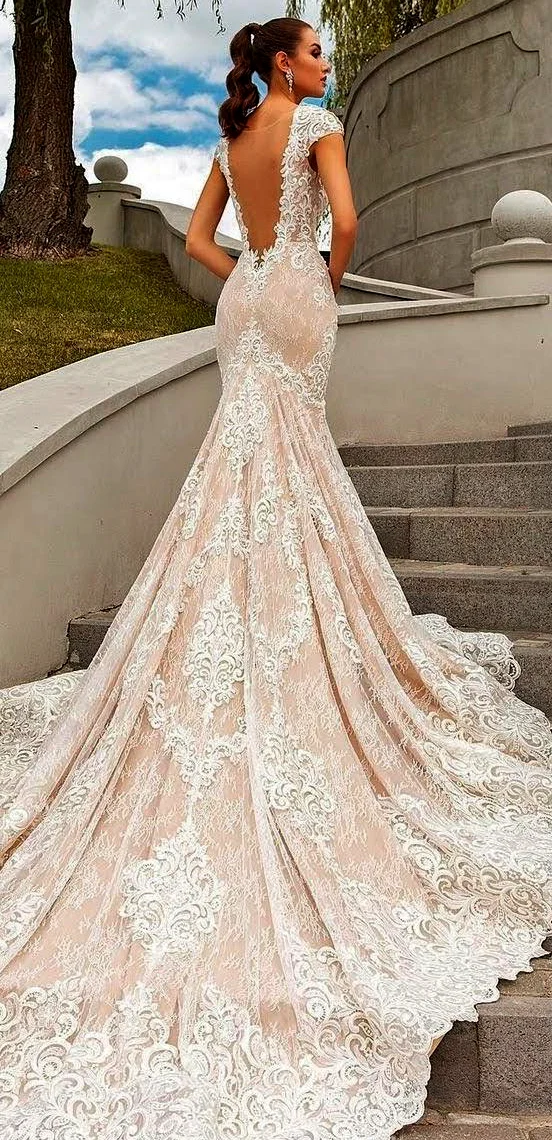
A rounded back with short sleeves creates a long exposed middle here. The shoulder areas carry pale curling motifs that continue along the edge and over the fitted lower-body section. Farther down, the skirt widens considerably and spreads across steps. Its broad patterned finish creates a different amount of lower volume from the narrow back area. Both affect the photograph together but remain separately selectable preferences for your own outfit.
Begin with the upper connection. Do you enjoy a shorter broader shoulder section beside the deeper curve, or would you prefer a finer line there? Compare two actual versions with similar back depth. Look afterwards at how motifs finish directly along the edge. Their distribution matters more to this question than the amount of fabric arranged on the steps. You can assess the upper line without spreading a skirt in that way.
Keep hands relaxed at the fitting so the sides show without a special stance. View the lower curve straight from behind and include the side. Ask to see the actual fabric boundary if motifs make its position unclear. Pale patterning cannot establish a manufacturing technique. Select this upper shape first and decide about the broader lower silhouette afterwards, keeping the impressive train arrangement from replacing the back decision.