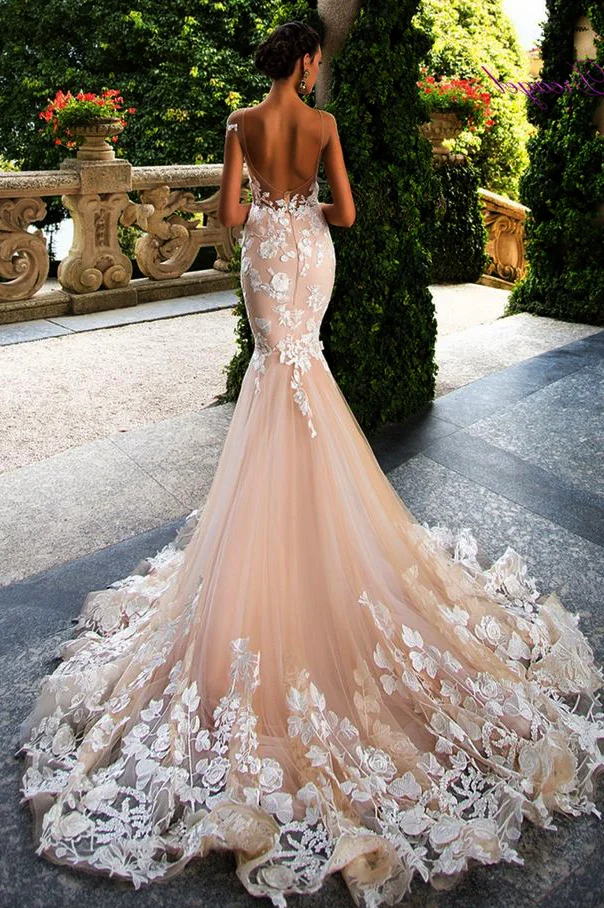
A rounded back with larger flowers creates a soft deep middle here. Fine shoulder lines rise at the sides. Larger pale floral forms concentrate near the lower back and continue over the fitted skirt area. The fabric widens farther down into a denser floral edge. Its underlying colour looks warmer than the motifs, an impression from the photograph rather than an exact product shade. The curve and floral scale remain the more useful initial comparison.
Describe the curve first if it appeals, then the border you want beside it. Would you prefer large individually readable forms or a quieter boundary? Keep opening width comparable on two actual candidates. You then decide about the decoration without simultaneously selecting a completely different neckline. A close detail should complement the whole rear view rather than replace it. Include the pattern’s visibility from farther away too.
Look at the edge with relaxed arms and hair moved aside at the fitting. Check the side transition afterwards. The broad spread lower area creates another photographic effect rather than a requirement for your own skirt. Choose the rounded back independently and clarify the real border construction on the offered garment before translating the reference into a complete product request.