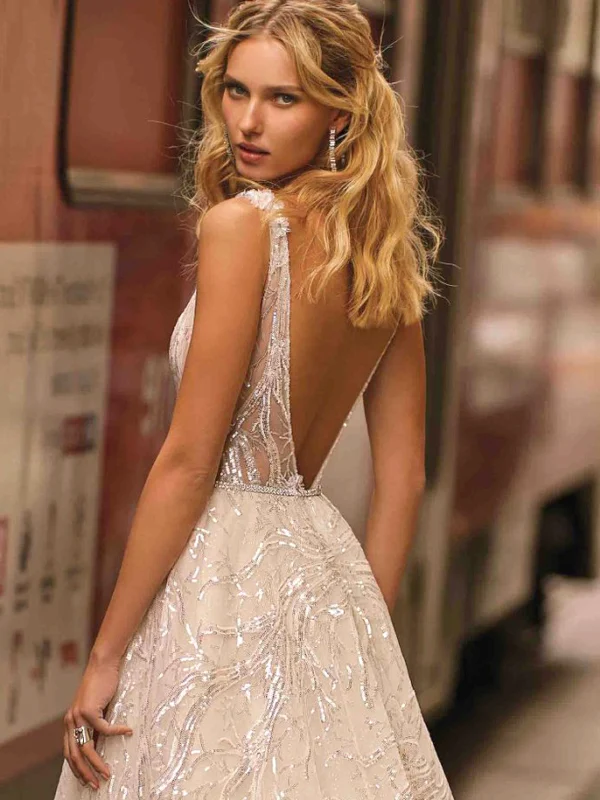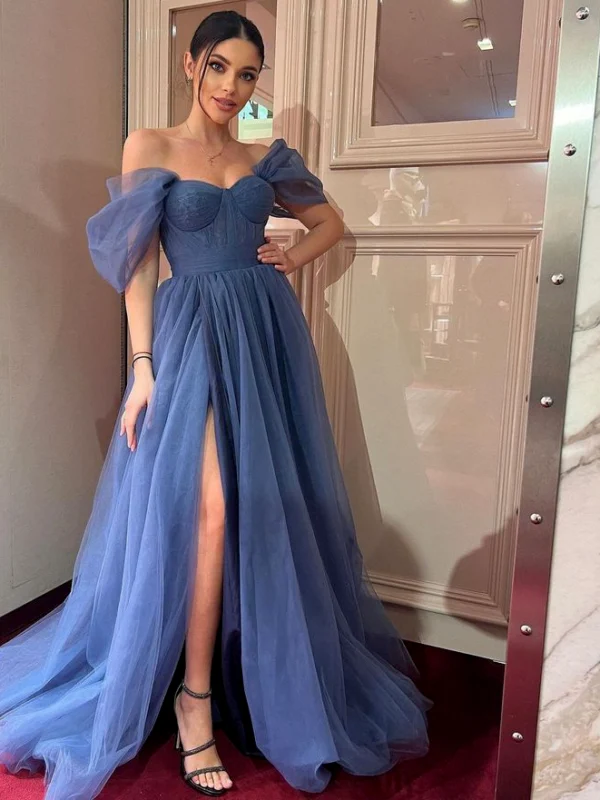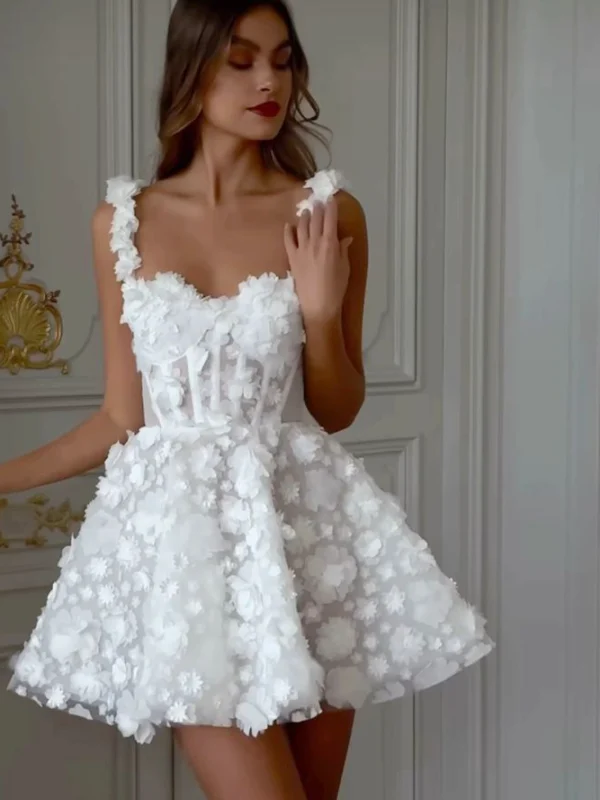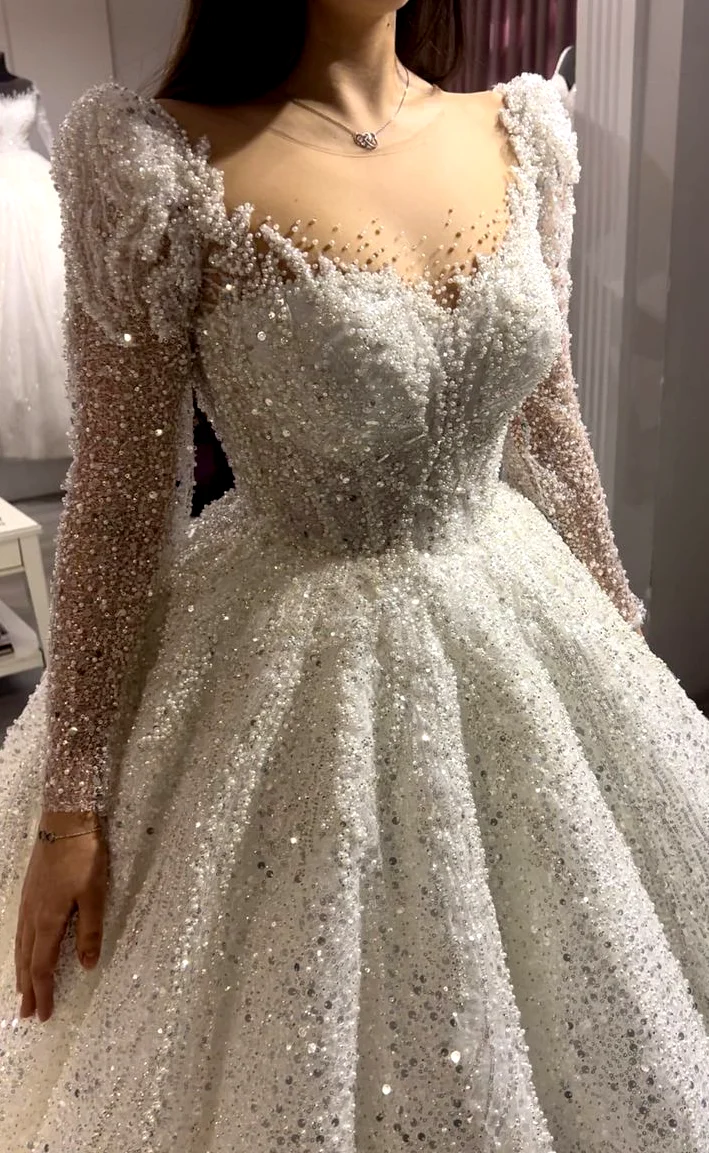
Preparing a bespoke wedding dress brief means translating shape preferences into an understandable commission. Begin with silhouette, neck frame and sleeves before collecting many small decorations. These five close views show dense reflections, different upper edges and several ways of drawing the middle. They serve as outcome references rather than proving how any pictured garment was produced. Use their visible differences for the design discussion and clarify the actual route from idea through fitting and approval with the selected provider. An unverified production story need not replace a concrete visual preference.
Begin a bespoke wedding dress with a clear shape idea
Write one sentence connecting your important lines. You might want a broad lower area, narrower middle and long sleeves with smaller volume at the shoulders. Or you may prefer an open shoulder edge and quieter side arm surface. Those statements are more concrete than a collection of sparkling dress pictures. Add two properties that can remain open. A consultation can then explain alternatives without turning every reference detail into a compulsory part of the same design. Knowing where you want options is useful alongside stating firm preferences.
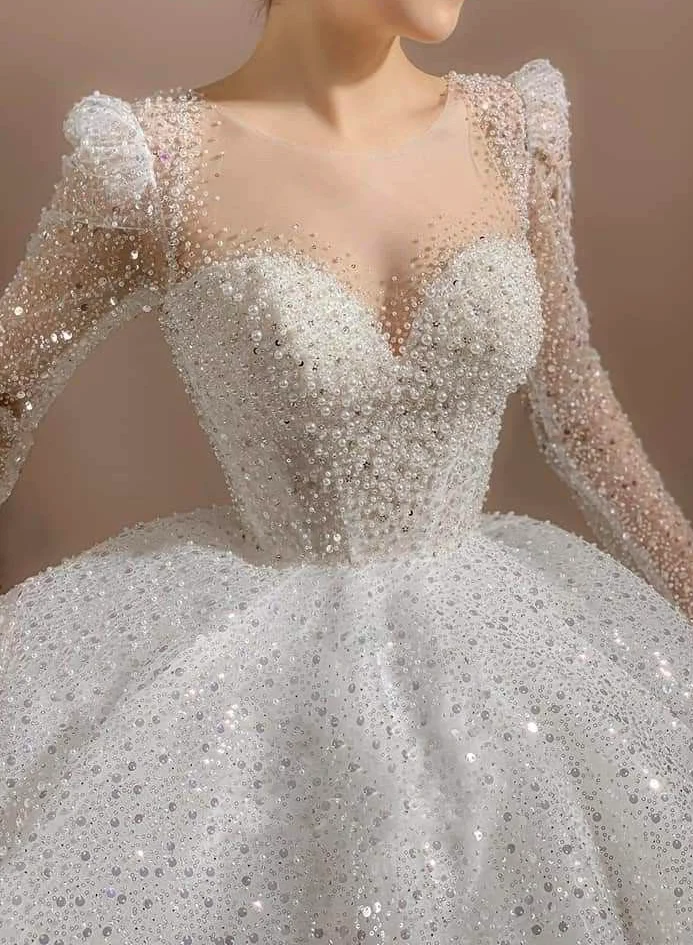
The closer small-reflection views show a shaped inner front edge beneath a higher sheer-looking outer frame. The off-shoulder version adds a broad folded upper surface instead. In the crossed example, softer lines travel diagonally across the chest. Mark the precise area you mean in each. Wanting the outer neck frame differs from wanting the identical inner edge. That distinction makes the brief clearer initially rather than requiring later corrections to explain what you originally intended. Describe surface and line as separate properties where appropriate.
Ask about the actual design route being offered
Ask whether the commission begins with a new design or changes existing shapes, and which choices are genuinely available. Request the steps and the result you will see at each. As a concrete example, Phillipa Lepley describes consultation, design development, toile fittings and further fittings within its own Bespoke service. That sequence belongs to this provider. It neither identifies the photographed dresses as its products nor determines another atelier’s process. Its value here is making your own questions more specific.
Use the example to ask how the confirmed design is identified, how shape is shown before further details and which decisions follow. Clarify which drawings or samples belong to your actual commission. Discuss costs, dates and handling later change requests directly with the real provider. A general service term does not explain which of those tasks your particular version includes. Keep the agreed answers beside the design stage so later comparisons remain on the same basis rather than confusing an earlier idea with the version actually discussed afterwards.
Choose inner front edge and outer neck frame separately
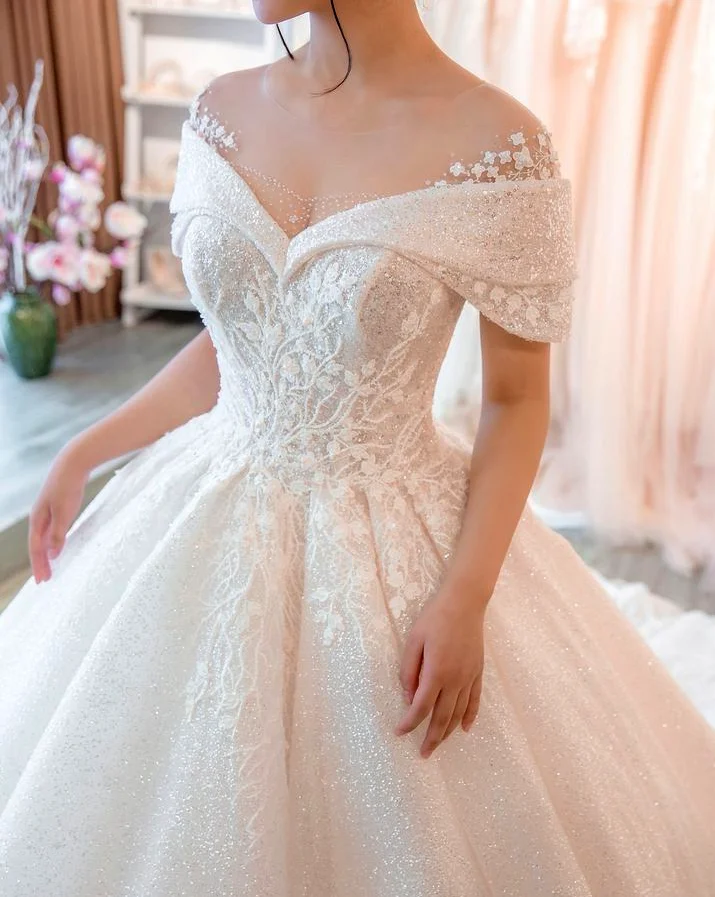
In the closer long-sleeved example, a deeper shaped inner line sits within a higher outer area. Small pale points spread between the two levels. The broad folded off-shoulder finish creates a clearer horizontal surface instead. Compare these frames without adding neck jewellery initially. Would you like drawing nearer the neck or a broader open upper zone? Which shape should remain visible in ordinary standing and during a greeting? Both questions can be stated separately in the design even where a similar amount of decoration appears.
Try corresponding upper arrangements with your intended hairstyle. If shape is first shown through a simpler trial version, concentrate on the agreed lines and ask about the later components still absent. Do not confuse a preliminary stage with the complete product view. Our long-sleeve wedding dress questions help assess arm surface and finish, while the lace pattern guide extends the relationship between drawing and underlayer. Transfer the useful comparison to the actual design without requiring another garment’s complete arrangement.
Connect sleeve volume with the lower shape
Several close views show small projecting shoulder areas and long drawn sleeves. Larger skirt folds or a broader quiet surface appear below. The crossed off-shoulder version supplies other upper directions beside several visible lower layers. Because the crops often omit the lowest length, deciding silhouette requires another complete view. Describe whether you want volume above, below or in both places. Dense surface alone does not explain that spatial distribution, so visible decoration and overall shape may need their own separate decisions.
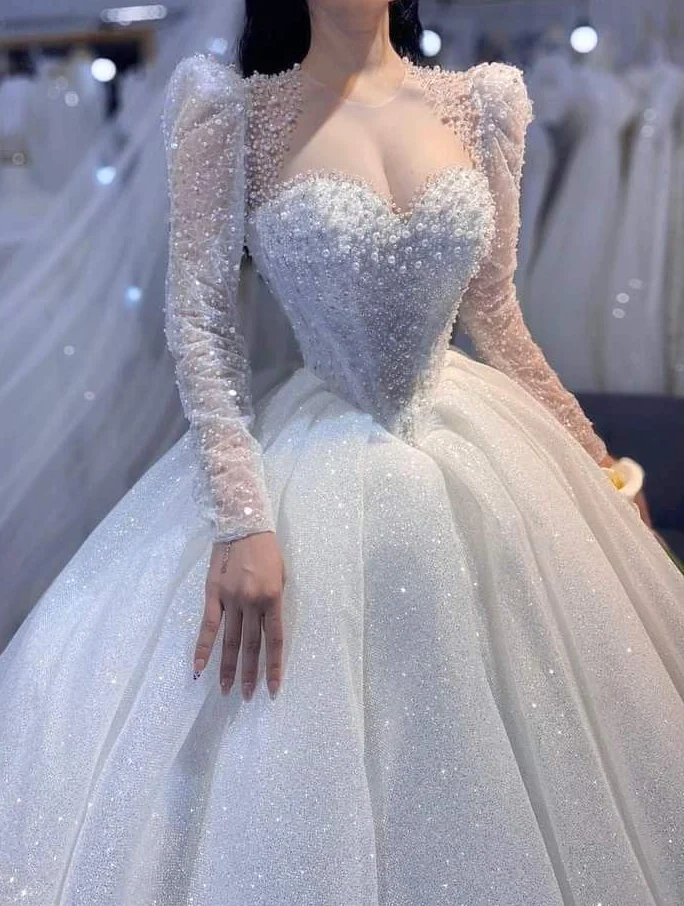
At the actual fitting, move your arms forwards, hold a bouquet and sit. Look at shoulder edge and waist afterwards. If you want a change, describe the intended line and the state in which it matters. A sleeve enjoyed in a standing photograph can appear different in your preferred hand position. Ask what can be adjusted at the current design stage and when it will be checked again. A concrete movement with a precise target gives a clearer task than an undefined request to make the whole upper garment feel somehow different.
Set the distribution of decoration deliberately
The densely reflective broader view distributes small pale and rounded points across bodice and skirt. The folded-upper-surface version connects those reflections with more readable trailing lines at the middle. In the crossed example, a diagonal band direction remains visible before a point-decorated surface. Decide which drawing should lead. Would you like a more even reflection distribution or a clearly readable motif with quieter spaces? Describe position and size rather than requesting the greatest possible amount of decoration. Similar lighting and distance help separate these arrangements.
Request the actual samples or detail views intended for your commission. Assess them with the proposed underlayer and from farther away too. A close image of one attractive point does not explain its repetition across the entire surface. Clarify when decoration is confirmed and how later requests are handled. Visible pale shapes do not establish a particular pearl type, gemstones or handwork. If a specific composition or technique matters, ask for it to be explained and connected to the actual offer rather than substituting appearance for confirmed product information.
Keep design stages and approvals understandable
After each discussed stage, record what is settled and what remains open. Distinguish upper shape, sleeves, skirt and decorative distribution in your description without replacing the worn impression with checkboxes alone. The main question remains whether the components create the outfit you want together. Retain confirmed drawings or references in one place and ask about the next visible result. You can avoid confusing an older preference with a subsequently agreed version and remember why the original shape decision was made when another detail is proposed.
Test the finished dress with shoes and important additions through intended movements. Read the care label too; the GINETEX care-symbol explanation helps interpret it. Shine and production descriptions do not prescribe treatment. Your result is an explained design with confirmed shape and deliberately chosen details. The references need not tell a production story. They have served their purpose when your preferences become more precise and assessable on the actual garment, giving later additions a real confirmed combination against which to be considered.
Describe shape and intended lines first. Clarify the actual design and fitting process before confirming decorative details.
Frequently asked questions
Do the pictures prove the dresses were individually commissioned?
No. They show visible results and serve as design references. Establish the actual production and adjustment process within the offer.
Can everything be changed after a shape fitting?
That cannot be promised generally. Clarify which decisions are made at each stage and which changes are offered afterwards.
Does every commission need the same number of fittings?
Ask about the actual provider’s process for your version. One atelier example does not supply a universal appointment schedule.