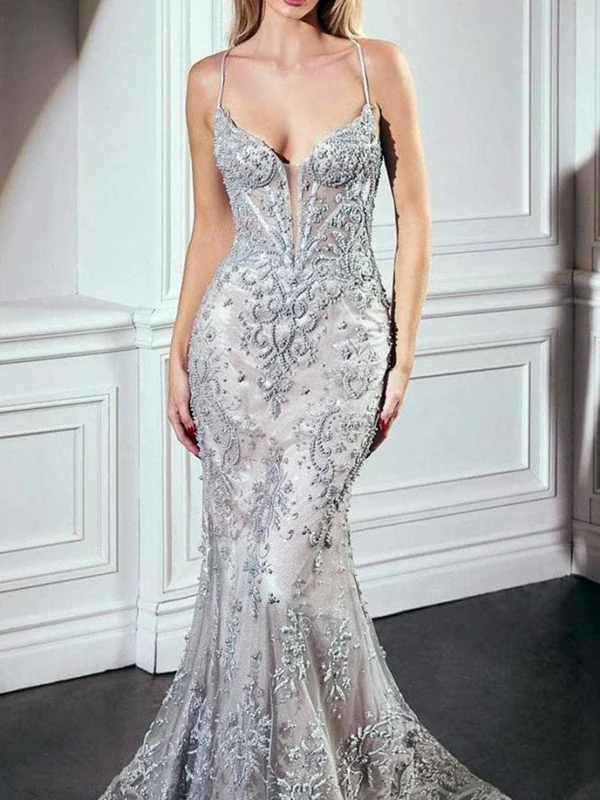
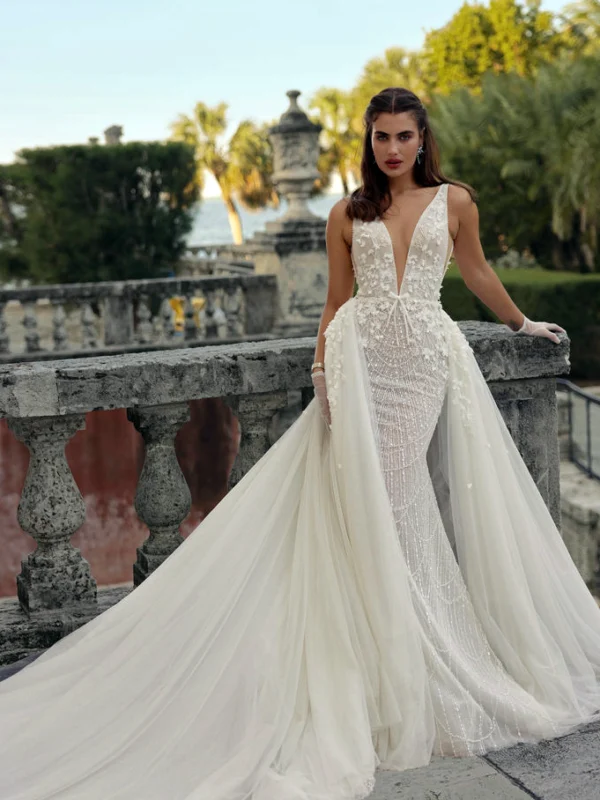
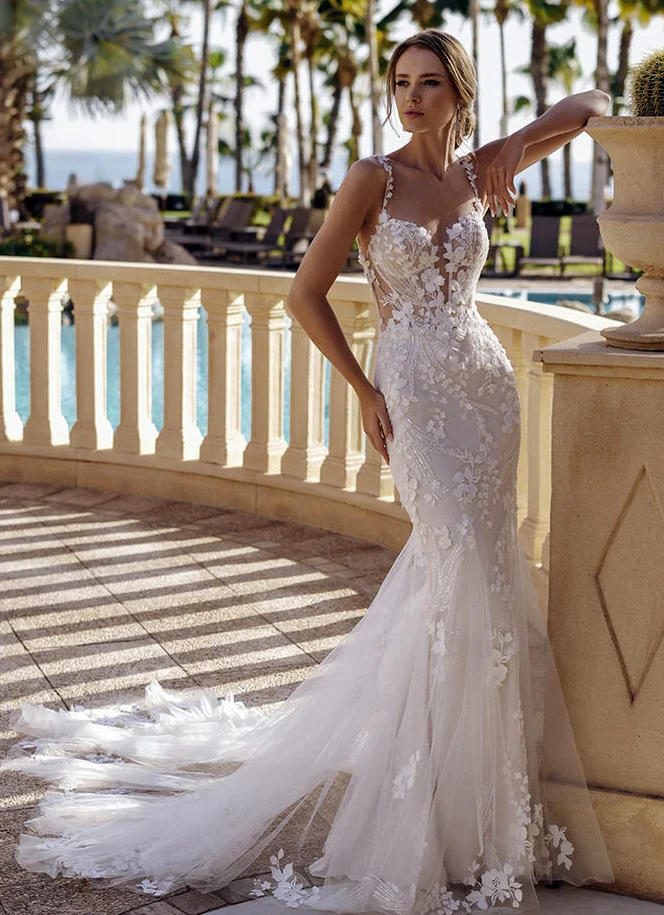
A lace wedding dress becomes easier to compare when you decide where its pattern should appear: concentrated on the bodice, scattered down the skirt or outlining a prominent back. That gives you a more precise starting point than simply seeking a romantic dress. These five views show different relationships between decoration and quieter surface. Choose a direction to take to a fitting. You can enjoy a feature in a photograph without needing every other part of the pictured outfit as well.
Lace wedding dress: read the pattern map first
Divide the dress visually into three areas: above the waist, waist to knee, and the lower finish. Where does your eye pause? In the beach photograph, small bright reflections concentrate on the off-shoulder bodice while the wide skirt provides larger quiet areas. It is a useful comparison for decoration placement even though the photograph does not establish an exact lace type. In the rear view on the steps, considerably larger pale flower motifs travel down to the spread hem instead.
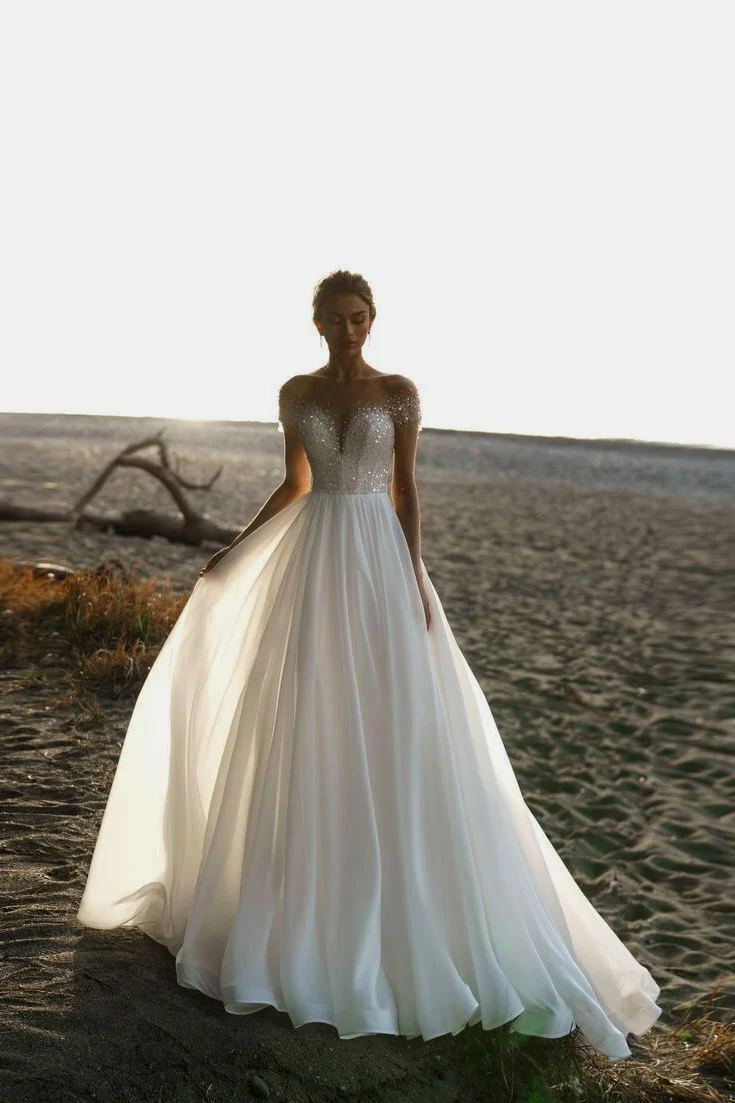
Place two candidates beside each other and describe the difference without ranking them: dense above and quiet below, or motifs distributed along the length. A large pattern does not demand a particular height. What matters is whether you enjoy its spacing and repetition on the dress you actually wear. Look once from conversation distance and again in a full-length mirror. Close photographs can then clarify individual edges, but they do not replace the overall distribution.
Make the underlayer its own colour decision
The rear view with larger flowers shows pale motifs against a warmer-looking background. In the closer back photograph, finer trailing shapes sit beside sheer-looking areas. These contrasts affect how clearly the drawing is visible. When comparing real candidates, look at their underlayers as well as their motifs. Where available, ask to see the same design with its different offered lining options. That helps distinguish a change in the drawing from a change in the surface beneath it.
Assess your preferred coverage standing, seated and in lighting relevant to your plans. Include the intended underwear and look for its edges. If you would like an additional underlayer, discuss a specific solution on the selected garment. Ask where it would finish and how it would alter the visible drawing. Especially around an open-looking back, a new lining edge can create a different boundary from the existing flower outline. Include that boundary in your visual decision.
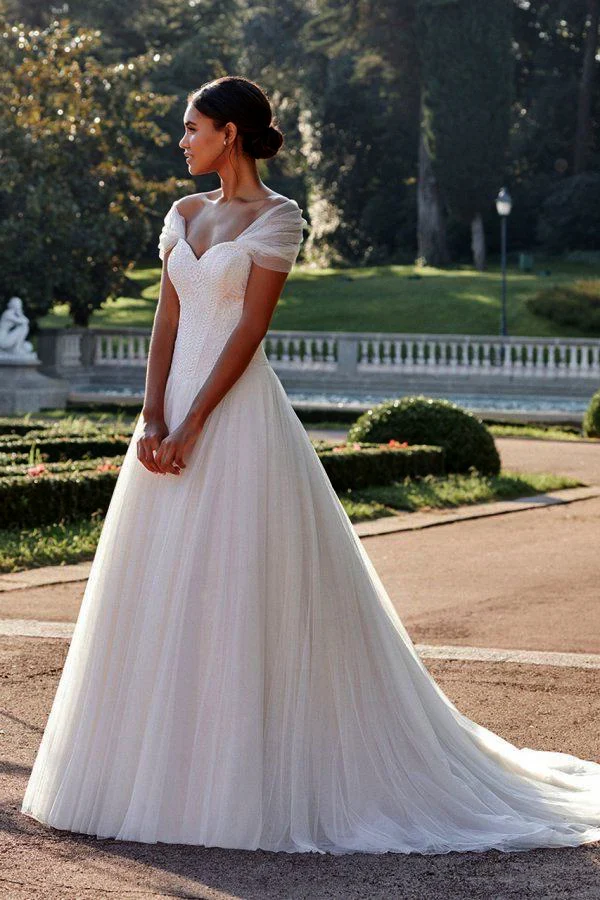
Compare the transition at the waist and skirt
The dress with side-set sheer-looking shoulder sections and a sweetheart front edge has a clearly drawn middle above a long widening skirt. In the off-shoulder front view among greenery, denser decoration instead trails down into individual motifs. Decide whether you want a clearly readable bodice finish or a softer passage into the skirt. You can compare these arrangements even when the candidates have different necklines or photographed colours. The transition itself remains a useful separate question.
At the fitting, identify where the dense drawing ends. Do you like that position with relaxed arms as much as in a posed photograph? Check the front and side next. If a length or waist alteration is planned, ask which patterned areas it would affect. Describe the continuation you want rather than supplying only a measurement. Our wedding dress guides offer other comparisons between upper shape and skirt. Your preferred transition can become a common criterion across different silhouettes.
Consider shoulder details individually
The close rear photograph contains two distinct lines: narrow leaf-like decorated straps and lower sheer-looking bands around the upper arms. In the front view among greenery, the short patterned sleeve edge sits directly below the shoulder. These arrangements frame the exposed neck area differently. Compare them initially without a veil or necklace so you can actually follow the line. Add your intended hairstyle afterwards; loose hair can cover some of the smaller shoulder details you first noticed.
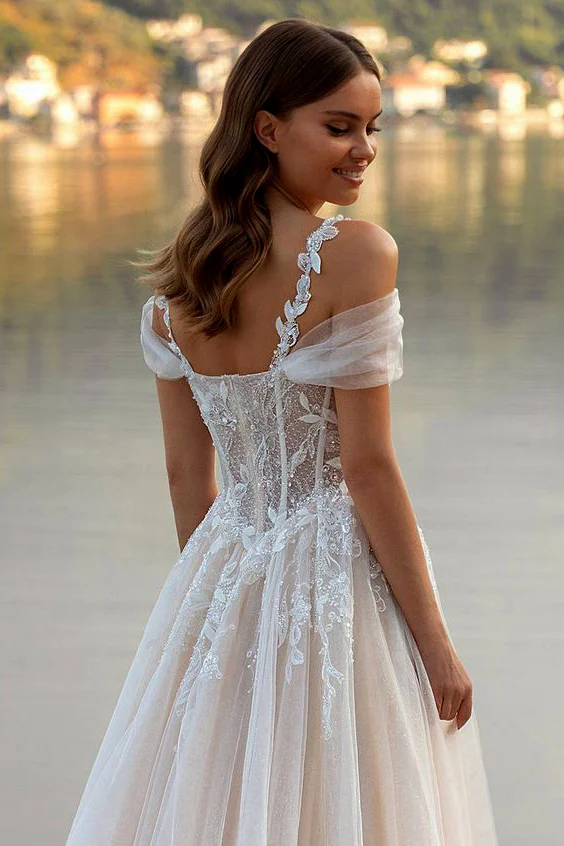
Move your arms as you would to hug someone or hold a bouquet. Observe where the lower sleeve edge sits afterwards. A decorative strap in a photograph does not establish a particular support system, and a delicate arm section does not fully explain its attachment. Ask about the connections on the real dress and try them. If several solutions appeal, choose through your preferred arm movements and visible shoulder line rather than automatically combining all the details.
Follow the back and hem as one drawing
The steps photograph links a long central button line with floral borders at the sides. Farther down, large motifs spread across the skirt and outline the extended train. Compare this with the closer back photograph, where finer trails move from the bodice into the skirt. Would you prefer a broad drawing at the lower finish or a more concentrated accent close to the waist? The question concerns the whole rear arrangement, beyond the depth of the neckline alone.
Let the proposed veil fall freely over the back, then put it aside. Compare both views before choosing its length and edge decoration. The boho wedding dress guide adds questions for combining an exposed back with other pieces. With a long train, also ask to see how the actual hem can be carried while walking. A skirt spread across steps shows its drawing, but it does not demonstrate the full movement sequence of your day or its gathered position.
Finish with a clear description of your pattern preference
For each of your final two candidates, write one sentence stating where the pattern should be dense, where the surface can become quieter and which underlayer you prefer. Add earrings, bag and veil only afterwards. Compare one restrained addition and one patterned addition on the same dress. This shows whether you prefer the garment’s drawing alone or a repeated motif across several pieces. Either can create a coherent personal arrangement when selected deliberately.
Record proposed alterations by exact location, intended result and a further fitting. Read the care label of the offered version too; the GINETEX care-symbol explanation helps interpret the markings. The visible pattern alone does not determine treatment. Once placement, underlayer and additions are clear, new suggestions become easier to assess. Another dress need not have the identical flowers: it can instead offer the relationship between drawing and quiet space that you have decided you enjoy.
Choose where you want the pattern concentrated, then compare its density, underlayer and transition into the skirt on the actual dress.
Frequently asked questions
Must the bodice pattern continue all the way to the hem?
No. A densely decorated bodice with a quiet skirt and motifs spread down the skirt offer different arrangements. Choose through the full silhouette.
Is a dropped sleeve the same detail as a decorated strap?
No. The close rear view shows narrow decorated straps alongside lower sheer-looking arm bands. Check their actual connections and movement on the garment.
Can I identify the exact lace technique from a photograph?
A photograph is insufficient for reliable technical identification. Ask for the offered dress’s description, fibre composition and construction.