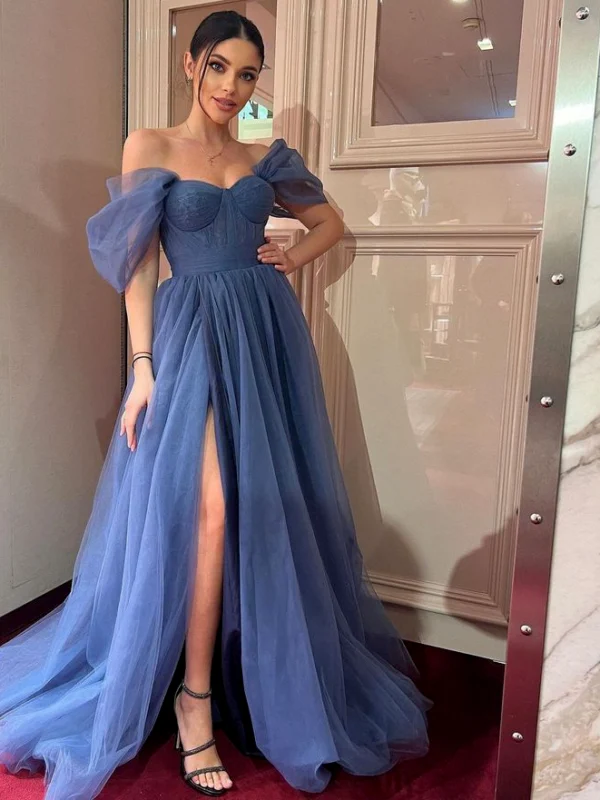
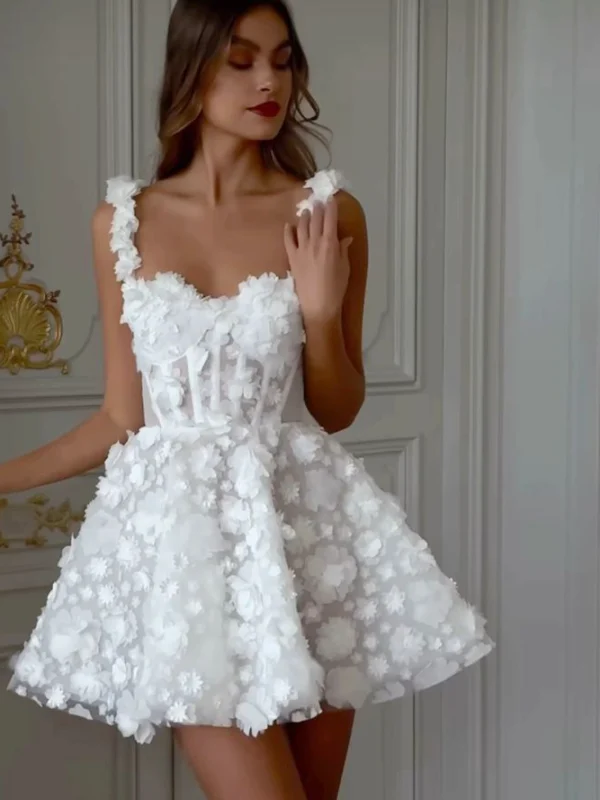
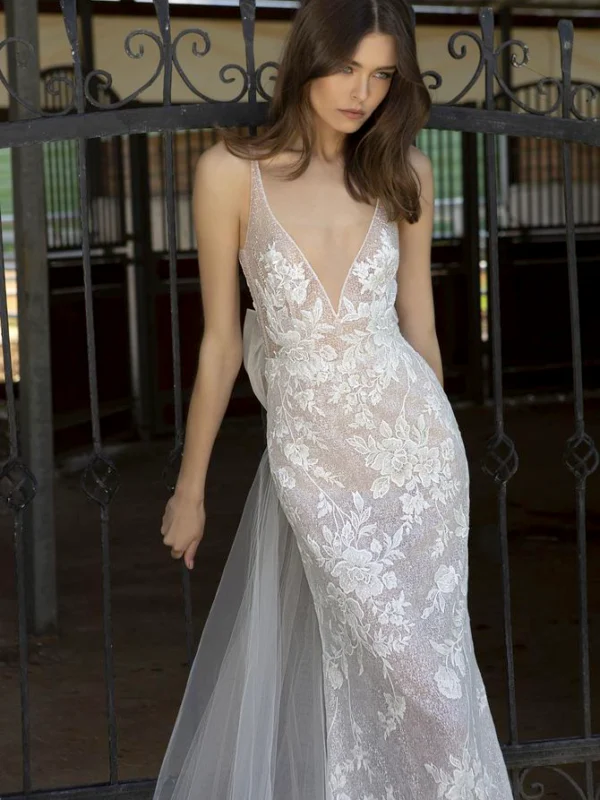
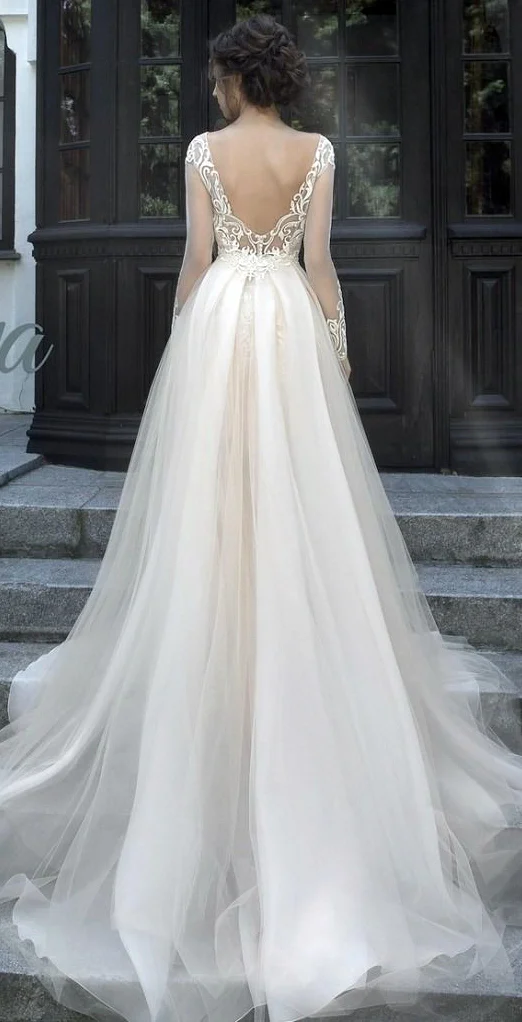
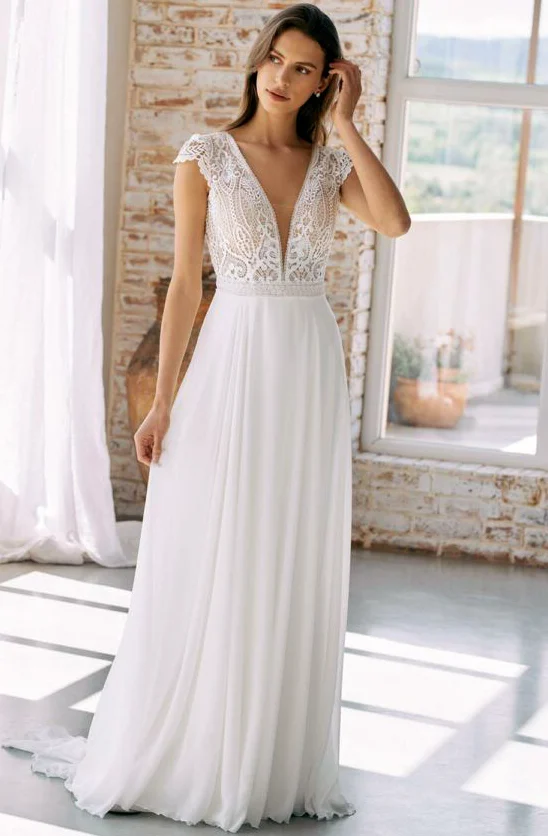
A deep V-back wedding dress is defined by more than the size of the exposed area. Where the two sides meet, how broad the borders remain and whether the middle is actually open all matter to the choice. An angular rear view and a softer rounded-back comparison show these differences. A third image shows only the front of another dress: a deep front neckline does not establish a matching back. Start by describing the rear shape you want, then ask about the layers and connections on the actual garment. This gives a fitting appointment a more precise purpose than simply asking for a low back.
Deep V-back wedding dress: locate the lower meeting point
Begin at the lowest visible point of the back opening and compare it with the transition into the skirt. On the angular example, the narrower decorated sides meet close to the waist, leaving a distinctly pointed middle. On the other rear view, broader patterned sides lead into a softer lower curve. Both expose a substantial area of the back but draw different shapes. If you specifically want a V, ask for more than depth alone. Show how pointed or rounded you want the bottom of the opening to look.
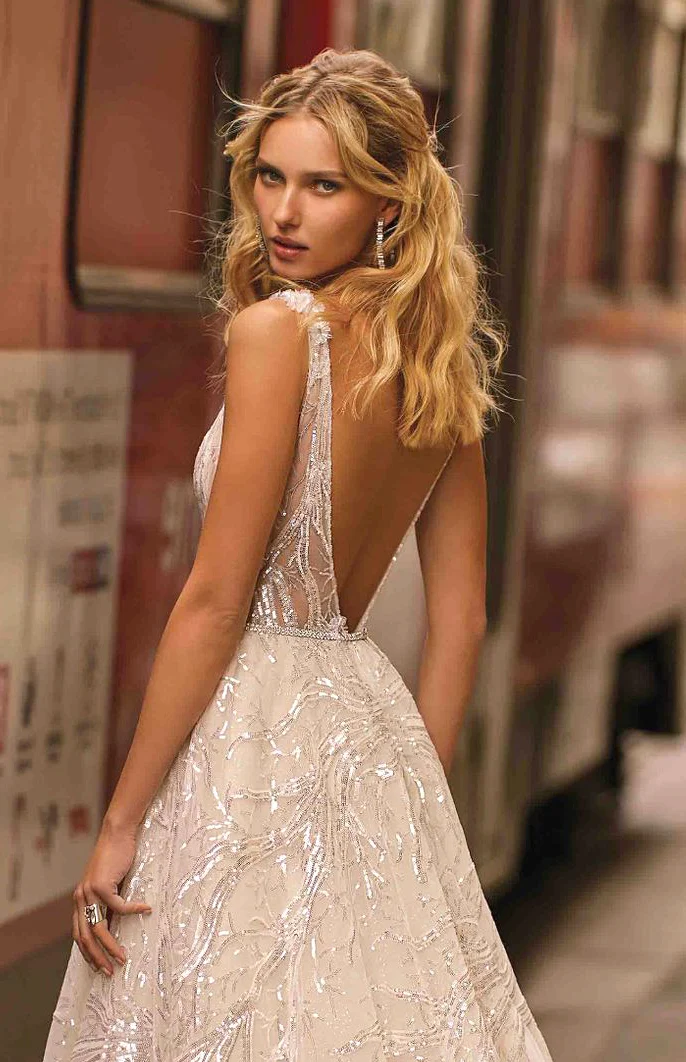
Describe your preferred depth relative to the actual dress rather than an arbitrary measurement guessed from a picture. At the fitting, ask to see the meeting point in relation to that garment’s waistline. Should it end at the skirt transition, visibly above it or lower down? A different skirt starting level changes the relationship. Compare candidates from behind while standing in a similar way. A turned torso or hair falling across one shoulder can hide part of the edge and make the shapes difficult to compare fairly.
Compare border width with the direction of the pattern
The narrower edges on the angular example create two relatively clear lines around the open middle. Decoration continues onto the lower part of the dress. In the softer rear view, broader patterned sides occupy more space and meet a visibly marked waist area. Decide which matters more to you: a clearly readable opening or a stronger ornamental frame. This is a choice about the drawing you want to see. Visible width alone cannot reliably establish stability, ease of movement or the construction beneath the surface.
Follow each pattern toward the lower meeting point. Some lines converge there, while others spread onto the skirt or remain along the border. For a quiet ending, ask to compare a clear single connection; for a more active effect, look at patterns that continue sideways. On an actual candidate, holding a neutral ribbon nearby without attaching it can help you assess whether an added horizontal line interrupts the V you like. Treat this as a visual experiment. Any real alteration needs a separate discussion about that specific garment.
Separate an open middle from a visible layer
A pale or skin-coloured area in a photograph does not reliably tell you whether a very fine layer is present. A visible motif does not reveal its attachment or the material underneath either. Ask for a close view and a straightforward demonstration on the dress. Which parts are open, which are backed, and where do the borders connect? Request a look inside if necessary. For the broader decision about transparent areas and underlayers, our guide to sheer wedding dress panels and lining adds context to this particular rear-shape question.
If you want more coverage, describe the intended boundary precisely. You might want only the lower point raised, or you might want the whole middle area backed. These are different requests with different visible results. Ask which is possible on the candidate and how the pattern would look afterward. Do not agree an alteration solely from a photograph of a different dress. An additional layer can change the colour and pattern relationship between border and middle even when the outside edge of the opening remains in the same place.
Ask explicitly about a line across the middle
No horizontal connection across the open middle is visible in the angular rear example. That does not establish that every similar dress is intended to be worn without one. Ask whether your candidate includes visible bands, fastenings or other connections. Have all the parts intended for wearing demonstrated together. If a cross-line is present, look at its height and where it intersects the V. You may like the extra arrangement, or prefer another model’s construction. Wanting an uninterrupted middle does not establish that removing a connection is an appropriate alteration on every dress.
The lower connection also deserves a close view of its own. Does it form a single narrow meeting point, a broader patterned area or a horizontal waistline? Look once at this small zone and once at the full-length dress. A connection that feels prominent in detail can recede in the whole view. Conversely, a pale edge may emphasise the opening even from a distance. Record whether you dislike the shape of the meeting point or its visual contrast. That distinction makes a discussion with a consultant much more specific.
Bring together the front and back of one real candidate
The front-only comparison shows broad patterned shoulder sections and a deep opening at the centre front. It proves neither a V-back nor a particular rear fastening. Use pictures like this as a prompt to request the missing view. For each real candidate, front, side and rear views need to belong to the same dress. Label the models clearly so the front of one does not accidentally become paired with the back of another as an apparently complete design. This is especially helpful when you take several inspiration images into an appointment.
Observe the back line while standing quietly and making your ordinary movements, without assuming one successful photograph represents the whole day. Ask another person to watch whether the intended meeting point and borders remain visibly where you expect them. Our broader backless wedding dress guide covers coordination with hair and a veil. Here, settle the rear shape, its lower connection and your preferred coverage first. The remaining pieces can then be tried with a clearly identified candidate rather than a vague collection of ideas.
Finish with three concrete notes
Before the next appointment, write down three preferences: the meeting point relative to the skirt start, the border width you want and the intended state of the middle. Add unresolved questions about layers, fastenings and alterations. For care, use the actual dress’s instructions; the GINETEX explanation of care symbols describes the different treatment symbols. An open-looking back or a fine pattern does not provide a care instruction. With these concrete details, you can compare two real solutions instead of relying only on the word deep or a particularly striking photograph.
Compare the lower meeting point against the skirt start and assess the width of the side borders. Establish the middle, layers and connections on the actual dress.
Frequently asked questions
Is every low back a V shape?
No. A large exposed area can end in an angular point or a soft curve. Compare the actual lower ending and both sides.
How should I describe the depth I want?
Show the meeting point relative to the waist or skirt start of the actual dress. This is more concrete than a measurement guessed from a picture.
Can I reliably identify a fine layer in a photograph?
Not always. Request a close view and an explanation on the dress of which areas are open or backed.
Does a deep front establish a deep back?
No. Request the matching rear view of that exact model before deciding about its back shape.