You can choose your wedding dress more deliberately by recording a few requirements before the next fitting. Begin with its intended use and three properties that particularly matter to you. Compare real garments afterwards instead of assembling attractive details from different pictures into a model nobody offers. These six references range from worn dresses and a garment rail to a suit and accessories. They answer different preparation questions. None replaces complete views and information about the actual item offered, so record what each image genuinely supplies alongside the preference you save.
1. Record three priorities for your wedding dress
Write down which parts of your celebration the dress should accompany. Do you intend to walk a longer route, sit for an extended period or remove an outer layer later? Add your preferred coverage and any requirements genuinely agreed with the venue. A style photograph’s setting cannot supply those requirements. Rank three priorities afterwards: perhaps exposed arms, a distinctly decorated bodice and less rear fabric. Other properties may remain unresolved at the fitting. You need a useful direction for the selection rather than an answer to every question before seeing actual candidates.
A short description might be: I want a decorated bodice, a quieter full skirt and a complete back view with my intended hairstyle. That gives a consultation specific starting points. The Pronovias FAQ describes its own example of preparing a selection around previously discussed preferences and saved styles. Ask your chosen shop about its actual process and the availability of your candidates. That example does not establish identical appointment lengths or garment quantities at every provider. Explain which particular area interests you when sharing a saved photograph.
2. Choose the complete silhouette before the detail
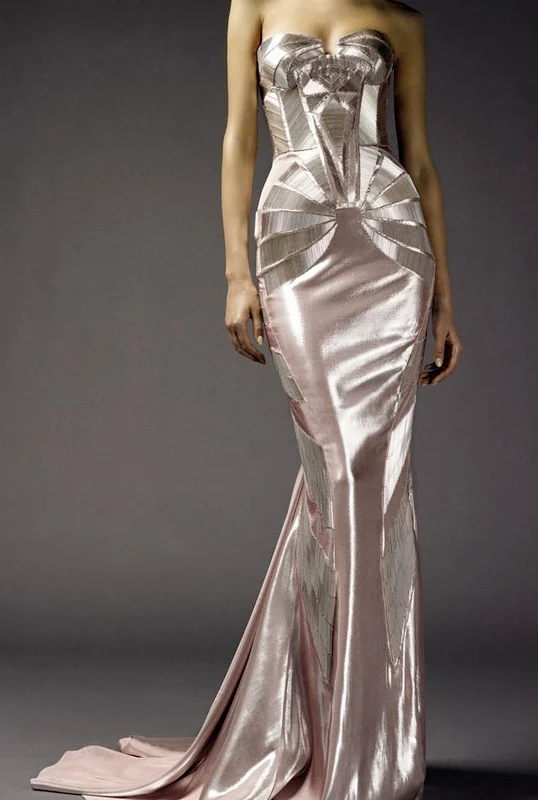
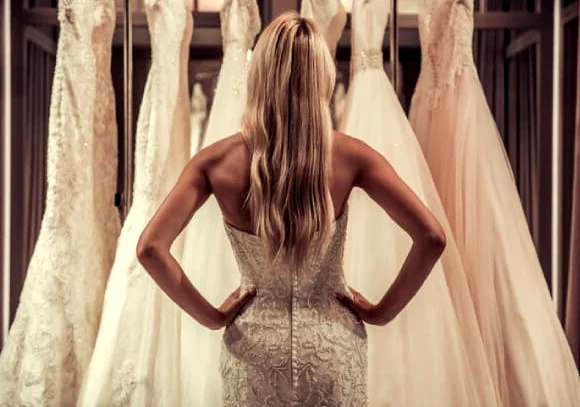
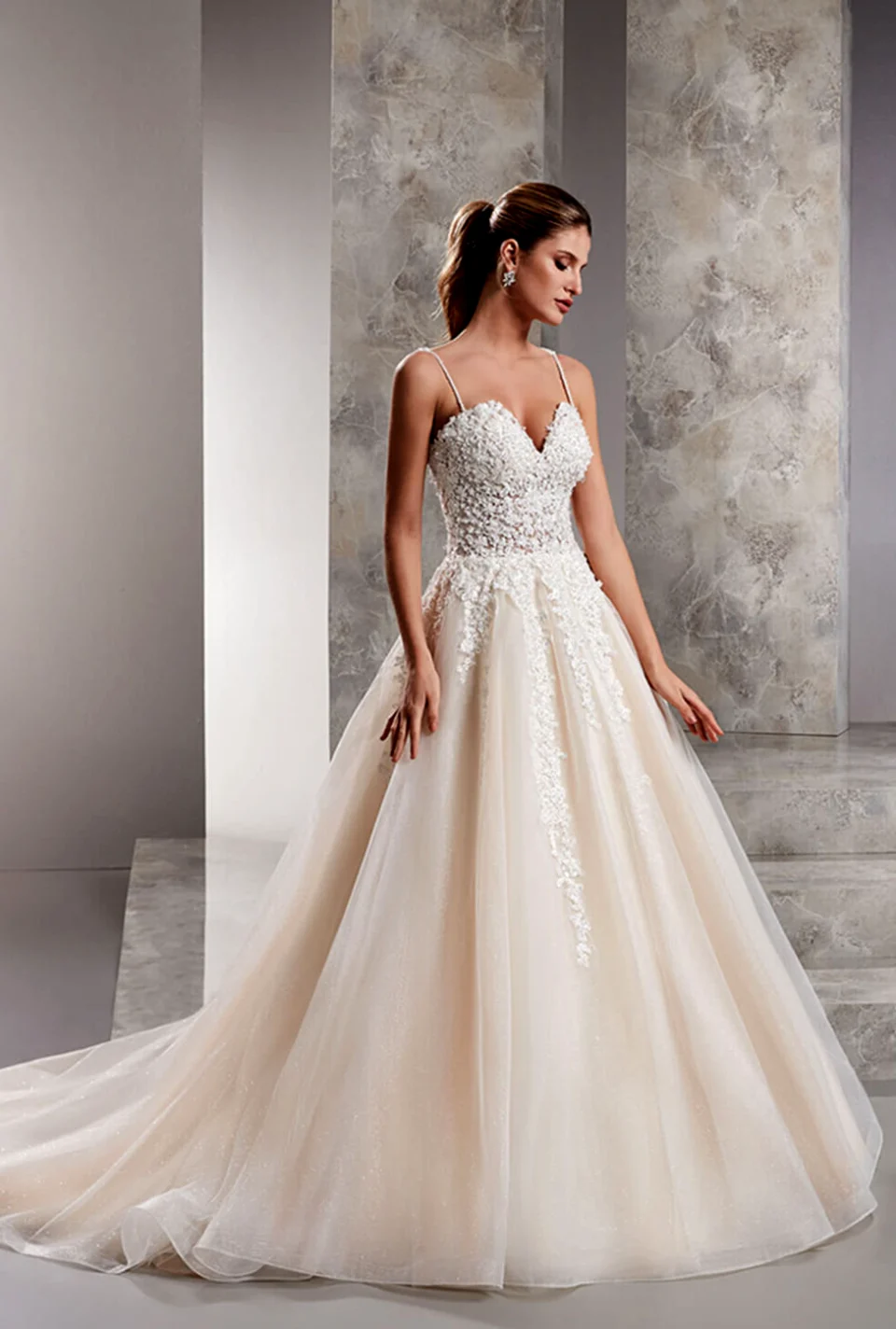
The long front view with fine straps combines a densely decorated bodice with a widening quieter skirt. The photograph before hanging garments instead mainly shows a closer rear line, with the lower finish outside the crop. Include those information limits in the comparison. An emphasised waist does not establish identical hip width or the same amount of lower fabric. Request complete views before choosing through a familiar silhouette name alone. Another photograph’s fuller lower area cannot finish the missing back view of this garment.
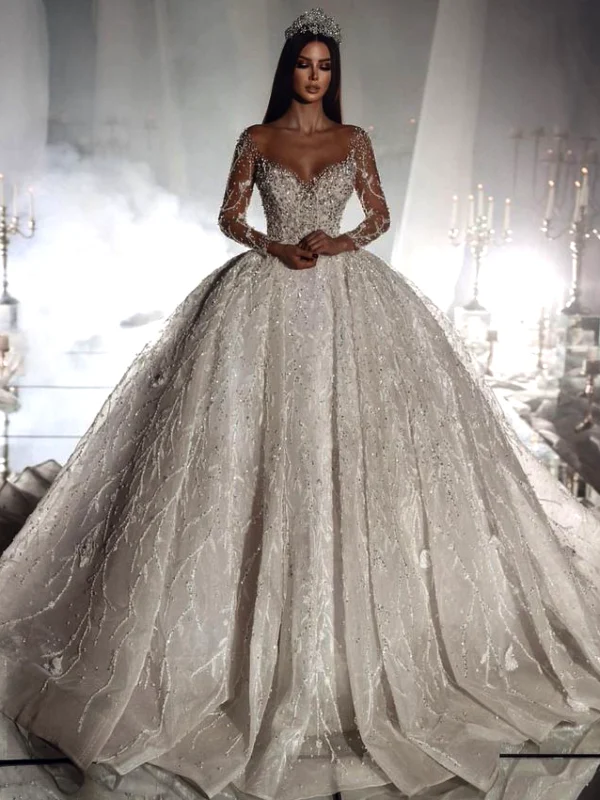
Include only a few genuinely available shapes in the first comparison, keeping shoes and viewing distance similar. If side fullness matters, the A-line wedding dress comparison develops questions about where widening begins. Choose the complete shape on the worn candidate afterwards. You can save a particularly attractive floral detail separately when its accompanying skirt does not appeal. Both need not become a package you must order. A preference for another bodice or skirt still needs a real offered combination rather than assuming the requested change is available.
3. Establish neck, shoulder and back coverage separately
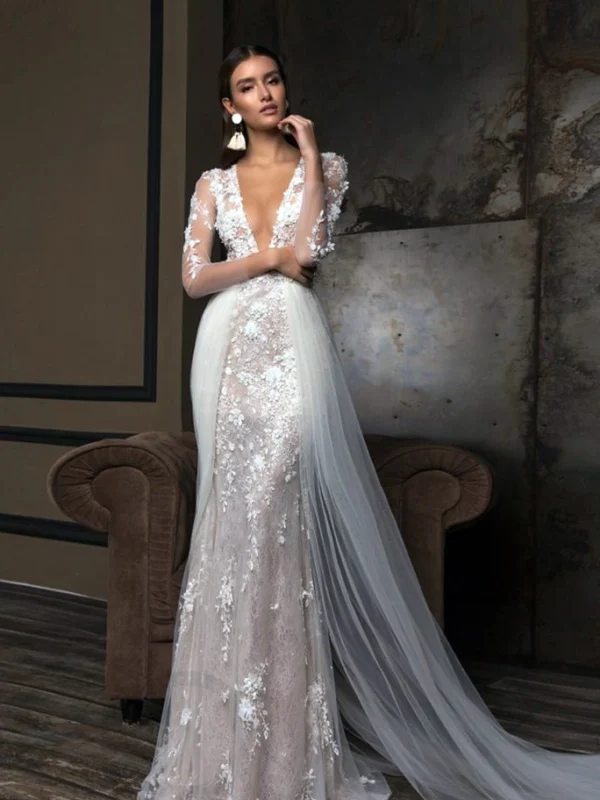
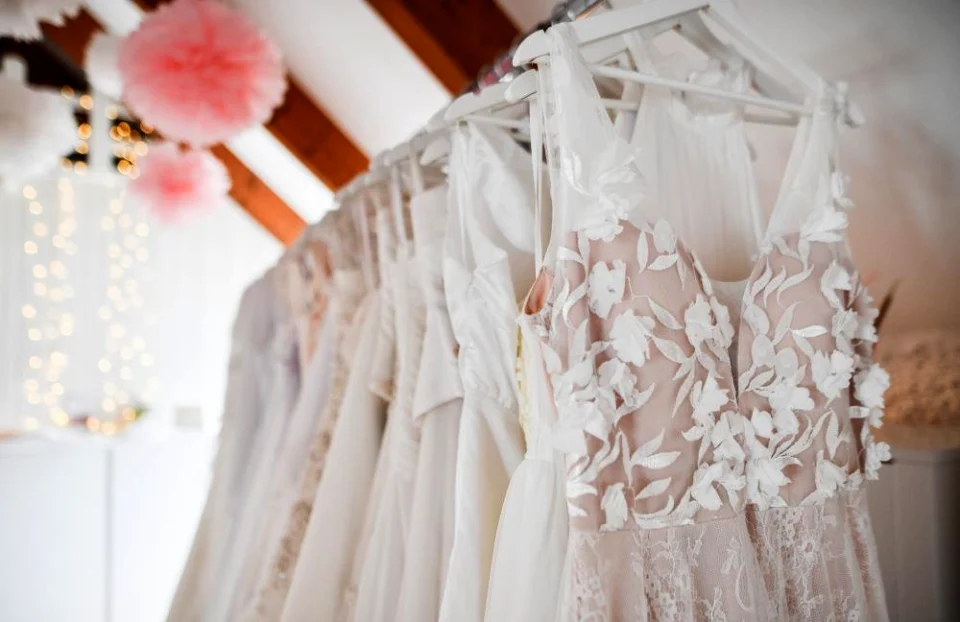
The rail photograph shows a close floral bodice over a warmer translucent-looking ground. A hanger reveals its pattern rather than its position on your body. The worn fine-strap front provides different information. Name whether you want a deeper centre, exposed shoulder sides or more area across the upper chest. Ask about lining, included layers and offered versions on a real model instead of treating photographic brightness as its construction. Similar pale colour does not confirm the same coverage between two dresses. Keep the visible preference and actual construction as separate information.
Try the offered version with intended underlayers and obtain front, side and back views. Relax the hands initially and bring them forwards afterwards. Long hair obscures part of the upper line in the rear reference, so add an unobstructed view of your candidate. Include your intended hairstyle next. You can consciously choose whether a preferred back border remains visible or partly beneath hair and veil. Another person’s photographed hairstyle is not a fixed part of the garment. Seeing both arrangements on your actual dress makes the selected edge easier to explain.
4. Add accompanying pieces individually
The heart-shaped bag is held with both hands before a pale waist. That shows a particular carrying position and decorated surface rather than confirmed capacity. Try your actual bag with the required contents and hold it where you intend to use it. Open it in the complete outfit. Assess whether its edge may cover your chosen bodice detail afterwards. A long chain supplies another visible line requiring assessment on the worn set. A smaller-looking photograph cannot establish that everything you need will fit, and the pale outfit behind it is not your own matching dress.
A shared appearance does not require identical colours. The light grey-blue three-piece suit and patterned bow tie are separate ideas rather than a documented combination. If you want to view your outfits together, use the actual pieces or reliable colour samples in the same light. Decide which relationship you want first. A bow-tie pattern can repeat a colour without repeating the dress fabric or sharing its material. Similar photographic brightness cannot settle the whole combination. Each person can also assess their own complete outfit rather than selecting solely through its relationship to the other garment.
Choose jewellery and headpiece individually afterwards. The bridal accessories guide helps assess neck line, earrings and hair ornament together. Keep the dress unchanged for the initial comparison instead of changing bag, hairstyle and necklace simultaneously. You can then identify which companion alters the selected area. The final overall view needs all the actual pieces together, including an outer layer if you intend to use one. Assess an accessory beside the chosen neck and shoulder lines rather than deciding through its separate photograph alone. Include removal if you plan to take that piece off later.
5. Discuss shoes, alterations and sequence together
Wear the intended shoes when length is assessed. Let the skirt fall normally, walk several steps and sit. Add a view of the front floor-level finish and rear area. A decorated border may belong to your preference, so identify it whenever discussing another length. The photographed amount of fabric is not promised alteration allowance. Have the affected area and proposed visible outcome explained on the actual garment. Another model’s fabric resting on the floor cannot establish the result of shortening your candidate. Repeating the trial with your own shoes connects length to its intended use.
Ordering terms need clear explanations too. Jenny Yoo’s made-to-order policy explicitly distinguishes production after ordering from individual custom measurements and expects alterations for these products. Use that named example to ask your provider a precise question. Establish what you would order, which fittings and work are included, and who undertakes additional work. Do not transfer one maker’s conditions to a different shop. The same term beside a product name cannot confirm that every seller provides an identical service or fitting schedule.
Record garment, intended adjustments and required accessories separately, requesting their specific prices and timing. An available sample does not automatically mean immediate delivery of that same version. Ask for the schedule of your actual order and subsequent work. The wedding dress buying guide develops the decision after a fitting. Here the first task is establishing which requirements you bring into that selection. Keep unresolved work visible in the enquiry instead of treating it as already completed. The attractive garment and practical steps needed to obtain your version then remain part of the same decision.
6. Turn pictures into an answerable enquiry
Retain two suitable candidates and a short list of unanswered questions finally. Give each picture a job: complete shape, upper coverage, missing back or accompanying piece. Request information about precisely those points. The hanging reference, for example, needs a worn view; the closer rear pose needs complete length. Compare answers on the same offered garment before changing priorities or adding a missing feature from another photograph. Return to your three preferences instead of continually expanding the list. A new candidate can then be assessed through the same questions without rebuilding the whole preparation.
Care and storage require information about the actual item. GINETEX explains textile care symbols; visible flowers or translucent-looking areas cannot determine treatment. Keep agreed information with the selected combination. Useful preparation ends with clear requirements, relevant views and established next steps. Your wedding dress need not satisfy a universal idea of perfection. What matters is the genuinely available combination you assessed completely and chose for your own plans. Real garment information and visual preference can remain different parts of that same decision.
Record three priorities for your wedding dress. Compare silhouette, upper coverage and accessories on real candidates, then establish shoes, alterations and timing for the complete combination.
Frequently asked questions
How many priorities should I have for the initial dress selection?
Three clear priorities can be a useful start for your wedding dress selection, such as coverage, silhouette and rear fabric area. Compare unresolved properties on actual candidates afterwards.
Must a partner’s outfit match the wedding dress colour?
Your partner’s outfit and wedding dress can have different colours. Choose the relationship you want first, then compare the actual pieces together in the same light.
Does production after ordering automatically mean made to individual measurements?
For a wedding dress, the provider needs to explain what its ordering term includes. Establish individual measurements, included work and necessary further fittings for that specific product.