An A-line wedding dress is described by more than a broad hem. The line between waist and hem matters: where does the skirt open out, and how much space appears beside the body? These five references show longer vertical folds, a quieter shiny-looking skirt and a fuller version with small motifs. Several also have a front opening. Comparing those properties separately helps you find the skirt shape you want without adopting the gloves, neckline and veil from the same photograph. Begin with the outline and let the other choices follow.
Recognise an A-line wedding dress below the waist
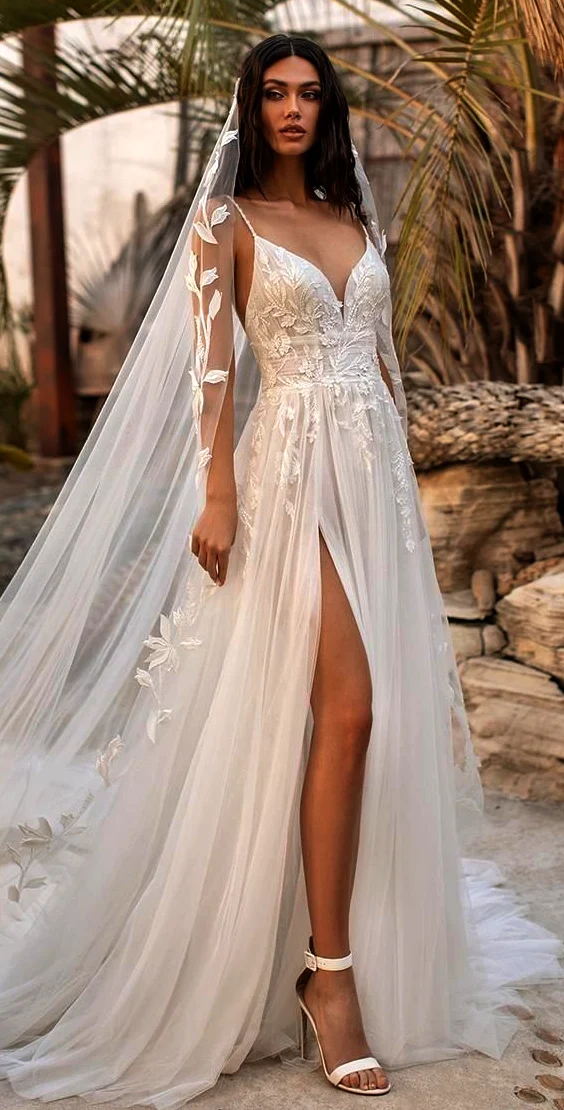
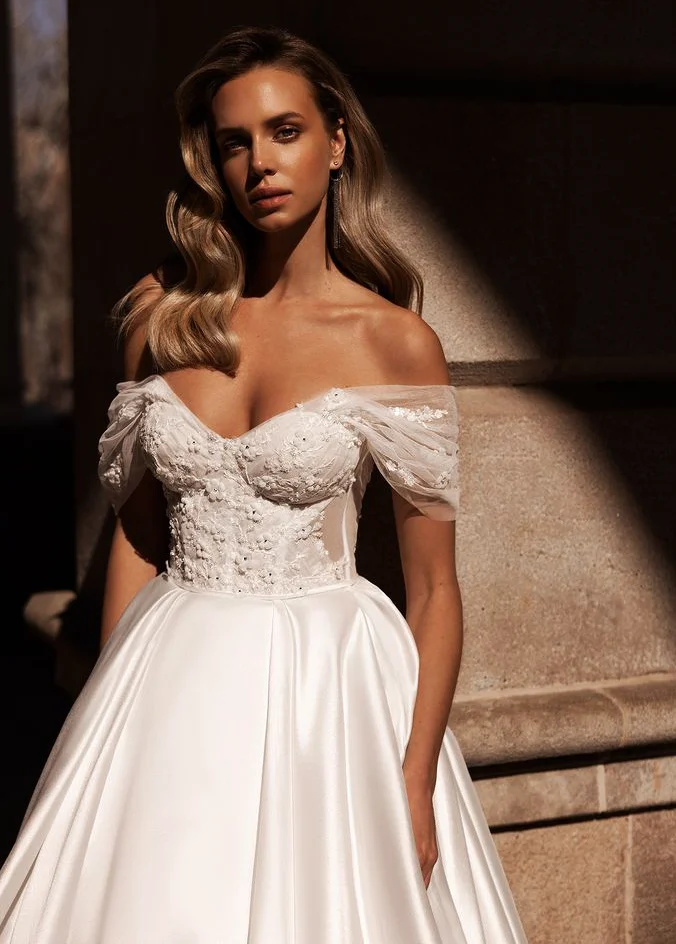
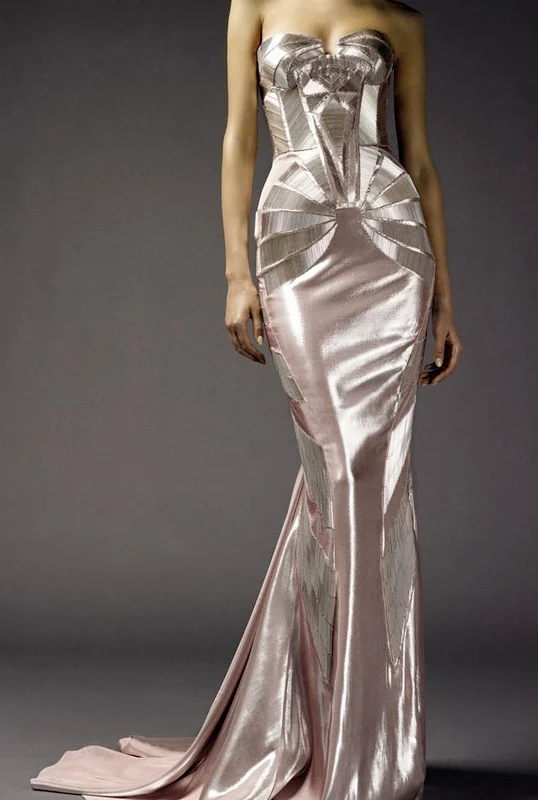
Follow both outside edges down from the waist first. In the thin-strapped example with the densely decorated V-shaped bodice, the skirt continues through longer vertical folds. It starts becoming wider high up rather than following hips and thighs closely first. The closer photograph with short draped shoulder sections also shows an early-opening skirt, but does not explain its lower edge. For a complete comparison, a full side view is therefore more useful than another similarly tight crop. Ask to see how the same outline continues down to the shoes.
Maggie Sottero’s silhouette guide describes the A-line through a closer bodice and a skirt gradually widening from the waist. That shape description supplies a useful search term. It neither makes the pictured dresses that designer’s products nor sets a rule for which body should wear the cut. Assess the offered garment from front and side without holding its skirt out. Decide whether the line appeals in your ordinary stance as well as in a deliberately arranged photograph.
Compare a gentler opening with more side fullness
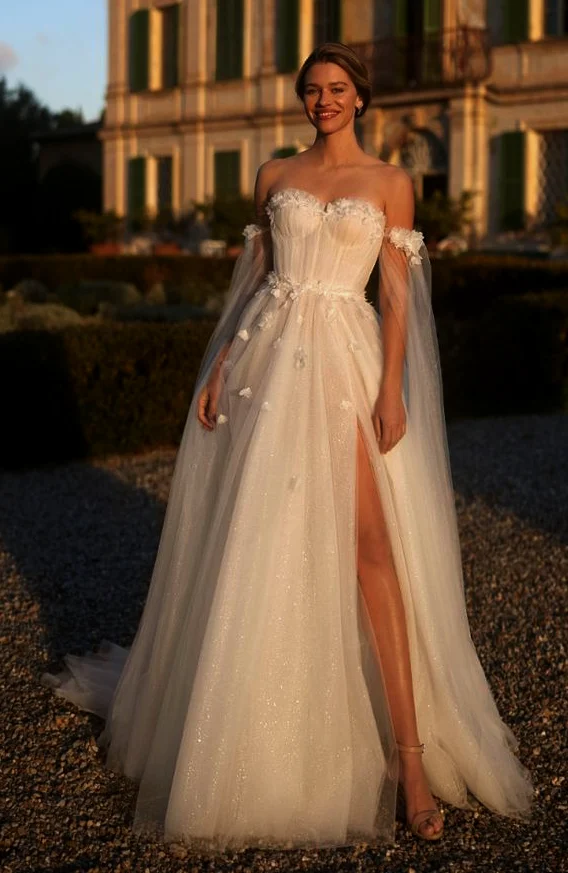
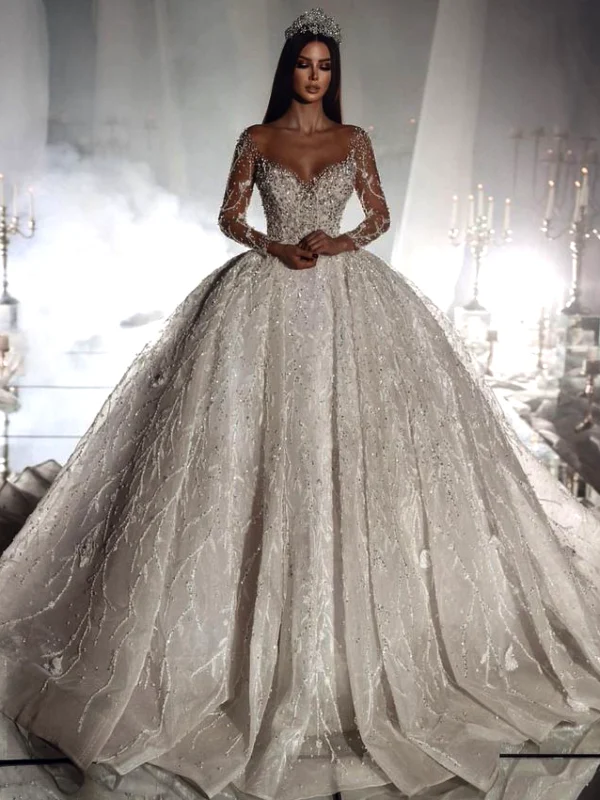
The fuller dress with small floral accents shows more side skirt area than the quieter folds beneath the decorated V-shaped front. Both can provide a starting point. Instead of immediately seeking maximum or minimum fullness, find two candidates whose difference you can explain clearly. Keep jewellery and shoe height unchanged during the first trial. You then decide about the skirt rather than reacting to a different neckline or brighter footwear at the same time. Notice the amount of fabric beside your hands and the outline when you turn.
A narrower falling version may suit your preference for a quieter line; a broader lower area can equally be your deliberate focus. This is not a ranking of body shapes. Stand with an ordinary distance between your feet, then turn slowly sideways. Does the outline change substantially because more fabric lies behind? The full-skirt wedding dress guide explores larger volume questions. Here the task is more specific: choosing the gradual outward route from the waist rather than treating every broad skirt as the same silhouette.
Separate the skirt’s beginning from its decoration
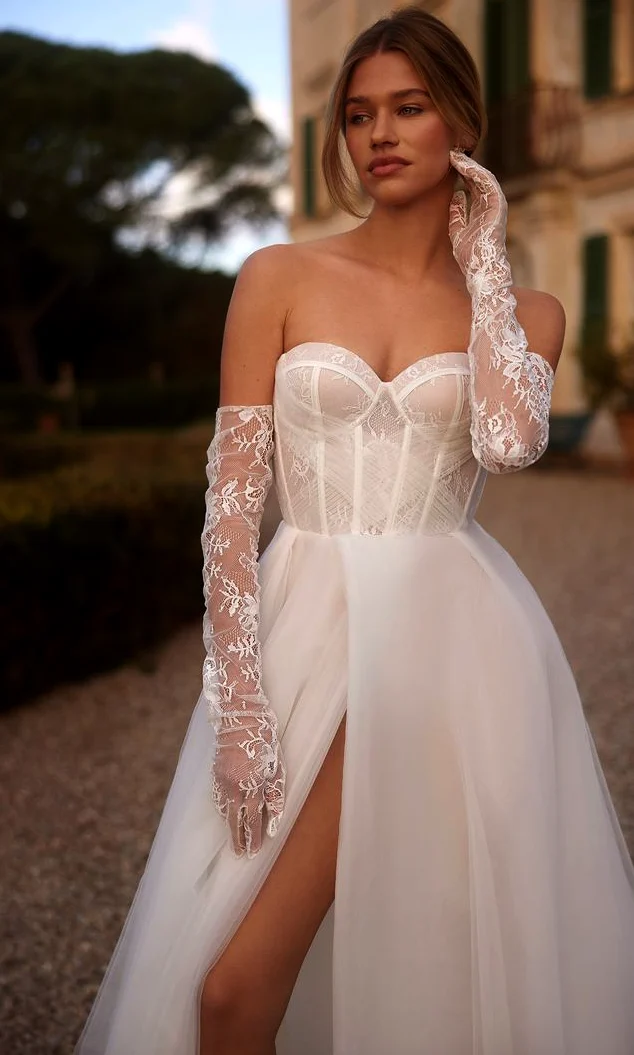
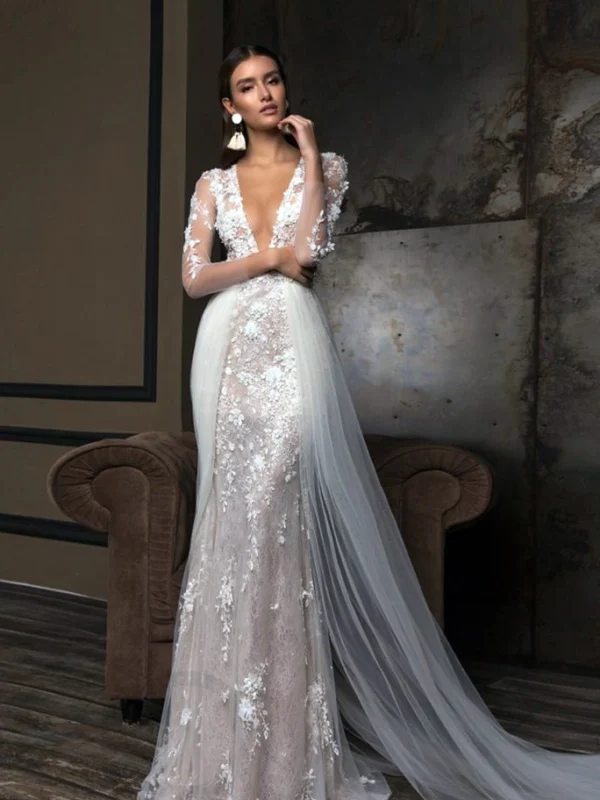
In the quieter shiny-looking reference, a clear waist line separates the decorated bodice from the skirt. In the view with a long floral veil, motifs continue below that boundary. This can make the transition appear softer even where the skirt also begins widening there. Choose how strongly you want the division to show first. Compare similar skirt fullness with decoration stopping clearly or continuing into the upper folds afterwards. The point where width begins and the point where decoration ends are different properties, even when one photograph combines them.
Describe the preference in concrete terms: a quiet skirt immediately below a patterned bodice, or a few motifs reaching into its upper folds. You need not request an especially tight waist or infer hidden support to make that choice. Show the connection you want during the appointment. Assess it while breathing normally and making ordinary arm movements. If an alteration is proposed, ask which visible line it changes and whether motif distribution changes too. That is a clearer conversation than simply asking for the whole dress to be tighter.
Assess the front opening with the skirt released
Several references reveal a leg placed forwards through an opening. The dress with long patterned gloves shows this area in a closer crop; the full view with small floral accents also includes the shoe. The pose illustrates one possible open arrangement, but cannot explain how much remains visible while standing quietly. Release the skirt at the fitting, put your feet beside one another and walk several normal steps. Choose how much leg you personally want to reveal in those states instead of reproducing the reference’s stance.
Sit in the same shoes and observe the edge before rearranging it. If you like the overall outline but dislike the opening, state those as two preferences. A slit is not compulsory for an A-line shape. Request an actual closed alternative or a specifically discussed adjustment. A quieter opening may retain your preferred outline, while a larger visible area can make shoes more prominent in the outfit. Relate that choice to the situations in which you will wear the dress. Test the relationship again if your final shoe height changes.
Add neckline and arm details to the selected skirt
The pictures place exposed shoulders, short draped side sections and fine straps above related lower shapes. Long gloves introduce an additional arm line; they do not establish long sleeves attached to the dress. After your first skirt decision, select two upper arrangements you genuinely want to compare. You may enjoy a quieter neckline above a fuller skirt or a densely patterned bodice over gentler long folds. Neither requires a universal balancing rule. Choose the complete distribution you want rather than adopting every detail from one reference together.
Keep the lower shape as similar as possible during this trial. Include the planned bag or a bouquet so your hand position is not selected for a photograph alone. The wedding dress straps guide adds shoulder comparisons if that decision remains open. Introduce jewellery individually afterwards. A new neck detail can redirect attention without changing the skirt, which is precisely why changing both at once makes the comparison harder to interpret. Keeping your hairstyle unchanged initially also makes each addition easier to assess.
Confirm two complete outlines under the same conditions
Finally compare two real outfits with the same intended shoes. Include a relaxed front view and a side view with the skirt released. Walk, sit and stand again. Notice whether you continually want to pull the sides out or hold the opening closed. That observation belongs in your choice and can be discussed more precisely than a broad request for more or less volume. A single picture with fabric deliberately spread out cannot replace this short sequence of your own movements.
Write one sentence about the outline and another about the opening. For example: a gentle widening from the waist with a quiet front fall, and a shoe visible mainly during a step. See how the actual model meets those preferences and read its material and care information rather than identifying fibre from a photograph. Those two sentences prepare the next fitting without restarting every dress detail. Your preferred A-line is the complete outline you have seen and deliberately selected, providing a clear basis for later veil or jewellery choices.
Start where the skirt begins to widen. Compare a gentler and a fuller outline with the same shoes and relaxed hands before adding the upper details.
Frequently asked questions
Does a wide hem alone establish an A-line?
The line before the hem matters too. Compare whether the skirt starts widening from the waist or follows hips and thighs more closely first.
Does an A-line need a front opening?
No. An opening is another choice. You can seek a related outline with a closed skirt or a differently arranged opening.
Do long gloves establish a long-sleeve dress?
No. Gloves and dress are separate visible elements. Check which pieces are present and included in the actual offer.
Thoughts on this article