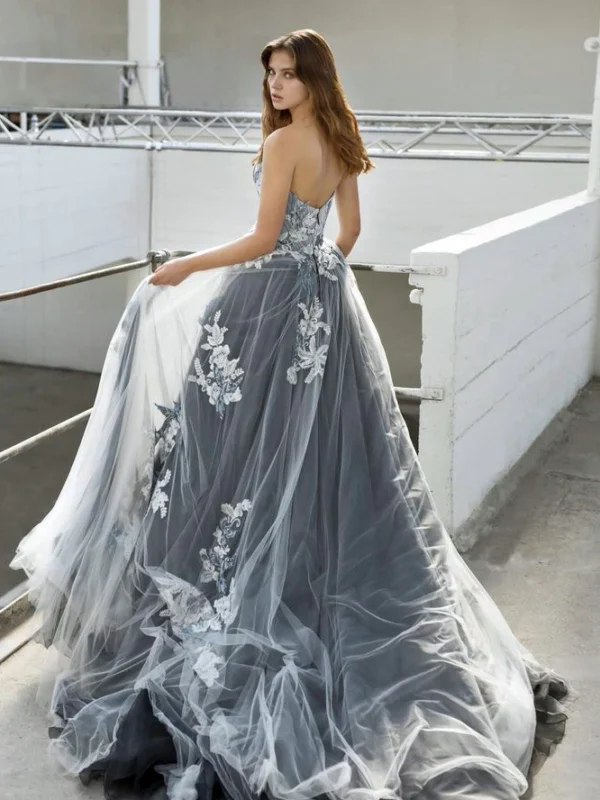
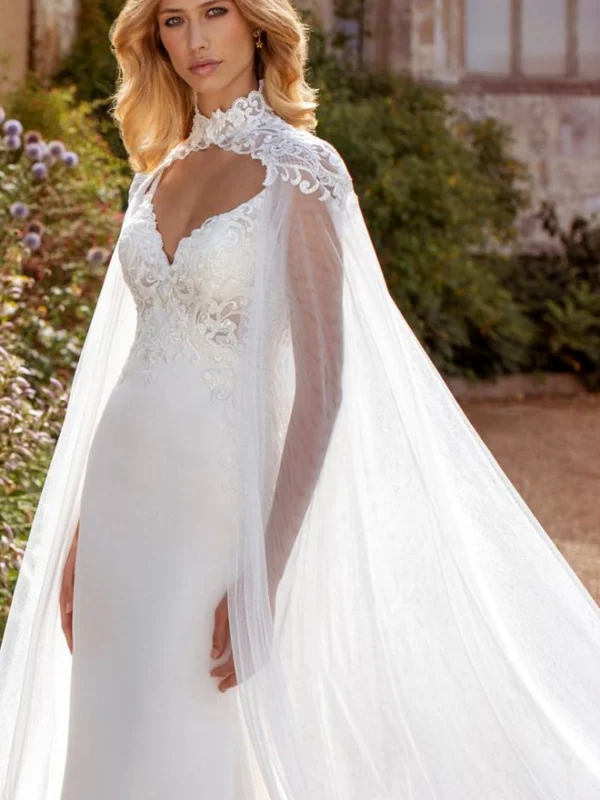
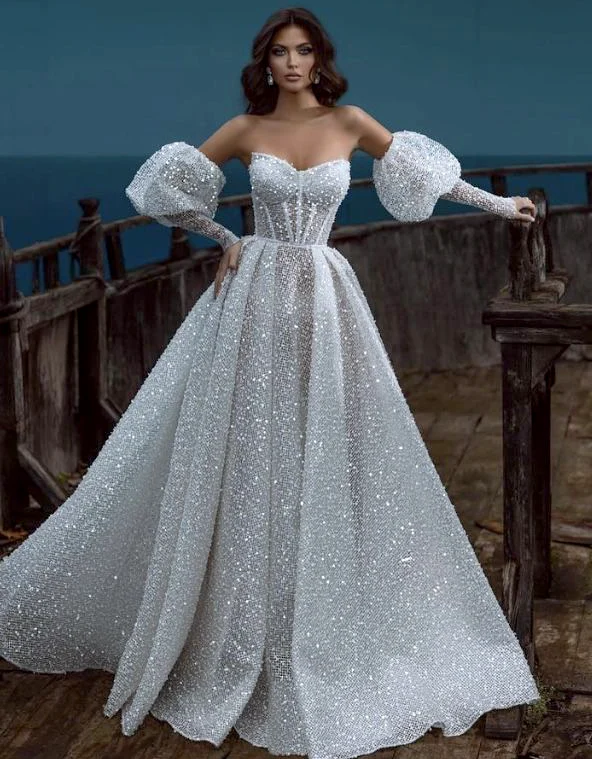
A wedding dress with skirt folds can be chosen by the visible starting point and direction of its large surfaces. In the clearest example, broad pale folds open below the waist. Another dress combines substantial outer panels with a front opening. These photographs do not securely show a fine regular pleated field. Naming the broad folds that are actually visible is more useful than assigning an unconfirmed technique to them.
Start with the whole skirt from the front. Where does the first deep area appear, where is the first broad quiet surface, and what happens at the centre? Look at small bodice details afterwards. You are comparing the arrangement of the lower garment, rather than neckline draping or a silhouette automatically recommended for a particular body shape. Similar outside width can hide very different distributions of large surfaces.
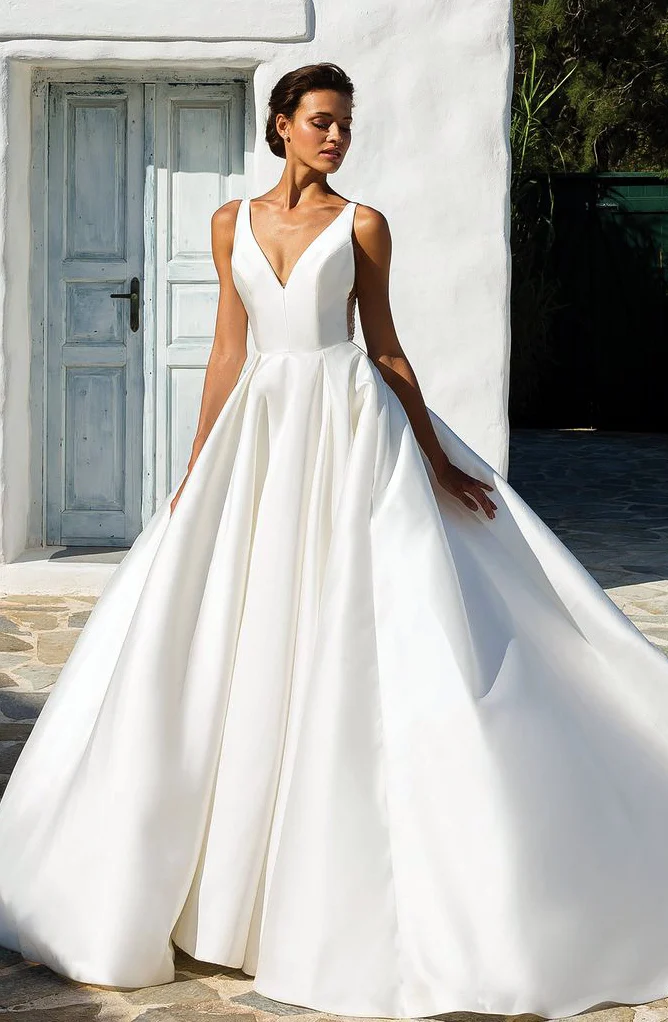
Wedding dress with skirt folds: compare the start
On the pale V-front model, substantial changes of direction begin directly below the waist. Broader quiet areas sit between them. If you like that arrangement, request a view with the sides hanging freely. A hand held out can open the skirt and pull particular folds into prominence. Do not choose the amount of visible surface only from the largest spread-out photograph.
Then compare the front centre with the sides. Would you prefer a broad quiet panel at the middle or a more pronounced hollow there? Show the position directly on the garment. This is more specific than a general request for a voluminous skirt. Two equally wide models can place their broad areas differently and therefore look quite different despite a similar outer outline.
Distinguish broad folds from fine regular pleating
For a fine even repeat, you need a confirmed sample that actually demonstrates it. Large irregularly opened surfaces do not establish the same thing. The guide to a pleated evening dress separates repeated fold patterns from draping. Do not transfer a fabric property from that discussion to these bridal references; keep the terms separate in your own request.
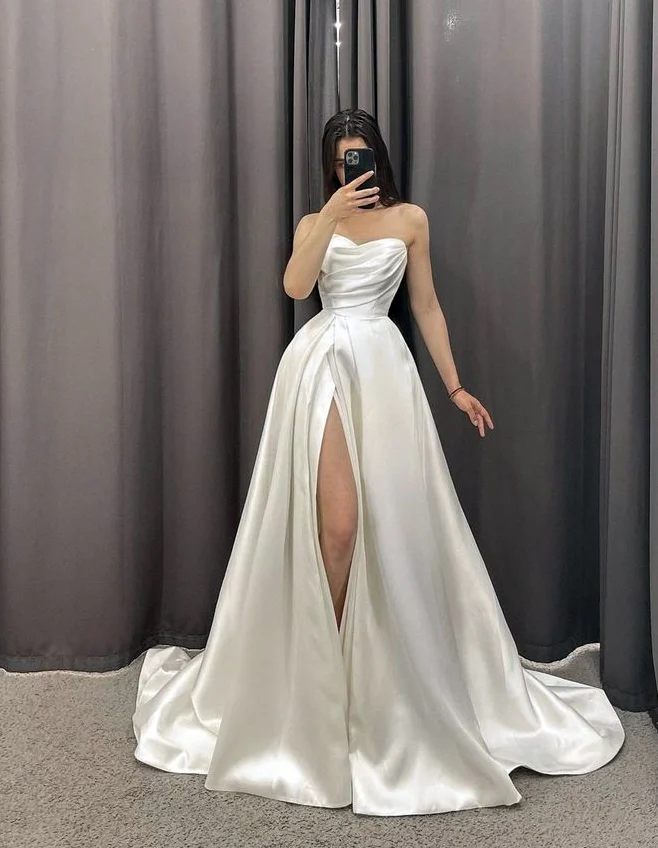
You can prefer broad skirt folds without also choosing a finely folded upper section. The quiet V-front bodice in the example lets the larger directions below remain clear. If you want several types of folds together, describe the bodice and skirt separately. A neckline detail does not answer a question about the lower repeat. Request an appropriate view or actual sample for each area you are choosing.
Treat a front opening as another variable
The strapless dress with the folded upper section has broad outer panels beside a high front opening. Here the decision concerns more than fold quantity. The centre is visibly open while large areas fall to either side. Compare it with a more closed skirt before deciding what attracts you. You may want the opening, or mainly the broad quiet side surfaces.
Let the actual skirt hang freely and take a few ordinary steps. Ask how the centre rests while standing and how far it parts during movement. A posed photograph is not a substitute. If considering an alteration, ask the professional to show how it might change the width of the side panels and the starting point of the adjoining folds on that particular garment.
Do not equate open outer areas with a fold sequence
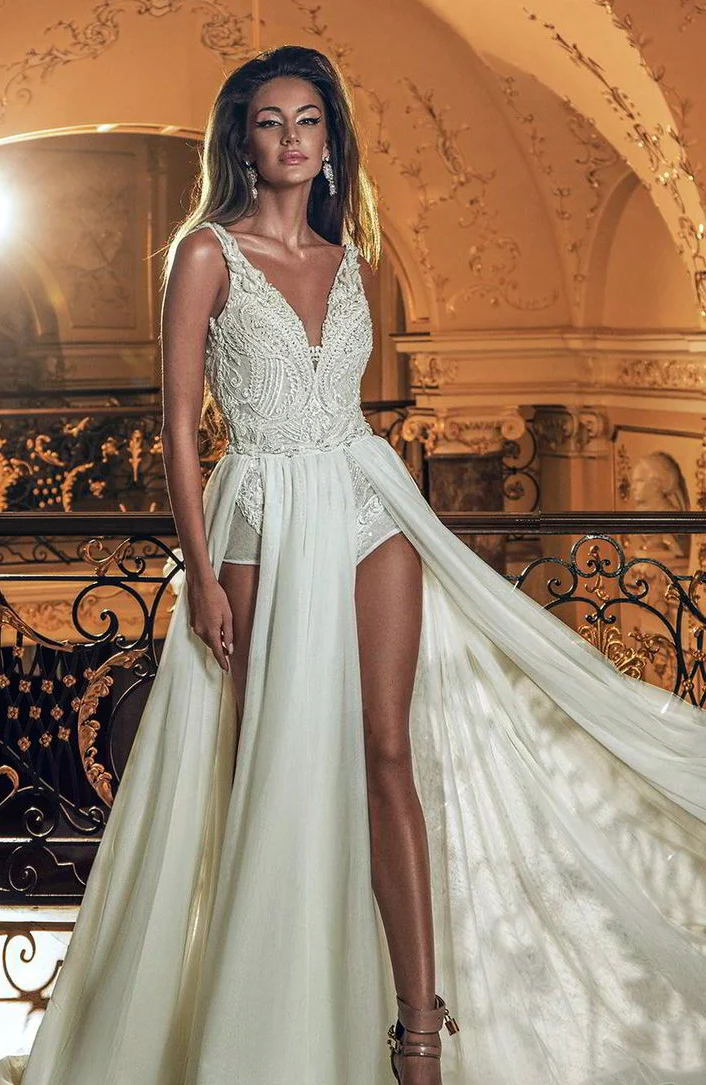
Another example reveals a short inner garment beneath long open outer areas. Their broad movement provides a different effect from clearly ordered folds beginning at the waist. Use it as an alternative: do you want large organised directions, or mainly a long open outer line? Both can appeal to you, but they should be described as separate design preferences.
Ask what the actual offer includes and how its parts connect. The photograph does not prove detachable construction. For the skirt decision, begin with the visible arrangement of short centre and long sides. If you want a continuous closed front, this reference is useful precisely because it differs so clearly, helping you explain the open area you do not want in another model.
Use the narrow alternative as a control view
The narrower dress with small diagonal or diamond-like drawing offers a different surface. Fine lines are not evidence of pressed pleats. Compare its more continuous outer line with the broad divided surfaces of the full-skirt example. This reveals whether you truly want large lower divisions or a quieter narrow outline with smaller surface detail, rather than simply liking the pale overall appearance.
The guide to a simple wedding dress adds a discussion of quieter areas. Keep shoes and viewing angle comparable in your own trial. A narrow back view and a fully spread front skirt change too many features at once. Begin with similar front views, then describe which lower line better meets the preference you are trying to identify.
Discuss the fold start during alterations
For changes around the waist, ask where the large folds will begin. If preserving a particular quiet front area matters, show it on the dress. For a length change, also examine where the broad folds meet the new lower edge. Request a complete view with the final shoes instead of assessing only a pinned hem from close range, so you can see the full distribution again.
For finishing, follow the actual model’s care information. GINETEX explains ironing and steam symbols; fold size does not establish permission for a particular treatment. Ask how the garment should be prepared, while keeping the design preference separately recorded. A clear starting point, quiet centre and preferred opening are visible features you can examine together at collection.
Test a quiet centre against broad sides
For a focused comparison, mark the quiet front area of the V-front model and one broad side panel of the open model as references. Request two actual front views from a comparable distance. Decide first whether you prefer the broad surface at the centre or to the side, then add the opening question. Liking the side panels while wanting a closed middle gives a specific search request for another real model. It is not an automatic alteration promise for the open reference. Show the desired distribution with your hands on the available dress and ask the professional which part is achievable. This turns a general fold idea into an arrangement you can actually compare and approve.
A specific description can name the starting point explicitly. Justin Alexander describes its separate style 8970 with a full pleated skirt beginning at the natural waist. This is information about that named product, not identification of the archive dress. Use it as an example of having the desired starting point shown and confirmed in your own offer.
Introduce bridal accessories after choosing the lower shape. Hold the intended bouquet or bag at the selected centre and check which area it covers.
Compare where the broad folds begin and how they open downwards, then examine the central area in ordinary standing and walking.
Frequently asked questions
Do the selected pictures prove fine pleating?
A securely identifiable fine regular pleated field is not visible in this selection; the guide compares the broad skirt folds that can be seen.
Why include the short inner garment example?
The short inner garment with long open outer panels separates a preference for open lines from a preference for ordered broad skirt folds starting at the waist.
What matters when the waist is altered?
Show the desired fold start and quiet central surface so the professional can explain the proposed new distribution.