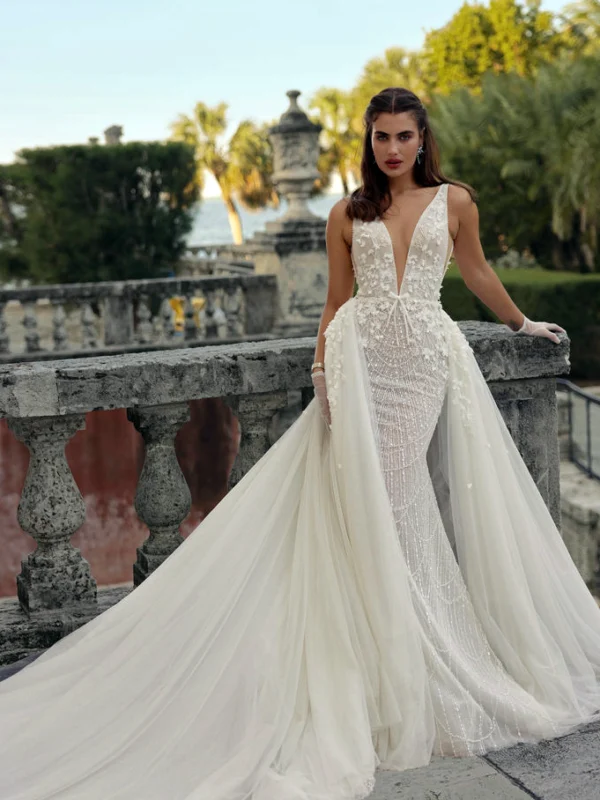
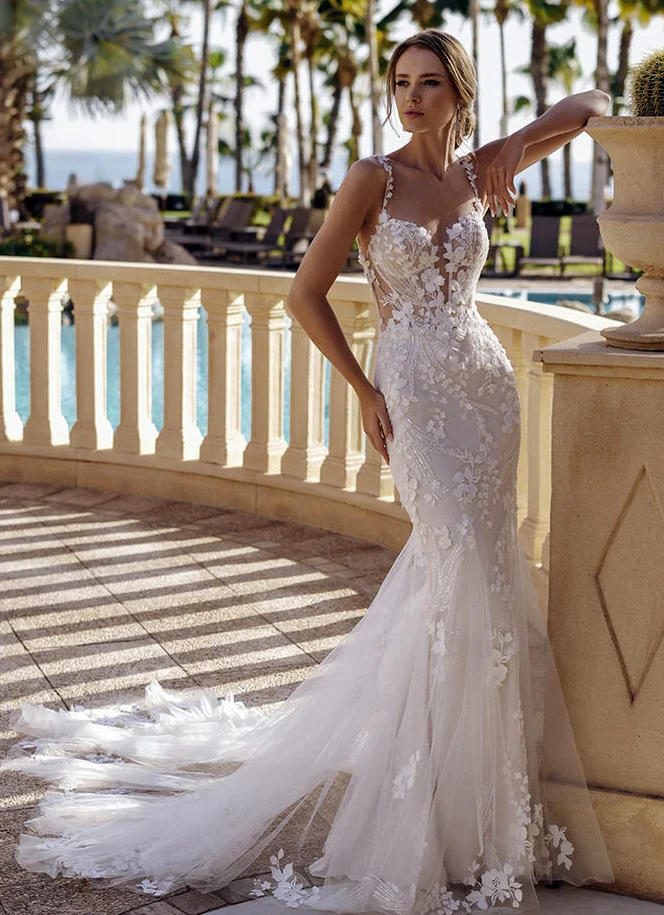
A simple wedding dress can work through large quiet surfaces and a few clearly drawn lines. That does not initially tell you whether the cut should be close or full. It also matters whether you want the complete garment reduced or only the skirt. These four views offer two answers: two bodices carry recognisable floral pattern above quiet lower areas, while two other dresses let neckline, waist and outline speak more directly. Compare those degrees deliberately before turning a general preference for simple into a fixed shopping requirement. The visible arrangement is more useful than the label alone.
1. Describe a simple wedding dress through its surfaces
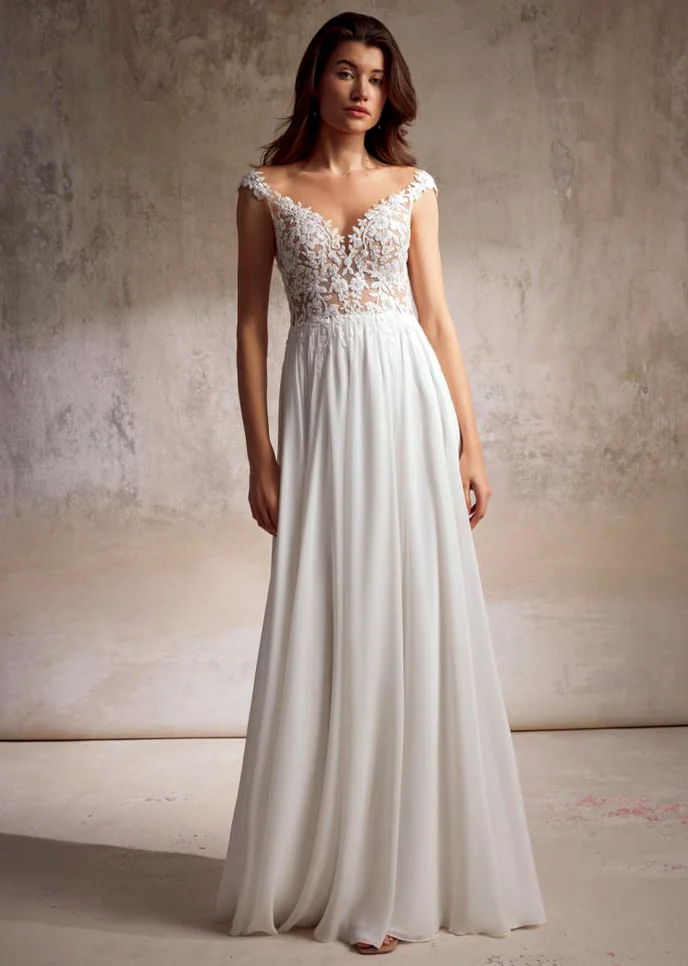
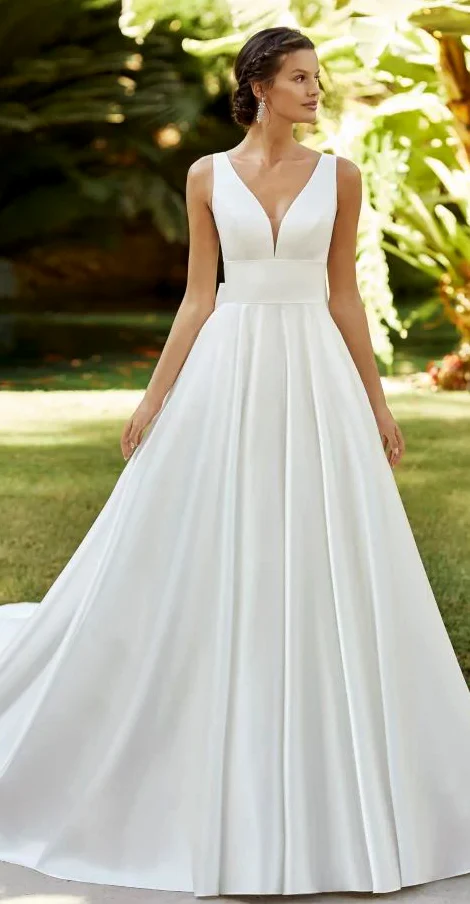
Begin with a complete view and identify where the surface should remain quiet. The sleeveless white example has large largely undecorated areas at both bodice and skirt. A deep V-neck, broad waist section and vertical folds organise its visible design. The long-sleeved dress also retains substantial quiet surface, but the middle sits closer to the body with a narrow waist accent. Both may feel reduced although their contours differ. Describe surface and outline as separate qualities, allowing a preferred plain area to be sought alongside another shape rather than accepting the first combination as fixed.
Compare these models without large additional jewellery areas first. Ask which existing line you notice most: neckline, waist boundary or lower outline. Record whether that order appeals. A quiet design can make one boundary especially visible because less pattern sits beside it. That is no reason to alter the shape immediately through decoration. Check whether you want another waist width or neckline instead. The wish for quietness stays concrete and connected to an actual feature that can be discussed on the garment, rather than becoming a vague instruction to make every part plainer.
2. Compare neckline edge with waist width
The quiet sleeveless version joins a deep neckline to a broad horizontal waist surface. In the long-sleeved example, the upper opening is also V-shaped but the waist is more narrowly defined. Compare that relationship from the same distance. Should a broad finish remain visible between bodice and skirt, or is a finer connection enough? Try corresponding actual candidates with the same underwear. Within your intended outfit, the impression of a deep neckline also relates to the area beneath it and the complete front, not only one small close-up of the opening.
If a simple wedding dress mainly means a clear front view to you, still request side and rear views. A decorated back or different side outline might change your preference. Have upper attachments and existing layers shown on the actual garment. The sleeveless picture suggests a pale intermediate area within the deep neckline; its real arrangement needs checking on the model. A quiet surface promises neither a particular interior nor the support you want. Those remain concrete fitting questions rather than conclusions derived from the reduced photographic styling, bringing appearance and actual product information together.
3. Choose sleeves as shape rather than added decoration
The quiet long-sleeved dress has slight shoulder folds, narrower wrist finishes and a largely even sleeve outline. The sleeveless option leaves more shoulder space open. Compare that upper distribution independently of lower fullness. You may want a quiet front with longer sleeves, or a more open shoulder line above a broader skirt. Try both with planned hair. Decide which area should remain visible beside your face before introducing necklace, veil or another upper layer. This keeps the sleeve and neckline choice clear before smaller accessories change the complete arrangement around them.
Move your arms, reach for an object and sit down. Inspect shoulder, neckline and sleeves afterwards without immediately rearranging them. Decide whether the lines still look as quiet as you want after ordinary actions. The small shoulder emphasis may appeal or prompt a plainer comparison. Ask about the real version instead of assuming the photographed shape can be altered however you like. You are selecting a particular design with its connections, not only the general word simple, which different providers can apply to different products. State which detail should remain clear when discussing another option.
4. Treat a decorated bodice as a deliberate compromise
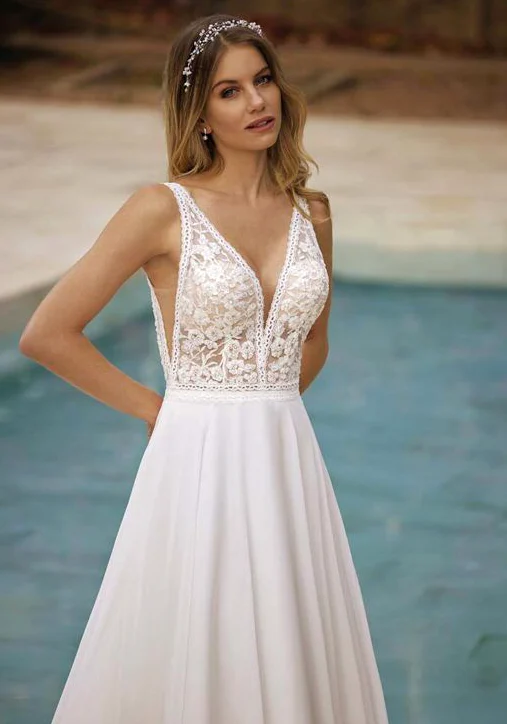
The first reference has a clearly floral-patterned upper section with small decorated shoulder edges above a quiet long skirt. The closer view adds a deeper V-neck, wider decorated straps and a narrow embellished waist. Both can be useful if you want a simple lower area while retaining pattern at the top. They do not show that a large quiet skirt makes every other decoration disappear. Compare the actual visible pattern share before choosing which degree comes closest to your preference, describing the upper and lower parts separately rather than allowing one general label to stand for both.
Try such a compromise directly beside a quieter upper version. Keep shoes and important companions unchanged initially. Look from ordinary conversational distance before moving closer to the motifs. You may enjoy the flowers and want simplicity only below, or find that they interrupt your preferred clear neckline. Our crochet-look bridal guide adds questions about visible patterns and underlying layers. It supports the comparison without explaining how these particular bodices were made or tying your choice to a specified technique. Ask the relevant question on the real garment you are considering.
5. Assess accessories against the clarity you selected
A simple wedding dress can provide a base for small or larger additions. Begin with one intended item, such as earrings, and inspect the full silhouette. Add the veil afterwards if planned. Decide whether its edge should create another visible line or recede beside the dress surface. The boho wedding dress guide offers further questions about the complete combination. Transfer the useful task to your quiet design without turning it into a requirement for more pattern or extra decoration. Keep the line you chose as the reference point throughout the comparison.
Hold any planned bouquet at its actual carrying position. A large pale area before the waist can leave different dress sections visible from a smaller shape at the side. Test both, then view the front without the bouquet again. If the dress alone appeals more, another carrying position or accessory may make more sense than changing the garment. Describe which feature should remain visible. Accessories then become deliberate support for the quiet lines rather than a collection of independently attractive objects, with each addition assessed for its role within the outfit you actually want.
6. Confirm quiet lines on the finished garment
Compare two actual models with the same important additions finally. Walk, sit and inspect front, side and back. A simple wedding dress should show the clarity you want beyond one selected front pose. Record unresolved points on the worn garment, such as waist width, hem or a shoulder area intended to sit differently. Ask about result, scope, cost and final fitting. A smooth area does not automatically make an intervention easy. Have the specific work explained, especially when visible boundaries form much of the design, so the intended lines stay understandable through any changes.
Check composition information, inner layers and care labels on the real product too. The GINETEX care-symbol explanation helps interpret instructions; a smooth white surface establishes neither fibre nor treatment. Your decision then connects three clear points: where quietness should remain, which lines should lead and which decoration you deliberately accept. That supports a precise choice of a reduced form or a decorated-bodice and plain-skirt compromise. The important evidence is the complete dress effect you have actually compared with your own companions, rather than its general product label alone.
A simple wedding dress can work through quiet surfaces and a few clear boundaries; decide whether the bodice should remain without prominent pattern too.
Frequently asked questions
Does a simple dress have to fit closely?
No. Quiet surfaces can accompany a broader or closer skirt outline. Choose the contour separately from the amount of pattern.
Can a floral bodice suit a wish for less decoration?
It can be a deliberate compromise. Compare a decorated bodice and quiet skirt directly with an actual model whose upper and lower surfaces are quieter.
Does a smooth white surface establish high-quality fabric?
No. The image shows a surface; composition, construction and fit need assessment on the actual dress.