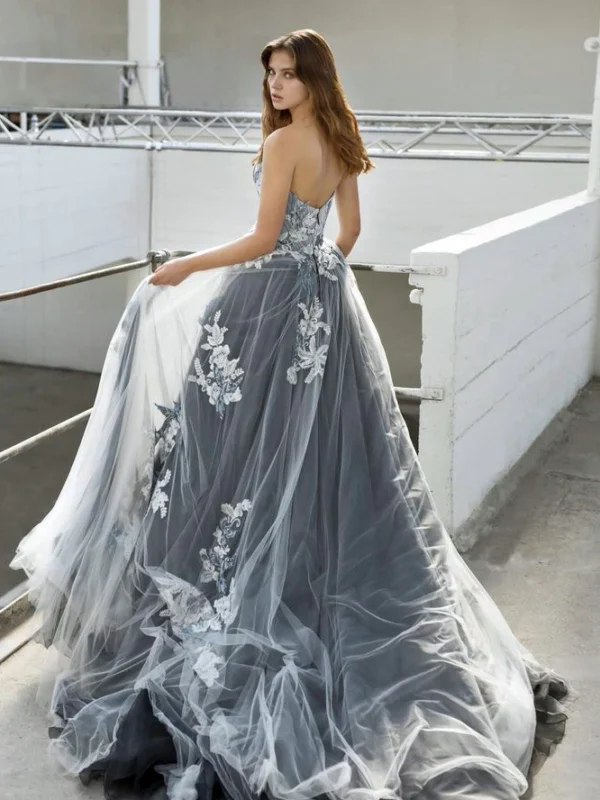
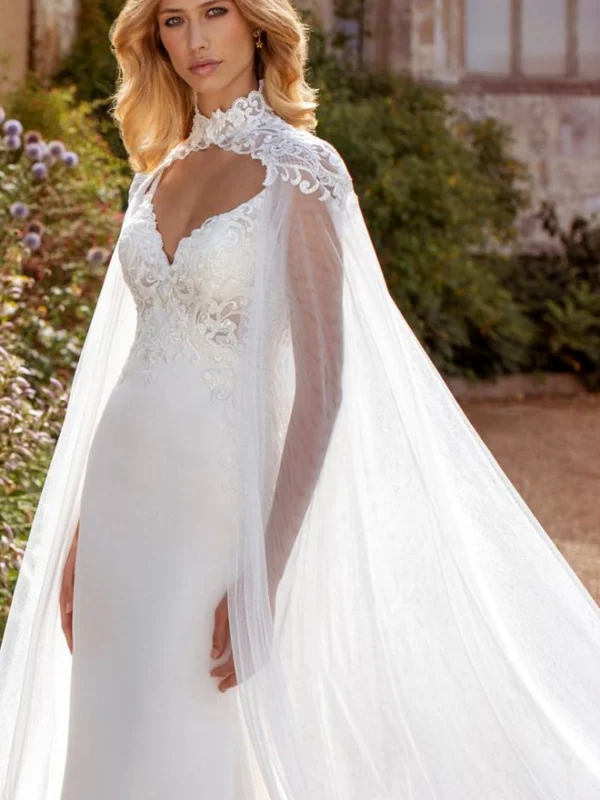
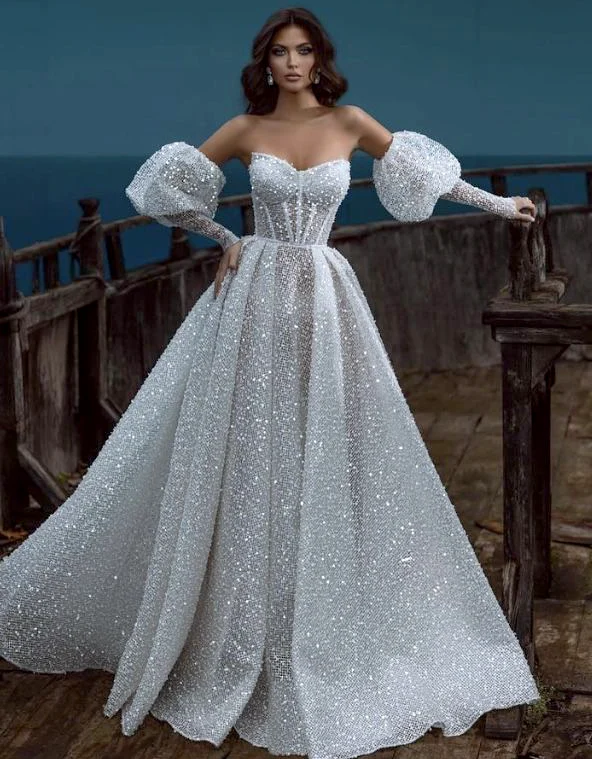
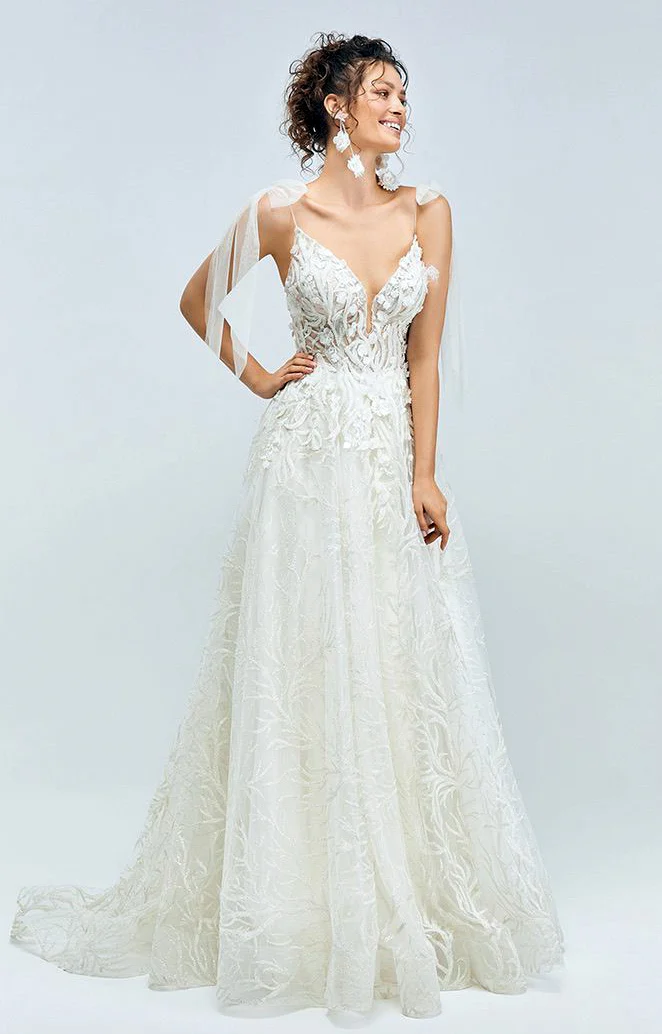
A wedding dress with shoulder bows places decorative forms where straps, hair, earrings and veil come together. In the reference, bow-shaped details sit on the shoulders while longer fine ribbons hang at the sides. A V neckline and densely patterned long dress accompany that upper emphasis. The other three dresses show fine straps or a high neckline with sleeves as separate alternatives. Compare the shoulder effect first and add the whole lower shape afterwards. This lets you choose bows without having to adopt every other feature of the example at the same time.
Choose scale on a wedding dress with shoulder bows
Look at the shoulder area from normal distance first. The bow shapes sit above the narrower strap line in the example, while their long ends remain visible beside the arms. Decide whether you chiefly want the small upper loop or the descending line as well. A close-up helps assess shape; the complete front view shows how much of the whole dress that detail occupies.
Compare two sizes or ribbon positions only as far as the available model genuinely permits. Ask for its intended connections to be explained and demonstrated. With a fixed shape, discuss possible alterations with the shop. A tied version needs to be reproducible in your preferred position. Record which arrangement was shown at the fitting and precisely what alteration is proposed, giving the next fitting a clear reference rather than a general request for different bows.
Check ribbon length and position with the whole dress
Longer ribbons can remain visible beside the arm and waist. Here they extend the upper outline while the long patterned skirt forms a separate broad area. Consider more than a single shoulder bow. Compare front, side and rear views to establish where the ends actually lie beside neckline, arm and skirt. Keep the arms relaxed initially, then assess how their position changes when you move.
Next, hold the planned bouquet. If it partly covers a ribbon, decide whether you like that arrangement. Try setting the bouquet down and picking it up again too. The ribbons should be manageable in a position you can use through the event. Request help on the actual garment if the preferred placement would require another connection or a definite alteration, rather than relying on a verbal description of the photographed arrangement.
Compare earrings and hairstyle beside the shoulders
Large pale floral earrings add volume beside the face in the reference. With bows and ribbons, they create a distinctly decorated upper group. If that appeals, try a similar scale with your planned hairstyle. If you want fewer details, compare smaller earrings while keeping the dress and ribbons unchanged. The effect of that single alteration is easier to assess than a completely different upper outfit every time.
Turn your head slowly to both sides and check where earrings, hair and ribbons meet. This concerns real contact as well as colour. The bridal accessories guide offers more comparisons. Choose an additional necklace after this combined test. You may like the already decorated bodice with the V opening left more visible. If adding jewellery there, assess its length on the same dress from normal mirror distance too.
Try the veil on the same shoulder arrangement
A veil places another layer near the shoulder details. Try it on the same dress with the same hairstyle and selected ribbons. Check rear and side views. Decide whether the bows should remain visible beneath or alongside it, or whether you prefer another distribution. A front photograph cannot fully answer that question, and holding a veil beside the dress does not reproduce its intended attachment or wearing position.
Rehearse taking off and replacing the veil if you plan a change. Have the intended fastening demonstrated and rearrange the ribbons afterwards. Your wedding dress with shoulder bows should also appeal in the later combination. Photograph both complete states briefly to assess how much upper decoration you want at each stage, including the remaining strap and ribbon positions after the change rather than the first view alone.
Consider fine straps and sleeves as real alternatives
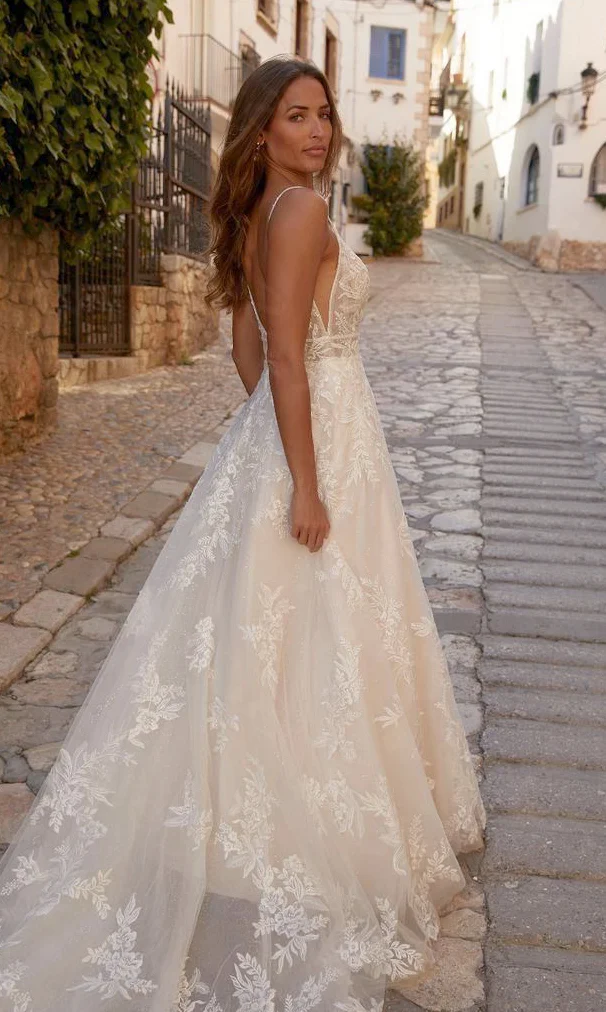
The rear street view shows fine straps and a low side-back transition into a patterned skirt. The other V dress uses fine floral-looking straps without the same long ribbons. These help you choose the additional shoulder decoration separately. Decide whether you prefer the freer strap line or extended bow outline, using similar neckline sizes where possible so that a much deeper opening does not decide the shoulder question for you.
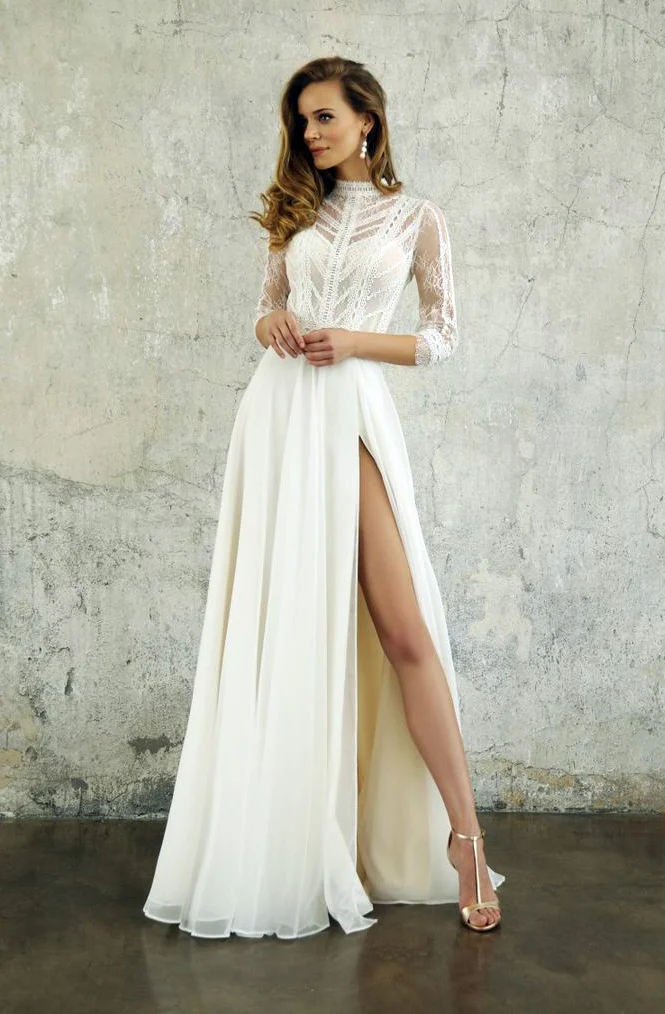
The high-neck dress with three-quarter sleeves creates different upper coverage. It also has a long front leg opening, which deserves a separate decision. The V-neck wedding dress guide develops the comparison of neckline depth and width. Choosing the shoulder detail need not automatically settle the skirt opening or complete neckline shape. Describe the feature you prefer in each reference before seeking it on an actual candidate.
Finish movement, alteration and care decisions
At the final fitting, raise your arms, sit and carefully put on the actual intended outer garment. Check where ribbons enter other layers and how you arrange them again. Show any preferred shortening or placement on the worn model. Ask about the alteration scope, cost and another fitting before relying on it. Compare the complete outfit afterwards, particularly the new proportion if ribbon length changes while the bow itself stays the same size.
The GINETEX care symbols help you read the instructions. Ask about the entire dress, including shoulder details. Keep the agreed ribbon position and actual connection in your fitting notes. Your wedding dress with shoulder bows is then selected through visible, tested decisions: loop shape, ribbon length, jewellery and veil suit the sequence you intend to use, with the actual accessories recorded so that the arrangement can be reproduced.
Choose loop size and hanging ribbons on a wedding dress with shoulder bows alongside hair, jewellery and veil. Clarify the connection on the real garment.
Frequently asked questions
Should bow ribbons lie towards the front or back?
Try both visible positions where the actual attachment allows them. Compare front and rear views with your veil and bouquet before settling the arrangement.
Can large earrings work with shoulder bows?
They can if you like the combined effect. Try the actual earrings with your hairstyle and dress, checking contact with ribbons and hair while turning your head.
Can I remove or retie the bows later?
Ask to see the real connections. Plan a change only if it is provided for and demonstrated on the available dress, then check the remaining straps too.
How should I test the ribbons while wearing the dress?
Raise your arms, hold the intended bouquet and sit down. Check where the ribbons rest and whether you can rearrange them comfortably, rehearsing any change on the actual model.