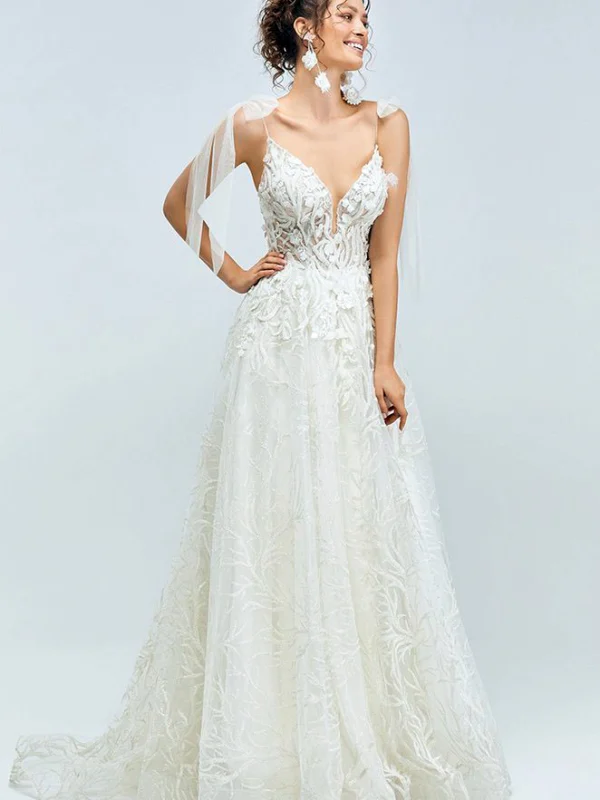
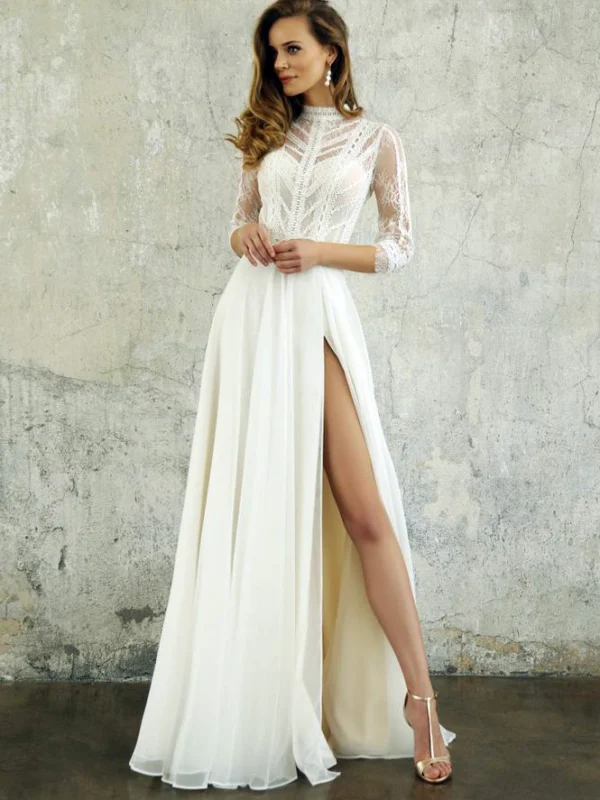
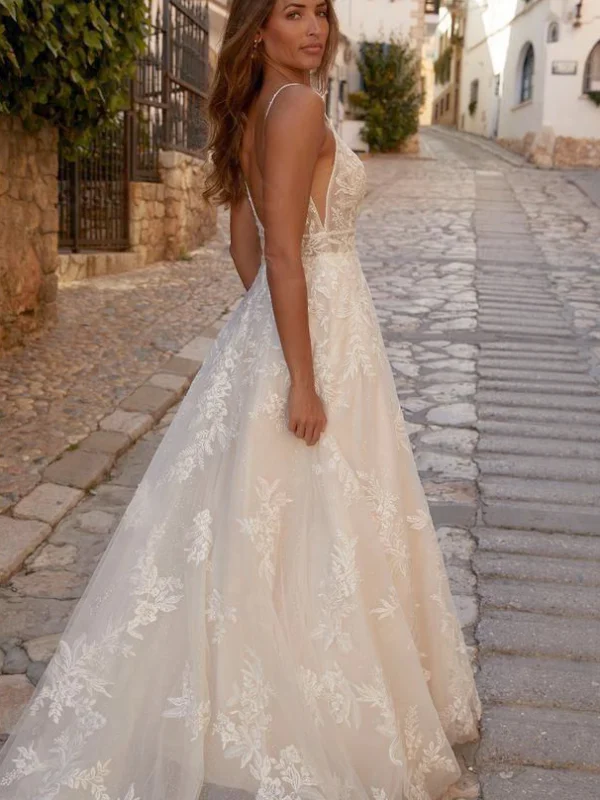
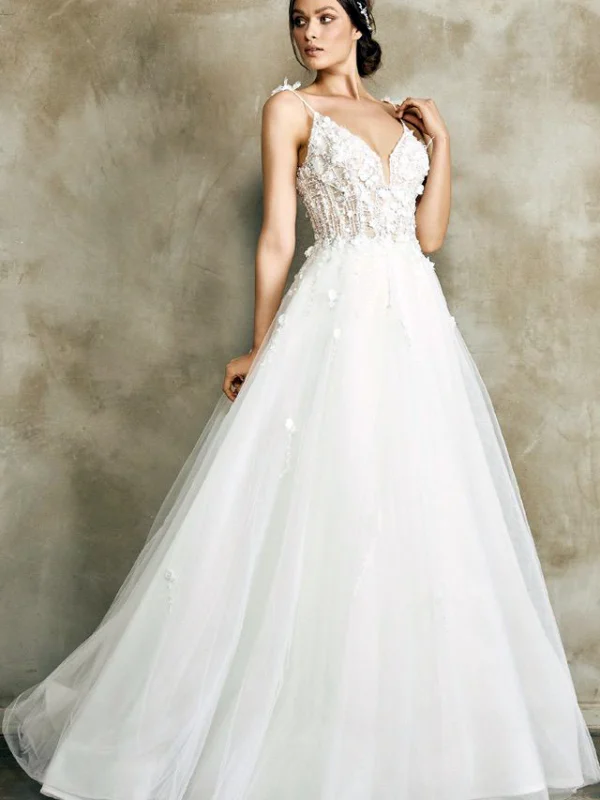
Wedding dress shoulder details are compared through four genuinely different upper arrangements here. The dress with large pale floral earrings has bow-shaped shoulder details and long fine ends beside the arms. The street view shows fine straps and a low back above a widely spread patterned skirt. Another V dress uses floral straps, while the high-neck option covers more of the neck area and arms. Each upper arrangement comes with its own skirt, so the comparison deliberately starts above the waist.
Look at the area between face, shoulder and waist first. Decide whether you want extra loops and hanging ribbons or a simpler visible strap line. Add earrings and hairstyle afterwards. The distinctly decorated example offers a specific combination that you can modify with smaller accessories if preferred.
Include relaxed arms, head movement and the intended veil at your real fitting. Clarify the ribbon connections before planning a change or another position. Add the complete skirt shape and shoes next, checking the shoulder decision within a whole wearable outfit.
Guide to comparing these images
Compare long ends with contained decoration
The bow reference lets fine ends descend beside the arms, while floral straps keep more decoration close to the upper dress edge. The street rear view offers an even finer shoulder route over a low back. Compare how far each visible detail travels away from the neckline. A smaller connection and a hanging end occupy different spaces even when both begin near the shoulder.
The high patterned neck and three-quarter sleeves provide another distribution, carrying the upper area closer towards the face and farther along the arms. Use that view to check whether your preference is for separate shoulder accents or a broader continuous upper field. The skirt should remain a later question in this comparison.
Keep the upper brief independent
Write a shoulder-detail note without the earrings, hairstyle or lower silhouette first. Then add the piece whose presence matters most to your own plan and compare the same actual dress again. Record whether the original shoulder idea remains the main attraction. This allows the decorated reference to guide a choice without making its complete accessory arrangement compulsory.